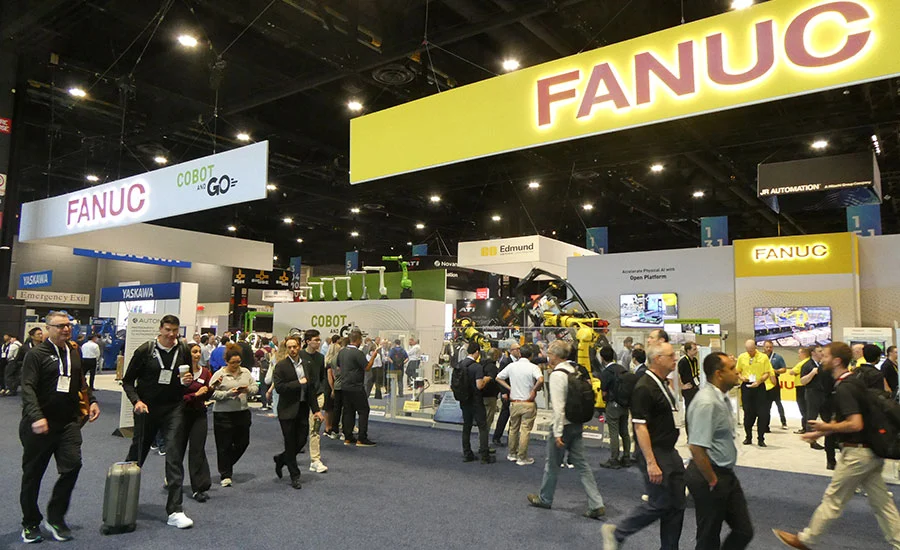
Chicago, IL – The 2026 Automate show, held from June 22-25 at McCormick Place in Chicago, marked a significant milestone for the global automation industry, drawing over 50,000 registered attendees and featuring an expansive showcase from 1,230 exhibitors. This year’s event underscored a pivotal moment in the evolution of robotics, artificial intelligence, machine vision, automation, and motion control, with a palpable shift towards more intelligent, adaptable, and human-centric technologies. The record attendance figures highlight the accelerating demand for automation solutions across diverse sectors, reflecting a collective industry push towards enhanced productivity, efficiency, and safety.
The Association for Advancing Automation (A3), organizers of Automate, noted the unprecedented level of engagement. "The energy at Automate 2026 was electrifying," remarked a spokesperson from A3, emphasizing the convergence of cutting-edge research with practical industrial applications. "The sheer volume of attendees and exhibitors, coupled with the innovative spirit on display, solidifies Automate’s position as the premier event for the automation ecosystem. We’re seeing not just incremental improvements, but fundamental shifts in how robots learn, interact, and integrate into our world."
Humanoid Robotics Takes Center Stage
One of the most compelling attractions at Automate 2026 was the dedicated Humanoid Robot Pavilion, a new feature sponsored by NVIDIA. This pavilion offered attendees an unparalleled opportunity to explore the latest advancements in humanoid robotics and the sophisticated enabling technologies that power them. The presence of these bipedal machines, once largely confined to science fiction or research labs, signifies a growing readiness for humanoid forms in various commercial and industrial applications. Experts at the pavilion discussed the intricate balance of mechanical engineering, advanced AI, and sophisticated sensor fusion required to achieve fluid, human-like motion and interaction. The focus extended beyond mere aesthetics, delving into the practicalities of deployment in unstructured environments, the development of robust manipulation skills, and the critical importance of safety protocols for robots operating alongside humans.

Industry analysts present at the show observed that the rise of humanoid robotics, while still in its nascent stages for widespread industrial adoption, points towards a future where robots can navigate and perform tasks in environments originally designed for humans without extensive retooling. This could unlock automation possibilities in sectors previously considered too complex or dynamic for traditional industrial robots, such as logistics in varied warehouse layouts, healthcare support, and even certain aspects of retail and service industries.
Spotlight on Innovation: The Automate Startup Challenge
A perennial highlight, the Automate Startup Challenge, once again brought emerging talent to the forefront. Ten early-stage companies, selected for their pioneering work in robotics and automation, vied for a $10,000 prize, presenting their innovations to a panel of expert judges. These challenges are crucial incubators for the industry, providing vital visibility and funding for technologies that often represent the next wave of disruption.
This year, Mbodi emerged as the triumphant winner, recognized for its groundbreaking platform that simplifies human-robot interaction and programming. Mbodi’s innovation lies in its ability to empower users to teach robots new tasks through natural language commands and intuitive physical demonstrations. For instance, an operator can simply instruct a robot to "place three bottles in a tray" or physically guide its arm through the desired motion. The platform then leverages a sophisticated network of AI agents to interpret human intent, plan safe and efficient motion paths, and execute the task on the robot within minutes.
Mbodi’s system integrates vision, reasoning, and motion control through a cloud-to-edge platform, ensuring compatibility across various robot brands. A significant advantage is its fleet-wide synchronization; a single training session can update the skill set of every connected robot, drastically reducing deployment and training times. This approach addresses a critical bottleneck in automation adoption: the complexity and time-intensive nature of traditional robot programming. By democratizing robot programming, Mbodi promises to make advanced automation accessible to a broader range of businesses, including small and medium-sized enterprises (SMEs) that may lack specialized programming expertise. Its impact could be profound, accelerating the deployment of flexible automation solutions across manufacturing, logistics, and beyond.

Recognizing Excellence: The Automate Product Awards
Beyond the startup challenge, Automate 2026 also celebrated established innovation, presenting awards to several new products and technologies introduced to the market in 2025 that are now shaping the 2026 landscape. These awards acknowledge products that demonstrate significant advancements in functionality, efficiency, and real-world applicability.
In the Automation Systems category, the coveted award went to CeiliX for its revolutionary InfinityCrane and SkyRunner system. This overhead material handling solution redefines industrial logistics by enabling seamless, omnidirectional movement across any industrial space. The system comprises modular ceiling rails that can be configured in various shapes and easily expanded to meet evolving operational needs. SkyRunner vehicles traverse these rails, facilitating the effortless transport of loads weighing up to 1 ton. What sets CeiliX apart is the untethered nature of its individual hoists, which are not restricted to specific rails. This design eliminates limitations imposed by columns or other floor obstacles, offering unparalleled flexibility. The modularity allows for adaptation to any room layout, and multiple SkyRunner cranes can collaborate to rotate or lift heavy loads with precision, all controlled with fingertip ease. This system promises to optimize floor space, enhance operational safety, and dramatically improve material flow in factories and warehouses.
The Vision, AI, and Software category recognized Standard Bots for its Flux AI software. This innovative software empowers Standard Bots’ robots to learn tasks through demonstration, circumventing the need for complex coding. Operators can physically guide the robot arm through a desired task, such as welding or polishing. The robot’s onboard vision and AI systems then map this human motion into structured data. The AI engine automatically translates these human actions into executable robotic tasks. Utilizing deep learning capabilities and advanced machine vision, the system adapts on the fly, adjusting to real-world variations or unexpected environmental changes. This capability is crucial for dynamic manufacturing environments where slight variations in product placement or material characteristics are common. Flux AI represents a significant leap towards more intuitive robot programming, reducing the barrier to entry for automation and making robots more adaptable to diverse production requirements.
Finally, in the Components, Hardware, and Enabling Technologies category, Synapticon received the award for its Actilink-JD actuator. Specifically engineered for humanoid robots, this actuator integrates a high-torque motor, a single-stage planetary gearbox, and a servo controller into a single, self-contained joint. It boasts an impressive peak torque density of 84.5 newton-meters per kilogram across four sizes, ranging from 20 to 110 newton-meters. This compact and powerful design is critical for humanoid robots, where space and weight are at a premium, and high performance is essential for agile movement.

In conjunction with Synapticon’s Positron Safety AI system, the Actilink-JD actuator delivers multiaxis safe motion, precise human detection, and AI behavioral safety, all connected via a "safety on EtherCAT" system. A pioneering feature of this technology is "safe guided falling" for bipedal robots. Unlike conventional systems that simply cut power, leading to uncontrolled falls, Synapticon’s technology allows a humanoid robot to fall in a controlled and finely modulated manner. Coupled with safe active damping at the drive level, this capability is paramount for robots intended to work alongside humans without protective caging, significantly enhancing safety by mitigating injury risks during unexpected events.
Major Exhibitor Highlights: A Glimpse into the Future
Beyond the awards, several leading robotics companies unveiled significant new products and strategic initiatives that captured considerable attention.
Epson’s Collaborative Robot Debut
Perhaps one of the biggest stories at Automate 2026 was the North American debut of Epson’s first collaborative robot, the AX6 six-axis cobot. Long revered for its high-precision SCARA robots, Epson had notably held back from the collaborative robot market, even as competitors like Fanuc, Comau, Denso, ABB, and Kuka entered the space. This strategic shift signals Epson’s intent to become a full-spectrum robotics provider.
The AX6 cobot features a lightweight carbon-fiber chassis, offering a 6-kilogram payload and a 900-millimeter reach, with an impressive positional repeatability of ±0.03 millimeter. Weighing a mere 17 kilograms, it is suitable for ISO Class 5 clean rooms and boasts an IP54 rating for challenging industrial environments. Its design prioritizes hygiene and integration, with internal cable routing and a smooth chassis free of screw holes and sharp edges, facilitating easy cleaning and minimizing dust accumulation.

The AX6 can be paired with Epson’s SafeSense technology, which employs sensors to detect human presence in the workspace. This allows the cobot to dynamically adjust its speed, operating at full capacity when alone and slowing down when workers are nearby, enhancing safety and flexibility in human-robot collaborative cells. The robot’s head is equipped with an M12 Ethernet port, two M8 tool connectors, and two 4-millimeter pneumatic couplings. Its flange is designed for endless rotation, and multifunctional buttons enable motor unlocking, gripper control, and position saving. Two additional buttons are freely assignable, while an LED ring provides clear status indication.
Epson has also focused on ease of programming, incorporating hand-guided jog-and-teach functionality for quick and safe teaching of points or paths. Crucially, the robot supports Python programming, facilitating smooth adoption and flexible customization by eliminating the need for users to learn a new, specialized language. This move by Epson is expected to intensify competition in the rapidly growing cobot market, offering manufacturers another robust option for safe and flexible automation.
FANUC’s "Cobot and Go" Initiative
FANUC America Corp., a dominant force in industrial robotics, commanded one of the largest displays at the show. In addition to its main booth, the company featured a dedicated "Cobot and Go" exhibit. This innovative concept showcased pre-engineered cobot systems designed to address a common industry challenge: the perceived complexity and cost of implementing automation.
The "Cobot and Go" approach, featuring FANUC’s CRX series of collaborative robots, aimed to demonstrate how manufacturers can rapidly deploy automation using standardized, portable systems instead of bespoke, fixed cells. Simon Kenworthy, general manager for authorized system integrator sales at FANUC, articulated the vision: "Many manufacturers are eager to automate but are hesitant to invest in complex, fixed systems. The Cobot and Go approach illustrates how collaborative, out-of-the-box solutions can make automation more accessible, scalable, and achievable on the shop floor."
The exhibit displayed multiple collaborative robot systems developed by FANUC integrators and distributors, each demonstrating a specific real-world application. For instance, Mission Design and Automation of Holland, MI, presented its "Dispense Buddy" system, featuring the CRX-10iA cobot, designed for automated adhesive dispensing with pick-to-light bins, a flexible fixture table, and an integrated dispense valve, all controlled via a drag-and-drop interface. Canadian integrator Premier Tech showcased its "TOMA" palletizing system, utilizing a CRX-30iA robot for compact, automated box transfer, programmable through a pre-engineered interface. Other demonstrations included robotic painting, welding, machine tending, inspection, and order picking, highlighting the versatility of the CRX series.

Many "Cobot and Go" systems are built on mobile carts or compact bases, allowing manufacturers to deploy automation precisely where needed without permanent infrastructure modifications. Standard power requirements, integrated air systems, and intuitive software interfaces further streamline setup and training, democratizing access to automation for a broader spectrum of industries and operational scales.
ABB Robotics: Pioneering Physical AI
ABB Robotics demonstrated its new Physical AI Toolchain software stack, promising to significantly enhance the speed and accuracy of robot programming. Marc Segura, president of ABB Robotics, articulated the transformative potential: "For decades, industrial robots have operated within fixed, pre-programmed routines. Now, physical AI fundamentally changes how robots operate and the value they create. Through our Autonomous Versatile Robotics technology, we are equipping robots with new capabilities: eyes to see, hands to handle, and the mobility to move through their environment, enabling them to perform faster, safer, and smarter across a broader range of applications."
The software allows robots to learn from fully simulated, synthetic, and real-world data, applying this knowledge to real-world operations with industrial-grade accuracy. This represents a paradigm shift from traditional teaching methods, enabling robots to adapt to variations and uncertainties in their environment rather than relying solely on rigid, pre-defined instructions. The implication is a dramatic reduction in programming time, increased flexibility in production lines, and the ability for robots to tackle more complex, unstructured tasks.
Teradyne Robotics: The Power of Physical AI and PolyScope X
Teradyne Robotics, the parent company behind Universal Robots (UR) and Mobile Industrial Robots (MiR), presented an extensive array of demonstrations showcasing how physical AI is reshaping industrial automation. Jean-Pierre Hathout, President of the Teradyne Robotics Group, emphasized the practical readiness of their innovations: "The demos we are presenting are real and deployable. Manufacturers can purchase the physical AI-enabled applications we have on display, including our first physical AI-product—the MiR1200 Pallet Jack—to automate tasks that have traditionally been difficult or impractical for robots, including those in dynamic and unstructured environments."
The foundational layer for Teradyne’s physical AI advancements is PolyScope X, UR’s next-generation software platform. This platform modernizes the operator’s experience with a state-of-the-art technology stack, incorporating modern web technologies, containerized applications, and native ROS 2 support. This allows developers and engineers to program automation applications using familiar tools and languages, fostering greater collaboration and innovation within the developer community.

PolyScope X also introduces "Logic Programs," continuously running, multi-threaded programs that execute in parallel with the main robot program. This native, PLC-style background logic enables programmers to coordinate and control multiple work cell components, exchange data, and, in many deployments, reduce or even replace external PLCs. These programs run independently of safeguard stops, program pauses, and robot power states, providing robust and flexible control. Hathout underscored the broader vision: "Automation today requires more than just a robot. It demands a platform that can adapt, integrate, and evolve with the needs of modern manufacturing."
Among the numerous highlights at the Teradyne booth was the UR AI Trainer, developed in collaboration with Scale AI. This imitation learning platform allows users to physically guide a UR robot through tasks like smartphone packaging, capturing high-fidelity, force-aware data. This data is then used to train sophisticated Vision-Language-Action (VLA) models for direct factory deployment. The AI Trainer also supports integration with cloud services, demonstrating how users can leverage data from the Trainer to train the NVIDIA GR00T open-VLA model or utilize the NVIDIA Isaac Sim open simulation framework to validate and test robot behavior in a virtual environment. This synergy between physical demonstration, data capture, and simulation accelerates the development and deployment of intelligent robotic applications.
Another compelling demo featured two UR12e robots operating autonomously on Generalist’s GEN-1 model, showcasing complex dexterous manipulation capabilities. GEN-1 represents a new class of general-purpose robotic foundation models, designed to deliver general intelligence from the physical world at levels of speed and reliability approaching the practical thresholds required for real-world deployments. This points to a future where robots can handle a broader range of tasks with minimal reprogramming.
Further demonstrations included dual-arm UR7e robots equipped with Cambrian’s AI vision system, identifying and inserting copper cables into high-density server racks—a task traditionally performed manually due to its complexity and precision requirements. A collaboration with AICA demonstrated how a UR7e robot executes learned trajectories from human demonstrations that are both adaptive and force-sensing. The robot could pick up a metal part and buff it against a polishing wheel, matching the speed and applied force of an operator with just a single demonstration.
An automated spot-sanding system, developed in conjunction with Maple Advanced Robotics Inc., also garnered attention. This system eliminates the need for CAD models or manual teaching; an operator simply marks defects, and the system, powered by a UR8L robot, automatically scans the surface and applies the correct finishing recipe. Lastly, a demo implemented with Trener Robotics showcased how operators can set up machine tending applications using voice commands in any language, further simplifying human-robot interaction and programming.

Broader Implications and Future Outlook
Automate 2026 served as a powerful testament to the rapid advancements occurring across the automation landscape. The overarching themes – the increasing intelligence and adaptability of robots, the simplification of programming through AI and intuitive interfaces, and the critical emphasis on human-robot collaboration and safety – point towards a future where automation is not just about replacing labor but augmenting human capabilities and creating more efficient, flexible, and resilient industrial ecosystems.
The integration of AI, particularly physical AI and large vision-language models, is poised to unlock new levels of autonomy and versatility for robots. This will enable them to perform complex tasks in unstructured environments, adapt to unforeseen circumstances, and learn new skills far more quickly than ever before. The rise of humanoid robotics, though still a niche, signifies a long-term vision for robots that can operate seamlessly within human-centric spaces, potentially revolutionizing industries from logistics to personal assistance.
As the industry moves forward, the focus will continue to be on making automation more accessible, easier to deploy, and safer for all stakeholders. The innovations showcased at Automate 2026 suggest that the next few years will see an accelerated pace of adoption, transforming manufacturing, logistics, healthcare, and many other sectors, driving a new era of productivity and innovation globally. The event reinforced that the future of work will increasingly involve intelligent machines working in close concert with human operators, creating unprecedented opportunities for growth and technological advancement.