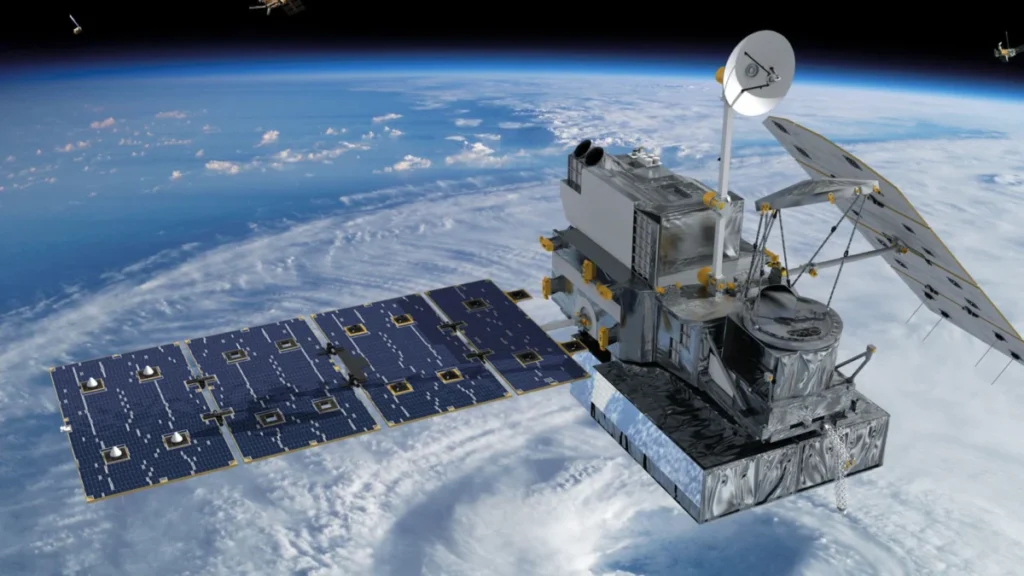
A groundbreaking custom chip design utilizing Static Random-Access Memory (SRAM) is poised to drastically reduce the computing power required for future space telescopes, potentially by nearly 59 times. This monumental efficiency leap could fundamentally transform humanity’s quest to image Earth-like exoplanets orbiting distant stars, bringing the ambitious goals of missions like NASA’s proposed Habitable Worlds Observatory (HWO) closer to reality. Researchers at the University of Michigan have engineered two innovative memory-centric chip architectures specifically tailored to address the immense real-time data processing demands of advanced space telescopes. Their most robust design, centered on SRAM technology, offers the promise of slashing computing power consumption from an estimated 3,000 watts typical of conventional GPU-based systems to a mere 51 watts.
This dramatic reduction in power consumption carries profound implications for space exploration. In the unforgiving environment of space, every watt saved translates directly into smaller, lighter, and less complex supporting systems. Reduced power needs mean smaller solar panels, lighter batteries, and less extensive cooling apparatus, all of which contribute to a significant decrease in the overall mass of a spacecraft. Given the exorbitant costs associated with launching mass into space, such efficiencies could yield savings of hundreds of millions of dollars over the lifespan of a mission, alongside expanding the scientific capabilities previously deemed impractical.
The Exoplanet Imperative and the Habitable Worlds Observatory
Humanity’s search for life beyond Earth has intensified dramatically over the past two decades, fueled by the discovery of thousands of exoplanets. The ultimate goal is to identify and characterize Earth-like planets within the habitable zones of their stars, where conditions might permit liquid water and, consequently, life as we know it. This ambitious endeavor necessitates instruments of unprecedented precision and power, capable of directly imaging these faint worlds obscured by the overwhelming glare of their host stars.
NASA’s proposed Habitable Worlds Observatory stands as a testament to this scientific imperative. Envisioned as a flagship mission, HWO is designed to revolutionize exoplanet science by directly imaging exoplanets and analyzing their atmospheres for biosignatures—chemical indicators of life. To achieve this, HWO would employ advanced techniques such as coronagraphy, which precisely blocks out starlight, and sophisticated adaptive optics systems. These systems continuously measure and correct tiny optical distortions caused by the telescope’s own mirrors or temperature fluctuations, ensuring that the star’s light is perfectly nullified, allowing the much fainter planet to become visible.
The challenge, however, is formidable. Direct imaging requires processing vast quantities of data in real-time to maintain the delicate balance needed for starlight suppression. Any minute jitter or thermal distortion must be immediately compensated for, demanding continuous, high-throughput computation. Current space-hardened processors, primarily designed for reliability in harsh radiation environments, often lag significantly behind terrestrial counterparts in terms of raw computational power and efficiency, making the HWO’s real-time processing requirements a critical bottleneck.
Overcoming the Data Movement Bottleneck: A New Computing Paradigm
The core problem, as identified by the University of Michigan researchers, is not merely a lack of raw computing power. Instead, a more fundamental limitation lies in the energy consumed by moving data between separate memory units and processing units—a phenomenon often referred to as the "memory wall" or "data movement bottleneck." In conventional computing architectures, processors fetch data from memory, perform calculations, and then store results back in memory. This constant back-and-forth data transfer, especially for iterative and data-intensive tasks like adaptive optics correction, consumes a disproportionate amount of energy, often overshadowing the energy spent on the actual computations themselves.
"The key insight of our research is that future space missions don’t just need more computing power; they need the right kind of computing power. For these workloads, the bottleneck is moving data, not doing calculations," explained Nathaniel Bleier, an assistant professor of computer science and engineering at U-M and co-corresponding author of the study. This understanding underscores a critical shift in design philosophy: from simply making processors faster to making the entire computational system more efficient by minimizing energy-intensive data transfers.
In space applications, where every milliwatt counts and thermal dissipation is a major design constraint, mitigating the data movement bottleneck becomes paramount. Traditional General-Purpose Graphics Processing Units (GPGPUs), while powerful for parallel processing on Earth, are often too power-hungry and complex for direct translation to space environments, especially when considering the added requirements for radiation hardening and extreme reliability.
University of Michigan’s Innovative Architectures: SRAM at the Forefront
To address this critical bottleneck, the University of Michigan team developed two distinct memory-centric chip architectures. The first design explored the use of 27 high-bandwidth memory (HBM) chips, each constructed from a stack of 16 Dynamic Random-Access Memory (DRAM) chips, all connected to a custom processor. HBM offers significantly higher bandwidth than traditional DRAM, reducing the time and energy spent moving data between the processor and memory. While a step in the right direction, this approach still relied on a more conventional separation of processing and memory.
The second and ultimately more performant design took a fundamentally different approach. This architecture distributes both processing capabilities and data storage across 56 custom chiplets. Each of these chiplets incorporates approximately 2 GB of distributed SRAM, strategically placing memory and computing resources much closer together. This "in-memory computing" or "near-memory computing" paradigm dramatically reduces the need to repeatedly shuttle data back and forth to a centralized processor. Instead, computations can occur directly within or very close to where the data resides, thus circumventing the energy-intensive data movement bottleneck.
SRAM, while generally less dense than DRAM (meaning it stores less data per unit area), offers significant advantages in speed and lower static power consumption for certain access patterns. Crucially, its inherent architecture allows for faster random access and lower power per access than DRAM, making it ideal for applications where data needs to be accessed frequently and quickly, such as the real-time feedback loops in adaptive optics. The distributed nature of the SRAM chiplets further enhances this efficiency, creating a highly parallel and localized processing environment perfectly suited for the complex, iterative calculations required by future space telescopes.
Technical Deep Dive: Achieving Unprecedented Efficiency
The researchers rigorously simulated their innovative chip designs using Synopsys Design Compiler, an industry-standard tool for evaluating power consumption, performance, and physical size of integrated circuits. Beyond standard performance metrics, they also subjected their designs to extensive testing for resilience against radiation-induced errors—a critical consideration for any space-bound hardware. This involved running 10,000 simulations where cosmic radiation was modeled to flip binary values during calculations, demonstrating the robustness of their approach in a realistic space environment.
Initially, the SRAM-based design demonstrated a significant power reduction, bringing the demand down to 90 watts. However, the team pushed the boundaries further by incorporating a sophisticated mathematical technique to reduce the precision of certain data points. This technique, often involving fixed-point arithmetic or reduced bit-width representations, allows for a compromise between absolute numerical precision and computational efficiency. Crucially, the researchers achieved this without compromising the system’s ability to detect dangerous computational errors, a vital safeguard for mission-critical operations. This optimization further reduced the power requirement to an astonishing 51 watts.
To put this into perspective, the 51-watt requirement is approximately 59 times lower than the 3,000-watt GPU-based setup used as a benchmark in the study. While 3,000 watts might seem high for a space system, high-performance computing clusters on Earth can easily exceed this, and even terrestrial GPUs can draw hundreds of watts. The challenge in space is not just the peak power but the sustained power consumption over years, which directly dictates the size and complexity of the spacecraft’s power and thermal management systems. For comparison, a typical scientific instrument on a deep-space probe might consume tens to a few hundred watts, making a 51W processing core for such a demanding task truly revolutionary.
Transformative Impact on Spacecraft Design and Mission Costs
The profound reduction in power consumption directly translates into a cascade of benefits for spacecraft design and mission economics. Lower power demands mean the spacecraft can be outfitted with significantly smaller and lighter solar panels, which are a substantial component of any deep-space mission’s mass. Similarly, the battery systems required for operations during eclipses or peak power demands can be scaled down. Perhaps most critically, the need for extensive and heavy cooling systems, which are essential for dissipating heat generated by electronics, is drastically reduced.
The researchers estimate that this reduction in computational power could cut the total spacecraft mass from roughly 2,425 pounds (1,100 kg) to a mere 425 pounds (193 kg). This represents an astonishing mass reduction of approximately 82%. To understand the financial implications, it’s crucial to consider launch costs. Launching payloads into space is incredibly expensive, with costs often quoted in thousands to tens of thousands of dollars per kilogram, depending on the destination (e.g., Low Earth Orbit vs. Geostationary Transfer Orbit vs. deep space). A reduction of nearly 900 kg (2,000 lbs) is not just significant; it’s transformative.
Using established aerospace calculations, the team estimates that such a substantial reduction in spacecraft weight could translate into savings of approximately $430 million over a 25-year mission. These savings could free up vital resources, allowing for more ambitious scientific payloads, increased mission redundancy, or simply making previously unaffordable missions feasible. "We want computing to expand what space science can achieve, not set the limit. By designing hardware around the workloads, we can make the real-time processing required by future missions practical," stated Barry Lyu, a doctoral student of electrical and computer engineering at U-M and co-corresponding author of the study. This sentiment underscores the philosophy behind the research: computing should be an enabler, not a constraint, for humanity’s grandest scientific aspirations.
The Broader Landscape of Space-Hardened Computing
For decades, space-hardened computing has been a niche field, prioritizing extreme reliability and radiation tolerance over raw performance. Processors like the RAD750, based on PowerPC architecture, or LEON series, based on SPARC, have been workhorses for countless missions. While incredibly robust, these processors operate at clock speeds far below modern commercial chips and are designed for general-purpose command and control, not for the massive, parallel, real-time data processing required by next-generation scientific instruments.
The advent of missions like HWO, which demand sophisticated adaptive optics, complex image reconstruction, and potentially on-board artificial intelligence/machine learning for autonomous decision-making, has exposed a growing gap between available space-qualified hardware and future mission requirements. This University of Michigan research represents a significant step in bridging that gap by focusing on application-specific, memory-centric designs that are inherently more efficient for the types of workloads prevalent in advanced scientific payloads.
The choice of SRAM over DRAM for the most efficient design is also noteworthy in the context of space. While DRAM offers higher density, making it cheaper per bit for large memories, SRAM is generally more resistant to single-event upsets (SEUs) caused by radiation, making it inherently more robust for critical applications in space. Furthermore, the ability to integrate processing logic directly into or adjacent to the SRAM cells allows for novel computational paradigms that can sidestep traditional radiation mitigation strategies like error-correcting codes, which themselves introduce latency and power overheads.
Looking Ahead: From Simulation to Silicon
The promising results from these extensive simulations mark a crucial milestone, but the journey from conceptual design to space-qualified hardware is a long and meticulous one. The immediate next step for the University of Michigan team is to move beyond simulation and into physical realization. They plan to manufacture the SRAM chiplets and subject them to rigorous laboratory testing. This phase will involve verifying the chiplets’ performance, power consumption, and radiation tolerance in real-world conditions, providing invaluable data to refine the design further.
The successful fabrication and testing of these chiplets could pave the way for their eventual integration into prototypes for future space telescopes. Given the multi-decade timelines for flagship missions like HWO, such a breakthrough, if matured, could be incorporated into mission planning within the next decade or two. The long lead times for space-qualified hardware mean that innovations like this must begin far in advance of a mission’s launch date.
Ultimately, this research signifies a fundamental shift in how we approach computational hardware for extreme environments. By meticulously tailoring architectures to the specific demands of scientific workloads and prioritizing energy efficiency through memory-centric design, the University of Michigan team has unveiled a pathway to dramatically enhance the capabilities of future space telescopes. This innovation promises to accelerate humanity’s profound quest to discover and characterize Earth-like planets, bringing us closer than ever to answering the age-old question: Are we alone?