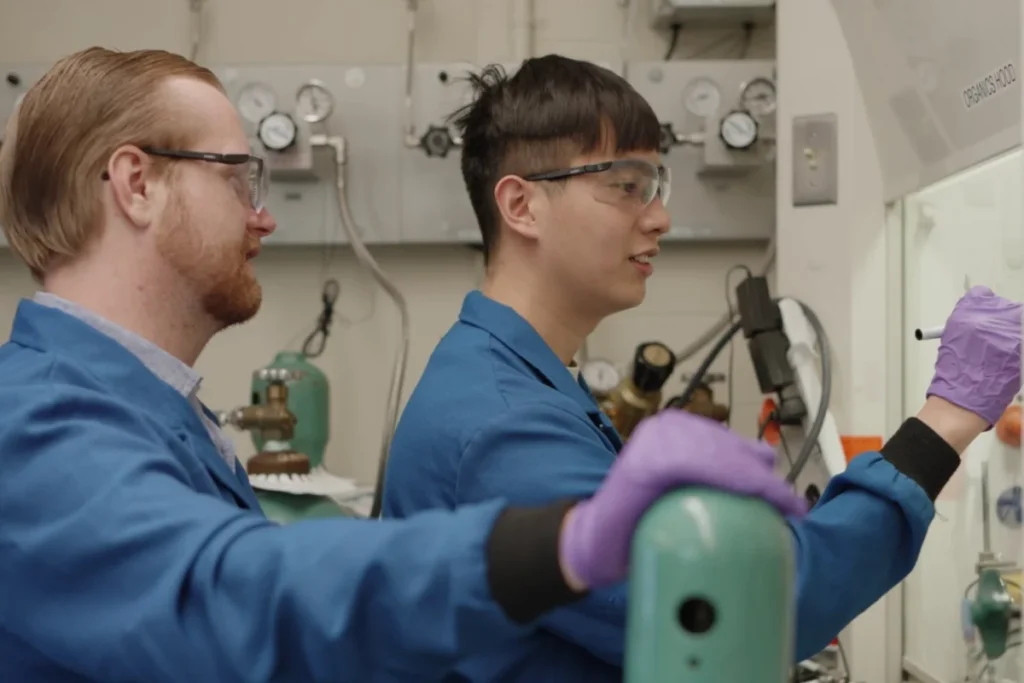
In a significant stride towards addressing the global climate crisis, a team of researchers from the Massachusetts Institute of Technology (MIT), with crucial backing from the MIT Climate and Sustainability Consortium (MCSC), has unveiled a promising new approach to carbon dioxide (CO2) capture. This innovative method, detailed in a recent article published in Nature Energy, explores electrochemically mediated CO2 capture (EMCC) using a novel class of sorbents, N-heterocyclic imines (NHIs), offering a potentially energy-efficient and highly scalable alternative to the prevailing, energy-intensive conventional methods. This breakthrough could be instrumental in overcoming the significant technological and economic barriers that have historically hampered widespread carbon capture and utilization efforts.
The Urgent Imperative for Carbon Capture and Storage
The escalating urgency of climate change, primarily driven by anthropogenic greenhouse gas emissions, mandates a multi-pronged approach to mitigation. Global CO2 emissions from fossil fuels and industry reached approximately 36.8 billion tonnes in 2023, a level that continues to push the planet towards critical warming thresholds. Achieving the ambitious targets set by the Paris Agreement – limiting global warming to well below 2 degrees Celsius above pre-industrial levels, preferably to 1.5 degrees Celsius – necessitates not only drastic reductions in emissions but also the active removal of CO2 from the atmosphere and industrial point sources.
Carbon capture, utilization, and storage (CCUS) technologies are widely recognized by international bodies like the Intergovernmental Panel on Climate Change (IPCC) and the International Energy Agency (IEA) as indispensable tools in the decarbonization toolkit. They are particularly crucial for hard-to-abate sectors such as heavy industry (cement, steel, chemicals) and power generation, where direct electrification or fuel switching may not be immediately feasible or economically viable. However, the current state of CCUS deployment falls far short of what is required. As of late 2023, there were approximately 42 commercial-scale CCUS facilities operating globally, with a combined capture capacity of roughly 49 million tonnes of CO2 per year. While this represents growth, it is a mere fraction of the billions of tonnes that need to be captured annually to meet net-zero targets by mid-century.
The Limitations of Conventional Methods: The Amine Scrubbing Challenge
For decades, the standard-bearer for CO2 capture has been amine scrubbing, a mature chemical absorption technology. In this process, CO2-laden flue gas passes through a liquid solvent, typically an aqueous solution of amines, which chemically reacts with and absorbs the CO2. The CO2-rich solvent is then heated to high temperatures (typically 100-150°C) to release the captured CO2, regenerating the amine solution for reuse. While effective, this regeneration step is notoriously energy-intensive, often consuming 30-40% of the energy output of the power plant or industrial facility it is attached to. This significant energy penalty translates directly into higher operational costs, often ranging from $30 to over $100 per tonne of CO2 captured, depending on the concentration of CO2 in the source gas and the specific amine used.
Beyond the energy and cost implications, amine scrubbing presents other challenges:
- Degradation: Amine solvents can degrade over time due to reactions with oxygen and other impurities in the flue gas, leading to the formation of corrosive byproducts and necessitating solvent make-up.
- Corrosion: The solvents and their degradation products can be corrosive to equipment, requiring expensive materials.
- Scaling Difficulties: The large physical footprint of amine scrubbing units and the sheer volume of solvent required pose significant hurdles for large-scale deployment across diverse industrial settings.
- Environmental Concerns: While designed to capture CO2, some amine-based systems can lead to the emission of volatile organic compounds (VOCs) and other air pollutants.
These limitations have significantly constrained the widespread adoption of amine scrubbing, despite its technical maturity, underscoring the critical need for next-generation carbon capture technologies that are more energy-efficient, cost-effective, and scalable.
A Chronology of Carbon Capture Innovation
The concept of carbon capture is not new. Early forms of CO2 removal date back to the 1930s with industrial applications in natural gas processing. However, the focus on CO2 capture as a climate mitigation strategy gained significant traction in the late 1980s and early 1990s as scientific consensus on anthropogenic climate change solidified.
- 1970s-1980s: Initial research primarily focused on enhanced oil recovery (EOR) where CO2 was injected into oil reservoirs to boost production, incidentally storing some of the gas underground.
- 1990s: The first dedicated large-scale industrial CO2 capture projects began to emerge, often utilizing amine scrubbing, such as the Sleipner West gas field in Norway, which started injecting CO2 offshore in 1996.
- 2000s: A period of increased R&D investment, spurred by growing environmental concerns and international protocols like Kyoto. Various pilot projects demonstrated capture from power plants, but commercial deployment remained limited due to high costs.
- 2010s: Continued focus on improving amine technology, alongside exploration of advanced materials and alternative processes like membrane separation, solid sorbents, and electrochemical methods. Initiatives like the U.S. Department of Energy’s Carbon Capture Program and the European Union’s NER300 program aimed to accelerate deployment.
- Late 2010s – Present: A growing recognition of the role of direct air capture (DAC) and a surge in interest in electrification of industrial processes, including CO2 separation, to leverage renewable energy sources. This period saw increased funding for novel, low-energy capture mechanisms.
It is within this evolving landscape of innovation that the MIT researchers’ work on EMCC with NHIs emerges as a significant advancement, directly addressing the energy intensity and scalability issues that have plagued previous generations of carbon capture technology.
The MIT Breakthrough: Electrochemically Mediated CO2 Capture (EMCC) with NHIs
The MIT team, comprising graduate students Fang-Yu Kuo of the Department of Chemical Engineering and Gi Hyun Byun of the Department of Mechanical Engineering (MechE), alongside Professor Betar Gallant of MechE and former MCSC postdoctoral Impact Fellows Glen Junor and Akachukwu Obi, has focused on electrochemically mediated CO2 capture (EMCC). This approach offers the tantalizing prospect of electrifying CO2 separation, allowing the process to be powered by renewable electricity sources such as solar or wind, thereby significantly reducing its carbon footprint and potentially its operational costs.
The core principle of EMCC involves using an electrical current to drive the reversible binding and release of CO2 by a sorbent material. The challenge with existing EMCC systems, however, lies in their reliance on sorbents that require highly reducing potentials to operate. This often leads to undesirable side reactions, particularly oxygen reduction, which can severely compromise both the efficiency and the long-term performance of the system. These parasitic reactions consume energy without contributing to CO2 capture, making the overall process less viable.
To overcome this critical shortcoming, the MIT team investigated N-heterocyclic imines (NHIs) as a novel class of EMCC sorbent. As Fang-Yu Kuo explains, "NHIs have shown promise in recent years as CO2 sorbents because of the ease of NHI molecular modifications for tuning basicity." The team’s work marks the first translation of these NHIs into the EMCC application space. Their key discovery is that "NHI-based sorbents can be modulated electrochemically for CO2 separation by a unique separation mechanism that avoids the need of applying highly reducing potentials." This distinct mechanism is central to the breakthrough, as it minimizes the detrimental oxygen reduction side reactions, paving the way for significantly improved efficiency and operational longevity.
The initial research has successfully established a novel bis(NHI) structure. This specific molecular design holds the potential to enable a theoretical CO2 modulation of two molecules per electron during cell operation. This "two molecules per electron" characteristic is a critical metric for efficiency, indicating how effectively the electrical energy is utilized for CO2 binding and release. Achieving this level of modulation could translate into substantially lower energy consumption compared to conventional methods.
Furthermore, the initial published results suggest that with continued molecular engineering to strengthen the CO2 binding affinity of bis(NHI) structures, the technology could operate effectively in a wider range of electrolyte environments. This expanded operational flexibility is crucial for practical deployment, allowing for optimization of system performance across several key parameters: electron efficiency (how many CO2 molecules per electron), energy efficiency (overall energy input per tonne of CO2), and operational flexibility (adaptability to varying CO2 concentrations and operating conditions).
Future Directions and Broader Implications
While the initial findings are highly encouraging, the research team acknowledges that further work is necessary. "A critical future direction of our work involves gaining deeper mechanistic insight into the stability and degradation pathways of the bis(NHI) radical cation," says Kuo. Understanding these pathways is paramount for the rational design of next-generation bis(NHI) molecules, ensuring longer operational lifetimes and enhanced cycling durability – attributes essential for the practical, commercial deployment of any carbon capture technology. This involves detailed studies into the chemical and electrochemical resilience of the materials under continuous operation, identifying potential failure modes, and engineering solutions to mitigate them.
The implications of this research are far-reaching across environmental, economic, and technological landscapes:
Environmental Impact:
- Accelerated Decarbonization: If scaled, this technology could significantly reduce CO2 emissions from hard-to-abate industrial sectors and power plants, contributing substantially to global net-zero targets.
- Reduced Energy Footprint: By leveraging renewable electricity, the carbon capture process itself becomes much cleaner, avoiding the paradox of energy-intensive capture methods generating their own emissions.
Economic Impact:
- Cost Reduction: The potential for lower energy consumption and increased efficiency could drive down the per-tonne cost of CO2 capture, making it more economically viable for industries to adopt. Current estimates for advanced capture technologies aim for costs below $30/tonne, and this research moves towards that goal.
- New Industries and Jobs: The development and deployment of EMCC technologies would foster new industries in advanced materials, electrochemical engineering, and carbon utilization, creating skilled jobs.
- Circular Carbon Economy: Reduced capture costs would also make carbon utilization more attractive, enabling the conversion of captured CO2 into valuable products like fuels, chemicals, and building materials, thereby establishing a more robust circular carbon economy.
Technological Advancement:
- Materials Science Innovation: This research drives innovation in the design of advanced sorbent materials, pushing the boundaries of electrochemistry and surface science.
- Modular and Scalable Systems: Electrochemical systems often lend themselves to modular design, meaning they can be scaled up or down more easily to fit various emission sources, from large industrial facilities to smaller, distributed applications. This flexibility is a significant advantage over bulk chemical processes.
- Integration with Renewables: The inherent electrical nature of EMCC makes it highly compatible with intermittent renewable energy sources, allowing for demand-side management and optimal energy utilization.
Policy and Regulatory Landscape:
- Incentivizing R&D: The success of such fundamental research underscores the importance of continued public and private investment in climate tech R&D, like that provided by the MCSC.
- Shaping Future Policies: Demonstrating more efficient and affordable capture methods could influence policy frameworks, leading to stronger mandates or incentives for carbon capture adoption.
The scientific community is likely to welcome such a novel and promising approach, recognizing the critical need for diverse solutions in the carbon capture arena. Industry stakeholders, particularly those in energy-intensive sectors, would closely watch the continued development, anticipating a technology that could offer a viable pathway to meet increasingly stringent emissions regulations without compromising economic competitiveness. The potential for a flexible, energy-efficient, and scalable carbon capture solution represents a significant step forward in the collective global effort to mitigate climate change and transition to a sustainable future. The work by the MIT team, published in Nature Energy, underscores the power of fundamental research in unlocking solutions to humanity’s most pressing challenges.






