The manufacturing sector is witnessing a significant shift in the production of ultra-hard materials as researchers from Hiroshima University and Mitsubishi Materials Hardmetal Corporation successfully demonstrate a novel additive manufacturing (AM) process for tungsten carbide-cobalt (WC-Co) cemented carbides. This breakthrough, detailed in the International Journal of Refractory Metals and Hard Materials, addresses the long-standing challenges of high production costs, material waste, and the inherent difficulty of shaping one of the world’s most durable industrial materials. By utilizing a specialized hot-wire laser irradiation technique, the team has managed to 3D print these "industrial teeth" with a hardness exceeding 1400 HV, a feat that preserves the material’s integrity while allowing for unprecedented design flexibility.
The Critical Role of Tungsten Carbide in Modern Industry
Tungsten carbide-cobalt, often referred to as cemented carbide or simply "hardmetal," occupies a vital niche in the global industrial landscape. Known for its exceptional hardness, which rivals that of sapphire, and its remarkable resistance to heat and wear, WC-Co is the material of choice for the most demanding applications. It is the primary component in high-speed cutting tools, deep-sea drilling bits, mining equipment, and high-precision machining components.
The material’s unique properties stem from its composite nature. Tungsten carbide particles provide the extreme hardness and compression resistance, while a cobalt binder acts as a metallic "glue" that provides toughness and prevents the brittle carbide from fracturing under impact. This combination allows tools to maintain a sharp edge even when subjected to the intense friction and heat generated during the machining of aerospace-grade titanium or hardened steel.
However, the very properties that make WC-Co valuable also make it notoriously difficult to process. Traditional manufacturing relies on powder metallurgy, a multi-step process involving the mixing of fine powders, high-pressure compression into a "green body," and subsequent liquid-phase sintering at temperatures often exceeding 1,400 degrees Celsius. While effective, this process is rigid; creating complex geometries often requires expensive custom molds or extensive post-process grinding, which is both time-consuming and wasteful. Given the rising costs of tungsten and the geopolitical volatility surrounding cobalt—a critical mineral largely sourced from the Democratic Republic of the Congo—reducing material waste has become an economic and strategic imperative for the tool-making industry.
Evolution of Manufacturing: From Sintering to Additive Deposition
The transition toward additive manufacturing for hardmetals represents a major chronological leap in metallurgical science. For decades, the industry was confined to "subtractive" or "formative" methods. In the 1920s, when WC-Co was first developed by Osram in Germany, the focus was purely on achieving structural density through sintering. By the late 20th century, improvements in hot isostatic pressing (HIP) allowed for more consistent quality, but the fundamental limitation remained: the material had to be shaped early in the process, and any deviations resulted in significant scrap.
The research conducted by Assistant Professor Keita Marumoto and his team at Hiroshima University’s Graduate School of Advanced Science and Engineering introduces a "directed energy deposition" (DED) approach, specifically hot-wire laser irradiation. Unlike Selective Laser Melting (SLM), which uses a bed of powder, this method uses a preheated filler wire. This evolution in the timeline of carbide manufacturing is significant because it allows for the localized application of the material. Instead of making an entire tool out of expensive carbide, manufacturers can now print the hardmetal only on the specific cutting edge or wear surface of a cheaper steel substrate.
The Mechanics of Hot-Wire Laser Irradiation
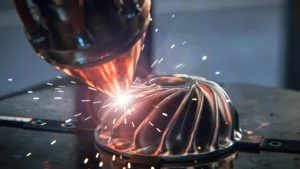
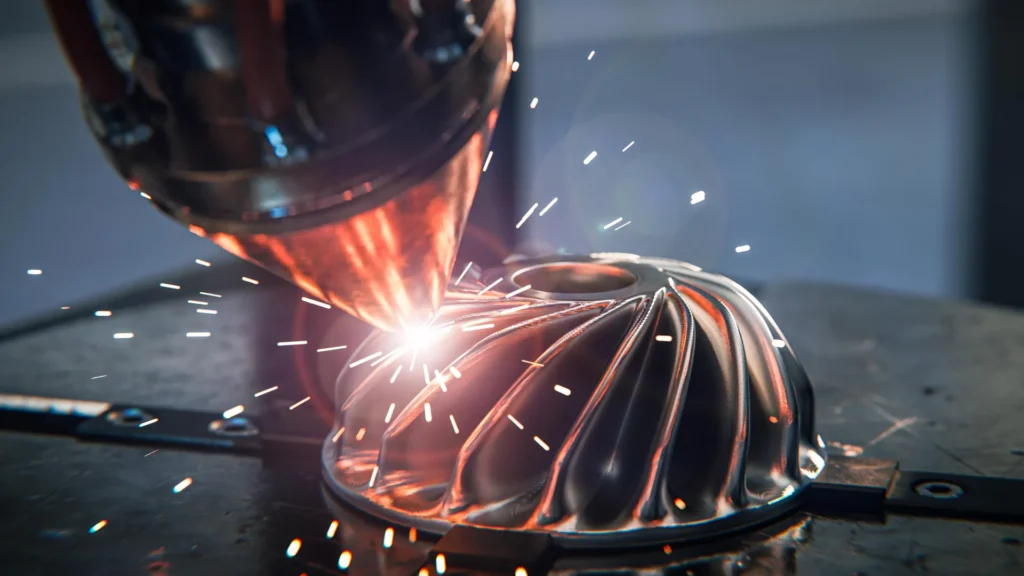
The core of the Hiroshima team’s innovation lies in the precision control of thermal energy. In their experiments, the researchers utilized a laser beam in tandem with a filler wire that was preheated by an electric current. This dual-heating mechanism—hot-wire laser irradiation—offers several advantages over conventional laser-cladding techniques. By preheating the wire to near its melting point before it even enters the laser’s path, the process requires significantly less laser energy to achieve deposition. This not only speeds up the "deposition rate" (the volume of material added per minute) but also reduces the thermal shock to the base material.
The researchers tested two distinct fabrication arrangements to determine the optimal metallurgical outcome:
- The Rod-Leading Method: The laser was directed onto the top of a cemented carbide rod, with the rod positioned ahead of the direction of travel.
- The Laser-Leading Method: The laser preceded the filler material, irradiating the interface between the carbide rod and the iron base material.
A critical discovery made during these tests was the importance of "softening" versus "melting." In traditional 3D printing of metals, the goal is often to fully melt the material to ensure a homogenous bond. However, tungsten carbide is sensitive to overheating. If the temperature exceeds a certain threshold, the tungsten carbide can decompose into W2C (ditungsten carbide) or dissolve into the cobalt binder, leading to "grain growth." Larger grains result in a softer, less durable material. The Hiroshima team’s method focused on softening the material just enough to facilitate a bond, thereby preserving the fine-grained microstructure that gives the material its 1400 HV hardness.
Technical Data and Experimental Results
The success of the study was measured against the Vickers hardness (HV) scale, a standard industrial metric for material resistance. The researchers aimed for a target hardness above 1400 HV, which is the benchmark for high-quality industrial cemented carbide.
The results revealed a nuanced relationship between the fabrication arrangement and the final material quality. In the rod-leading arrangement, the team observed that the tungsten carbide tended to decompose near the upper layers of the structure. This decomposition created microscopic defects and "eta phases"—brittle carbon-deficient compounds that can lead to premature tool failure.
Conversely, the laser-leading method showed more promise in maintaining structural integrity, though it initially faced challenges with consistent hardness. To solve this, the researchers introduced a nickel-alloy-based middle layer between the iron substrate and the WC-Co deposit. This buffer layer served to mitigate the migration of iron into the carbide and managed the thermal expansion differences between the two materials, effectively preventing cracks.
By meticulously controlling the temperature to stay above the melting point of the cobalt binder (approx. 1,495°C) but below the point of rapid WC grain growth, the team achieved a defect-free structure. The final manufactured components exhibited a uniform distribution of WC particles within the cobalt matrix, successfully hitting the >1400 HV hardness target without the brittleness associated with conventional laser welding.
Perspectives from the Research Team and Industry
The implications of this research are being closely watched by industrial tool manufacturers. Assistant Professor Keita Marumoto emphasized the economic necessity of this shift. "Cemented carbides are made from very expensive raw materials such as tungsten and cobalt, making reduction of material usage highly desirable," Marumoto stated. He noted that the ability to deposit these materials only where they are functionally required could fundamentally change the cost-benefit analysis for complex industrial components.
The collaboration with Mitsubishi Materials Hardmetal Corporation suggests a clear path toward commercialization. Industry analysts suggest that if this process can be scaled, it would allow for the "re-manufacturing" of worn-out tools. Instead of discarding a large drill bit once the tip is worn, a robotic AM system could grind away the damaged portion and "print" a new carbide tip directly onto the old shank, a process that would align with global sustainability goals and circular economy principles.
Broader Impact and Future Outlook
The successful 3D printing of WC-Co via hot-wire laser irradiation has the potential to ripple across several sectors:
- Aerospace and Defense: The ability to create complex, lightweight cooling channels inside ultra-hard cutting tools could allow for faster machining of jet engine components, where heat management is the primary bottleneck.
- Mining and Energy: Drill bits with customized carbide gradients—harder on the outside and tougher on the inside—could be manufactured without the need for complex multi-stage pressing.
- Economic Resilience: By reducing the total volume of tungsten and cobalt required for a single tool, manufacturers can better insulate themselves from the price volatility of these critical raw materials.
Despite the success, the research team acknowledges that hurdles remain. The current study focused on relatively straightforward geometries. The next phase of research will focus on "path planning" for more complex, three-dimensional shapes and further refining the cooling rates to eliminate any residual micro-cracking.
"The approach of forming metal materials by softening them rather than fully melting them is novel," Marumoto concluded. "It has the potential to be applied not only to cemented carbides but also to other difficult-to-weld materials."
As the manufacturing world moves toward "Industry 4.0," the integration of high-performance materials like tungsten carbide into the additive manufacturing ecosystem marks a pivotal moment. The Hiroshima University study provides the blueprint for a future where the world’s toughest tools are not just forged in massive furnaces, but precisely grown, layer by layer, with minimal waste and maximum efficiency.