The study of Earth’s atmosphere has long been the domain of government agencies and multi-billion-dollar satellite programs, yet a growing movement of citizen scientists is proving that high-precision atmospheric data can be gathered from a backyard. Central to this movement is the construction and deployment of the twilight photometer, a specialized instrument designed to measure the vertical distribution and altitude of the ozone layer. By utilizing ultra-high-gain amplification and specific wavelength detection, amateur researchers can now track the Chappuis absorption band of ozone, providing localized data that rivals the accuracy of professional orbital sensors.
The ozone layer, situated primarily in the lower stratosphere, serves as the planet’s primary shield against harmful ultraviolet (UV) radiation. While its density is highest between 20 and 30 kilometers above the Earth’s surface, this "layer" is dynamic, shifting in response to seasonal changes, solar activity, and chemical fluctuations. Measuring its height and thickness is critical for understanding climate patterns and the efficacy of international environmental treaties. The project detailed here provides a sophisticated methodology for building a scientific-grade photometer capable of detecting these subtle atmospheric signals during the transition from day to night.

Technical Foundations: The Chappuis Absorption Band
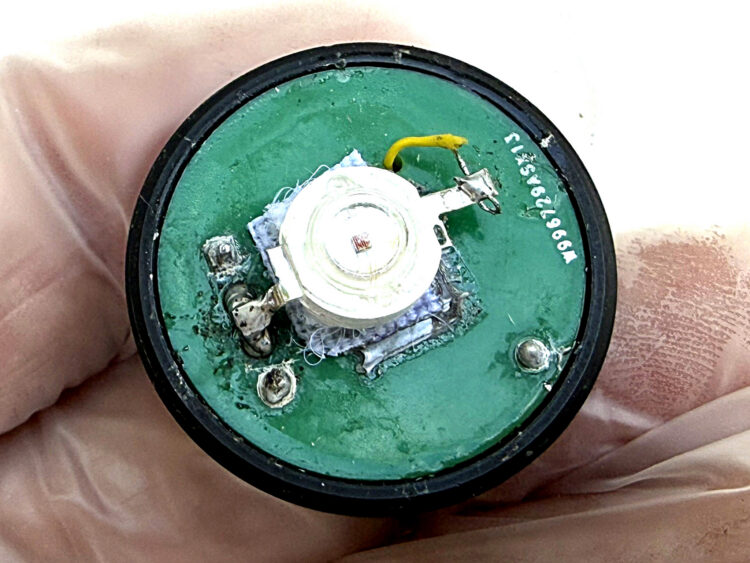
The principle behind the twilight photometer relies on the Chappuis band, a region of the electromagnetic spectrum where ozone absorbs light, primarily in the visible range between 400 and 700 nanometers, with a peak near 600 nanometers. By using a 620nm red LED as a sensor—functioning in photodiode mode—the instrument can detect the specific attenuation of sunlight as it passes through the ozone layer at a tangent during twilight.
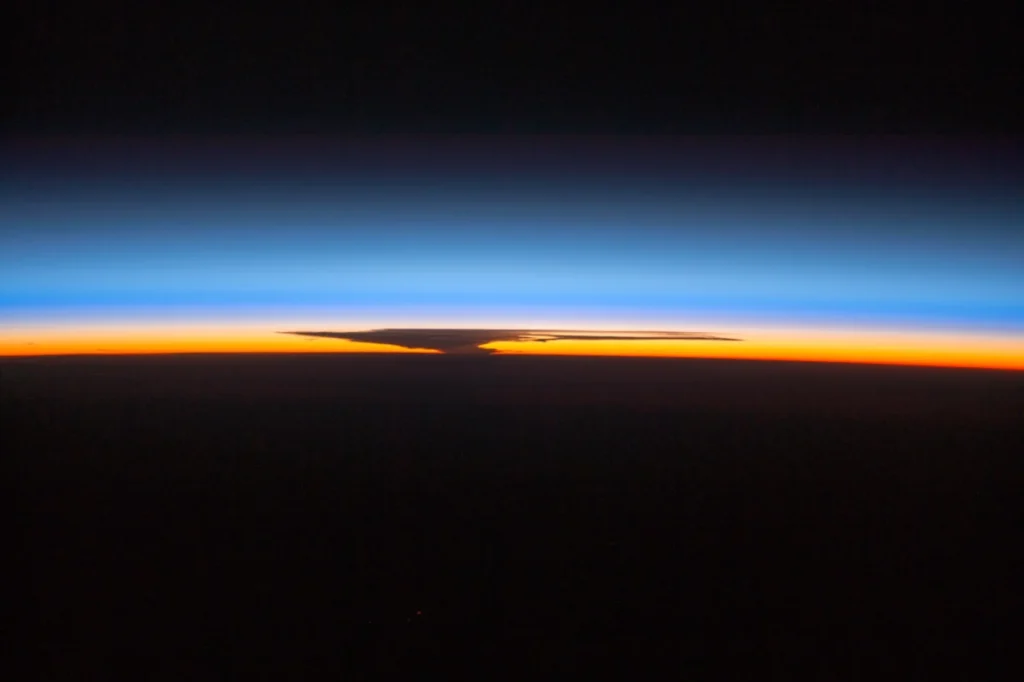
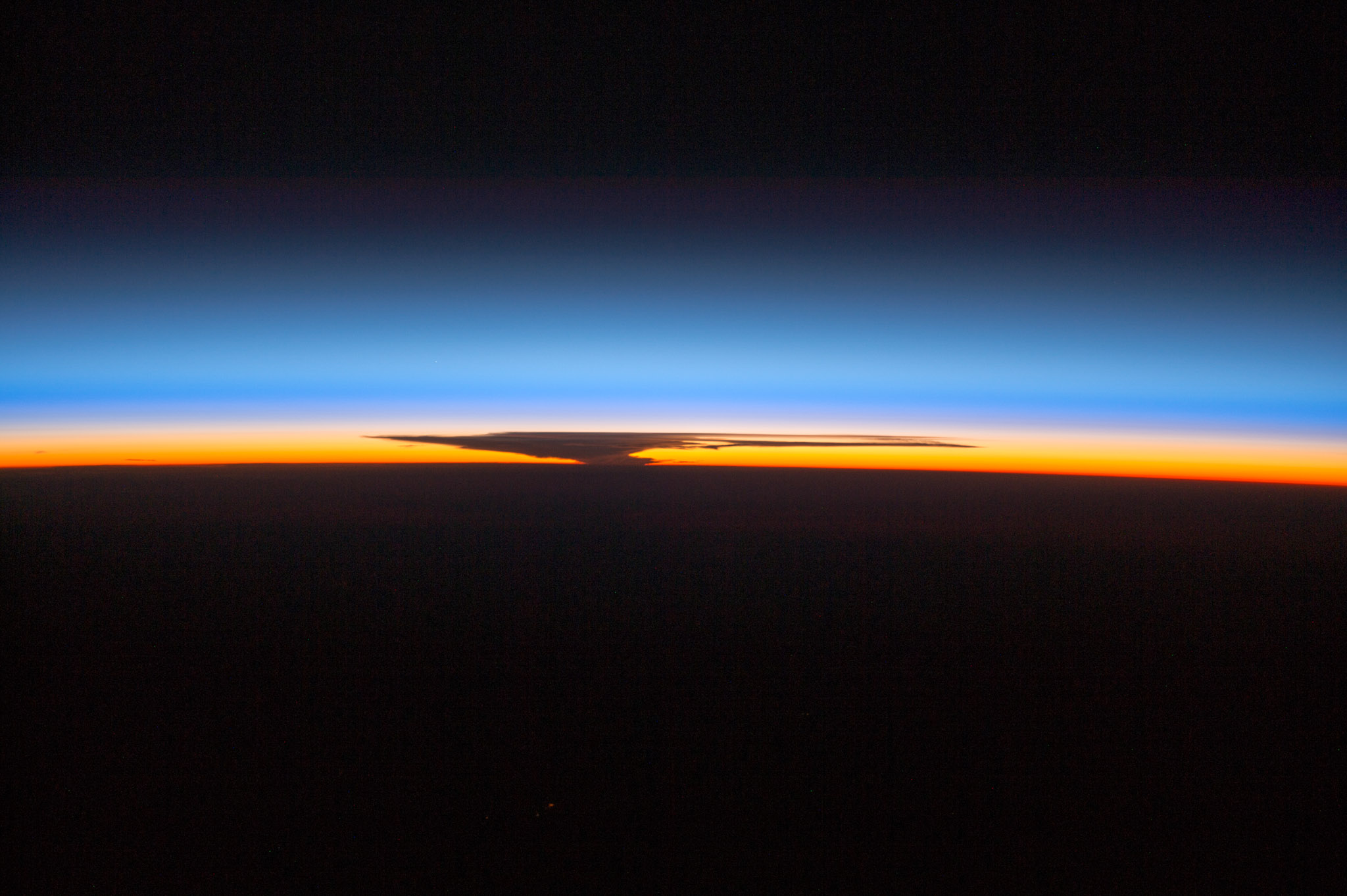
As the sun sinks below the horizon, the Earth’s shadow rises through the atmosphere. The photometer, pointed at the zenith (the point directly overhead), measures the intensity of the light scattered from the upper atmosphere. When the shadow passes through the ozone layer, the rate of change in light intensity shifts predictably. By correlating the timing of these shifts with the known geometry of the Earth’s shadow, researchers can calculate the exact altitude of the ozone concentration.
Chronology of Construction and Assembly
The assembly of a twilight photometer is a process that demands the precision of a laboratory environment. Because the instrument must measure currents in the femtoampere range (one-quadrillionth of an ampere), even a single fingerprint or a microscopic dust mote can create a "leakage path" that ruins the data.
The process begins with an intensive decontamination phase. The circuit board must be thoroughly scrubbed with high-purity isopropyl alcohol and dried with filtered compressed air. This "clean room" approach continues throughout the assembly, with the technician required to wear disposable vinyl gloves to prevent skin oils from contacting the components.
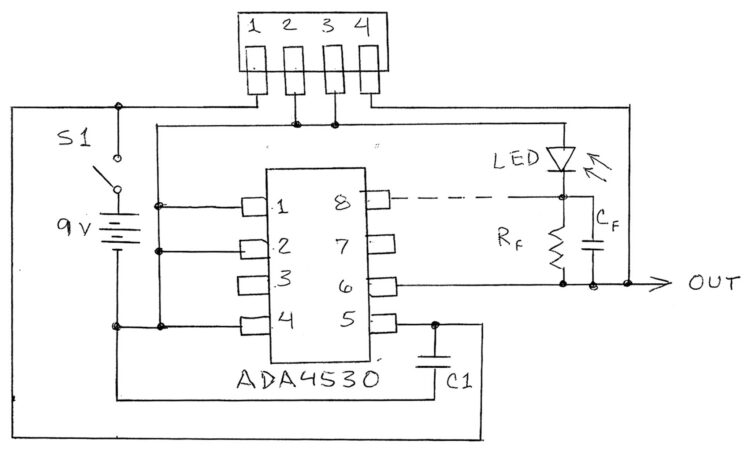
The heart of the device is the ADA4530-1, an electrometer-grade operational amplifier. This component is chosen for its exceptionally low input bias current. During assembly, a specific technical maneuver is required: pin 8, the input pin, must be bent away from the board to prevent it from touching the fiberglass substrate, which could introduce electrical noise. This "air-wiring" technique ensures that the signal from the LED sensor remains pure.
Following the mounting of the amplifier, a feedback network consisting of a 5-gigohm (GΩ) or 10-gigohm resistor is installed. This massive resistance is what allows the device to amplify the incredibly faint signals produced by the twilight sky. The optical stage involves mounting the sensor inside a series of threaded tubes—often sourced from precision optical suppliers like Thorlabs—to ensure that only light from a narrow field of view reaches the detector. A high-quality glass lens is then used to focus the zenith glow onto the LED.
Data Acquisition and Field Implementation
Once the hardware is finalized, the instrument is housed in a light-tight, weather-resistant enclosure, typically a shielded metal box to minimize electromagnetic interference. The output of the photometer is fed into a 16-bit data logger, such as those manufactured by Onset, which records the voltage fluctuations at high resolution.
Field operations occur in the "twilight window"—the period starting approximately ten minutes before sunset and lasting for at least an hour. During this time, the sun’s rays travel through an increasingly long path of the atmosphere, exaggerating the absorption effects of the ozone.
Data processing involves plotting the logarithm of the light intensity against the solar depression angle. The resulting "twilight curve" reveals distinct features. A primary peak or "bulge" in the data indicates the altitude where ozone absorption is most intense. In recent field trials conducted by atmospheric researchers, this method produced an average ozone peak height of 25.13 kilometers. When compared to NASA’s satellite-derived averages for the same coordinates, which cited a height of 25 kilometers, the amateur-built instrument demonstrated a variance of less than one percent.

Supporting Data and Comparative Analysis
The reliability of amateur twilight photometry is supported by decades of comparative studies. Historically, ozone was measured using Dobson Spectrophotometers, large and expensive ground-based units that measure the difference between two UV wavelengths. While Dobson units provide the total "column" of ozone, they do not easily provide the altitude of the layer.
The twilight photometer fills this gap. Recent data sets have highlighted the instrument’s sensitivity not only to ozone but also to stratospheric aerosols. Following major volcanic eruptions or large-scale forest fires, the photometer can detect the "Junge Layer," a collection of sulfate aerosols located near 20 kilometers. By utilizing simultaneous measurements at different wavelengths—such as 620nm for ozone and 885nm for aerosols—researchers can decouple these two atmospheric components, leading to a clearer picture of stratospheric health.
| Parameter | Amateur Photometer | NASA Satellite (OMI/MLS) |
|---|---|---|
| Spectral Range | 620nm (Visible) | UV/Microwave |
| Altitude Accuracy | +/- 1.5 km | +/- 1.0 km |
| Cost to Deploy | ~$300 – $500 | $Millions |
| Temporal Resolution | Daily (Twice) | Orbital Pass Dependent |
The Role of Citizen Science Networks
The proliferation of these instruments has been championed by figures such as Forrest Mims III, whose work with NASA’s GLOBE (Global Learning and Observations to Benefit the Environment) program helped standardize amateur atmospheric measurements. The consensus among the scientific community is that while satellite data provides essential global coverage, ground-based amateur networks offer "ground truth" verification and high-frequency local monitoring that satellites sometimes miss due to orbital constraints or cloud cover.

Official responses from atmospheric scientists emphasize the value of this "distributed sensing." By having hundreds of photometers across different latitudes, the scientific community can track the migration of the ozone layer in real-time, observing how it thins over the poles or thickens over the tropics in response to global weather systems like the Quasi-Biennial Oscillation (QBO).
Broader Impact and Environmental Implications
The ability for individuals to measure the ozone layer has profound implications for environmental transparency and education. In the wake of the Montreal Protocol, which phased out ozone-depleting substances like CFCs, the recovery of the ozone layer has been hailed as a major success story of international policy. However, recent reports of illegal CFC emissions in various parts of the globe have underscored the need for vigilant monitoring.
A decentralized network of amateur scientists acts as a secondary watchdog. If localized ozone thinning is detected by a cluster of ground-based photometers, it can trigger more intensive investigations by state agencies. Furthermore, this project bridges the gap between theoretical physics and practical application, allowing students and hobbyists to engage with the mechanics of climate change directly.
As the technology for ultra-low-current amplification becomes more accessible and affordable, the potential for high-precision citizen science continues to expand. The twilight photometer stands as a testament to the fact that with a steady hand, a clean workspace, and a fundamental understanding of atmospheric optics, the mysteries of the stratosphere are within reach of anyone with a passion for discovery. The future of environmental monitoring may well lie not just in the stars, but in the hands of dedicated observers on the ground.