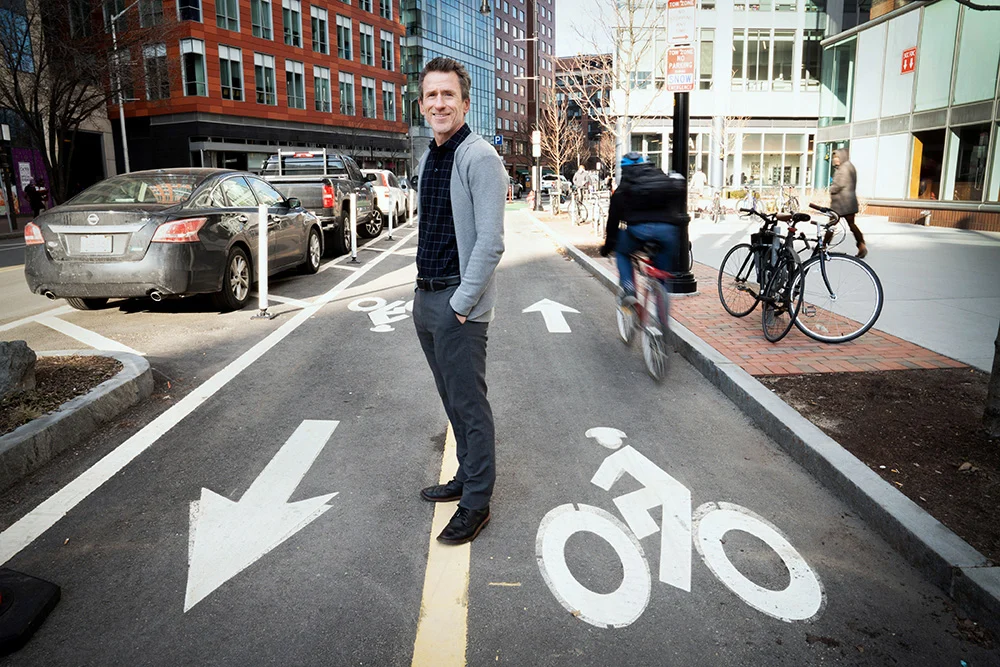
Chris Zegras, a distinguished professor of mobility and urban planning and the current head of the MIT Department of Urban Studies and Planning (DUSP), has been appointed the new chief executive officer and director of the Singapore-MIT Alliance for Research and Technology (SMART), effective September 1. This significant leadership transition marks a new chapter for SMART, an institution dedicated to fostering cutting-edge research and innovation through a unique international collaboration. Zegras succeeds Professor Bruce Tidor, a renowned figure in biological engineering and computer science, who has capably served as interim CEO and director since January 2025.
A Legacy of Innovation and Collaboration
Established in 2007 through a strategic partnership with the National Research Foundation of Singapore, SMART stands as MIT’s sole research center situated outside the United States. Its strategic location within the vibrant Campus for Research Excellence and Technological Enterprise (CREATE) in Singapore underscores its role as a pivotal nexus for collaborative endeavors between MIT and Singapore’s dynamic research ecosystem. SMART actively cultivates an environment where leading experts and institutions from the United States, Singapore, and the broader Asian region converge to pursue world-class research and drive transformative innovation. The alliance’s establishment was a deliberate effort to bridge geographical boundaries and intellectual disciplines, fostering a global outlook on addressing complex scientific and societal challenges.
The announcement of Professor Zegras’s appointment was made by Anantha Chandrakasan, MIT’s Provost, in a formal letter to the MIT community on [Date of original announcement, if available. If not, use a placeholder like "a recent communication"]. Chandrakasan expressed strong confidence in Zegras’s leadership, stating, "Professor Zegras brings a distinguished track record of interdisciplinary leadership and a deep understanding of SMART’s mission and impact." She further emphasized the significance of his appointment, noting, "His appointment reinforces MIT’s commitment to the alliance, which has advanced innovation and driven global impact, and which remains as important as ever in a time of accelerating technological and global change." This endorsement highlights Zegras’s perceived readiness to steer SMART through an era characterized by rapid technological advancements and interconnected global challenges.
Zegras’s Expertise and Deep Roots in SMART
Professor Zegras’s academic journey at MIT began in 2005, and he has since established himself as a leading voice in urban planning and mobility. His tenure as head of DUSP, commencing in 2020, has been marked by a commitment to interdisciplinary approaches and forward-thinking research. His scholarly work critically examines the intricate challenges of metropolitan mobility, with a particular focus on leveraging advanced computational technologies. These technologies are instrumental in understanding and modeling complex human behaviors and in enhancing strategic planning capabilities for urban environments. This specialized knowledge is directly applicable to SMART’s mission of addressing pressing global issues through research.
Zegras’s connection to SMART is not new; he has a long-standing and impactful history with the institution. He has previously led significant collaborative research initiatives, most notably focusing on next-generation mobility sensing and simulation systems. From 2010 to 2020, he served as a principal investigator within the Future Urban Mobility interdisciplinary research group, a cornerstone of SMART’s early work. His leadership intensified from 2016 to 2020 when he assumed the role of lead principal investigator for this group. Under his guidance, the Future Urban Mobility group achieved several groundbreaking milestones. These included spearheading Singapore’s inaugural public autonomous vehicle trials, a pioneering effort that contributed significantly to the understanding and implementation of self-driving technology in urban settings. Furthermore, the group developed and deployed sophisticated large-scale urban simulation and visualization systems, tools that have been invaluable for urban planning and policy development. The impact of this research extended beyond academia, with several research outcomes evolving into successful spinoff companies, demonstrating SMART’s commitment to translating research into tangible economic and societal benefits.
Reflecting on his new role, Zegras expressed his enthusiasm and vision for SMART’s future. "Bringing together leading experts from the U.S., Singapore, and around the world, SMART has established itself as a unique hub for interdisciplinary collaboration and innovation that addresses pressing societal issues," he stated. "Having experienced firsthand what this distinctive model can achieve, I look forward to building on this strong foundation to deepen collaboration, strengthen our innovation ecosystem, and accelerate the translation of research into meaningful real-world impact." His remarks underscore a commitment to building upon SMART’s existing strengths while actively pursuing new avenues for growth and impact.
SMART’s Structure and Research Focus
The operational framework of SMART is built around a series of highly interdisciplinary research groups, each under the leadership of senior MIT faculty members. This structure ensures a high level of academic rigor and a direct connection to MIT’s world-renowned research capabilities. Currently, SMART hosts six distinct research groups, each tackling critical areas of global concern:
- Antimicrobial Resistance: This group focuses on understanding and combating the growing threat of antibiotic-resistant bacteria, a major public health challenge worldwide. Their research likely involves developing novel therapeutic strategies, diagnostic tools, and preventative measures.
- Personalized Medicine with Living Cells: Dedicated to advancing the frontiers of healthcare, this group explores the use of living cells as personalized medicines. The aim is to develop tailored treatments and preventative strategies for diseases, leveraging the body’s own biological mechanisms.
- Social and Institutional Challenges of AI and Emerging Technologies: In recognition of the profound societal shifts brought about by artificial intelligence and other emerging technologies, this group examines the complex social, ethical, and institutional implications. Their work aims to foster responsible development and deployment of these transformative technologies.
- New Agricultural Technologies: Addressing the critical need for sustainable and efficient food production, this group investigates and develops innovative agricultural technologies. This could encompass areas like precision agriculture, climate-resilient crops, and sustainable farming practices.
- Wafer-Scale 3D Sensing Technologies: This research group is at the forefront of developing advanced sensing capabilities. Their focus on wafer-scale 3D sensing promises breakthroughs in areas ranging from industrial automation and robotics to medical imaging and environmental monitoring.
- Wearable Ultrasound Imaging: This group is pioneering the development of wearable ultrasound devices, aiming to bring advanced medical imaging capabilities to a broader range of applications. This could revolutionize diagnostics, remote patient monitoring, and even consumer health technologies.
Beyond these research groups, SMART also houses the SMART Innovation Centre. This vital component of the alliance is specifically designed to bridge the gap between groundbreaking research and market application. The Innovation Centre plays a crucial role in nurturing nascent research ideas, facilitating their journey from the laboratory benchtop to commercial viability, and ultimately, to widespread societal impact. This integrated approach, combining fundamental research with a dedicated focus on innovation and commercialization, is a hallmark of the SMART model.
Supporting Data and Context
The establishment of SMART in 2007 was part of a broader strategic initiative by both MIT and Singapore to foster a global research network and enhance scientific and technological capabilities. Singapore, in particular, has made significant investments in research and development, aiming to become a leading innovation hub in Asia. The CREATE campus, where SMART is located, exemplifies this commitment, housing a cluster of world-class research centers from various international institutions.
The significance of SMART’s work can be further appreciated by examining the global challenges it aims to address. For instance, the World Health Organization (WHO) has declared antimicrobial resistance a "global health and development threat." The economic impact of this threat alone is estimated to be billions of dollars annually in healthcare costs and lost productivity. Similarly, the rapid advancements in AI and emerging technologies, while promising, also present complex societal questions related to employment, privacy, and equity, underscoring the importance of the research conducted by SMART’s social and institutional challenges group.
Furthermore, the success of research translation is a key metric for such alliances. While specific figures for SMART spinoff companies and their market valuations are not readily available in the original announcement, the mention of such ventures indicates a tangible return on investment in terms of economic growth and job creation. The Future Urban Mobility group’s work on autonomous vehicles, for example, aligns with global trends towards smart cities and sustainable transportation, areas where significant investment and innovation are occurring. Singapore’s own vision for a "Smart Nation" provides a fertile ground for testing and deploying such advanced mobility solutions.
Broader Implications and Future Outlook
Professor Zegras’s appointment as CEO and Director of SMART is poised to have several significant implications. His background in urban planning and mobility, coupled with his extensive experience in interdisciplinary research leadership and his direct involvement with SMART’s Future Urban Mobility program, positions him to further enhance the alliance’s impact in these critical areas. Given the increasing urbanization worldwide and the urgent need for sustainable and efficient urban systems, Zegras’s expertise is particularly relevant.
His emphasis on deepening collaboration and strengthening the innovation ecosystem suggests a strategic focus on fostering stronger ties between researchers, industry partners, and government agencies. This approach is crucial for accelerating the translation of research findings into practical solutions that address societal needs. The ongoing advancements in areas such as AI, biotechnology, and sustainable technologies present both opportunities and challenges, and Zegras’s leadership will be instrumental in navigating this complex landscape.
The continuity provided by his long-standing relationship with SMART, combined with his fresh perspective as its new leader, suggests a trajectory of sustained growth and influence. As global challenges become increasingly interconnected, international research collaborations like SMART, and the leaders who guide them, will play an even more critical role in shaping a sustainable and prosperous future. The alliance’s ability to bring together diverse perspectives and expertise from across continents makes it a vital platform for tackling the most pressing issues of our time. Professor Zegras’s tenure is likely to be characterized by a continued commitment to excellence, innovation, and impactful global collaboration.