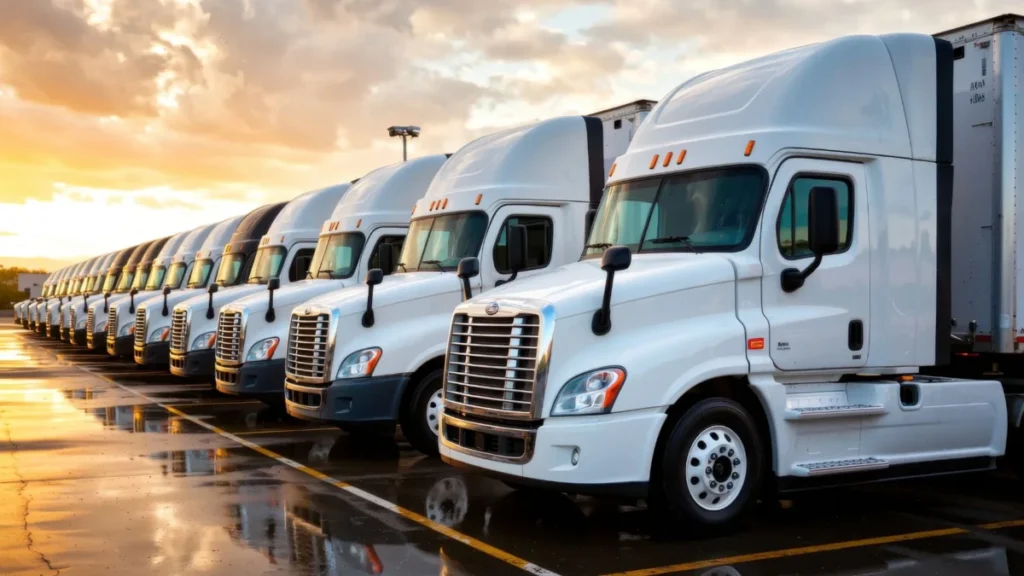
Commercial fleet operators are poised to experience a significant simplification in their transition from traditional diesel to natural gas, circumventing the substantial capital investment typically required for permanent fueling stations. A pioneering managed mobile compressed natural gas (CNG) fueling service is set to revolutionize fleet operations by delivering fuel directly to depot locations, enabling on-site refueling and eliminating the prohibitive costs and extensive timelines associated with constructing fixed infrastructure. This innovative approach promises to democratize access to natural gas as a transportation fuel, making it a viable option for a broader spectrum of commercial logistics.
This groundbreaking service is being launched in conjunction with a state-of-the-art CNG supply hub strategically located in Houston, Texas. This facility is designed to serve as the operational backbone for customers throughout the expansive Gulf Coast region, a critical corridor for industrial and commercial activity. Demonstrating immediate market confidence, the Houston hub has already secured a two-year agreement to supply approximately 100 Class 8 natural gas trucks for a prominent global logistics company. This substantial pre-contracted demand ensures a robust operational start for the site, which is slated to commence operations in the third quarter of 2026. This development marks a pivotal moment in the evolution of alternative fuel infrastructure, offering a flexible and scalable solution to one of the most persistent challenges in fleet decarbonization.
The Paradigm Shift: On-Demand Fleet Fueling
The core innovation of this new service lies in its departure from the conventional fueling station model. Instead of requiring fleets to travel to fixed points for refueling, the provider manages the entire supply chain, delivering both CNG and renewable natural gas (RNG) directly to customer facilities. This "station-free" approach liberates fleet operators from the prerequisite of pipeline access or the installation of permanent, expensive fueling equipment. The service provider assumes comprehensive responsibility for gas sourcing, compression, transportation, secure storage, and efficient dispensing, all integrated into a single, seamless service package.
This managed mobile fueling model is specifically tailored to address the needs of fleets operating a minimum of 10 natural gas trucks or those actively planning conversions of a similar scale. A key advantage for operators is the inherent scalability of the fueling capacity, allowing them to expand as additional natural gas vehicles are integrated into their service without necessitating significant upfront infrastructure investments. This flexibility is particularly attractive for businesses that wish to pilot natural gas adoption or gradually transition their fleets over time, mitigating financial risk and operational complexity.
For many years, the absence of accessible and affordable fueling infrastructure has stood as one of the most formidable obstacles to the widespread adoption of natural gas vehicles within commercial fleets. Industry executives involved in this initiative believe that by bringing the fuel directly to fleet yards, this long-standing barrier can be effectively dismantled. Dan Messina, Vice President of Growth and Strategy, articulated this sentiment, stating, "Fleet operators increasingly seek the operating economics of natural gas trucks, but access to fueling can be a barrier to adoption." He further emphasized that the mobile service empowers fleets to adopt natural gas vehicles "faster and with greater flexibility," underscoring the strategic intent to accelerate the transition to cleaner fuels. This direct-to-depot model is expected to unlock new segments of the market that were previously hesitant due to the infrastructure hurdle.
Strategic Significance of the Houston Hub
The new Houston supply hub is not merely a regional facility; it represents the foundational cornerstone of this innovative fueling program. While initially focused on supporting the anchor client’s 100-truck logistics fleet, its capabilities extend far beyond. The hub is poised to become a vital supplier of natural gas to a diverse array of industrial customers, critical utilities, various transportation operators, large-scale energy infrastructure projects, and data centers spread across the entire Gulf Coast. This multifaceted utility highlights Houston’s strategic importance.
Dale Winger, President of the company spearheading this initiative, affirmed Houston’s crucial role, citing its escalating energy demand and burgeoning customer base. He noted that the new hub will not only enhance service levels for existing clientele but also forge new opportunities to penetrate industries that exhibit a consistent need for dependable mobile gas delivery solutions. The demand for natural gas has demonstrably increased across sectors where traditional pipeline connections are either limited, nonexistent, or where the requirement for temporary, flexible supply solutions is paramount. Mobile delivery addresses this directly, granting customers immediate access to fuel without the protracted waiting periods and significant capital outlays typically associated with new pipeline infrastructure development. This provides an agile response to dynamic energy needs, a critical factor in today’s rapidly evolving industrial landscape.
The Economic and Environmental Imperative for Natural Gas
The introduction of this mobile fueling service is anticipated to yield substantial benefits for fleets, encompassing significant reductions in diesel consumption, lower operating costs, and enhanced operational efficiency. By enabling on-site refueling, the service minimizes driver downtime, as vehicles no longer need to deviate from their routes to access public fueling stations. This elimination of off-route trips directly translates into improved route efficiency for commercial trucking operations, contributing to faster delivery times and reduced labor costs.
From an economic perspective, natural gas consistently offers a more stable and often lower price point compared to diesel. Over the long term, this can translate into substantial fuel cost savings, particularly for high-mileage heavy-duty fleets. Beyond direct fuel savings, the reduced wear and tear on vehicles from avoiding frequent stops and starts at public stations, coupled with optimized route planning, further contributes to a lower total cost of ownership. Industry data indicates that natural gas prices have historically exhibited less volatility than diesel, providing greater budget predictability for fleet managers. According to reports from the U.S. Energy Information Administration (EIA), natural gas prices have remained relatively competitive, offering a compelling economic argument for conversion.
Environmentally, the transition from diesel to natural gas, particularly renewable natural gas (RNG), offers profound benefits. Natural gas vehicles (NGVs) produce significantly lower emissions of nitrogen oxides (NOx), particulate matter (PM), and greenhouse gases (GHG) compared to their diesel counterparts. While conventional natural gas reduces GHG emissions by approximately 15-25% on a well-to-wheel basis compared to diesel, the adoption of RNG dramatically amplifies this environmental advantage. RNG, which is chemically identical to conventional natural gas but is derived from the decomposition of organic waste materials (such as landfill gas, agricultural waste, or wastewater treatment plants), can achieve carbon intensity reductions of 50-100% or even more, making it a carbon-negative fuel in some applications. This makes RNG a powerful tool in achieving ambitious sustainability targets and complying with increasingly stringent environmental regulations. The California Air Resources Board (CARB), for instance, has demonstrated that RNG can have a negative carbon intensity score under its Low Carbon Fuel Standard (LCFS) program, highlighting its superior environmental profile.
Market Dynamics and the NGV Landscape
The heavy-duty trucking sector is under increasing pressure to decarbonize, driven by regulatory mandates, corporate sustainability goals, and consumer demand for greener supply chains. Despite the clear economic and environmental advantages, the adoption rate of NGVs has been hampered by several factors. The initial capital outlay for natural gas trucks, while decreasing, is still higher than comparable diesel models. However, the most significant impediment has consistently been the lack of a ubiquitous and accessible fueling infrastructure. Many fleets operate on fixed routes or within specific geographic areas, making a mobile, on-demand fueling solution particularly appealing.
According to the North American Council for Freight Efficiency (NACFE), while the total number of natural gas trucks on North American roads remains a fraction of the diesel fleet, interest and adoption are growing steadily, especially in refuse, transit, and regional haul applications where fixed routes and return-to-base operations are common. This new mobile fueling service is directly targeted at these segments, and also aims to open up the long-haul sector by offering fueling flexibility. The global market for natural gas vehicles is projected to grow substantially in the coming decade, with heavy-duty trucks forming a significant component of this expansion. Solutions that reduce infrastructure friction are critical to realizing these growth projections.
The company’s platform leverages an extensive existing North American network, which includes what it describes as the continent’s largest fleet of CNG transport trailers, advanced portable compression equipment, integrated gas supply assets, and proprietary pressure reduction systems. This robust infrastructure provides the necessary backbone to ensure reliable and scalable mobile fueling services. Furthermore, in a testament to its commitment and to gain invaluable practical insights, the company is actively converting its own tractor fleet to natural gas. This hands-on operational experience with the same vehicle platforms used by commercial customers is crucial. This practical knowledge will undoubtedly help refine the mobile fueling model, ensuring it meets the real-world demands and challenges faced by heavy-duty fleets as they evaluate alternatives to diesel across the United States and Canada. This internal conversion program acts as a living laboratory, allowing for continuous improvement of the service offering.
Broader Implications for the Logistics Sector
The advent of managed mobile CNG/RNG fueling represents a potential paradigm shift for the logistics and transportation sector. It significantly lowers the entry barrier for fleets contemplating a switch from diesel, thereby accelerating the overall pace of decarbonization within commercial transportation. By decoupling fueling infrastructure from land ownership and fixed capital, this model offers unprecedented flexibility. Smaller fleets, which often lack the financial muscle or geographical footprint to invest in their own fueling stations, can now realistically consider natural gas vehicles. Fleets operating in more remote locations, or those serving temporary project sites, will also find this solution particularly beneficial, as it brings the fuel to them, rather than requiring expensive and time-consuming detours.
This model could also foster greater competition and innovation within the alternative fuels market. As mobile fueling becomes more prevalent, it may encourage other providers to develop similar flexible solutions, ultimately benefiting fleet operators with more choices and potentially lower costs. Furthermore, by improving access to cleaner fuels, this service contributes directly to air quality improvements in urban and regional areas, reducing the health impacts associated with diesel emissions. It also bolsters energy independence by diversifying the fuel mix for transportation.
Challenges and Future Outlook
While highly promising, the expansion of mobile fueling services is not without potential challenges. Scalability to extremely large fleets operating hundreds or thousands of vehicles across vast geographies will require continuous innovation in logistics and supply chain management. Regulatory frameworks surrounding mobile fuel delivery, storage, and safety will also need to evolve and standardize across different jurisdictions to ensure smooth operations. Additionally, competition from other emerging alternative fuels, such as battery-electric vehicles (BEVs) and hydrogen fuel cell electric vehicles (FCEVs), will continue to shape the long-term energy landscape for heavy-duty trucking. Each alternative fuel has its own set of advantages and disadvantages concerning range, payload, refueling time, and infrastructure requirements.
However, natural gas, particularly RNG, is widely recognized as a viable and immediate solution for many heavy-duty applications, offering a compelling blend of proven technology, established engine platforms, and significant environmental benefits. The mobile fueling model enhances its competitiveness by solving the critical infrastructure problem. Looking ahead, it is plausible that this service will expand beyond the Gulf Coast, replicating its success in other key logistics hubs and industrial corridors across North America. As more fleets experience the operational and economic benefits, the demand for such flexible fueling solutions is expected to grow.
This development underscores a broader trend in the energy transition: the move towards more distributed, flexible, and customer-centric energy solutions. By eliminating the need for extensive fixed infrastructure, the mobile CNG/RNG fueling service represents a significant leap forward in making sustainable transportation more accessible, practical, and economically viable for the commercial trucking industry. It not only addresses immediate operational needs but also positions natural gas as a critical bridge fuel, and in the case of RNG, a sustainable long-term solution, in the ongoing global effort to decarbonize the transportation sector.