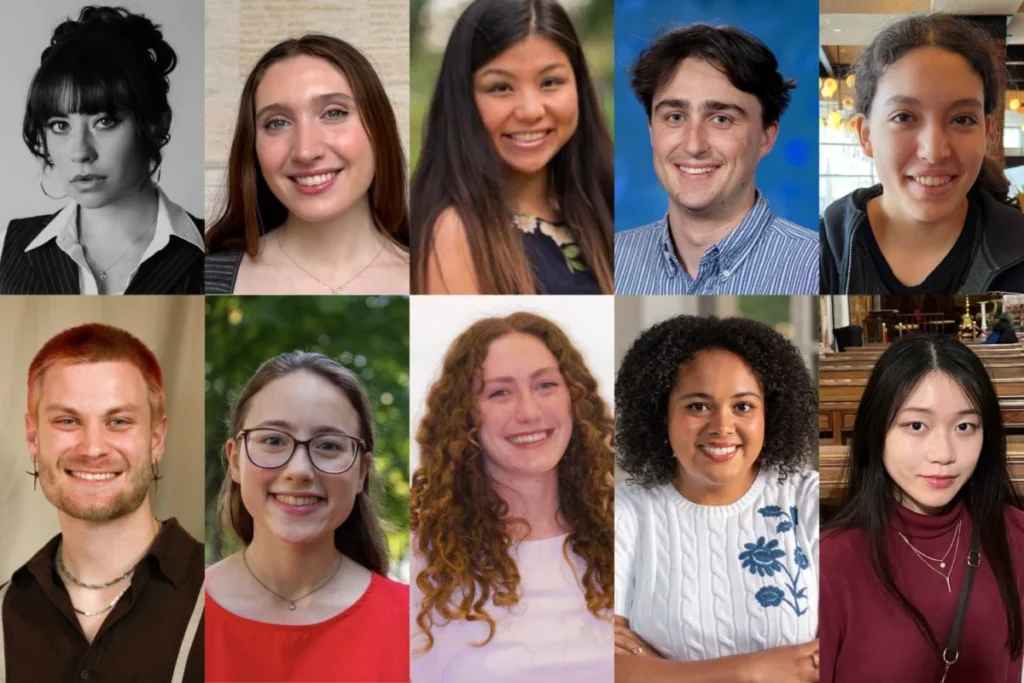
The Massachusetts Institute of Technology (MIT) has announced that 11 of its affiliates, including current undergraduates, graduate students, and alumni, have accepted prestigious Fulbright grants for the 2024-2025 academic year. These scholars will travel to diverse locations across the globe to conduct high-level research or provide English language instruction. This cohort represents a significant portion of the 17 MIT applicants who were offered awards this year out of a total of 30 applicants, marking a robust success rate of nearly 57 percent for the institution. While 11 have formally accepted, five other students declined their awards to pursue alternative academic or professional opportunities, and one student remains in the decision-making process.
The Fulbright U.S. Student Program is the flagship international educational exchange program sponsored by the U.S. government. Funded primarily through an annual appropriation by the U.S. Congress to the U.S. Department of State’s Bureau of Educational and Cultural Affairs, the program is designed to foster mutual understanding between the people of the United States and the people of other countries. For MIT, a university traditionally associated with rigorous technical and scientific output, the consistent success of its students in the Fulbright program underscores a growing institutional emphasis on global leadership, cross-cultural communication, and the humanistic application of STEM disciplines.
Institutional Success and the Fulbright Mission
In February 2024, the Fulbright Program officially recognized MIT as the nation’s No. 1 "Top Producing Institution" among special focus STEM universities. This distinction highlights MIT’s unique position in the academic landscape, where technical expertise is increasingly paired with international engagement. The university provides extensive support for applicants through the Distinguished Fellowships office within Career Advising and Professional Development (CAPD). Julia Mongo, the Fulbright program advisor at MIT, serves as a primary resource for students navigating the complex application process, which requires a compelling statement of grant purpose and a personal statement.
The Fulbright program offers various types of grants, including the Study/Research Award, which allows students to design their own projects and work with advisers at foreign universities or research institutes, and the English Teaching Assistant (ETA) Award, which places grantees in classrooms abroad to assist local English teachers while serving as cultural ambassadors. The 2024-2025 MIT cohort reflects a heavy lean toward research-based grants, particularly in fields such as biotechnology, artificial intelligence, robotics, and climate science.
Profiles of the 2024-2025 Fulbright Scholars
The diverse array of projects undertaken by this year’s recipients illustrates the breadth of MIT’s impact on global challenges. From the study of volcanic activity in Iceland to the ethics of AI in the Arctic, the scholars are poised to contribute significantly to their respective fields.
Science Communication and Public Engagement
Jessica Chomik-Morales (SM ’25), who earned her master’s in science writing at MIT, will spend her Fulbright year in Spain. Her work at Universitat Pompeu Fabra’s Center for Brain and Cognition in Barcelona will focus on the "science of science communication." Having previously spent three years as a post-baccalaureate cognitive neuroscience researcher at MIT, Chomik-Morales is uniquely positioned to investigate how narrative structures in science writing influence public trust and comprehension. As the creator of the Spanish-language neuroscience podcast “Mi Última Neurona,” her project seeks to make scientific discourse more inclusive and resonant across cultural boundaries.
Public Health and Biological Engineering
Stella Gassman, a graduate in biological engineering with a concentration in women’s and gender studies, will conduct microbiology research at the University of Copenhagen in Denmark. Her work focuses on the vaginal microbiome, a continuation of research she began at MIT and expanded through clinical trials in South Africa. By bridging the gap between laboratory samples and human context, Gassman aims to prepare for a career in medicine that integrates scientific discovery with direct patient impact.
In a similar vein of health-focused research, Claire Underwood will travel to Portugal. A senior in chemical-biological engineering, Underwood will join the University of Minho to study high-throughput fabrication techniques for cell-embedded microtissues. This research has vital applications in drug discovery and biomimetic systems. Underwood’s background in lipid nanoparticle drug delivery for cancer treatment at MIT provides a strong foundation for her upcoming work in Guimaraes.
Artificial Intelligence and Systems Science
Chen Li (SM ’25), a graduate of the System Design and Management program, has been awarded the Fulbright Iceland-NSF Arctic Research Award. Li’s project explores the intersection of generative AI and systems thinking to support the health and well-being of Arctic communities. Her previous experience includes developing AI tools for Parkinson’s patients and urban design platforms. Li’s work in Iceland will serve as a precursor to her planned PhD studies in information and systems science.
Josephine Wang, a computer science graduate, will head to Switzerland to work with the NeuroAI Lab at EPFL in Lausanne. Her research will investigate brain-inspired language models, specifically looking at how functional clusters within these models mimic cortical organization. This work is part of a broader effort to understand the computational foundations of human cognition and behavior.
Geophysics and Energy Resilience
Liam Moser, who is completing his PhD in geophysics through the MIT-WHOI Joint Program, has also received a Fulbright Iceland-NSF Arctic Research Award. Moser will conduct postdoctoral research at Reykjavík University, using earthquake recordings to analyze the structure of the Hengill volcano. His work is critical for understanding the dynamics of subduction zones and geothermal energy potential.
Bryan Sperry (’23), holding dual degrees in physics and mechanical engineering, will focus on climate resilience in Brazil. Working with the Cenergia Lab at the Federal University of Rio de Janeiro, Sperry will study urban power grids and pathways toward energy equity. His background in superconducting power transmission lines at the firm VEIR positions him to address the technical and social complexities of urban disaster preparedness.
Robotics and Advanced Manufacturing
Lilia Ould-Hammou, a mechanical engineering senior, is a recipient of the Fulbright U.S.-Korea Presidential STEM Initiative Award. She will conduct research at Seoul National University’s Wearable Robotics Laboratory, focusing on adaptive exosuit control for balance recovery. This initiative is part of a specialized track designed to foster technological collaboration between the U.S. and South Korea.
Sophie Thompson, a chemical engineering senior, will travel to Sweden to research the performance of recycled carbon fiber composites at the Swedish School of Textiles. Her project addresses the urgent need for sustainable materials in manufacturing. Thompson’s previous experience with prosthetic socket research and textile recycling startups underscores the environmental focus of her Fulbright mission.
Physics and Education
Sophie Vulpe, a senior in physics and mathematics, will work at the Extreme Light Infrastructure-Nuclear Physics (ELI-NP) institute in Romania. She will develop algorithms for a new monoenergetic gamma ray spectrometer, combining her technical skills with a personal connection to her Romanian heritage. Vulpe has been a prominent advocate for physics outreach and education during her time at MIT.
Global Education and Cultural Exchange
Alexandra Coston, graduating with a degree in architecture and design, will serve as an English Teaching Assistant in Senegal. Her placement highlights the Fulbright Program’s commitment to cultural exchange beyond the laboratory, allowing MIT graduates to apply their communication skills in diverse educational settings.
Timeline and Selection Process
The path to a Fulbright grant is a year-long endeavor. For the 2024-2025 cycle, the process began in the spring of 2023, when students first expressed interest and began drafting their proposals. Internal MIT deadlines in the early fall allowed for campus interviews and institutional endorsements. Following the national deadline in October, applications underwent a rigorous multi-stage review process by the Institute of International Education (IIE) and the National Screening Committees.
Semi-finalists were announced in early 2024, followed by final selections made by the Fulbright commissions in the host countries and the J. William Fulbright Foreign Scholarship Board. This timeline ensures that by the time students graduate in May or June, they are prepared for a late summer or fall departure.
Analysis of Global Implications
The selection of these 11 affiliates reflects broader trends in global research priorities. The heavy concentration on AI, climate resilience, and biotechnology suggests that the Fulbright Program is increasingly being used as a tool for "science diplomacy." By sending some of the brightest minds from MIT to countries like Iceland, Brazil, and South Korea, the U.S. government is fostering long-term collaborative networks that are essential for solving transnational problems.
Furthermore, the "Top Producing" status of MIT indicates that the gap between technical "hard" sciences and "soft" diplomatic skills is narrowing. MIT’s Fulbright scholars are not just researchers; they are ambassadors who bring a unique problem-solving ethos to their host communities. The inclusion of projects focused on science communication (Chomik-Morales) and urban planning (Sperry) demonstrates that MIT is producing graduates who understand that technical solutions are only effective when integrated into the social and cultural fabric of a society.
As these 11 individuals prepare to depart, their work will likely have lasting impacts on both their host institutions and their future careers in academia and industry. The Fulbright experience often serves as a transformative period that steers researchers toward more globally-conscious and collaborative methodologies, reinforcing MIT’s mission to advance knowledge and prepare students to tackle the world’s greatest challenges.