The realm of space exploration and scientific discovery is experiencing an unprecedented period of innovation, driven by breakthroughs in engineering, artificial intelligence, and international collaboration. From the resurgence of supersonic flight concepts to ambitious plans for lunar infrastructure and advanced planetary defense systems, humanity’s reach into the cosmos is expanding rapidly. These developments underscore space as a critical frontier for both profound scientific inquiry and complex engineering challenges, continually pushing the boundaries of what is possible.
Reshaping Terrestrial and Extraterrestrial Travel
The aspiration for faster-than-sound travel is witnessing a significant resurgence, promising to shrink global distances. The supersonic comeback is closer than it has been in decades, largely spearheaded by companies like Boom Supersonic. Blake Scholl, the CEO of Boom, has been a prominent advocate for overcoming the economic and environmental hurdles that grounded previous supersonic commercial jets like the Concorde. Modern efforts focus on quieter engine designs, more fuel-efficient aerodynamics, and advanced materials to mitigate the sonic boom and reduce operational costs, aiming for a new era of high-speed passenger and cargo transport that is both sustainable and commercially viable. This renewed interest is not merely nostalgic; it represents a strategic push to redefine global mobility, potentially connecting distant cities in a fraction of current travel times, opening new economic corridors and cultural exchanges.
In parallel, SpaceX continues to dominate headlines with its ambitious Starship program. The Starship’s most recent outing, Flight 13, successfully launched Starlink satellites and achieved its most successful splashdown yet, marking a crucial step forward in the development of a fully reusable, super heavy-lift launch system. Each test flight of Starship provides invaluable data, iteratively refining its design and operational procedures. This colossal rocket is envisioned as the primary vehicle for NASA’s Artemis program, aiming to return humans to the Moon, and ultimately, for establishing a permanent human presence on Mars. The ability to deploy large constellations of satellites like Starlink, coupled with the long-term goal of deep-space human missions, positions Starship as a pivotal technology for the next generation of space exploration, promising unprecedented payload capacity and cost-effectiveness. The successful splashdown demonstrates increasing control and reliability in atmospheric re-entry and landing, critical for its reusability mandate.
Complementing launch capabilities, in-orbit servicing is emerging as a vital component for sustainable space operations. SpaceX recently launched Northrop’s robotic spacecraft designed to extend the operational life of satellites without traditional refueling. This innovative technology enables existing satellites to remain functional longer, delaying costly replacement missions and reducing the accumulation of space debris. By providing essential services such as propulsion, maneuvering, and even repairs, these robotic servicers are transforming the economics of space asset management. This capability is particularly significant for high-value government and commercial satellites, ensuring continuity of critical services like communications, Earth observation, and national security intelligence, thereby enhancing the resilience and longevity of our orbital infrastructure.
Fortifying Earth’s Defenses and Navigational Systems
The security and reliability of space assets are becoming increasingly critical, spurring advancements in tracking and navigation. Rocket Lab’s next-gen "flatellites" are set to help the US Space Force track airborne threats. These highly compact, mass-producible satellites, often leveraging advanced miniaturization and AI, can be deployed in large numbers to create resilient and persistent surveillance networks. Their unique design and rapid deployment capabilities offer a significant advantage in monitoring vast swathes of airspace and tracking potential adversaries, providing real-time intelligence for defense applications. This represents a shift towards distributed, agile space architectures, moving away from reliance on a few large, vulnerable satellites.
Furthermore, ensuring robust navigation capabilities beyond the Global Positioning System (GPS) is a strategic imperative. The US has approved the world’s first private constellation to strengthen navigation, signaling a proactive approach to enhancing resilience against potential GPS disruptions. This private initiative aims to provide an independent, complementary navigation system, mitigating risks associated with reliance on a single, government-controlled infrastructure. Such diversification is crucial for critical sectors including transportation, finance, and emergency services, ensuring continuity even in the face of natural disasters, cyberattacks, or intentional jamming. The approval signifies a growing recognition of space as a commercial domain with significant private sector contributions to national security and civilian infrastructure.
Planetary defense against Earth-threatening asteroids is also seeing accelerated development. China has proposed a deep-impact nuclear strategy to deflect Earth-threatening asteroids, a concept that involves detonating a nuclear device near an asteroid to alter its trajectory. While highly controversial due to the implications of deploying nuclear weapons in space, this approach is considered for extremely large, short-notice threats where kinetic impactors might be insufficient. Concurrently, China prepares to hit an asteroid using a projectile with 26 times the speed of sound, demonstrating a kinetic impactor strategy similar to NASA’s DART mission. This test, if successful, would validate China’s capabilities in asteroid deflection, contributing to the global effort to protect Earth from cosmic impacts. The DART mission, which successfully impacted Dimorphos in September 2022, proved the viability of kinetic impactors, and China’s independent pursuit of similar technology underscores the international recognition of this existential threat.
Maintaining awareness of objects in orbit is paramount for preventing collisions and managing space traffic. Quantum-inspired software now shrinks models by 99% to identify unknown objects in orbit. This innovative technology leverages advanced algorithms to process vast amounts of observational data, enabling more efficient and accurate tracking of satellites and space debris. By reducing computational load, it enhances Space Situational Awareness (SSA), crucial for safeguarding operational satellites and planning safe trajectories for new launches. The exponential increase in orbital activity from commercial mega-constellations makes such sophisticated tracking indispensable, transforming raw sensor data into actionable intelligence for collision avoidance and orbital debris mitigation.
Exploring the Universe and Expanding Human Horizons
Beyond Earth’s immediate vicinity, astronomers continue to unveil the mysteries of the cosmos. The discovery of 7 strangest objects in the Universe proves reality is weirder than fiction, challenging established astrophysical models. These include phenomena like ultra-fast radio bursts with unknown origins, rogue planets wandering interstellar space without a star, hypervelocity stars ejected from galactic centers, and exotic forms of neutron stars and black holes exhibiting unexpected behaviors. Such discoveries push the boundaries of our understanding of fundamental physics and the processes that govern the universe, inspiring new theories and observational campaigns. Each anomalous finding offers a glimpse into the diverse and often bizarre tapestry of cosmic existence, underscoring the vastness of the unknown.
The search for life beyond Earth is profoundly impacted by the discovery of exoplanets. The 7 most stunning exoplanets discovered in recent years highlight the diversity of planetary systems and the potential for habitable worlds. These include rocky planets in the habitable zones of their stars, "super-Earths" with intriguing atmospheric compositions, and distant gas giants providing clues about planet formation. Advanced telescopes like the James Webb Space Telescope are providing unprecedented insights into exoplanet atmospheres, searching for biosignatures that could indicate the presence of life. These discoveries fuel the scientific quest to understand our place in the universe and whether life is a common phenomenon. For example, the TRAPPIST-1 system, with its seven Earth-sized planets, three of which are in the habitable zone, remains a prime target for future study, offering a miniature solar system to scrutinize for signs of habitability.

The quest for extraterrestrial intelligence (SETI) is also undergoing a critical re-evaluation. Astronomers are rethinking where to hunt for alien signals, questioning traditional assumptions about the "water hole" frequency band. New approaches involve searching broader frequency ranges, utilizing advanced artificial intelligence to sift through noisy data, and considering different types of signals that might indicate technological civilizations. This strategic shift acknowledges that our initial search parameters might have been too narrow, potentially missing signals from civilizations with different communication strategies or technological advancements. By expanding the search space and employing more sophisticated analytical tools, the scientific community hopes to increase the odds of making contact.
Advancing Lunar Ambitions and Space-Based Innovation
Humanity’s return to the Moon is not just about planting flags; it involves establishing sustainable infrastructure. A piece of a SpaceX rocket is about to crash at 5,400 mph speed on the Moon’s surface, a unique and unplanned event. This discarded Falcon 9 upper stage, initially used for a deep space mission, drifted into an uncontrolled lunar collision course. While an unintended consequence of space operations, this impact provides scientists with a rare opportunity to study the formation of new craters and analyze seismic data from the Moon’s interior using existing lunar orbiters and landers. The event highlights the growing issue of space debris extending even to lunar trajectories, underscoring the need for more robust space traffic management policies beyond Earth orbit.
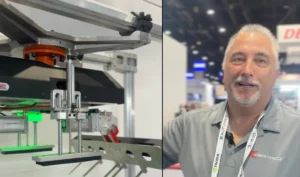
Looking ahead, a mission-ready Moon excavation system targets 2028 for NASA’s lunar base construction. Companies like Interlune and Vermeer are developing autonomous equipment capable of extracting lunar regolith, a crucial step for In-Situ Resource Utilization (ISRU). This technology is vital for building future lunar habitats, landing pads, and extracting resources like water ice for propellant and life support. The ability to "live off the land" on the Moon significantly reduces reliance on expensive Earth-launched supplies, making long-term lunar presence economically feasible and sustainable. NASA’s Artemis program heavily relies on such capabilities to establish a durable human presence at the lunar South Pole, where shadowed craters are believed to hold substantial water ice deposits.
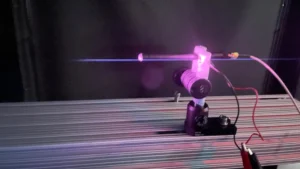
China is also making ambitious plans for lunar infrastructure, proposing a laser-powered energy tower near the Moon’s south pole to transmit wireless power. This innovative concept aims to provide continuous energy to lunar bases and equipment, particularly in regions that experience prolonged periods of darkness. By harnessing solar power and converting it into laser energy for wireless transmission, China seeks to overcome the challenges of energy storage and distribution on the lunar surface, laying the groundwork for more extensive and permanent lunar operations. This infrastructure would be critical for supporting scientific research, resource extraction, and eventual human settlements, demonstrating a long-term vision for lunar exploitation.
Pioneering Cutting-Edge Technologies in Space
The integration of artificial intelligence into space systems is revolutionizing operations. SpaceX picks Nvidia’s Rubin chips as the brain of the Starmind AI1 orbital data center satellite, illustrating a significant leap in space-based computing. These powerful AI processors enable satellites to perform complex data analysis and decision-making on orbit, reducing the need to downlink massive amounts of raw data to Earth. This edge computing capability is crucial for applications like advanced Earth observation, real-time threat detection, and autonomous navigation, making space systems more intelligent, responsive, and efficient. The Starmind AI1 satellite is designed to act as an orbital data center, providing unprecedented processing power in space, which can significantly accelerate scientific discoveries and commercial applications.
Further solidifying this trend, an onboard neural network guides satellites, reducing the need for ground control. This advancement allows satellites to autonomously manage their operations, including trajectory adjustments, anomaly detection, and payload management, with minimal human intervention. Such autonomy enhances mission resilience, reduces operational costs, and frees up valuable ground station time. It also increases the speed at which satellites can react to unexpected events or dynamic mission requirements, ushering in an era of truly intelligent spacecraft capable of self-management and adaptive behavior. The US Air Force, for instance, has been actively exploring these technologies to bolster the robustness of its satellite constellations.
Despite these advancements, the inherent challenges of operating in space remain. NASA’s Swift rescue spacecraft recently spun out of control after losing two reaction wheels, highlighting the vulnerabilities of even robust spacecraft. Reaction wheels are critical components for attitude control, allowing satellites to orient themselves in space without expending propellant. The failure of multiple wheels can severely impair a spacecraft’s ability to point its instruments, jeopardizing its mission. Incidents like these underscore the need for resilient design, redundancy, and potentially in-orbit repair capabilities to extend the operational life of valuable scientific and observational assets. Efforts are underway to regain control or to understand the full implications for the mission’s scientific objectives, which include observing gamma-ray bursts.
Beyond traditional satellite functions, novel applications are emerging. A new "space mirror" satellite aims to bring sunlight to Earth even during the night. While still in its early demonstration phases, this concept involves deploying large, reflective structures in orbit to direct sunlight to specific areas on Earth after sunset. Potential applications range from illuminating disaster zones and agricultural areas to extending daylight hours for construction projects. While the engineering challenges are significant, and environmental implications require careful study, this ambitious idea explores the potential for space-based infrastructure to directly benefit terrestrial needs, offering a glimpse into a future where humanity can manipulate light from space.
In a groundbreaking development, kidney and liver tissues were printed in space to tackle critical Earth problems. Microgravity conditions in orbit have been shown to facilitate the growth of more complex and structured biological tissues than is often possible on Earth, where gravity can cause cells to collapse. This advancement in bioprinting technology holds immense promise for drug discovery, disease modeling, and ultimately, for addressing the global organ shortage by creating transplantable tissues. The unique environment of space provides a powerful laboratory for biomedical research that could lead to revolutionary treatments and a deeper understanding of human biology.
Finally, ensuring the safety of future space missions, particularly those involving advanced propulsion, is paramount. A new "micro black box" could help locate crashed nuclear rockets before leaks occur. As nations explore nuclear propulsion for deep-space travel—offering significantly faster transit times to distant planets—safety concerns regarding potential accidents on Earth or in low Earth orbit are paramount. These robust, miniaturized data recorders would provide critical information about the circumstances of a crash, allowing for rapid recovery and mitigation of any environmental contamination, ensuring the responsible development and deployment of this powerful technology. Such systems are vital for public acceptance and regulatory approval of next-generation propulsion systems.
In summary, the current landscape of space endeavors is characterized by a dynamic interplay of engineering ingenuity, scientific curiosity, and strategic imperatives. From the return of supersonic travel and the promise of reusable rockets to advanced planetary defense, sophisticated orbital intelligence, and groundbreaking biological research in microgravity, humanity is rapidly expanding its capabilities and understanding of the cosmos. These diverse advancements, while each presenting unique challenges, collectively underscore a future where space is not merely observed but actively explored, utilized, and integrated into the fabric of human progress. The focus on robust systems, long-term sustainability, and responsible stewardship is paramount as we continue to push the boundaries of our celestial frontier.