Imagine a world where the aesthetic of your surroundings and personal belongings can be as fluid as your imagination. This is the future envisioned by researchers at the Massachusetts Institute of Technology (MIT), where a groundbreaking portable device called ChromoLCD promises to transform everyday objects into dynamic canvases. Developed at MIT’s Computer Science and Artificial Intelligence Laboratory (CSAIL), this innovative technology allows users to digitally alter the visual designs on items ranging from clothing and accessories to furniture and whiteboards, ushering in an era of unprecedented personalization and interactive surfaces.
At the forefront of this innovation is Yunyi Zhu, a PhD student in electrical engineering and computer science at MIT, who, along with her colleagues, has engineered a system that can effectively "reprogram" the appearance of objects. This breakthrough builds upon previous work at CSAIL, aiming to make dynamic visual customization accessible and portable. The core of this technology lies in the application of photochromic dyes, which are invisible inks that change color when exposed to specific wavelengths of light.
The Evolution of Dynamic Surface Technology
The journey towards ChromoLCD began with earlier MIT projects, notably the "PhotoChromeleon." This initial device utilized a projector to activate photochromic dyes, enabling the alteration of designs on coated surfaces. While a significant step forward, PhotoChromeleon’s reliance on a stationary projector limited its portability and practical application in dynamic, on-the-go scenarios. Recognizing this limitation, Zhu and her team developed "PortaChrome," a more mobile, LED-based tool. PortaChrome offered improved portability for lower-resolution imagery but still presented challenges in achieving the crispness and detail desired for widespread consumer adoption.
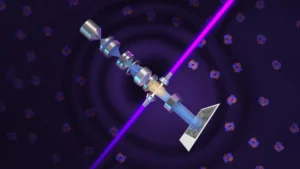
The development of ChromoLCD represents a pivotal advancement, merging the precision of liquid-crystal displays (LCDs) with the targeted illumination capabilities of light-emitting diodes (LEDs). This synergistic combination allows for the creation of high-resolution, clear images directly onto a variety of surfaces. The device, externally resembling a small printer, houses a sophisticated internal architecture comprising a computer chip, a backlight unit with ultraviolet (UV) and red, green, and blue (RGB) LEDs, and an LCD panel.
How ChromoLCD Works: A Symphony of Light and Chemistry
The process of transforming an object’s appearance with ChromoLCD is elegantly orchestrated. First, users apply a photochromic dye to the surface they wish to customize. This dye acts as a blank slate, ready to receive a new visual identity. Once the surface is prepared, users upload their desired image – be it a piece of artwork, a photograph, or a graphic design – to the ChromoLCD device via Bluetooth or a USB port.
The device then displays a black-and-white preview of the selected image, outlining the precise brightness levels for each pixel. This initial visualization guides the subsequent light-based transformation. The magic truly happens when the ChromoLCD device is brought into contact with the coated surface. A sequence of precisely controlled light emissions then takes place:
- UV Illumination: The device emits ultraviolet (UV) light. This wavelength of light saturates or darkens the photochromic dye in specific areas, effectively setting the stage for the color application.
- RGB Illumination: Following the UV treatment, a precisely arrayed set of red, green, and blue (RGB) LEDs emit light. These LEDs, working in concert with the LCD panel, meticulously color in each pixel according to the uploaded design. The intensity and combination of these lights determine the final hue and vibrancy of the image.
This sophisticated interplay of light and chemistry allows for the gradual emergence of a full-color, high-resolution design on the object. The entire process, from design upload to final display, typically takes approximately 15 minutes, after which the user can enjoy their personalized item. The beauty of ChromoLCD lies in its reversibility; the design can be changed or updated at any time by simply applying a new image through the same process, making the object a continuously evolving piece of personal expression.
Expanding the Canvas: Applications and Implications
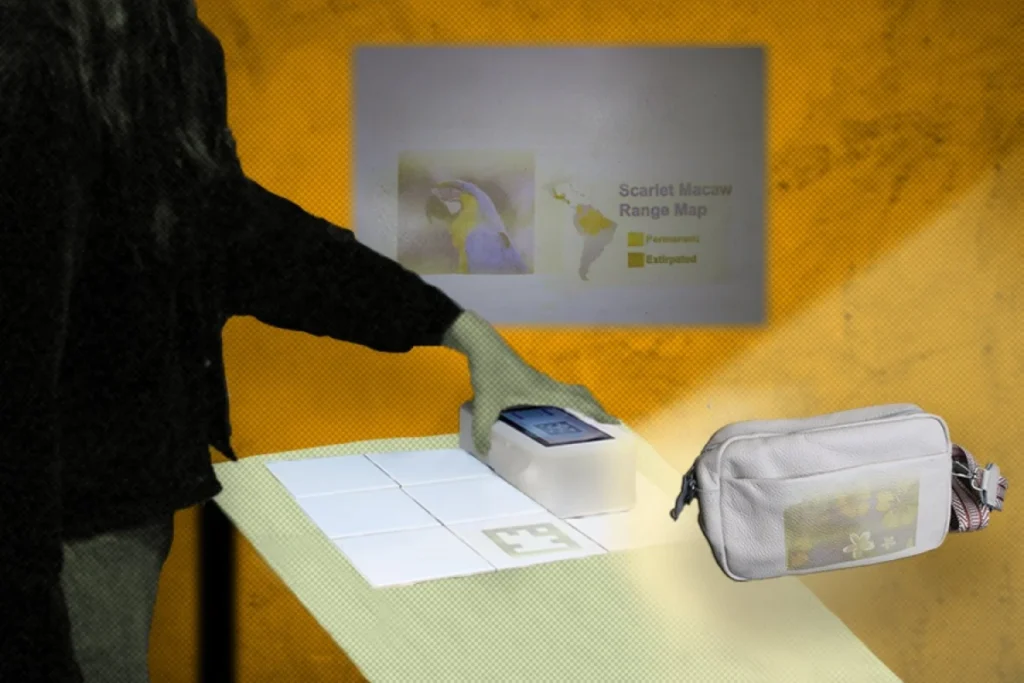
The potential applications for ChromoLCD are vast and extend far beyond mere aesthetic customization. During demonstrations, the device successfully embedded intricate designs, such as colorful drawings of fish and flowers, onto accessories like handbags. This capability suggests a future where fashion items are not static but can be dynamically updated to match moods, seasons, or current trends.
Beyond personal accessories, ChromoLCD has shown its versatility on harder surfaces. Researchers embedded an augmented reality (AR) tag, akin to a QR code, onto a kitchen countertop. This tag could link to a cooking tutorial, transforming a common household surface into an interactive informational display, offering a seamless blend of digital content with the physical environment. Similarly, the technology was used to reprogram a whiteboard, displaying high-resolution reference images. This hints at the possibility of turning any whiteboard into an interactive canvas, where digital visuals can augment or even replace traditional sketching, enhancing collaboration and learning environments.
Yunyi Zhu articulates the vision behind ChromoLCD, stating, "We see ChromoLCD as a bridge between consumers and photochromic dyes. It’s basically a stamp, and it’s very easy to use. There are no alignment requirements, no 3D object texture creation. You just upload the image you’d like to put on your bag, place it on there, and then you’d have a personalized accessory." This emphasis on user-friendliness is crucial for widespread adoption.
A Glimpse into the Future of Interactive Environments
The implications of ChromoLCD extend to transforming entire living and working spaces. Zhu suggests that walls in offices could display family photos when one misses loved ones, or doormats could offer personalized greetings for guests. This capability effectively turns the world into a dynamic canvas, where surfaces are no longer passive elements but active participants in communication and personalization.
The research team is already looking ahead to further enhance this technology. One significant area of development is the integration of Artificial Intelligence (AI) to streamline the creative process. Currently, users need to upload pre-existing images or create texture maps for 3D objects. However, with advancements in AI-powered texture generation, users could soon make simple verbal requests, such as asking a system to "turn a cup into a medieval-style tankard." This would democratize the creation of dynamic visuals, making complex customization accessible to a broader audience.
Furthermore, the CSAIL researchers are exploring ways to apply this technology to larger surfaces. They are developing a wall-roller-shaped reprogrammer, designed to apply designs onto walls in a manner akin to painting. Beyond this, investigations into swiping and ironing motions, as well as the integration of this technology into robots, are underway. This could enable machines to communicate their actions and status through surface displays. For instance, a robotic vacuum cleaner could stamp a clear, high-resolution message on the floor indicating which areas have been cleaned, facilitating communication between different robotic systems or informing human occupants.
Expert Reactions and Broader Impact
Narges Pourjafarian, a postdoctoral researcher at Northeastern University who was not involved in the study, lauded ChromoLCD for its innovative approach. She commented, "ChromoLCD is more than a resolution upgrade over prior MIT projects. It reframes monochromatic LCD panels as wavelength-selective fabrication tools, rather than merely display endpoints. This approach expands how we think about reprogrammable surface appearance, enabling high-resolution, reconfigurable graphics to be embedded directly into physical environments without the need for stationary projection enclosures. It opens a path toward compact, portable augmentation of garments, countertops, and shared surfaces." This sentiment underscores the fundamental shift ChromoLCD represents in how we conceive of digital displays and interactive surfaces.
The research paper detailing the ChromoLCD system was co-authored by six CSAIL affiliates: MIT undergraduates Qingyuan Li (co-lead author), Katherine Yan, Alex Luchianov, and Eden Hen; Harvard University graduate student and former visiting researcher Emily Guan; and MIT Associate Professor Stefanie Mueller (CSAIL principal investigator and senior author). The findings are slated for presentation at the ACM International Conference on Tangible, Embedded, and Embodied Interaction, a prestigious venue for research at the intersection of human-computer interaction and physical computing.
The ongoing work by the CSAIL team, encompassing PhotoChromeleon, PortaChrome, and now ChromoChrome, collectively signifies a significant leap forward in digitizing our physical environments. As this technology matures, it promises to redefine personal expression, enhance functional interactivity in everyday objects, and pave the way for a more dynamic and personalized world, blurring the lines between the digital and physical realms.