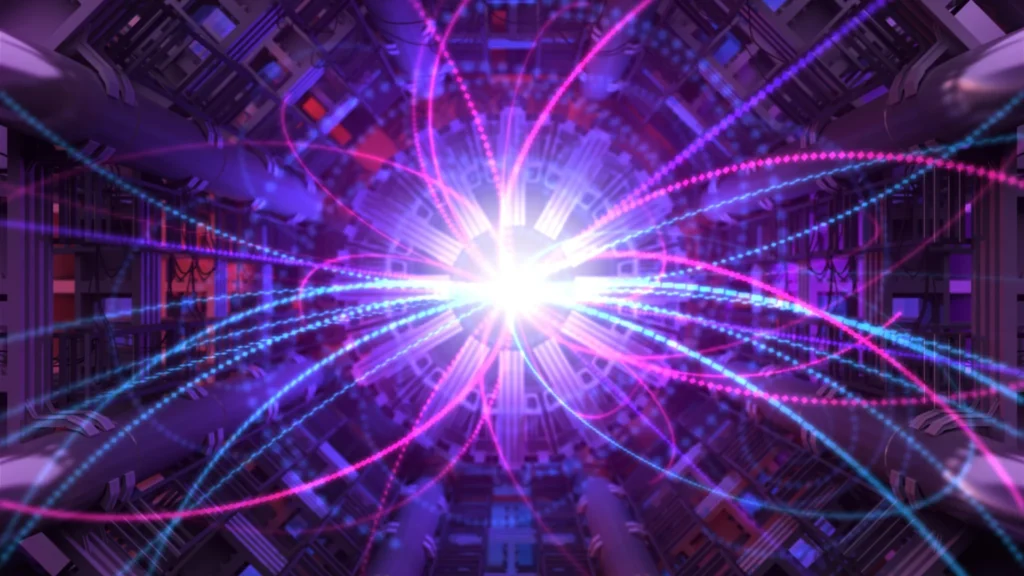
Recent experimental results from the Large Hadron Collider (LHC) at the European Organization for Nuclear Research (CERN) in Geneva have sent ripples through the global scientific community, suggesting that physicists may be on the precipice of discovering "new physics" that lies beyond our current understanding of the universe. The findings, primarily emerging from the LHCb (Large Hadron Collider beauty) experiment, indicate that certain subatomic particles are behaving in a manner that contradicts the Standard Model—the theoretical framework that has served as the bedrock of particle physics for more than half a century. If these results are confirmed by further data, they would necessitate a fundamental rewrite of the laws governing the smallest building blocks of matter.
The Standard Model is a highly successful theory that describes three of the four fundamental forces of nature—electromagnetism, the weak nuclear force, and the strong nuclear force—while classifying all known elementary particles. However, despite its predictive power, scientists have long known the Standard Model is an incomplete "map" of reality. It notably fails to incorporate gravity, as described by general relativity, and offers no explanation for dark matter or dark energy, which together account for approximately 95% of the energy-matter content of the cosmos. The latest data from the LHCb experiment provides a tantalizing hint of where the theory might finally be breaking down.
The Anatomy of the Discovery: B Mesons and Penguin Decays
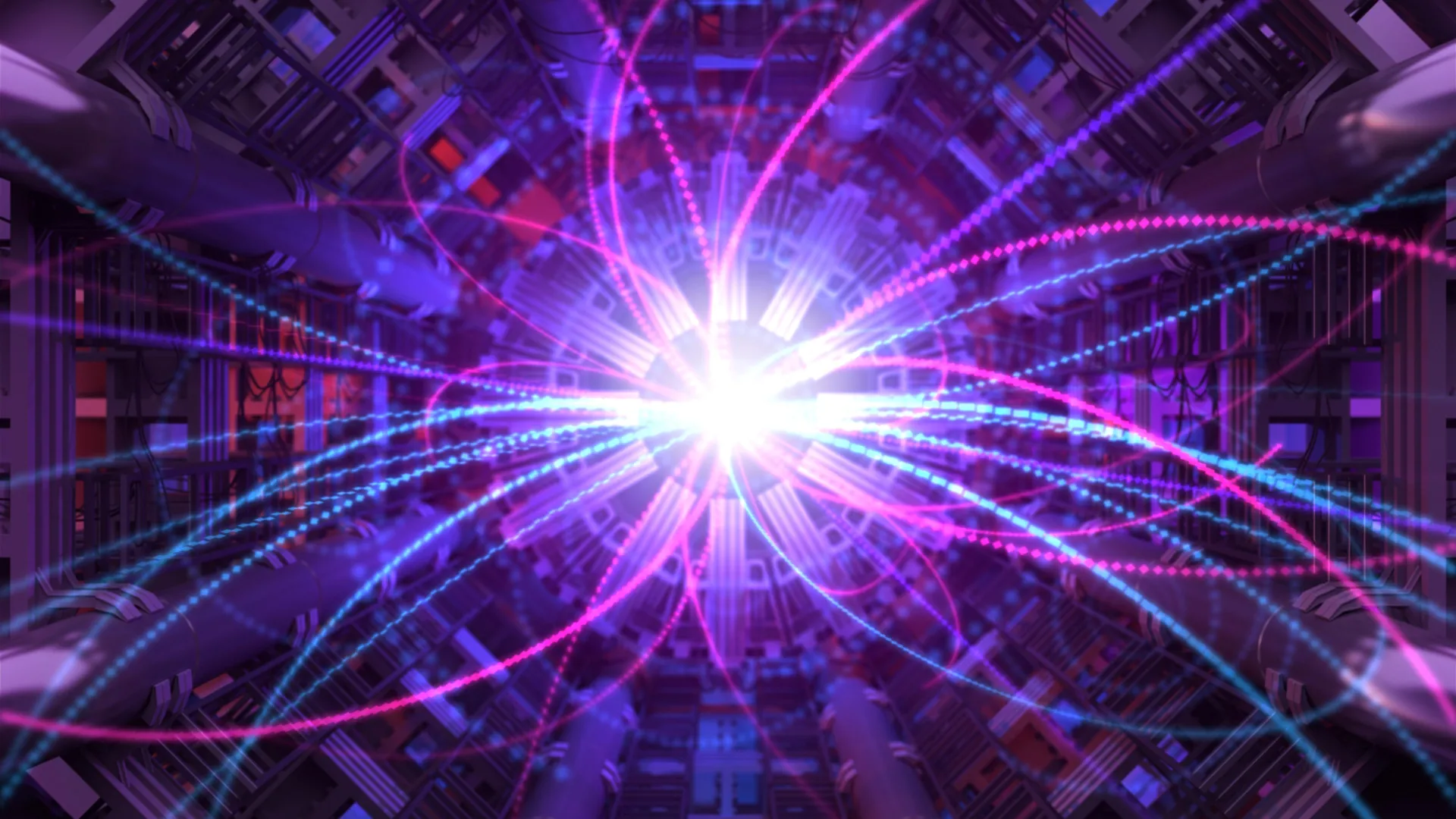
The core of the recent tension lies in the observation of extremely rare transformations involving subatomic particles known as B mesons. B mesons are unstable particles composed of a bottom quark (also known as a beauty quark) and an antiquark. Because they are not found in ordinary matter on Earth, they must be produced in high-energy environments like the 27-kilometer circular tunnel of the LHC, where proton beams collide at near-light speeds.
Researchers focused their investigation on a specific process known as an "electroweak penguin decay." This colorful terminology refers to a complex quantum process where a B meson transforms into other particles—specifically a kaon, a pion, and a pair of muons. In the language of particle physics, this represents a "flavor-changing neutral current," where a beauty quark transitions into a strange quark. Under the rules of the Standard Model, this specific decay is exceedingly rare; statistically, it occurs only once for every million B mesons produced.
By analyzing approximately 650 billion B meson decays recorded between 2011 and 2018, the LHCb team precisely measured the angles at which the decay products were emitted and the frequency of the process. The data revealed a discrepancy. The particles were not appearing in the quantities or configurations predicted by the Standard Model equations. Instead, the behavior suggested the presence of an unmeasured influence—potentially a new, heavy particle that is interfering with the decay process.
Statistical Significance and the Four-Sigma Tension
In the rigorous world of particle physics, discoveries are measured by "sigma" (standard deviations), which represents the level of certainty that a result is not a mere statistical fluke. The new findings from LHCb show a tension of four standard deviations (4σ) from the Standard Model’s predictions. In practical terms, this means there is only a 1-in-16,000 chance that the observed data is the result of a random fluctuation if the Standard Model were perfectly correct.
While a 4σ result is significant enough to warrant intense international scrutiny, it remains below the "gold standard" of five sigma (5σ). A five-sigma result, representing a 1-in-1.7 million chance of a fluke, is the threshold required for a formal claim of "discovery." Nevertheless, the scientific community is taking the result seriously because it does not exist in a vacuum. Earlier in 2025, the Compact Muon Solenoid (CMS) experiment—another massive detector at the LHC—published independent results that, while less precise than the LHCb data, showed a consistent trend in the same direction. The alignment of data from two independent experiments significantly strengthens the case that the anomaly is a physical reality rather than an experimental error.
A Chronology of the Search for New Physics
The journey toward this potential discovery has been decades in the making. The timeline of the LHC and its quest to move beyond the Standard Model reflects the patience required in modern experimental physics:
- 1994: The LHCb experiment is officially conceived, designed specifically to investigate the slight differences between matter and antimatter by studying B mesons.
- 2008: The Large Hadron Collider sees its first beam, marking the beginning of the most ambitious physics project in human history.
- 2012: The discovery of the Higgs Boson at CERN completes the "menu" of particles predicted by the Standard Model, shifting the focus of the LHC toward finding "cracks" in that very model.
- 2011–2018: The LHCb detector collects data from 650 billion B meson decays during "Run 1" and "Run 2" of the collider.
- 2021–2024: Preliminary anomalies in "lepton universality"—the idea that electrons and muons should behave identically—begin to emerge, though some are later refined by better theoretical calculations.
- Early 2025: The CMS experiment releases data corroborating the LHCb’s observations of B meson decay anomalies.
- Present: The latest LHCb analysis is accepted for publication in Physical Review Letters, confirming a 4σ deviation and setting the stage for a new era of theoretical modeling.
Theoretical Implications: Leptoquarks and New Forces
If the Standard Model is indeed failing to explain these B meson decays, what could be responsible? Theoretical physicists have already begun proposing several "Beyond the Standard Model" (BSM) theories to account for the data.
One of the most prominent candidates is the existence of "leptoquarks." These are hypothetical particles that would act as a bridge between two different families of matter: leptons (like electrons and muons) and quarks (the constituents of protons and neutrons). In the Standard Model, these two families are strictly separated. The existence of leptoquarks would imply a grander unification of forces and particles than previously imagined.
Another possibility involves the existence of a "Z-prime boson." This would be a heavy, undiscovered cousin of the Z boson (which mediates the weak force). A Z-prime boson could exert a new, fifth fundamental force of nature, interacting specifically with beauty quarks and muons in a way that alters their decay patterns. These theoretical particles are too heavy to be produced directly by the LHC’s current energy levels, but their "shadows" or indirect influences can be detected in the precision measurements of rare decays—much like how the existence of Neptune was mathematically predicted by its gravitational effect on Uranus before it was ever seen through a telescope.
The Challenge of "Charming Penguins"
Despite the excitement, the physics community remains cautious. The primary source of skepticism involves a phenomenon known as "charming penguins." Within the Standard Model, B meson decays can involve intermediate loops containing "charm" quarks. The mathematical contributions of these charming penguins are notoriously difficult to calculate with absolute precision.
Some critics argue that the 4σ discrepancy might not be "new physics" at all, but rather a result of underestimating the complex Standard Model effects of these charm quarks. However, recent theoretical refinements and combined data models suggest that even when accounting for charming penguins, the Standard Model still struggles to explain the sheer magnitude of the anomaly observed by LHCb.
Broader Impact and the Future of Particle Physics
The implications of confirming physics beyond the Standard Model cannot be overstated. It would provide the first concrete evidence of a "hidden sector" of the universe, potentially offering a gateway to understanding dark matter. If the forces governing B meson decays are linked to dark matter, scientists could finally begin to probe the invisible 25% of our universe that has eluded detection for nearly a century.
The roadmap for the next decade is already clear. The LHCb experiment has recently been upgraded and has already recorded three times more data than was used in the current study. Over the coming years, researchers will analyze this mountain of information to see if the 4σ tension grows into a definitive 5σ discovery.
Furthermore, the scientific world is looking toward the 2030s and the "High-Luminosity LHC" (HL-LHC) upgrade. This project aims to increase the collider’s luminosity (the number of collisions) by a factor of ten, allowing for a dataset 15 times larger than what is currently available. This massive influx of data will allow physicists to observe rare processes with unprecedented clarity.
If the current hints hold firm, the 2020s and 2030s will be remembered as the era when the Standard Model finally gave way to a more profound understanding of the cosmos. For now, the "penguin" decays at CERN remain the most promising lead in the global hunt for the ultimate laws of nature, suggesting that the universe is even more complex and interconnected than our most elegant theories have dared to suggest.