The rapid expansion of data centers across the United States is exerting unprecedented pressure on the national electricity supply, prompting researchers to seek transformative solutions for decentralized power generation. These massive facilities, which form the backbone of the modern digital economy and the burgeoning artificial intelligence sector, require immense amounts of electricity not only to power high-performance computing equipment but also to maintain the sophisticated cooling systems necessary to prevent hardware failure. According to recent estimates from the Electric Power Research Institute (EPRI), data centers could account for as much as 9% of total annual U.S. electricity generation by 2030. This represents a significant leap from 2023, where these facilities consumed approximately 4% of the nation’s total electricity demand.
In response to this growing energy crisis, a multi-institutional research team led by Gang Wu, the Elvera and William R. Stuckenberg Professor in the McKelvey School of Engineering at Washington University in St. Louis, has unveiled a pioneering approach to fuel cell technology. Their research, published on August 6, 2026, in the prestigious journal Nature Nanotechnology, details the development of a novel carbon nanostructure that significantly improves the performance and longevity of low-temperature fuel cells. By addressing the fundamental limitations of platinum-based catalysts, the team has opened a potential pathway for data centers to generate their own clean electricity on-site, thereby mitigating the strain on the aging American power grid.
The Growing Burden of the Digital Infrastructure
The surge in energy demand is driven largely by the proliferation of generative AI and large language models, which require significantly more computational power than traditional search engine queries or cloud storage. As technology giants like Microsoft, Google, and Amazon expand their server footprints, the infrastructure required to support them is clashing with a grid already struggling to transition toward renewable energy. In many regions, the timeline for connecting new data centers to the utility grid has stretched to several years, leading to a desperate search for "behind-the-meter" power solutions.
"If a data center is able to supply its electricity itself by using a fuel cell, it would directly convert hydrogen and other fuels into electricity, reducing the burden on the energy grid," Professor Wu stated. Fuel cells represent a compelling solution because they offer high efficiency and zero-emission operation at the point of use, provided they are fueled by green hydrogen. However, until now, the cost and durability of the catalysts required to facilitate the chemical reactions within these cells have remained a primary barrier to widespread commercial adoption.
Overcoming the Platinum Catalyst Dilemma
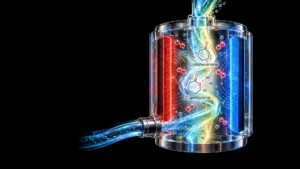
At the heart of a proton-exchange membrane (PEM) fuel cell is the catalyst, which facilitates the reaction between hydrogen and oxygen to produce electricity, with water and heat as the only byproducts. Platinum has long been recognized as the gold standard for these catalysts due to its high catalytic activity. However, platinum is a precious metal with a volatile market price and limited global supply. To make fuel cells economically viable for large-scale applications like data centers or heavy-duty transportation, researchers have focused on "stretching" the utility of platinum by using as little of it as possible.
The standard industry approach involves engineering platinum into nanoparticles. By breaking bulk platinum into particles just a few nanometers in size, scientists can exponentially increase the surface area available for chemical reactions. This allows for the use of extremely small quantities of the metal—often less than one-quarter of a milligram per square centimeter of the electrode.
Despite this efficiency in material use, platinum nanoparticles face a critical durability issue. During the rigorous cycles of fuel cell operation, these tiny particles tend to dissolve, migrate across the support surface, or clump together in a process known as sintering. As the particles grow larger or disappear, the total surface area decreases, leading to a steady decline in the fuel cell’s power output over time.
A Breakthrough in Intermetallic Engineering
To solve the durability problem, the research community has turned toward platinum intermetallic catalysts. Unlike traditional platinum alloys, where atoms are arranged randomly, intermetallic structures feature a highly ordered, repeating atomic lattice. This ordered arrangement creates stronger atomic bonds, which significantly enhances both the activity and the chemical stability of the catalyst.
However, creating these ordered structures presents a significant manufacturing challenge known as the "thermal tradeoff." To achieve the necessary atomic ordering, the materials must be annealed (heated) at high temperatures. Traditionally, temperatures above 700°C are required to trigger the transition to an ordered state. At these temperatures, however, the nanoparticles typically lose their small size and even distribution, clumping together and negating the benefits of the high surface area.
Professor Wu and his colleagues from Brookhaven National Laboratory, Lawrence Berkeley National Laboratory, Northeastern University, and the University of Pittsburgh developed a unique solution to this problem: a specialized carbon support structure.
The Architecture of the Radial Nanochannel Host
The team engineered a new carbon structure consisting of porous, hollow carbon spheres. What sets this material apart is the presence of orderly radial nanochannels that extend from the center of the sphere outward, combined with a high degree of internal pore space. This "honeycomb-like" architecture serves as a protective host for platinum-cobalt (Pt-Co) intermetallic nanoparticles.
The radial nanochannels act as physical barriers that confine the nanoparticles, preventing them from moving or merging even when subjected to extreme heat. This allowed the researchers to heat the catalyst to 1000°C—a temperature high enough to ensure a perfectly ordered intermetallic structure—while maintaining a particle size of less than 5 nanometers.
"Our strategy is using this new carbon nanostructure to synthesize platinum cobalt intermetallic nanoparticles that can reduce precious metal content and enhance activity and stability," Wu explained. "Traditionally, there would be a tradeoff between size and stability, but with the ordered carbon nanochannel host, platinum cobalt nanoparticles can be confined and remain stable at very small particle size even at high temperatures."
Performance Metrics and Longevity Testing
The results of the team’s testing indicate a significant leap forward in fuel cell durability. In laboratory simulations, the material was subjected to 150,000 severe voltage cycles, a rigorous test designed to mimic years of heavy-duty use. The catalyst retained 85% of its initial performance after this stress test.
The researchers estimate that this level of stability corresponds to approximately 25,000 hours of real-world operation. For context, the U.S. Department of Energy (DOE) has set ultimate durability targets for fuel cell systems in heavy-duty applications at 25,000 to 30,000 hours. The Washington University-led study suggests that this target is now within reach for platinum-cobalt catalysts.
Beyond mere stability, the carbon support’s architecture improves the overall kinetics of the fuel cell. The open-channel structure allows for the uniform distribution of ionomers—materials that transport ions—and provides "express lanes" for protons, oxygen, and water to move through the electrode. This reduced mass-transport resistance allows the fuel cell to maintain high power density even under high-load conditions.
Strategic Implications for the Energy Grid and Industry
The implications of this research extend far beyond the laboratory. As data center operators face increasing pressure from regulators and local communities to reduce their carbon footprint and grid impact, the ability to deploy long-lasting, efficient fuel cells becomes a strategic imperative.
1. Grid Decarbonization and Stability: By generating power on-site using hydrogen, data centers can function as "microgrids." During periods of peak demand on the public grid, these facilities can disconnect and run on fuel cell power, preventing blackouts and reducing the need for utilities to fire up carbon-intensive "peaker" plants.
2. The Hydrogen Economy: This catalyst breakthrough aligns with the broader federal push toward a hydrogen economy. The U.S. government has allocated billions of dollars through the Inflation Reduction Act and the Bipartisan Infrastructure Law to develop regional hydrogen hubs. High-efficiency catalysts make the end-use of this hydrogen more cost-effective.
3. Economic Feasibility: By reducing the amount of platinum required and extending the lifespan of the fuel cell stack, this technology lowers the total cost of ownership for fuel cell systems. This makes them more competitive with traditional diesel backup generators, which are currently the standard but are criticized for their high emissions.
Chronology of the Research and Future Directions
The development of this technology was a multi-year effort funded by Washington University in St. Louis and supported by resources from several national laboratories. Following the successful synthesis of the carbon nanostructure, the team moved through several phases of testing:
- Initial Synthesis: Developing the hollow carbon spheres with radial nanochannels.
- High-Temperature Annealing: Testing the limits of the structure at 1000°C to achieve atomic ordering.
- Electrochemical Evaluation: Measuring activity levels against standard platinum catalysts.
- Durability Cycling: Performing the 150,000-cycle stress test to prove long-term viability.
Professor Wu has already filed a patent for the technology through the WashU Office of Technology Management. The next phase of the project involves collaborating with industry partners to scale up the production of the carbon support and integrate the catalyst into full-sized fuel cell stacks for pilot testing in data center environments.
"Eventually, through further development and collaboration with industry partners, we’ll be able to solve the remaining catalyst problems and significantly advance fuel cell technologies for powering our future more efficiently and sustainably," Wu said.
As the U.S. continues its transition toward a digital-first economy, the intersection of nanotechnology and energy science will be critical. The work of Wu’s team provides a blueprint for how fundamental materials science can solve the practical, large-scale energy challenges of the 21st century, ensuring that the growth of data and AI does not come at the expense of a stable and sustainable power grid.