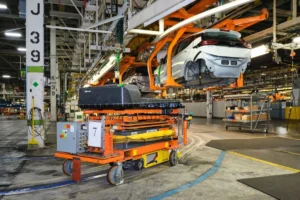
The automotive industry in Japan is grappling with the aftermath of a powerful 7.1-magnitude earthquake that struck Kyushu Island on July 28th, 2026. While major Japanese automakers have largely resumed operations following the seismic event, the ripple effects on the crucial parts supply chain are continuing to hamper production. Some manufacturers have acknowledged that a full recovery remains uncertain, with potential implications for global vehicle availability and pricing.
Initial Impact and Immediate Responses
The earthquake, which caused widespread damage across southern Japan, prompted immediate operational suspensions from industry giants including Toyota, Honda, Nissan, and Mitsubishi. These manufacturers cited the need for thorough inspections of their facilities to ensure the safety of their workforce and to assess structural integrity before restarting production lines. The initial daily progress reports issued by these companies suggested a relatively smooth recovery, but underlying concerns about supply chain vulnerabilities quickly emerged.
The disruption extended beyond the assembly lines of the major automakers. Regional supply chains experienced significant pauses as numerous part suppliers, essential cogs in the automotive manufacturing process, faced their own challenges in assessing and repairing damage. The varied impact on these suppliers meant that even as major manufacturers began to restart, the flow of necessary components remained inconsistent.
Timeline of Recovery: A Patchwork Resumption
Mitsubishi was the first to officially announce a return to normal operations on August 5th, signaling a positive step towards stabilization. Toyota also reported a relatively swift recovery for its facilities in the Fukuoka prefecture, with many plants resuming production by the end of July. Nissan similarly confirmed that its recovery phase was largely complete by August 6th, with manufacturing back online and major repairs concluded.
However, Honda faced more significant hurdles. The automaker announced on August 6th that two of its Japanese assembly plants would remain idled until August 19th. This extended downtime was attributed by CFO Masao Kawaguchi to the unavailability of components from several key suppliers. Automotive News corroborated these reports, highlighting the ongoing challenges faced by Honda.
The damage at Honda’s facilities was particularly acute for its motorcycle assembly operations. One plant experienced significant flooding due to ruptured water lines, while auto parts facilities also suffered severe infrastructure damage. Notably, at least one Astemo plant, a major automotive parts supplier, reported a complete loss of electricity and gas services.
Despite these setbacks in Japan, Honda expressed confidence that the impact on its North American operations would be minimal, with the exception of the imported Honda Civic Type R. The company’s strategy of largely localizing production within North America is expected to shield its Western market from significant production delays.
Broader Supply Chain Concerns and Sectoral Impacts
While the major automakers appear to be on a path to recovery, the resilience of the Japanese automotive supply chain remains a critical concern. The earthquake’s impact on key component manufacturers and raw material suppliers could have far-reaching consequences.
Microchip Production Disruption
The disruption to Japan’s semiconductor industry is particularly noteworthy. Numerous microchip plants in southern Japan were reported as non-operational until August 5th. Local reports indicate that facilities owned by major players like Taiwan Semiconductor Manufacturing (TSMC) and Mitsubishi Electric, both critical suppliers to the automotive sector, were among those affected. This downtime, even if temporary, could exacerbate existing global semiconductor shortages and potentially impact the production of vehicles equipped with advanced electronics.
Aluminum Supply Under Pressure
Japan’s aluminum supply chain also reportedly took a hit. Damage to select facilities and production downtime is expected to create downstream procurement issues for the automotive industry in the coming months. Analysts anticipate this could lead to speculative price increases and, in some cases, temporary supply shortages of aluminum-based components.
Motorcycle Market Vulnerability
Beyond the passenger vehicle sector, Japanese motorcycle brands are facing considerable challenges. Honda, Yamaha, Kawasaki, and Suzuki are all undergoing repairs, and many of their suppliers are still offline. This situation raises concerns about a potential temporary stifling of the global supply of select motorcycle models.
Quantifying the Production Shortfall
The temporary plant closures are estimated to have resulted in a production shortfall of between 20,000 and 60,000 vehicles for Japanese automakers. Industry analysts suggest that persistent supply chain issues could further escalate these numbers throughout the remainder of 2026.
Even suppliers that experienced a relatively quick recovery, such as Aisin Corp., are now facing delays in parts delivery, creating the risk of bottlenecks for various automakers. The combined impact of damage to manufacturing facilities, extended downtime, and disruptions to raw material supplies paints a complex picture of recovery.
Expert Analysis and Future Outlook
While the magnitude of the earthquake was significant, the overall response and recovery efforts are being viewed by many analysts as an "industrial hiccup" rather than a catastrophic event. The speed at which many facilities, including those of major automakers, have resumed operations is a testament to the industry’s resilience and preparedness.
However, the sustained impact on the supply chain, particularly concerning microchips and specialized components, warrants close monitoring. The global automotive market, already navigating fluctuating demand and logistical challenges, will likely feel the indirect effects of these disruptions.
The situation underscores the interconnectedness of the global automotive supply chain and the vulnerability of even highly developed industrial regions to natural disasters. As Japan’s automotive sector works towards a full recovery, the focus will remain on rebuilding damaged infrastructure, stabilizing the supply of critical components, and mitigating any long-term impacts on vehicle availability and pricing for consumers worldwide. The next few months will be crucial in determining the extent of the lasting effects of the Kyushu Island earthquake on the global automotive landscape.