The humble graphite found in common pencil lead has long been considered one of the most well-understood and mundane materials in the world, yet new research from the Massachusetts Institute of Technology (MIT) suggests its microscopic properties are far more complex and multifaceted than previously imagined. In a landmark study published in the journal Nature, a team of physicists led by Long Ju, the Lawrence C. and Sarah W. Biedenharn Associate Professor of Physics at MIT, has revealed that a specific microscopic structure found within natural graphite can host multiple, distinct superconducting states. This discovery challenges long-held assumptions about the limits of carbon-based materials and opens new avenues for the development of quantum technologies and high-efficiency electronics.
Superconductivity is a rare and highly sought-after electronic state of matter in which electrons form "Cooper pairs," allowing them to glide through a material with zero electrical resistance. Under normal circumstances, materials resist the flow of electricity, losing energy as heat. In a superconductor, this energy loss is eliminated, a property that has transformative implications for power grids, medical imaging, and particle accelerators. While thousands of materials have been identified as superconductors since the phenomenon was first discovered in 1911, it is exceedingly rare for a single material to exhibit multiple, tunable forms of superconductivity within the same structure.
The MIT team’s findings center on rhombohedral graphene, a naturally occurring configuration of carbon atoms found within ordinary graphite. Unlike the more common hexagonal stacking found in most graphite, rhombohedral graphene consists of layers stacked in a specific, staircase-like pattern. By isolating these atomically thin layers and subjecting them to precise electrical and magnetic controls, the researchers discovered a family of unconventional superconducting states that not only survive in high magnetic fields but are actually strengthened by them—a phenomenon that defies the standard rules of condensed matter physics.
The Architecture of Rhombohedral Graphene
To understand the significance of this discovery, one must first look at the geometry of carbon. Graphene, first isolated in 2004, is a single layer of carbon atoms arranged in a hexagonal honeycomb lattice. When these layers are stacked on top of each other, they form graphite. However, the way these layers are aligned significantly changes the material’s electronic properties.
In the majority of natural graphite, layers are stacked in an "ABAB" pattern, known as hexagonal graphite. However, a small percentage of graphite contains "ABC" or rhombohedral stacking. In this configuration, each layer is slightly offset from the one below it, creating a three-dimensional staircase effect. This specific symmetry is crucial because it creates a "flat band" in the material’s electronic structure—a state where electrons are forced to interact strongly with one another rather than moving independently.
"People might assume that this is a simple, boring carbon material," says Long Ju. "But we can control this material by tuning certain experimental ‘knobs,’ such as electrical voltages. This is how a simple physical material can exhibit so many different superconducting properties."
The researchers isolated samples of four- and five-layer rhombohedral graphene through a process known as mechanical exfoliation. This technique, famously involving the use of adhesive tape to peel away layers of graphite until only the thinnest flakes remain, allows scientists to identify and extract the rare rhombohedral sections. Once isolated, these samples were integrated into complex electronic devices that allowed the team to manipulate electron density and apply external fields with extreme precision.
Breaking the Rules: Superconductivity in Magnetic Fields
One of the most startling revelations of the study is the material’s resilience to magnetic fields. In conventional superconductors, magnetic fields are the enemy. They typically penetrate the material and break the delicate bonds between Cooper pairs, effectively "killing" the superconducting state.
However, the MIT team observed that three of the four discovered superconducting states in rhombohedral graphene persisted in the presence of a magnetic field of up to 9 tesla. For context, 9 tesla is approximately 180,000 times stronger than the Earth’s magnetic field and significantly stronger than the magnets used in standard hospital MRI machines.
Even more surprising was the material’s reaction to a perpendicular magnetic field. At specific electron densities, the researchers found that the magnetic field did not just fail to destroy the superconductivity—it actually enhanced it. The critical temperature (Tc) at which the material becomes superconducting rose from 55 millikelvin to roughly 90 millikelvin when the field was applied. Furthermore, the material was able to carry 50 to 60 percent more electrical current before the superconducting state collapsed.
"From a fundamental physics point of view, it’s very exotic that a magnetic field doesn’t kill superconductivity, and instead it boosts it," Ju explains. "We have provided a lot of experimental results and provided the nutrition that people can absorb to try to think about what’s going on here."
A New Theory of Electron Pairing
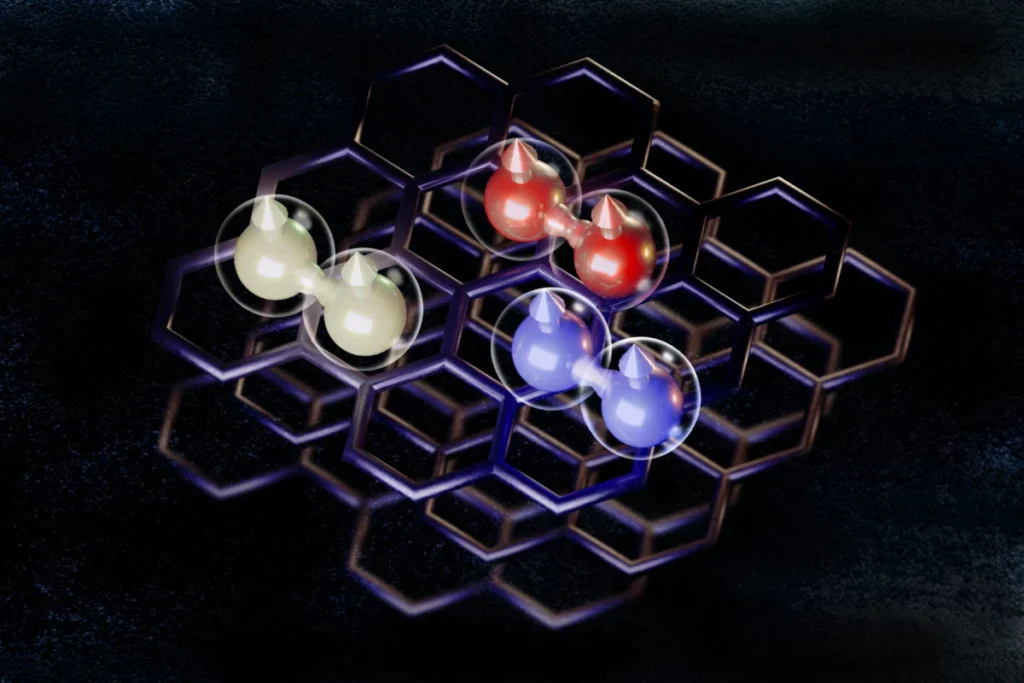
The persistence of superconductivity in high magnetic fields suggests that rhombohedral graphene may be hosting "spin-triplet" superconductivity. In conventional "spin-singlet" superconductors, the two electrons in a Cooper pair have opposite spins (one up, one down), which cancel each other out. A magnetic field forces these spins to align in the same direction, which breaks the pair and ends the superconductivity.
In a spin-triplet state, the electrons in a pair already have aligned spins. Because they are already pointing in the same direction, a magnetic field does not disrupt their pairing; instead, it may actually stabilize the configuration. While spin-triplet superconductivity has been theorized for decades, it remains incredibly rare in nature. The MIT study provides some of the strongest evidence yet that rhombohedral graphene is a platform for this exotic state.
Chronology of Discovery and Collaborative Effort
The discovery is the culmination of several years of intensive research into the properties of graphene stacks. The timeline of this breakthrough reflects a shift in the field of "twistronics"—the study of how stacking and twisting 2D materials changes their behavior.
- 2004: Graphene is first isolated at the University of Manchester, sparking a global interest in 2D materials.
- 2018: Researchers discover "magic-angle" twisted bilayer graphene, where twisting two layers at 1.1 degrees creates superconductivity.
- 2021-2023: Long Ju’s group at MIT begins focusing on rhombohedral graphene as a "natural" alternative to twisted graphene, discovering chiral superconductivity and fractional electron charges.
- 2024: The team shifts focus to electron depletion (removing electrons) rather than "doping" (adding them), leading to the discovery of the four new superconducting states and the magnetic field enhancement.
This specific study was a massive collaborative effort. While device fabrication and primary experimentation took place at MIT.nano, the team required specialized environments to reach the necessary conditions for observation. They collaborated with Dominik Zumbuhl’s group at the University of Basel in Switzerland, which provided the ultracold dilution refrigerators and high-field magnets required to observe states at temperatures near absolute zero. Other contributors included researchers from Florida State University, the University of Florida, and the National Institute for Materials Science in Japan, who provided high-quality hexagonal boron nitride used to encapsulate and protect the graphene samples.
Broader Implications for Quantum Computing and Physics
The ability to "tune" a material into different superconducting states using only electrical gates is a holy grail for quantum electronics. In a standard computer, bits are either 0 or 1. In a quantum computer, qubits can exist in multiple states simultaneously. The exotic superconducting states found in rhombohedral graphene could potentially serve as the basis for "topological qubits," which are more stable and less prone to errors than current quantum computing architectures.
Furthermore, the discovery that natural graphite contains these hidden properties suggests that scientists may not always need to rely on complex, artificially twisted structures to find "magic" physics. By looking closer at the natural variations in common materials, researchers may find more robust ways to engineer the next generation of superconductors.
Lead author Junseok Seo, a graduate student in Ju’s group, emphasizes the empowerment this research provides to materials scientists. "We’re not only dealing with what nature gives us, but we’re applying additional controls to change it to something that nature does not give us, but that can exist in the same material," Seo said.
Future Research Directions
While the MIT study provides a wealth of experimental data, the exact microscopic mechanisms remain a subject of debate. Future research will likely focus on:
- Direct Spin Imaging: Using advanced microscopy to confirm the spin-triplet nature of the electron pairs.
- Higher Temperature Search: Investigating if different stacking sequences or chemical modifications can push the transition temperature (Tc) from the millikelvin range into more practical territory.
- Topological Properties: Determining if these states possess "non-Abelian statistics," a requirement for certain types of fault-tolerant quantum computing.
The work, supported in part by the U.S. Office of Naval Research, serves as a reminder that the most revolutionary discoveries often hide within the most ordinary substances. As physicists continue to turn the "knobs" of rhombohedral graphene, the transition from a simple pencil lead to a quantum powerhouse seems increasingly possible.