August has historically been a month of significant events in the annals of aviation and space exploration, marked by groundbreaking technological advancements, daring feats, and the establishment of crucial regulatory frameworks. From the foundational years of air travel to the cutting edge of space science, August has witnessed pivotal moments that have shaped the trajectory of human flight and our understanding of the cosmos. This comprehensive look back at key August events reveals a narrative of persistent innovation, occasional stumbles, and the relentless pursuit of pushing boundaries.
The Genesis of Air Commerce Regulation and Early Aviation Ambitions
The early 20th century was a period of fervent activity in aviation, characterized by rapid development and a growing need for organized oversight. In August 1926, this need was formally addressed with the establishment of the Aeronautics Branch, a precursor to the modern Federal Aviation Administration (FAA). On August 11th, William MacCracken, a pivotal figure in the creation of the Air Commerce Act of 1926, assumed the role of the first assistant secretary of commerce for aeronautics. His mandate was to regulate the burgeoning U.S. aviation industry, laying the groundwork for safety standards and air traffic control that would become essential as air travel transitioned from a novelty to a viable mode of transportation. This foundational legislation and the subsequent establishment of the Aeronautics Branch were critical in fostering public trust and encouraging further investment in aviation, a sector then grappling with inherent risks and a lack of standardized practices.

The same month also highlighted the competitive and sometimes controversial nature of early aviation records. On August 23rd, French pilot Jean Callizo claimed a world altitude record, reporting an ascent to an astonishing 40,820 feet (12,422 meters) in a Bleriot-Spad S.61. However, this achievement was later tainted by scandal. An investigation revealed Callizo had tampered with the barograph, the device used to measure altitude, during a subsequent record attempt. The Aero Club of France, upon discovering the fraud, rescinded all of Callizo’s recorded achievements, serving as a stark reminder of the integrity required in scientific measurement and record-keeping within aviation. This incident underscored the challenges of verifying such claims in an era of rapid technological advancement and intense competition for aviation prestige.
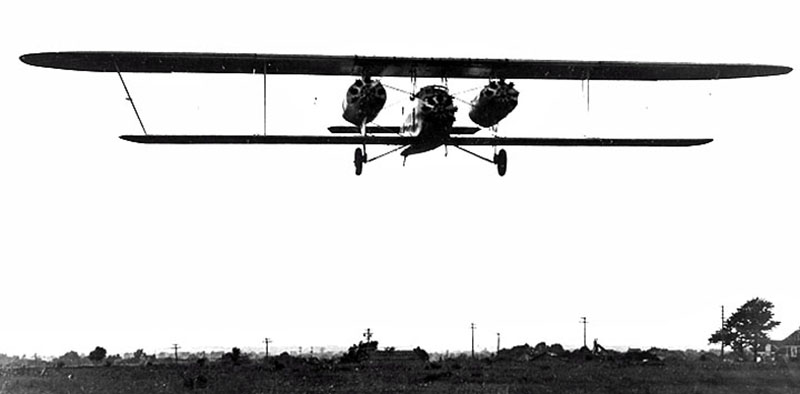
August 23rd, 1926, also marked the maiden flight of the Sikorsky S-35, a formidable three-engine biplane designed with a specific, ambitious goal: to capture the $25,000 Orteig Prize for the first non-stop flight between New York and Paris. The S-35, a marvel of engineering for its time, took to the skies from Roosevelt Field in New York, achieving a respectable speed of 233 kph. Despite its promising initial flight, the S-35’s quest for transatlantic glory was ultimately fraught with disaster. An initial attempt was thwarted by a fuel leak, and a subsequent attempt ended tragically with a crash shortly after takeoff. While pilot Capt. René Fonck and his co-pilot survived the second incident, the aircraft’s potential remained unrealized, and the dream of an S-35 transatlantic crossing was extinguished, with the loss of two crew members. The S-35’s story, though ending in tragedy, represents the bold spirit of exploration and the significant risks undertaken by aviation pioneers in their pursuit of historic firsts.
Post-War Aviation and the Dawn of Jet Age Innovations
The post-World War II era witnessed a dramatic acceleration in aerospace technology, with August playing host to several significant developments. The year 1951 saw the establishment of Japan Airlines on August 1st. However, the Allied Peace Treaty imposed strict limitations, notably prohibiting Japanese pilots from flying for the nascent carrier. Consequently, Japan Airlines initially relied on leased pilots and aircraft from Northwest Airlines, commencing operations on domestic routes. It wasn’t until 1954 that the airline began offering international services, marking a slow but steady re-emergence of Japan on the global aviation stage. This period highlights the geopolitical influences on aviation development and the resilience of nations seeking to rebuild their infrastructure and economies.
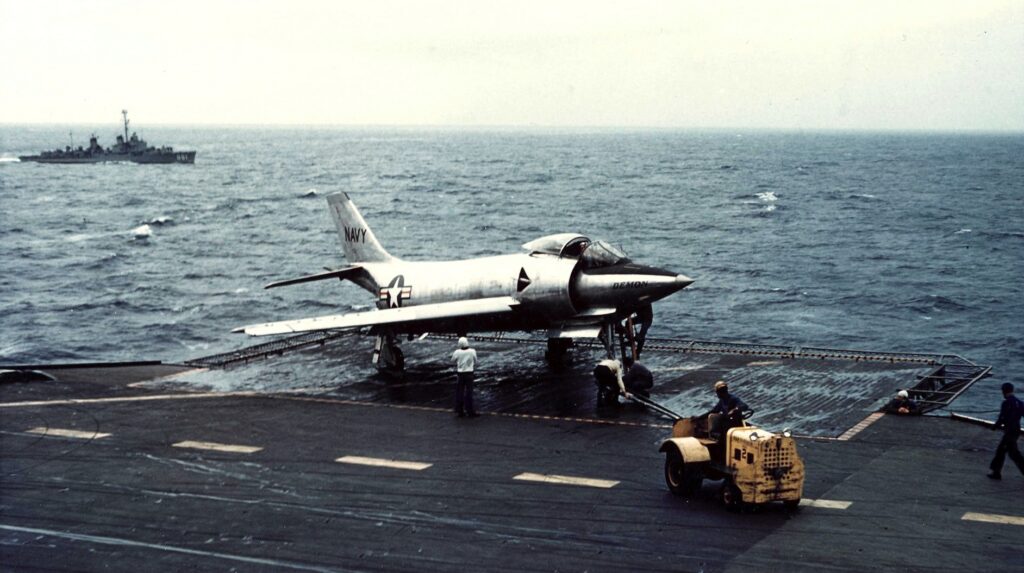
On August 7th, 1951, a new chapter in naval aviation began with the first flight of the McDonnell XF3H-1 Demon. This carrier-based jet fighter was a pioneering design for the U.S. Navy, distinguished by its swept-wing configuration and its intended role as the first Navy fighter armed exclusively with radar-guided air-to-air missiles, eschewing traditional guns. While the initial prototype suffered from underpowered performance, a crucial engine upgrade later salvaged the design, leading to production variants that served operationally until 1965. The XF3H-1 Demon represented a significant shift in fighter doctrine, emphasizing standoff missile capabilities and paving the way for future advancements in air combat technology.
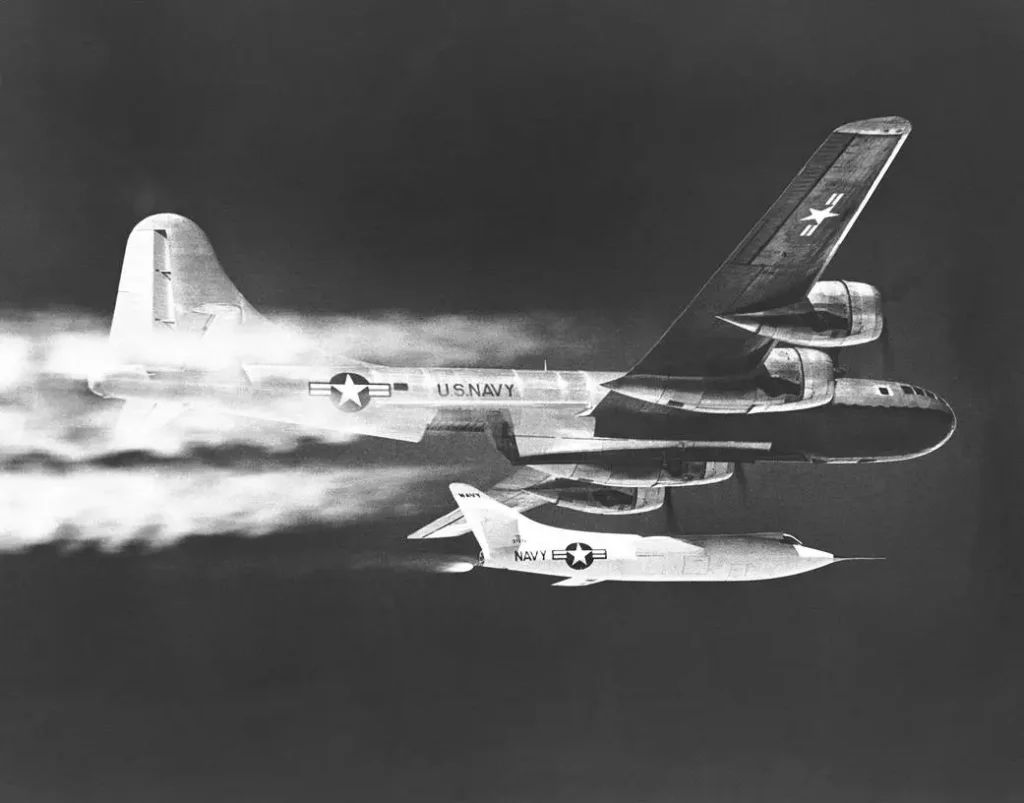
The relentless pursuit of speed and altitude records continued. On August 15th, 1951, Douglas test pilot William Bridgeman achieved what was then an unofficial world altitude record, soaring to 79,494 feet in a rocket-powered Douglas D-558-2 Skyrocket. Launched from a carrier aircraft, the Skyrocket’s powerful Reaction Motors Inc. XLR-8 engine propelled it to a remarkable Mach 1.35 during its ascent. This feat showcased the capabilities of rocket-assisted flight and contributed valuable data to the understanding of high-altitude aerodynamics and the challenges of supersonic flight, furthering the quest for breaking the sound barrier and beyond.
Space Exploration and the Strategic Arms Race: August in the Space Age
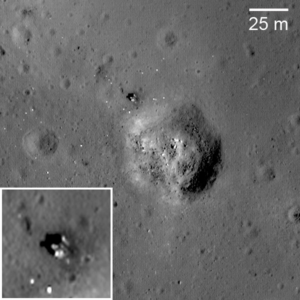
As the space race intensified, August became a month for significant celestial endeavors and strategic maneuvers. In 1976, the Soviet Union launched Luna 24 on August 9th, its final mission to return lunar samples. Nine days later, the probe successfully landed on the Mare Crisium plain of the Moon, drilling to a depth of two meters to collect approximately 170 grams of regolith. This mission was a crucial step in the ongoing scientific investigation of the Moon, providing invaluable material for analysis and deepening humanity’s understanding of its natural satellite’s composition and history.
The European Space Agency (ESA) demonstrated its growing capabilities in August 1976 by announcing its intention to display a full-scale model of the Spacelab modular laboratory at the Farnborough International Aerospace Exhibition. This move signaled ESA’s proactive efforts to garner public and commercial interest in European space activities, showcasing its collaborative projects with NASA and its ambitions for independent launch capabilities with the Ariane rocket. The exhibition also featured models of the Meteosat and OTS satellites, underscoring Europe’s commitment to advancing its presence in space.
The Soviet space program also saw activity in August 1976 with the return of Soyuz 21 cosmonauts Boris Volyonov and Vitaly Zholobov to Earth. Their 48-day mission to the Salyut 5 space station was one of three flights to the orbital outpost, with objectives that included assessing the station’s potential military surveillance capabilities. This mission highlighted the dual-use nature of space technology during the Cold War, where scientific exploration often intersected with strategic military interests.
On August 30th, 1976, the People’s Republic of China marked a significant milestone in its space program with the launch of its sixth satellite from the Jiuquan Satellite Launch Centre. Known as China 6, the spacecraft reportedly remained in orbit for approximately 17 months, signifying China’s steady progress in developing its satellite technology and its growing influence in the global space arena.
Intriguingly, August 1976 also saw the public display of the U.S. Air Force’s Project Blue Book files at the National Archives. This extensive, 20-year investigation into unidentified flying objects (UFOs) had concluded in 1969, with investigators determining no evidence of extraterrestrial activity. However, 701 cases remained unexplained, fueling ongoing public fascination and speculation. The reporting in the journal Science noted the significant public interest in these files, underscoring the enduring human curiosity about phenomena beyond our current understanding.
Modern Aviation Challenges and Technological Triumphs in August
The turn of the millennium continued to showcase August as a month of significant aviation events, ranging from record-breaking flights to critical emergency landings. In 2001, NASA’s solar-powered Helios Prototype achieved a world altitude record for winged aircraft on August 13th, reaching an astonishing 96,864 feet. This remotely operated craft not only set a new altitude benchmark but also demonstrated sustained flight at this extreme altitude, remaining above 96,000 feet for a remarkable 40 minutes. The Helios Prototype represented a leap forward in unmanned aerial vehicle technology, exploring the potential for high-altitude, long-endurance atmospheric research and surveillance.
A dramatic test of pilot skill and aircraft resilience occurred on August 24th, 2001, when Air Transat Flight 236, en route from Toronto to Lisbon, ran out of fuel over the Atlantic Ocean due to a fuel leak. Captain Robert Piché and First Officer Dirk DeJager executed a remarkable emergency landing at Lajes Airport in the Azores. With limited power, they were forced to perform a "deadstick" landing, gliding the Airbus A330 to a touchdown significantly faster than normal, relying solely on brakes to stop. This incident resulted in injuries to 16 of the 306 passengers and crew but, remarkably, no fatalities. It stands as the longest recorded glide without engine power by a jet airliner, a testament to the crew’s exceptional airmanship and the robust design of the aircraft.
On August 29th, 2001, Japan’s H-IIA launch vehicle made its inaugural flight, signaling a significant advancement in the nation’s space launch capabilities. Featuring crucial upgrades such as strap-on solid fuel boosters, the H-IIA demonstrated a marked improvement in reliability over its predecessor, the H-II. This successful debut underscored Japan’s commitment to its space program and its ability to compete in the global satellite launch market.
Conclusion: A Legacy of Innovation and Resilience
The collection of August events across these years paints a vivid picture of aviation and space exploration’s dynamic history. From the foundational regulatory steps of 1926 to the cutting-edge solar-powered flight of 2001, August has consistently been a stage for both triumphant achievements and critical lessons learned. The pursuit of records, the development of advanced aircraft and spacecraft, the establishment of international carriers, and the exploration of the cosmos have all been shaped by the events of this month. The stories of daring pilots, ingenious engineers, and ambitious nations continue to inspire, reminding us of the enduring human drive to conquer the skies and venture beyond our terrestrial home. Each August contribution, whether a celebrated first flight or a hard-won emergency landing, adds a vital chapter to the ongoing narrative of human ingenuity and our unyielding quest for progress.