The realm of space exploration and utilization is undergoing a profound transformation, marked by an unprecedented surge in technological innovation, commercial enterprise, and strategic interest. From groundbreaking scientific discoveries to ambitious engineering feats and the burgeoning commercialization of orbital services, the global space sector is rapidly expanding its capabilities and redefining humanity’s relationship with the cosmos. This dynamic landscape, characterized by both remarkable successes and persistent challenges, underscores space as a critical domain for scientific inquiry, technological advancement, and economic opportunity, while also demanding careful attention to sustainability and risk management.
The Dawn of Commercial Space Operations
A significant driver of the current space renaissance is the increasing role of commercial entities, often in partnership with traditional space agencies. NASA, for instance, is actively fostering this ecosystem by funding innovative projects designed to make space operations more efficient and cost-effective. One such initiative involves the development of an orbital hangar by Gravitics, aimed at significantly reducing the cost and accelerating the timeline for commercial space sample returns. This project signifies a strategic shift, where NASA seeks to leverage private sector ingenuity to streamline logistical challenges previously managed almost entirely by government programs. The vision is for private companies to handle the intricate process of bringing valuable samples from deep space or orbital platforms back to Earth, thereby freeing up agency resources for core research and exploration. Such a facility could become a crucial node in future interplanetary missions, facilitating the exchange of scientific payloads and fostering a more robust space economy.
Beyond sample returns, the commercial space sector is venturing into novel applications, including microgravity manufacturing. SpaceX, a leading private space company, is poised to launch 32 pharmaceutical laboratories into orbit, signaling a bold step towards drug production in microgravity environments. The unique conditions of space, free from gravitational pull, offer unparalleled opportunities for crystal growth and molecular structuring, potentially leading to the development of purer compounds and entirely new drugs. This development, if successful, could revolutionize the pharmaceutical industry, offering a new frontier for therapeutic innovation and high-value manufacturing that is simply not possible on Earth. The implications extend to a variety of industries, from advanced materials to biomedical research, demonstrating space’s potential as an industrial park.
Furthermore, the United States has approved the world’s first private constellation designed to strengthen navigation capabilities, serving as a crucial backup to the existing Global Positioning System (GPS). This move highlights the growing recognition of space infrastructure as vital national assets and the strategic imperative to diversify and harden these systems against potential threats or failures. Commercial navigation constellations promise enhanced resilience and accuracy, providing essential services for both civilian and military applications. This private-public collaboration in critical infrastructure underscores a broader trend where commercial ventures are not merely supplementing, but becoming integral to, national space capabilities.
Engineering Marvels and Orbital Infrastructure
The relentless pursuit of innovation in space engineering continues to yield impressive advancements. The development of new 3D-printed rocket engines, for example, is enabling faster test-and-learn cycles and rapid production, dramatically shortening the development timelines for propulsion systems. Additive manufacturing techniques allow for complex geometries and integrated components, optimizing engine performance and reducing manufacturing costs. This technology is not only accelerating the pace of rocket development but also democratizing access to space by making launch vehicles more affordable and adaptable.
In anticipation of future lunar outposts, companies like Interlune, in partnership with Vermeer, are targeting 2028 for the deployment of mission-ready Moon excavation systems. These autonomous systems are critical for NASA’s ambitious lunar base construction plans, aiming to extract regolith and other resources for in-situ resource utilization (ISRU). Building and sustaining a human presence on the Moon requires sophisticated machinery capable of operating in extreme environments, harvesting local materials for shelters, oxygen, and even rocket fuel. The successful development and deployment of such equipment will be foundational for long-term lunar habitation and exploration, paving the way for sustainable off-world operations.
The expansion of orbital infrastructure is also seeing the emergence of highly specialized satellites. Rocket Lab is developing "flatellites" for the US Space Force, next-generation satellites designed to track airborne threats. These innovative spacecraft, likely characterized by their compact and deployable nature, enhance situational awareness and provide critical data for national security. This initiative reflects the increasingly complex and strategic role of satellites in modern defense and surveillance.
Another cutting-edge development involves the integration of advanced computing into orbit. SpaceX’s collaboration with Nvidia to launch Starmind AI1, an orbital data center satellite powered by Nvidia’s Rubin chips, signifies a major leap forward in space-based computation. By bringing high-performance computing capabilities into orbit, this satellite will enable faster processing of vast amounts of data directly in space, reducing the need to transmit raw data back to Earth. This has profound implications for AI-driven applications, real-time analytics, and autonomous operations for a multitude of missions, from Earth observation to scientific research, promising to unlock new levels of efficiency and capability.
Furthermore, the concept of extending the operational lifespan of satellites without refueling is becoming a reality. SpaceX has launched Northrop Grumman’s robotic spacecraft designed for this very purpose. These servicing vehicles can dock with existing satellites, provide propulsion, reboost them to correct orbits, or even perform repairs. This "on-orbit servicing" capability is crucial for managing the growing population of satellites, reducing space debris by preventing premature decommissioning, and maximizing the return on investment for expensive orbital assets. It represents a shift towards a more sustainable and flexible approach to space asset management.

Unveiling the Cosmos: Scientific Exploration and Discovery
Amidst the engineering and commercial boom, scientific exploration remains a cornerstone of space activity. NASA’s rich history is replete with missions that have profoundly redefined science, engineering, and exploration. From the Hubble Space Telescope revolutionizing our understanding of the universe to the Mars rovers revealing the red planet’s geological past, these missions have consistently pushed the boundaries of human knowledge. The commitment to such ambitious scientific endeavors continues to inspire and inform future generations of explorers and scientists.
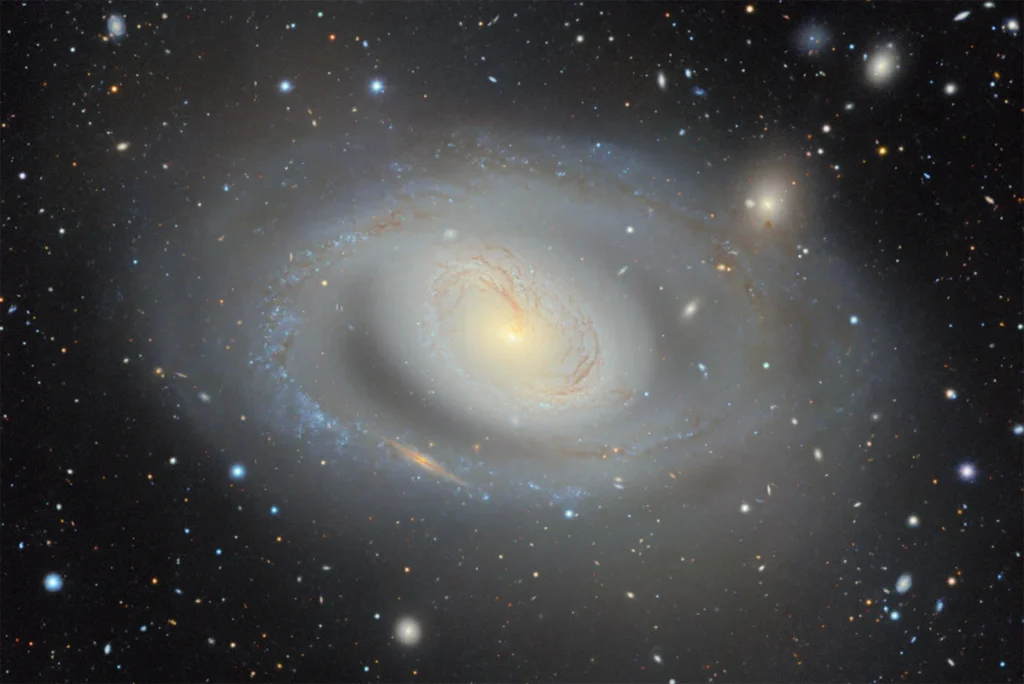
Recent years have brought forth astounding discoveries, including the identification of "7 strangest objects discovered in the Universe" that continue to challenge our understanding of physics and cosmology. These include exotic phenomena like magnetars, quasars, and fast radio bursts, which offer tantalizing glimpses into the extreme conditions and fundamental processes governing the cosmos. Similarly, the discovery of "7 most stunning exoplanets" has expanded our perspective on planetary diversity, with some worlds boasting conditions potentially suitable for life, while others present environments unlike anything in our solar system. The ongoing hunt for exoplanets, fueled by powerful telescopes like the James Webb Space Telescope, promises to continue revealing the wonders of distant worlds.
The search for extraterrestrial intelligence (SETI) is also undergoing a critical re-evaluation. Astronomers are rethinking traditional approaches, questioning whether they have been "hunting for alien signals" at the wrong frequencies or in the wrong places. This introspection is leading to new strategies, leveraging advanced signal processing techniques and broader observational campaigns, reflecting a mature and evolving scientific quest for life beyond Earth.
Navigating the Challenges of Space
The rapid expansion of space activities, while exciting, also brings a host of challenges and risks that demand robust solutions. One pressing concern is space debris. A notable incident involved a piece of a SpaceX rocket booster being on a collision course with the Moon’s surface, impacting at an estimated speed of 5,400 mph. While this particular impact was on a celestial body and posed no immediate threat to Earth, it underscores the growing problem of orbital junk. Every launch, every mission, and every malfunction contributes to a crowded orbital environment, increasing the risk of collisions that could generate even more debris, threatening operational satellites and future missions. International efforts are increasingly focused on tracking, mitigating, and eventually removing space debris to ensure the long-term sustainability of space activities.
Launch failures serve as a stark reminder of the inherent risks in space operations. China experienced a setback when its Long March 7A rocket exploded 85 seconds after liftoff, resulting in the loss of the ChinaSat-4B satellite. Such incidents highlight the complex engineering challenges and the unforgiving nature of spaceflight. Each failure, though unfortunate, provides invaluable data for engineers to refine designs, improve safety protocols, and enhance reliability for future launches.
Even established missions face significant challenges, as evidenced by NASA’s Swift rescue spacecraft spinning out of control after losing two reaction wheels. Reaction wheels are crucial for controlling a spacecraft’s orientation and stability. Malfunctions of this nature can severely compromise a mission’s ability to collect data or even render it inoperable. These events underscore the fragility of complex systems operating in the harsh vacuum of space, where repairs are often impossible, and redundancy is paramount.
Addressing potential threats from beyond Earth is also a critical area of focus. China has proposed a "deep-impact nuclear strategy to deflect Earth-threatening asteroids." This concept involves using nuclear devices to alter the trajectory of large, hazardous asteroids that could pose an existential threat to our planet. While such a strategy carries significant geopolitical and technical complexities, it reflects the global scientific community’s commitment to planetary defense and the proactive development of technologies to safeguard Earth from cosmic impacts. This complements other international initiatives, such as kinetic impactor missions, demonstrating a multi-faceted approach to this vital challenge.
The Rise of Autonomous Systems and AI in Space
Artificial intelligence and autonomous systems are increasingly being integrated into space operations to enhance efficiency, reduce reliance on ground control, and enable more complex missions. The United States Air Force (USAF) has made strides in this area, with an onboard neural network now guiding satellites, significantly reducing the need for constant ground control intervention. This development represents a pivotal shift towards more autonomous spacecraft, capable of making real-time decisions, navigating complex orbital maneuvers, and even diagnosing and recovering from certain anomalies without human input. Such autonomy is crucial for deep-space missions where communication delays are substantial and for large constellations where managing each satellite individually becomes impractical.
The confluence of advanced engineering, commercial dynamism, and scientific ambition paints a vibrant picture of the future of space. As private companies take on more operational roles, traditional space agencies can increasingly focus on frontier exploration and groundbreaking research. The relentless drive for innovation in propulsion, manufacturing, and AI is making space more accessible, more capable, and more resilient. However, this expansion also necessitates a concerted global effort to address the challenges of orbital congestion, space debris, and the responsible governance of this increasingly vital domain. The journey into space, ever an engineering problem and a scientific one, continues to unfold as humanity strives to make the cosmos both useful and usable for generations to come.