Physicists at Emory University have harnessed a novel machine learning methodology to unveil previously unobservable details about particle interactions within complex systems, particularly focusing on non-reciprocal forces where the influence exerted by one particle on another differs from the return influence. This groundbreaking work, published in the prestigious journal PNAS, marks a significant step beyond artificial intelligence’s traditional roles of data analysis and prediction, positioning it as a potent tool for the discovery of entirely new physical laws. The interdisciplinary collaboration, bridging experimental and theoretical physics, utilized a bespoke neural network trained with laboratory data from a dusty plasma system, demonstrating AI’s capacity to illuminate the fundamental principles governing the universe.
Unraveling the Mysteries of Non-Reciprocal Interactions
At the heart of this research lies the challenge of understanding non-reciprocal forces, which are ubiquitous in nature yet notoriously difficult to measure and model with high precision. Unlike reciprocal forces, such as gravity or electromagnetism, where the action-reaction pair is equal and opposite (Newton’s third law), non-reciprocal forces exhibit asymmetry. Imagine a school of fish where the leader influences the followers differently than the followers influence the leader, or two boats on a lake whose wake patterns interact unevenly depending on their relative positions and speeds. These forces are critical in diverse many-body systems, from the dynamics of living cells and collective animal behavior to the properties of industrial materials like paints and inks, and even the fundamental interactions within plasmas.
The Emory team’s innovation provides an unprecedentedly detailed description of these forces within dusty plasma, a system comprising ionized gas interspersed with charged dust particles. "We showed that we can use AI to discover new physics," states Justin Burton, an Emory professor of experimental physics and senior co-author of the paper, emphasizing the clarity of their approach. "Our AI method is not a black box: we understand how and why it works. The framework it provides is also universal. It could potentially be applied to other many-body systems to open new routes to discovery." This assertion underscores a crucial distinction: the AI is not merely finding correlations but constructing a functional understanding that leads to verifiable physical insights.
High-Precision Insights into Dusty Plasma Dynamics
The study achieved an astonishing accuracy of over 99% in describing these complex non-reciprocal forces. This level of precision allowed the researchers to challenge and correct long-held theoretical assumptions. Ilya Nemenman, an Emory professor of theoretical physics and co-senior author, elaborated on this impact: "What’s even more interesting is that we show that some common theoretical assumptions about these forces are not quite accurate. We’re able to correct these inaccuracies because we can now see what’s occurring in such exquisite detail."
For decades, theoretical models have provided approximations for these forces, often simplifying interactions due to the sheer complexity of multi-particle systems. For instance, a common theoretical assumption posited that a particle’s electric charge increases in direct proportion to its size. The new AI-driven findings, however, reveal a more intricate relationship, indicating that while larger particles do carry more charge, the correlation is not linear and is significantly influenced by environmental factors such as plasma density and temperature. Similarly, another long-standing idea suggested that inter-particle forces decay exponentially with distance, independently of particle size. The AI model compellingly demonstrated that particle size indeed plays a role in how rapidly these forces weaken over distance, adding a crucial layer of nuance to our understanding. These corrections were subsequently validated through additional targeted experiments, reinforcing the robustness of the AI’s discoveries.
The Fourth State of Matter: Dusty Plasma in Focus
To fully appreciate the significance of these findings, it is essential to understand the system under investigation: dusty plasma. Often referred to as the fourth state of matter, plasma is an ionized gas where electrons and ions move freely, imparting unique properties such as electrical conductivity. It constitutes an astounding 99.9% of the visible universe, manifesting in phenomena ranging from the solar wind and stellar interiors to lightning strikes and neon signs.
Dusty plasma, a variant containing additional charged micron-sized dust particles, is ubiquitous across various environments. It can be found in the majestic rings of Saturn, the Earth’s ionosphere, and even within industrial processes. On the Moon, for example, weak gravity allows charged dust to hover above the surface, a phenomenon that famously causes lunar astronauts’ suits to become coated in fine dust. On Earth, dusty plasma can form during wildfires when soot mixes with smoke, potentially disrupting radio signals and complicating communication for emergency responders. Understanding its dynamics, therefore, has both fundamental and practical implications.
A Chronology of Interdisciplinary Breakthrough
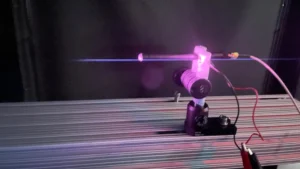
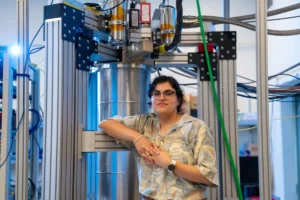
The journey to this discovery began with the meticulous experimental work in Burton’s laboratory. Researchers recreated dusty plasma systems in controlled environments, suspending tiny plastic particles within a plasma-filled vacuum chamber. By precisely adjusting gas pressure, they could mimic diverse real-world conditions, observing how particles responded to varying forces. For this specific project, Burton and former Emory PhD student Wentao Yu, now a postdoctoral fellow at the California Institute of Technology, developed an advanced tomographic imaging method. This technique involved moving a laser sheet through the chamber while a high-speed camera captured sequential images. These snapshots were then meticulously combined to reconstruct the three-dimensional (3D) motion of dozens of particles over time, providing the raw, high-precision data essential for training the AI.
The subsequent challenge lay in designing an AI capable of extracting new physics from this data, a task taken up by Nemenman, a theoretical biophysicist with a keen interest in collective motion in complex systems. Nemenman’s focus on how macroscopic system behaviors emerge from microscopic interactions, particularly in living systems like cancerous cell migration, made dusty plasma an ideal, simpler testbed for exploring AI’s discovery potential. The team recognized that conventional AI models, often reliant on massive datasets, would not suffice given the limited, albeit high-quality, experimental data.
"When you’re probing something new, you don’t have a lot of data to train AI," Nemenman explains. "That meant we would have to design a neural network that could be trained with a small amount of data and still learn something new." This realization spurred an intensive collaborative effort, involving more than a year of weekly meetings between the experimental and theoretical teams. The goal was to structure the neural network to adhere to known physical principles while simultaneously empowering it to explore and infer unknown physics. "We needed to structure the network to follow the necessary rules while still allowing it to explore and infer unknown physics," Burton clarified. This iterative process, described by Nemenman as "back-and-forth discussions," ultimately led to a surprisingly simple yet profoundly effective network architecture. The final model elegantly partitioned particle motion into three primary influences: drag from velocity, environmental forces such as gravity, and the intricate forces between particles.
Unveiling Subtle Interactions: Leading vs. Trailing Particles
Upon training with the 3D particle trajectories, the AI successfully captured the nuanced, asymmetrical forces between particles. A compelling example elucidated by the researchers is analogous to two boats traversing a lake: each creates a wake that affects the other, but the interaction is not necessarily symmetrical. "In a dusty plasma, we described how a leading particle attracts the trailing particle, but the trailing particle always repels the leading one," Nemenman detailed. While this phenomenon had been theoretically anticipated by some, the AI provided a precise, quantitative approximation that had previously been elusive. This particular insight highlights the AI’s ability to not only identify interactions but to quantify their directional and magnitude asymmetries with unprecedented accuracy.
Broader Implications and Future Horizons
The ramifications of this research extend far beyond the confines of dusty plasma physics. The developed physics-based neural network, capable of running on a standard desktop computer, offers a flexible framework applicable to a vast array of many-body systems across diverse scientific disciplines. From understanding the flow properties of industrial materials like paint and ink to modeling the complex dynamics of biological systems, the potential applications are immense.
Nemenman is already poised to share this methodology globally, slated to teach at the Konstanz School of Collective Behavior in Germany, an institution dedicated to studying complex systems ranging from avian flocks to human crowds. "I’ll be teaching students from all over the world how to use AI to infer the physics of collective motion — not within a dusty plasma but within a living system," he announced, signaling the immediate translational potential of their work.
This project also serves as a prime example of successful interdisciplinary collaboration, a point emphasized by Vyacheslav (Slava) Lukin, program director for the NSF Plasma Physics program. "This project serves as a great example of an interdisciplinary collaboration where the development of new knowledge in plasma physics and AI may lead to further advances in the study of living systems," Lukin remarked. "The dynamics of these complex systems is dominated by collective interactions that emerging AI techniques may help us to better describe, recognize, understand and even control." The research was primarily supported by the National Science Foundation, with additional funding from the Simons Foundation, underscoring the recognition of its foundational importance.
Crucially, the researchers stress that while AI offers revolutionary capabilities, human expertise remains indispensable. Scientists must meticulously design these models, formulate the right questions, and critically interpret the results. "It takes critical thinking to develop and use AI tools in ways that make real advances in science, technology and the humanities," Burton asserted. However, the optimism for the future remains palpable. "I think of it like the Star Trek motto, to boldly go where no one has before," Burton concluded, reflecting on the transformative potential. "Used properly, AI can open doors to whole new realms to explore."
The study’s first author, Wentao Yu, and co-author Eslam Abdelaleem, who also contributed as an Emory graduate student and is now a postdoctoral fellow at Georgia Tech, played pivotal roles in this groundbreaking research, exemplifying the next generation of scientists leveraging advanced computational tools to push the boundaries of human knowledge.