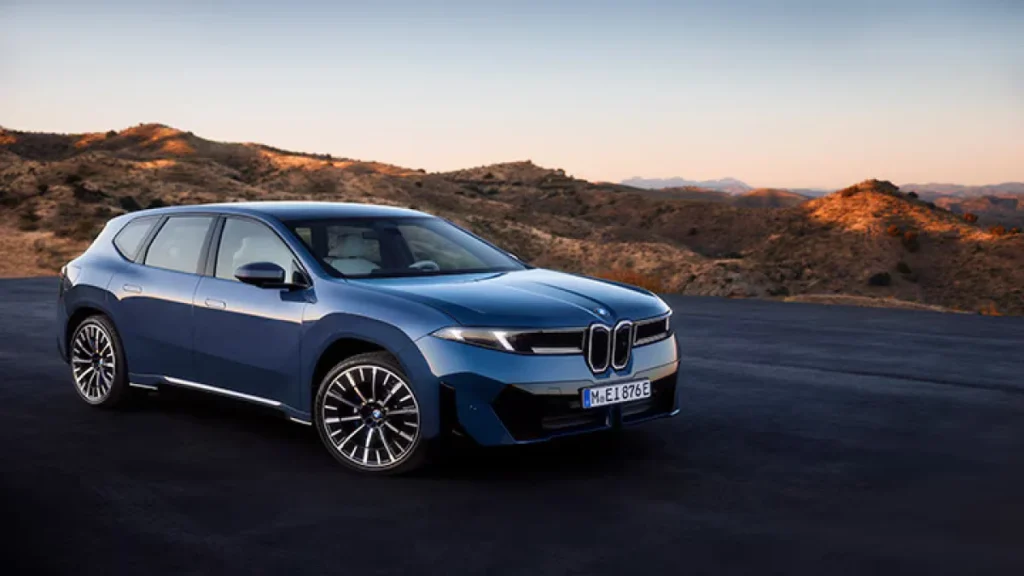
NXP Semiconductors has officially announced that its Trimension NCJ29D6 ultra-wideband (UWB) family of solutions will be comprehensively integrated across the BMW Group’s vehicle fleet, with initial deployment slated for selected 2026 vehicle programmes. This strategic adoption signifies a significant leap forward in automotive technology, blending advanced secure fine-ranging capabilities with sophisticated short-range radar functionalities within a single, unified hardware platform. The collaboration is poised to redefine vehicle access, bolster in-cabin safety, and pave the way for a new generation of smart automotive applications, reflecting a broader industry trend towards enhanced connectivity, security, and occupant protection.
The Evolution of Automotive Access and the Rise of UWB
For decades, the physical key has been the undisputed gateway to automotive ownership. Over time, this evolved from simple mechanical keys to remote key fobs, then to passive entry/start systems that allowed drivers to unlock and start their vehicles without physically interacting with a key. The advent of smartphones ushered in the era of digital keys, initially leveraging technologies like Near Field Communication (NFC) and Bluetooth Low Energy (BLE). While these offered convenience, they often presented limitations in terms of precise localization and susceptibility to relay attacks, where malicious actors could amplify signals to trick the vehicle into thinking the key was nearby.
Ultra-wideband (UWB) technology emerges as a transformative solution to these challenges. Unlike traditional radio technologies that send information by varying the amplitude or frequency of a continuous wave, UWB transmits data across a wide spectrum of frequencies in short, low-power pulses. This unique approach allows for highly precise distance measurement (ranging) and secure communication, making it significantly more resistant to interference and relay attacks. Its ability to determine location with centimeter-level accuracy, even in complex environments, sets it apart from BLE, which provides only approximate proximity, and NFC, which requires very close contact. The adoption of UWB in consumer electronics, notably by Apple for its AirTags and in its iPhone lineup for secure car key functionality, has significantly driven its maturity and standardization, laying a robust foundation for its wider automotive integration.
BMW has been at the forefront of digital key innovation, being one of the first manufacturers to offer a digital key solution for smartphones. Their "Digital Key Plus" initiative specifically leverages UWB to overcome the security and functionality limitations of earlier digital key iterations. The move to standardize NXP’s Trimension UWB across its fleet underscores BMW’s commitment to providing cutting-edge security and convenience features, aligning with consumer expectations for seamless digital integration into their daily lives.
BMW Digital Key Plus: A Seamless and Secure Experience
One of the cornerstone applications facilitated by NXP’s Trimension NCJ29D6 technology is the enhanced BMW Digital Key Plus. This system empowers compatible smartphones and smartwatches to completely supersede the traditional physical key fob, offering an unparalleled level of convenience and security. By employing UWB ranging capabilities, the vehicle can precisely determine the location of an authorized device in real-time. As the driver approaches the vehicle, the system intelligently detects their presence and automatically triggers unlocking. Conversely, as the driver departs, the vehicle securely locks itself, eliminating the need for manual interaction.
Beyond simple lock/unlock functions, the precision of UWB allows for a highly personalized welcome sequence. The vehicle can identify the specific authorized user approaching and automatically adjust settings such as seat position, mirror angles, climate control preferences, and infotainment profiles. It can also initiate personalized lighting sequences, illuminating the path to the vehicle and creating a sense of anticipation. This level of granular control and personalization, driven by accurate UWB localization, transforms the act of entering and starting a vehicle from a series of steps into a fluid, intuitive experience. The enhanced security against relay attacks, a known vulnerability in some earlier passive entry systems, is a critical differentiator for UWB, providing drivers with greater peace of mind.
The Critical Role of In-Cabin Presence Detection
Beyond convenience, NXP’s Trimension NCJ29D6 solution extends its capabilities to a vital safety application: in-cabin presence detection. This feature is meticulously engineered to identify whether a person or animal might have inadvertently been left inside a parked vehicle, a scenario that can have tragic consequences, particularly for vulnerable occupants like children or pets, especially in fluctuating ambient temperatures.

The technology leverages the short-range radar capabilities inherent in the UWB chip to detect subtle motion patterns indicative of occupant presence. Unlike camera-based systems, UWB radar can penetrate certain materials and is less affected by lighting conditions or obstructions, offering robust performance. It can discern even minute movements, such as breathing patterns, distinguishing between an empty cabin and one where a child or pet remains. If the system detects the possible presence of a person or animal after the vehicle has been parked and the driver has exited, it is programmed to issue an immediate warning to the vehicle user, typically via their smartphone or the vehicle’s infotainment system. This proactive alert system provides a critical safety net, allowing drivers to take prompt action.
The development and deployment of such advanced in-cabin detection systems are becoming increasingly imperative as automotive manufacturers navigate evolving global regulatory landscapes. Upcoming mandates, such as those within Europe’s General Safety Regulation 2 (GSR2) and future New Car Assessment Programme (NCAP) protocols in regions like Europe and China, are placing a heightened emphasis on occupant safety, particularly regarding child presence detection. The European New Car Assessment Programme (Euro NCAP), for instance, has outlined a roadmap to include Child Presence Detection (CPD) as part of its safety ratings, with substantial points allocated for effective systems from 2023 onwards, making it a critical differentiator for vehicle safety scores. Similarly, regulations in the United States, such as the proposed HOT CARS Act, highlight the severe public health issue of pediatric vehicular heatstroke. UWB-based radar detection offers a robust, privacy-respecting, and highly effective solution to meet these stringent new safety standards, significantly reducing the risk of heatstroke or other harm to vulnerable occupants left unattended.
NXP’s Trimension NCJ29D6: A Monolithic Automotive UWB Solution
NXP Semiconductors positions its Trimension NCJ29D6 as a groundbreaking innovation: the first monolithic automotive UWB solution that seamlessly combines secure fine-ranging and short-range radar capabilities onto a single chip. This integrated approach offers substantial benefits for vehicle manufacturers. By consolidating these functionalities, the solution simplifies hardware architecture, reduces bill of materials (BOM) costs, minimizes power consumption, and decreases the overall complexity of integration into vehicle platforms.
Traditionally, achieving both precise ranging for access and radar for presence detection might have required separate, dedicated hardware modules, each with its own processing unit and antennas. NXP’s monolithic design allows manufacturers to deploy a single, established UWB hardware platform that can serve a dual purpose – both for convenience applications like digital keys and for critical safety functions like in-cabin detection. This not only streamlines development and manufacturing processes but also provides a scalable and future-proof foundation for subsequent automotive applications.
Markus Staeblein, Senior Vice President and General Manager, Secure Car Access at NXP Semiconductors, aptly encapsulated the transformative potential of this technology, stating, "Digital key and presence detection are just the beginning." This statement underscores NXP’s vision for UWB as a foundational technology that will unlock a multitude of future automotive innovations. By establishing a robust UWB hardware presence within vehicles, manufacturers gain the flexibility to expand the use of secure ranging and radar technology across future vehicle platforms, enabling new features and services without necessitating a complete overhaul of the underlying hardware.
Broader Implications and Future Outlook
The widespread adoption of NXP’s UWB technology by a premium automotive brand like BMW carries significant implications for the broader automotive industry and the semiconductor market.
- Market Acceleration: BMW’s commitment to UWB is likely to accelerate its adoption across other OEMs. As a trendsetter in automotive technology, BMW’s endorsement provides strong validation for UWB as a key enabler for next-generation vehicle architectures. Competitors will likely follow suit to maintain parity in features and safety. The global automotive UWB market is projected to grow substantially, with reports indicating a compound annual growth rate (CAGR) exceeding 25% in the coming years, driven largely by digital key and safety applications.
- New Applications and Services: The robust and precise ranging capabilities of UWB open doors for a myriad of new applications beyond current implementations. These could include:
- Automated Valet Parking: Guiding autonomous vehicles precisely to parking spots.
- Automated Charging: Guiding electric vehicles to wireless charging pads or automated charging robots.
- Advanced Gesture Control: Highly accurate kick sensing for trunk opening, or in-cabin gesture recognition for infotainment.
- Vehicle-to-Everything (V2X) Communication: Enhanced security and precision for vehicle-to-infrastructure (V2I) and vehicle-to-vehicle (V2V) interactions, particularly in dense urban environments or for cooperative maneuvers.
- Car-Sharing and Fleet Management: More secure and seamless handover of vehicles.
- Anti-Theft Systems: Improved intrusion detection and immobilization based on precise key location.
- Security and Privacy: UWB’s inherent security features make it a strong candidate for critical automotive functions, reducing vulnerabilities to cyber threats. For presence detection, UWB radar is generally considered more privacy-friendly than camera-based systems as it detects motion and presence without capturing identifiable images.
- Standardization and Ecosystem Growth: The growing adoption by major OEMs will further drive standardization efforts, such as those by the Car Connectivity Consortium (CCC) and FiRa Consortium, ensuring interoperability across different devices and vehicle brands. This will foster a richer ecosystem of UWB-enabled devices and services.
- Competitive Landscape: NXP’s strong position in automotive semiconductors is further solidified by this win. While other semiconductor companies are also developing UWB solutions, NXP’s early integration into BMW’s platform provides a significant competitive advantage and showcases its leadership in secure car access and radar technologies.
Conclusion
The integration of NXP Semiconductors’ Trimension NCJ29D6 UWB family into BMW’s upcoming vehicle programmes marks a pivotal moment for the automotive industry. It signifies a convergence of advanced secure access, critical safety features, and a foundational technology platform poised for future innovation. By offering a monolithic solution that expertly combines secure fine-ranging and short-range radar, NXP is empowering BMW to deliver enhanced convenience through its Digital Key Plus and superior safety through sophisticated in-cabin presence detection. This move not only addresses immediate consumer demands for seamless digital integration and robust security but also proactively positions BMW to meet stringent forthcoming regulatory requirements for occupant safety. As the automotive landscape continues its rapid evolution towards greater autonomy, connectivity, and electrification, UWB technology, championed by collaborations like that between NXP and BMW, is set to be a fundamental enabler, driving the next wave of intelligent and secure mobility experiences.






