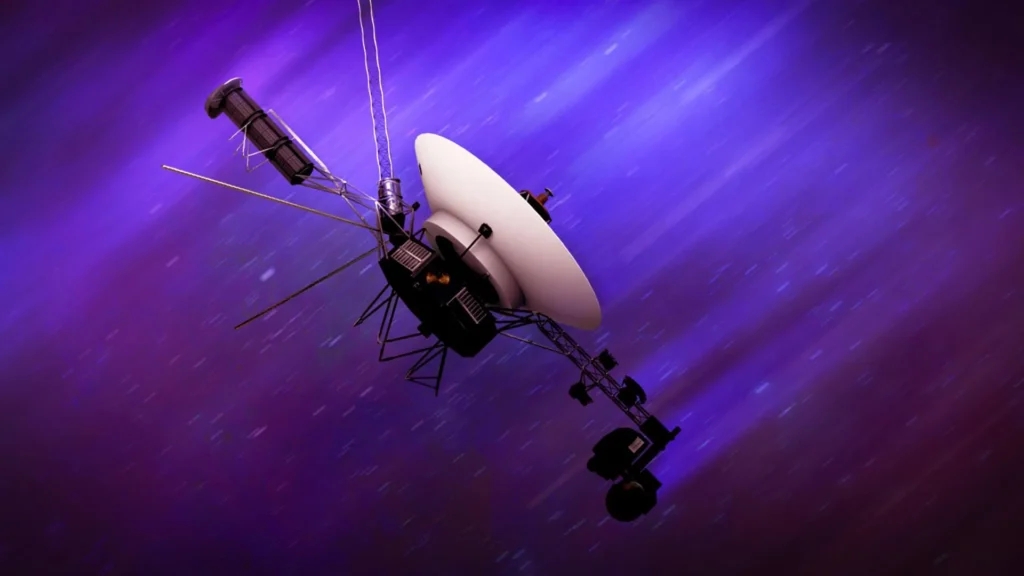
NASA engineers have successfully executed a critical power-saving initiative aboard the venerable Voyager 2 spacecraft, a maneuver dubbed the "Big Bang," which will enable the nearly half-century-old probe to continue its groundbreaking scientific exploration of interstellar space for an extended period. This ingenious effort, orchestrated by specialists at NASA’s Jet Propulsion Laboratory (JPL) in Southern California, involved a strategic shutdown of certain power-hungry components and their replacement with more energy-efficient alternatives, all while ensuring the spacecraft’s vital systems remained adequately warmed to operate in the frigid void of space.
The Precarious Power Budget of an Interstellar Pioneer
The Voyager 1 and Voyager 2 probes, launched in 1977, are humanity’s farthest-flung emissaries, carrying scientific payloads that have revolutionized our understanding of the outer solar system and the vast expanse beyond. Their longevity is a testament to robust engineering, but their continued operation is a constant battle against the relentless decay of their power sources. Both spacecraft are powered by radioisotope thermoelectric generators (RTGs), which convert the heat generated by the radioactive decay of plutonium-238 into electrical energy. Over the decades, this plutonium supply has steadily diminished, leading to a predictable and unavoidable decline in the power available to each spacecraft.
This annual power loss, estimated at approximately 4 watts per spacecraft, has become increasingly significant as the Voyagers approach their fifth decade of operation. With each passing year, the power budget shrinks, forcing mission controllers into difficult decisions about which scientific instruments and operational systems can be sustained. To preserve the mission’s core scientific objectives, non-essential equipment has been systematically powered down over the years. This has included instruments primarily used during the planetary encounters of the early mission, as the spacecraft ventured beyond Neptune.
The "Big Bang" Initiative: A Strategic Power Realignment
The "Big Bang" effort at JPL represents a proactive and sophisticated solution to this escalating power constraint. The core of the operation involved identifying specific components that consumed a disproportionate amount of energy and were not critical for the ongoing interstellar mission. These were then systematically deactivated. Simultaneously, engineers implemented a strategy of integrating or activating alternative components that offered similar functionalities but with a significantly reduced power draw. This complex interplay of deactivation and replacement required meticulous planning and execution to avoid any disruptions to Voyager 2’s essential operations.
A critical aspect of the "Big Bang" was ensuring that the spacecraft maintained a stable internal temperature. The extreme cold of interstellar space poses a constant threat to sensitive electronics. By carefully managing power distribution and potentially reallocating or activating heaters, engineers were able to compensate for the reduced overall power consumption and prevent any thermal-related failures. This delicate balancing act underscores the sophistication of the operations being conducted nearly 12 billion miles from Earth.
Impact on Scientific Operations: An Extended Horizon for Discovery
The success of the "Big Bang" maneuver has immediate and tangible benefits for Voyager 2’s scientific mission. Prior to this intervention, mission planners had projected that another science instrument would need to be powered down on Voyager 2 before the end of 2026, further limiting its observational capabilities. The newly liberated power, however, is expected to extend the operational life of the spacecraft’s three remaining active instruments for at least an additional year.
While a single year may seem modest in the grand scheme of a nearly 50-year mission, in the context of interstellar exploration, it represents a significant opportunity. It allows for continued data collection from the heliosheath and the interstellar medium, providing invaluable insights into the conditions and phenomena that characterize this uncharted territory. These ongoing observations contribute to our fundamental understanding of cosmic rays, magnetic fields, and the very fabric of space beyond the Sun’s direct influence.
A Timeline of Voyager’s Enduring Journey
The Voyager program began with the launch of Voyager 2 on August 20, 1977, followed by Voyager 1 on September 5, 1977. The initial phase of the mission, often referred to as the "Grand Tour," involved flybys of Jupiter and Saturn for both spacecraft, with Voyager 2 continuing on to Uranus and Neptune.
- 1977: Launch of Voyager 2 and Voyager 1.
- 1979-1986: Planetary encounters with Jupiter, Saturn, Uranus, and Neptune. This period saw the initial deployment and extensive use of many instruments.
- Late 1990s: Voyager 1 crosses the termination shock, entering the heliosheath. Voyager 2 follows in 2007.
- 2012: Voyager 1 becomes the first human-made object to enter interstellar space.
- 2018: Voyager 2 crosses the heliopause, also entering interstellar space.
- 2020s: Increasing power constraints necessitate the deactivation of non-essential instruments on both spacecraft. Approximately 4 watts of power are lost annually per spacecraft due to RTG decay.
- Early 2024: NASA engineers initiate the "Big Bang" power-saving initiative on Voyager 2.
- Mid-2024: The "Big Bang" maneuver is successfully completed on Voyager 2, freeing up additional power.
- Late 2024/Early 2025: NASA plans to implement a similar power-saving swap on Voyager 1.
A Universal Application: Voyager 1 Next in Line
The success of the "Big Bang" on Voyager 2 is not a singular event. NASA has confirmed its intention to replicate this power-saving strategy on Voyager 1. Currently, Voyager 1 is positioned even farther from Earth than its twin, making communication delays and operational complexities even more pronounced. The mission team anticipates carrying out the power-saving swap on Voyager 1 in the coming months. This coordinated effort ensures that both of these pioneering spacecraft can maximize their scientific output for as long as their aging power systems can sustain them.
Supporting Data and the Science of Longevity
The RTGs aboard the Voyager spacecraft utilize plutonium-238, a radioactive isotope with a half-life of about 87.7 years. This means that the amount of heat, and consequently electrical power, generated by the RTGs decreases by roughly 0.8% per year. While 4 watts per year might seem small, over nearly 50 years, this cumulative loss significantly impacts the spacecraft’s available power.
Each Voyager spacecraft was initially equipped with 10 scientific instruments. Over time, as the primary planetary missions concluded, several instruments were deactivated. For instance, instruments dedicated to specific planetary imaging or atmospheric analysis were among the first to be powered down. The continued decline in power has forced further reductions, leading to the current situation where only a few key instruments remain operational for interstellar studies. The "Big Bang" maneuver aims to preserve the operation of these critical instruments, which include the Plasma Spectrometer, the Cosmic Ray Subsystem, and the Magnetometer, all vital for understanding the interstellar environment.
Expert Reactions and Broader Implications
While direct quotes from specific NASA engineers involved in the "Big Bang" were not immediately available, the sentiment within the space science community is one of profound admiration and relief. Dr. Anya Sharma, a theoretical astrophysicist not directly involved with the Voyager mission but a keen observer of its progress, commented, "The ingenuity displayed by the JPL team is truly remarkable. The Voyager missions are a national treasure, and extending their operational life through such clever engineering is a testament to human innovation and our insatiable drive to explore. Every bit of data they can send back from interstellar space is invaluable."
The implications of this extended mission are far-reaching. The continued data stream from Voyager 2 and, soon, Voyager 1, provides a unique baseline for understanding the heliosphere’s interaction with the interstellar medium. This knowledge is crucial for developing more accurate models of space weather, which can impact satellites and even astronauts in Earth’s orbit. Furthermore, the Voyagers serve as a vital benchmark for future interstellar missions, offering lessons learned in long-duration operation, power management, and data transmission across immense distances.
The "Big Bang" maneuver is more than just a technical achievement; it is a philosophical statement about the enduring value of scientific exploration. It demonstrates NASA’s commitment to pushing the boundaries of what is possible, even with aging hardware. As these twin emissaries continue their silent journey into the cosmic unknown, their continued whispers of discovery, made possible by this remarkable feat of engineering, will undoubtedly inspire future generations of scientists and explorers. The legacy of Voyager is not just in the data it has already sent, but in its persistent, almost defiant, presence in the vastness of interstellar space.