Washington D.C. — The Federal Communications Commission (FCC) has initiated a significant regulatory expansion, adding a broad category of foreign-produced "advanced robotic devices" to its Covered List, a move designed to bolster national security and cybersecurity within the United States. This action, effective July 28, imposes substantial barriers for new models of mobile robots, including autonomous mobile robots (AMRs), humanoids, and quadrupeds, seeking to enter the U.S. market, marking a critical moment for the rapidly evolving robotics industry.
The FCC’s decision stems from a national security determination made by various executive branch agencies, identifying potential supply chain and cybersecurity vulnerabilities inherent in these advanced robotic systems. Equipment designated to the Covered List typically faces an outright ban from receiving the FCC authorization essential for new models to be imported, marketed, or sold within the U.S. An exception may be granted through a Conditional Approval, a rigorous process requiring review and consent from relevant executive branch agencies, underscoring the gravity of the perceived threats.
The Expanding Scope of the Covered List
The FCC’s Covered List policy has evolved significantly since its inception, primarily targeting telecommunications equipment from companies deemed to pose national security risks. The Secure and Trusted Communications Networks Act of 2019 provided the legislative framework for this initiative, initially focusing on entities like Huawei and ZTE. This expansion to include advanced robotic devices represents a major shift, indicating a broader interpretation of critical infrastructure and potential vectors for foreign interference. The move reflects a growing concern among U.S. policymakers that the proliferation of sophisticated, internet-connected devices, particularly those with autonomous capabilities, could be exploited by adversaries.
Historically, the Covered List has served as a mechanism to prevent U.S. networks and infrastructure from being compromised by equipment that could be used for espionage, sabotage, or other malicious activities. By extending this purview to robotics, the FCC is acknowledging the increasing integration of these systems into critical sectors, from manufacturing and logistics to defense and emergency services. The July 28 action is a direct consequence of this evolving threat landscape, recognizing that a robot, much like a network router, can serve as a conduit for sensitive data or even become an instrument of physical disruption if compromised.
Defining "Advanced Robotic Devices" Under the New Mandate
The FCC has provided a detailed, albeit complex, definition for what constitutes an "advanced robotic device" subject to these new restrictions. This classification targets specific mobile mechanical systems characterized by their ability to achieve locomotion, navigate complex environments, and avoid obstacles. Crucially, these systems must operate either remotely or autonomously, relying on sophisticated sensor data for their functions.
Beyond these fundamental capabilities, the definition further specifies requirements related to the robot’s physical attributes and operational characteristics. Covered systems must meet certain criteria concerning their weight, indicating a focus on devices of a substantial size and capability rather than miniature or purely educational robots. Environmental sensing capabilities are also a key factor, signifying robots that can perceive and interact with their surroundings in a sophisticated manner. Furthermore, the presence of network connectivity and software designed for autonomous navigation, perception, data collection, or remote operation are central to the FCC’s classification. This highlights the interconnected nature of these modern robotic systems and the potential for remote exploitation.
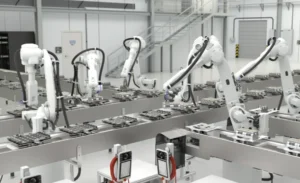
It is vital for the industry to note what is not covered by these restrictions. The government’s definition explicitly excludes traditional fixed industrial robots, which have been a staple of factory automation for decades. This means articulated robot arms, delta and parallel robots, Cartesian and gantry robots, and SCARA robots, widely used for assembly, welding, dispensing, and material handling, remain outside the scope of the new regulations. This distinction is crucial, as it indicates the FCC’s focus is on the mobile, autonomous, and potentially distributed nature of the newly restricted categories, rather than the static, contained operations of conventional industrial automation.
The definition specifically includes autonomous mobile robots (AMRs), humanoid robots, and quadrupedal robots. However, it carefully carves out exemptions for a range of other connected autonomous systems, including connected vehicles (e.g., self-driving cars), rail-only vehicles, uncrewed aircraft systems (UAS or drones), unmanned underwater vehicles (UUVs), and certain medical devices. These exclusions suggest that other regulatory bodies or specific legislative frameworks may govern their security, or that their operational contexts present different threat profiles.
The Rationale: Unpacking National Security and Cybersecurity Concerns
The core of the FCC’s action lies in the determination that foreign-produced advanced robotic devices could introduce critical supply chain and cybersecurity vulnerabilities, directly impacting U.S. economic and national security, as well as critical infrastructure. This concern transcends mere data security, encompassing a broader spectrum of potential threats.
The White House, instrumental in the national security determination, highlighted a specific cybersecurity vulnerability found in certain foreign-produced humanoids. This vulnerability, if exploited, could allow a remote actor to seize control of a single robot. More alarmingly, such a compromised robot could then identify and potentially control other nearby humanoids, leading to the formation of a "botnet" capable of spreading autonomously without user intervention. Such a scenario paints a chilling picture: an army of seemingly benign robots, distributed across various U.S. facilities, suddenly repurposed for malicious ends, whether for espionage, sabotage, or even physical harm.
Independent cybersecurity researchers have corroborated these concerns, demonstrating the multifaceted risks posed by compromised humanoid platforms. Their findings indicate that these robots can present both significant surveillance risks—acting as mobile, intelligent data collection points—and direct cyberattack vectors. A compromised robot could, for instance, map sensitive environments, collect proprietary data through its sensors, or even physically interfere with operations if its movement and manipulators are remotely controlled. The implications for intellectual property theft, industrial espionage, and disruption of critical services are profound.

The supply chain vulnerability aspect is equally critical. Reliance on foreign manufacturers for advanced robotic components or complete systems creates potential points of entry for malicious hardware or software. These "backdoors" could be intentionally inserted by state-sponsored actors during the manufacturing process, allowing for covert access and control once the robots are deployed within the U.S. Such a scenario would bypass traditional cybersecurity defenses and pose an insidious threat to sensitive operations.
Industry Implications and Market Dynamics
These new restrictions are poised to have significant implications across the robotics ecosystem, affecting manufacturers, robot suppliers, systems integrators, and end-users alike. The global market for mobile robots, particularly AMRs and humanoids, has been experiencing explosive growth. According to various market research firms, the AMR market alone is projected to reach tens of billions of dollars by the end of the decade, with humanoid robots also gaining traction in diverse applications. Many leading manufacturers in these segments are based internationally, particularly in Asia and Europe, making the U.S. market a crucial battleground for innovation and sales.
For foreign manufacturers, the immediate challenge is market access. Companies that have invested heavily in developing and marketing new models for the U.S. will now face substantial hurdles, potentially delaying or even preventing their entry. This could necessitate costly redesigns, the establishment of U.S.-based manufacturing or assembly operations, or a complete withdrawal from the U.S. market for certain product lines. The compliance burden, including the extensive documentation and review process for Conditional Approval, will be significant.
Robot suppliers and systems integrators in the U.S. will also feel the ripple effects. Their portfolios of available robots for deployment in U.S. factories, warehouses, and other facilities may shrink, forcing them to re-evaluate their partnerships and potentially seek out domestic alternatives. This could lead to increased costs and longer lead times for customers seeking to automate their operations, as the competitive landscape shifts. Integrators may also need to invest in new expertise to navigate the regulatory complexities on behalf of their clients.
For U.S. businesses that rely on advanced robotics for efficiency and competitiveness, the restrictions could lead to supply disruptions, limited choices, and potentially higher prices for compliant systems. Industries such as logistics, manufacturing, healthcare, and retail, which are increasingly adopting AMRs and other mobile robotic solutions, will need to carefully assess their procurement strategies. While the restrictions do not prevent the continued use of already-owned affected robots, or the import/sale of existing models that previously received FCC authorization, the future landscape for new deployments will be markedly different.
Navigating the New Regulatory Landscape: Conditional Approval
The primary avenue for foreign-produced robots to overcome the new market entry barriers is through a "Conditional Approval" process. While the full details of this process are still being clarified through an FCC FAQ and potential future guidance, it is expected to be a stringent federal review. Manufacturers seeking such approval, which can cover entire classes of devices, will likely need to demonstrate robust cybersecurity measures, supply chain transparency, and a commitment to mitigating the identified national security risks. This could involve providing detailed information about their software development practices, component sourcing, data handling protocols, and even the ownership structure of their companies.
The process for Conditional Approval is anticipated to be complex and time-consuming, requiring close coordination with various executive branch agencies involved in national security assessments. This could include the Department of Defense, Department of Commerce, Department of Homeland Security, and intelligence agencies. The criteria for approval will likely be dynamic, evolving with the threat landscape and technological advancements.
Reactions and Future Outlook
While no specific public statements from foreign manufacturers or industry associations have been widely reported immediately following the July 28 announcement, the move is expected to draw strong reactions. Industry groups representing robotics manufacturers and users, such as the Association for Advancing Automation (A3) or the Robotics Industries Association, are likely to engage with the FCC and other government agencies to seek clarification, provide industry perspectives, and advocate for practical implementation guidelines. Their concerns will likely center on ensuring a level playing field, avoiding undue burdens on legitimate businesses, and preserving innovation in a critical technological sector.
Cybersecurity experts, on the other hand, are likely to welcome the move, emphasizing the growing importance of securing autonomous systems against sophisticated threats. They would likely reiterate that while the economic implications are significant, national security imperatives must take precedence in an increasingly interconnected and vulnerable world.
This FCC action is part of a broader global trend where governments are increasingly scrutinizing the supply chains of critical technologies, particularly those originating from geopolitical rivals. It underscores the ongoing tension between fostering technological innovation and safeguarding national interests. The long-term effects could include a push towards greater domestic manufacturing of advanced robotics in the U.S., increased investment in cybersecurity research and development for autonomous systems, and a reorientation of global supply chains for the robotics industry.
The U.S. market, being one of the largest and most influential for advanced technology, often sets precedents that other nations may follow. As the world moves further into an era where robots are not just tools but increasingly autonomous agents interacting with our physical and digital infrastructure, the regulatory frameworks governing their development and deployment will continue to evolve, with national security and cybersecurity at the forefront of these considerations. The FCC’s latest action is a clear signal that the era of unfettered market access for advanced foreign-produced robotics is coming to an end, ushering in a new era of heightened scrutiny and strategic competition.