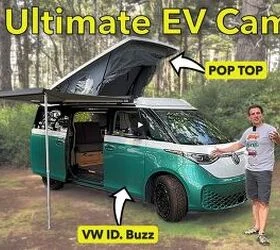
A recent two-night getaway along the picturesque Pacific coastline offered a unique opportunity to experience the Volkswagen ID. Buzz reimagined as a fully functional "living room on wheels," complete with a pop-top bedroom. This meticulously crafted camper conversion, provided by Harley and the team at Peace Vans, transforms the electric van into a surprisingly capable and comfortable mobile dwelling, blending modern electric vehicle technology with the nostalgic charm of a classic camper. The evaluation not only delved into the practicalities of this innovative conversion but also assessed the ID. Buzz’s driving dynamics and its advanced Travel Assist system, providing a comprehensive look at this emerging segment of the automotive and recreational vehicle market.
The Genesis of the ID. Buzz Camper: Peace Vans’ Vision
The collaboration between TTAC Creators Series and Peace Vans highlights a growing trend in the automotive world: the integration of personal passion and expert craftsmanship to create unique vehicle experiences. Peace Vans, a company known for its expertise in camper van conversions, has taken the already distinctive ID. Buzz and elevated it to a new level of utility and comfort. This particular conversion, conceived for weekend getaways, showcases the potential of electric vehicles beyond mere daily commuting, venturing into the realm of leisure and adventure. The company’s commitment to quality and thoughtful design is evident in every aspect of the build, from the cleverly integrated kitchen amenities to the ingenious pop-top sleeping quarters.
The decision by Volkswagen to reintroduce the iconic "Bus" nameplate in an all-electric format, the ID. Buzz, tapped into a deep well of nostalgia while simultaneously embracing the future of mobility. The vehicle’s retro-futuristic design, reminiscent of the original Type 2 Transporter, has garnered significant attention. However, its practical application as a camper van was an avenue ripe for exploration, a challenge Peace Vans has enthusiastically embraced. Their conversion philosophy appears to be rooted in maximizing utility within a compact footprint, a crucial consideration for navigating both urban environments and scenic coastal routes.
A "Living Room on Wheels": Exploring the Interior Conversion
The core of this review lies in the extensive camper conversion undertaken by Peace Vans. The ID. Buzz is no longer just an electric van; it has been meticulously transformed into a compact motorhome, a veritable "living room on wheels." The downstairs area has been thoughtfully designed to accommodate essential living functions. While specific details of the downstairs layout were not fully enumerated in the provided summary, the mention of a "cozy downstairs kitchen" suggests the inclusion of cooking facilities, refrigeration, and preparation surfaces. This is a critical element for any self-sufficient camper, allowing occupants to prepare meals and store provisions, thereby extending the duration and enjoyment of their outdoor excursions.
The rear seating area is engineered to convert into a downstairs bed, offering a comfortable sleeping arrangement for those who prefer to remain at ground level. This versatility is key to maximizing the usable space within the van. Additional side storage solutions have been incorporated, providing ample room for camping gear, personal belongings, and other essentials needed for a multi-day trip. Effective organization of storage is paramount in any camper conversion, and the Peace Vans team appears to have addressed this need with practical and accessible solutions.
The Ingenious Pop-Top: Expanding Living Space and Sleeping Capacity
The standout feature of this ID. Buzz conversion is undoubtedly the pop-top roof. This clever addition dramatically expands the vehicle’s interior volume and introduces a secondary sleeping area. The process of deploying the pop-top is described as relatively straightforward, involving the removal of a cover, the release of hooks and safety mechanisms, and a simple upward push. This ease of operation is crucial for a camper that might be used frequently or by individuals with varying levels of technical expertise.
Once raised, the pop-top creates a surprisingly functional upstairs sleeping platform. Measuring approximately 77 inches in length and 46 inches in width, it offers enough space to accommodate an adult comfortably. The headroom at its tallest point is around 33 inches, allowing for sitting upright, a significant advantage over sleeping in a cramped, confined space. While two adults can fit, the description notes it can be "somewhat cramped," suggesting it is best suited for a single occupant, a couple who don’t mind close quarters, or perhaps smaller individuals. The reviewer’s personal experience of sleeping upstairs while others slept downstairs highlights this spatial consideration.
The upstairs sleeping area is not just a place to rest; it’s also an integrated part of the camping experience. Zippered openings provide excellent ventilation, crucial for comfort, especially during warmer months. Furthermore, these openings offer panoramic views of the surrounding natural beauty, allowing campers to wake up to stunning vistas and feel more connected to their environment. This integration with the outdoors is a defining characteristic of the pop-top camping experience.
The Two-Night Coastal Camping Experience: Real-World Performance
The true test of any camper conversion lies in its performance during actual use. The reviewer’s two-night camping trip along the Pacific coastline provided valuable insights into the practicality and comfort of the converted ID. Buzz. The presence of the pop-top was identified as a "major difference," significantly enhancing the vehicle’s spaciousness, usability, and connection to the outdoors compared to a standard ID. Buzz. This emphasizes the transformative impact of the pop-top on the overall camper van experience.
Comfort during sleep is a critical factor. The upstairs mattress, while functional, is described as thinner than the downstairs option. The reviewer’s solution of adding a 2-inch mattress topper demonstrates a common and effective practice among campers to enhance comfort, particularly for side sleepers. A minor drawback noted was the increased noise level in the pop-top compared to the main cabin. However, the reviewer acknowledges this as a typical characteristic of pop-top campers and states it did not significantly detract from the overall enjoyment.
The craftsmanship and organization of the conversion received high praise. The efficient division of space and the thoughtful placement of storage solutions were highlighted. However, the review also wisely points out the necessity for owners to develop a personal organizational system. The inconvenience of having essential items, such as coffee-making equipment, buried beneath folded bedding serves as a practical reminder of the need for meticulous planning in compact living spaces.
Peace Vans offers various configurations beyond this specific "living room on wheels" setup. Options like the "Weekender" arrangement, which includes a launch table and retains rear seats, and a kitchen-box configuration with an integrated mattress, cater to different camping styles and needs. This flexibility further enhances the appeal of the ID. Buzz as a platform for custom camper conversions.
Driving Dynamics and Electric Range: The ID. Buzz in Motion
Beyond its camper capabilities, the ID. Buzz itself offers a compelling driving experience, especially in its electric iteration. After the camping portion of the trip, the vehicle displayed an estimated remaining range of 214 miles on a full charge. This figure, while dependent on driving style and conditions, provides a reasonable benchmark for the electric range of the ID. Buzz, suggesting it is well-suited for weekend excursions and potentially longer journeys with strategic charging stops.
The reviewers describe the ID. Buzz as "agile and pleasant to drive," a sentiment often attributed to the instant torque and smooth power delivery characteristic of electric powertrains. The vehicle’s compact dimensions, combined with its electric propulsion, likely contribute to its maneuverability and overall enjoyable driving character, making it a practical choice for both urban navigation and scenic highway cruising.
Volkswagen’s Travel Assist: A Glimpse into Advanced Driver Assistance
The review also included a demonstration of Volkswagen’s Travel Assist system, a sophisticated suite of driver assistance technologies designed to enhance safety and reduce driver fatigue on highways. Travel Assist integrates adaptive cruise control and lane-keeping assist to maintain a set speed, keep the vehicle centered within its lane, and manage the following distance from the car ahead. This system can significantly simplify long-distance driving, allowing the driver to focus more on the road and less on constant micro-adjustments.
It is crucial to emphasize, as the reviewers did, that Travel Assist is not a fully autonomous system. The driver remains responsible for monitoring the vehicle’s surroundings and maintaining control. The controls for engaging and adjusting Travel Assist are presented as user-friendly, with the system being activated and fine-tuned via steering-wheel mounted buttons. This accessibility ensures that drivers can readily utilize the system’s benefits without complex operation. The ability to adjust following distance through dedicated controls further adds to the system’s practicality and adaptability to varying traffic conditions.
Broader Implications and Future Outlook
The Peace Vans conversion of the VW ID. Buzz represents a significant step forward in the integration of electric vehicles with recreational living. The core takeaway is that this conversion transforms the ID. Buzz from a mere electric van into a "genuinely usable compact camper." The pop-top is highlighted as the "star of the conversion" due to its ability to provide an additional sleeping area, increase headroom, and foster a stronger connection with the natural environment, all without substantially increasing the vehicle’s overall footprint.
The compromises inherent in such a compact camper – limited sleeping space for two adults, slightly less comfortable upstairs accommodations, and the necessity for diligent organization – are acknowledged. However, the overall execution, craftsmanship, and versatility of the conversion are met with strong positive sentiment. This suggests a high level of satisfaction with the product and a promising future for such innovative vehicle adaptations.
The combination of electric propulsion, compact dimensions, a well-conceived interior, and pop-top camping capability positions the ID. Buzz camper as an exceptionally appealing option for short weekend trips and coastal or outdoor adventures. As the demand for sustainable and versatile travel solutions continues to grow, conversions like this by Peace Vans are likely to play an increasingly important role in shaping the future of recreational vehicles. The ID. Buzz, with its unique blend of retro charm and modern electric technology, proves to be an ideal canvas for such creative and practical transformations, opening up new possibilities for exploration and enjoyment of the great outdoors. The ongoing development of charging infrastructure and battery technology will only further enhance the viability and appeal of electric campers like this one.