The evolution of the wristwatch bracelet is a fascinating journey, mirroring advancements in craftsmanship, material science, and fashion trends throughout the 20th and 21st centuries. While leather and fabric straps dominated early wristwatches, the emergence of robust and aesthetically pleasing metal bracelets transformed the wristwatch from a delicate accessory into a durable and versatile timepiece. This article delves into the rich history of metal watch bracelets, exploring key designs, pivotal manufacturers, and their enduring impact on horology.
The Dawn of the Metal Bracelet: From Bespoke to Mass Production
Metal bracelets as we know them today are largely a 20th-century innovation, gaining prominence in the 1920s as wristwatches transitioned from niche military tools to widespread fashion statements. While precious metal bracelets graced rare custom women’s wristwatches as early as the 19th century, and even earlier examples from the late 18th century exist in single digits, these were bespoke creations rather than standard production pieces. The true rise of contemporary metal bracelets is often attributed to a triumvirate of influential names: Rolex, Gérald Genta, and Gay Frères. While all played significant roles, Gay Frères, a company with a deep heritage in chain-making, arguably holds the most substantial influence in shaping the landscape of high-end watch bracelets.
The Challenge of Bracelet Craftsmanship: More Than Meets the Eye
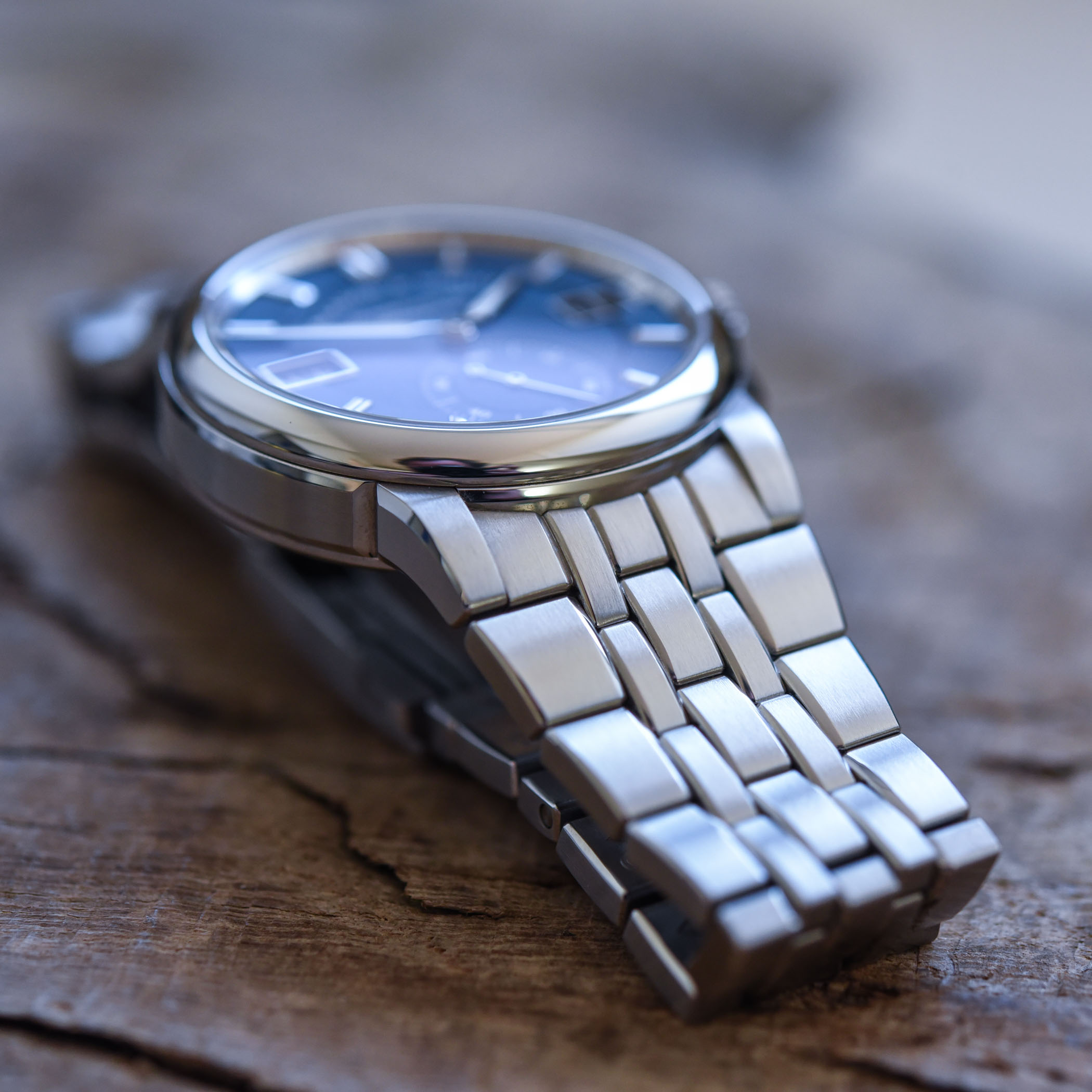
The perception that watch bracelets are merely accessories belies their intricate engineering and meticulous craftsmanship. Inexpensive aftermarket bracelets are commonplace, but proprietary bracelets for mid-range and luxury watches are far from mass-produced commodities. They are typically custom-designed for specific models, demanding extremely tight tolerances and extensive hand finishing. A watch bracelet is composed of numerous small, interlocking parts that must fit together with precision to ensure smooth articulation, prevent stiffness, minimize noise, and avoid hair-pulling. The performance and comfort of a bracelet are often considered second only to the watch’s movement itself.
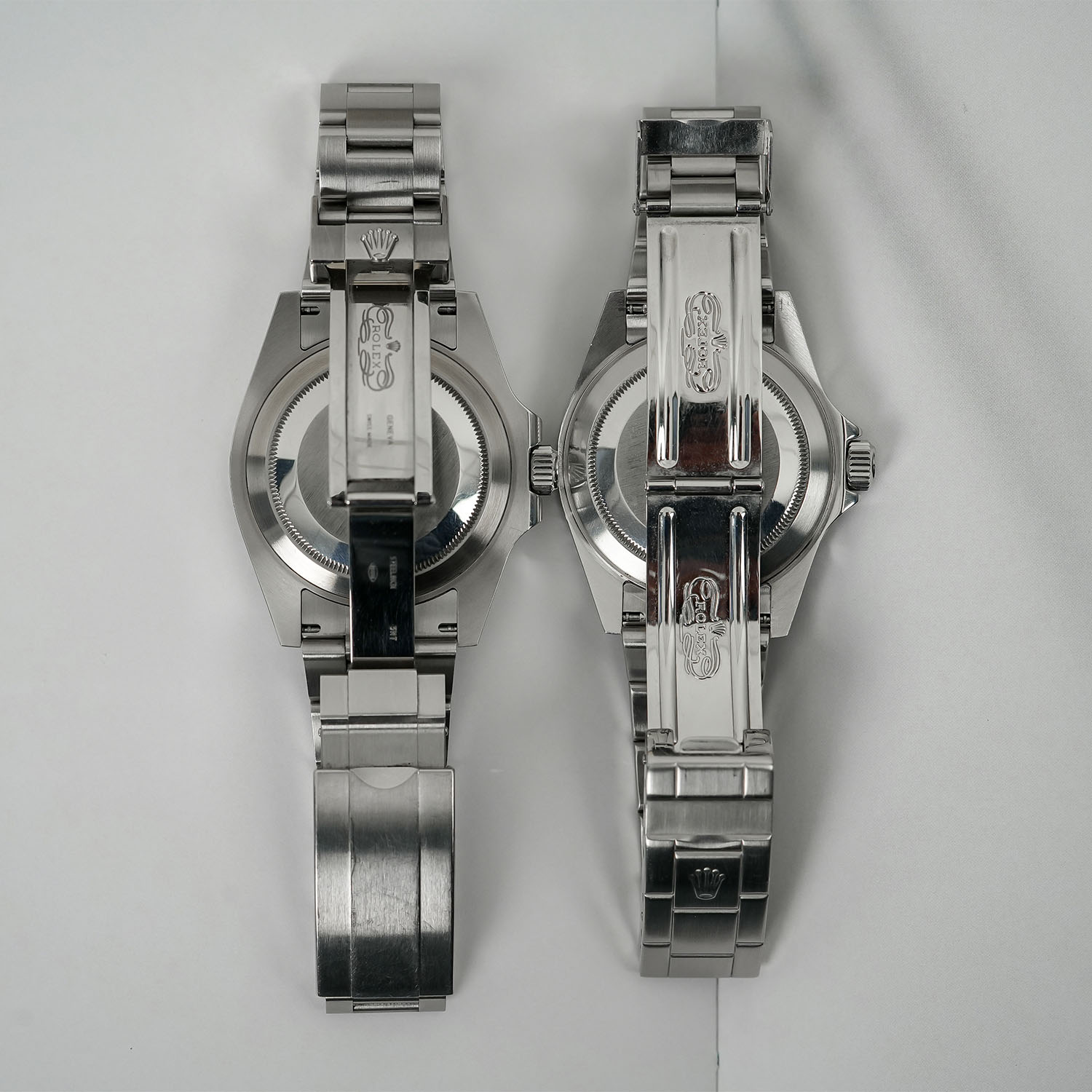
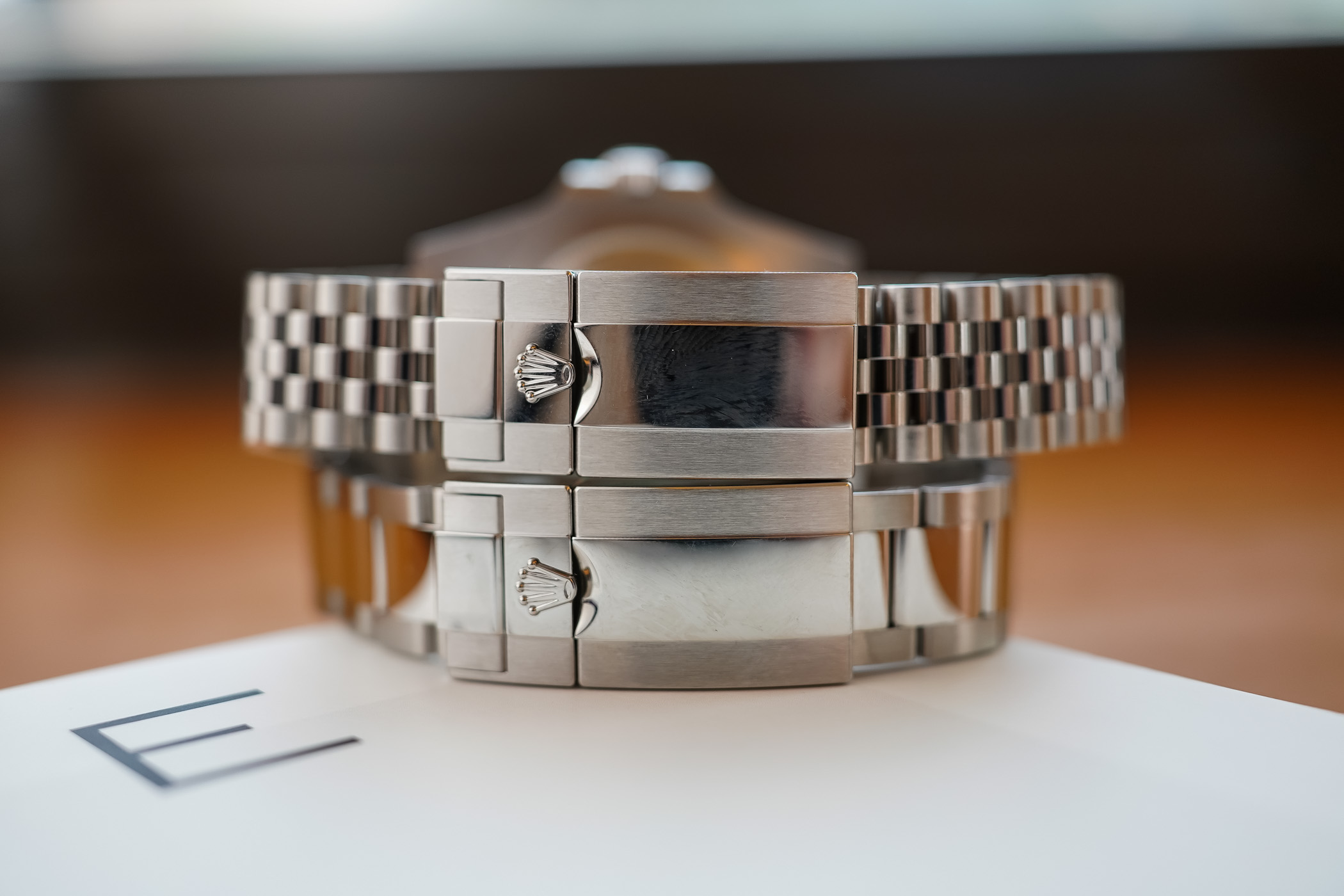
For perspective, a modern Rolex Oyster bracelet comprises approximately 190 individual components. Even this relatively simple design requires a majority of these parts to be finished to precisely match the case and adjacent links. The links themselves are carefully shaped to conform to the contours of the wrist, taper gracefully towards the clasp, and sit flush with the watch case. The clasps, too, are often marvels of engineering, featuring designs like seamless butterfly clasps, tool-free micro-adjusting mechanisms, and multi-point locking systems for dive watches. The complexity and cost of producing a high-quality metal bracelet can often exceed that of the watch case itself, underscoring its critical role in the overall horological experience.
The Bonklip Bracelet: A Legacy of Durability and Adaptability
One of the most historically significant early metal bracelet designs was the Bonklip. Favored by brands like Rolex and adopted by the British Royal Air Force (RAF), its lightweight construction and thin, metal tube links connected by loops earned it nicknames like "Ladder" or "Bamboo" bracelet. The ingenious design featured one end attached to the watch lugs, while the other end, integrated with a clasp, slipped through the second lug and hooked onto any of the tube links. This mechanism allowed for complete adjustability without the need to remove links, a concept remarkably similar to modern Velcro straps.
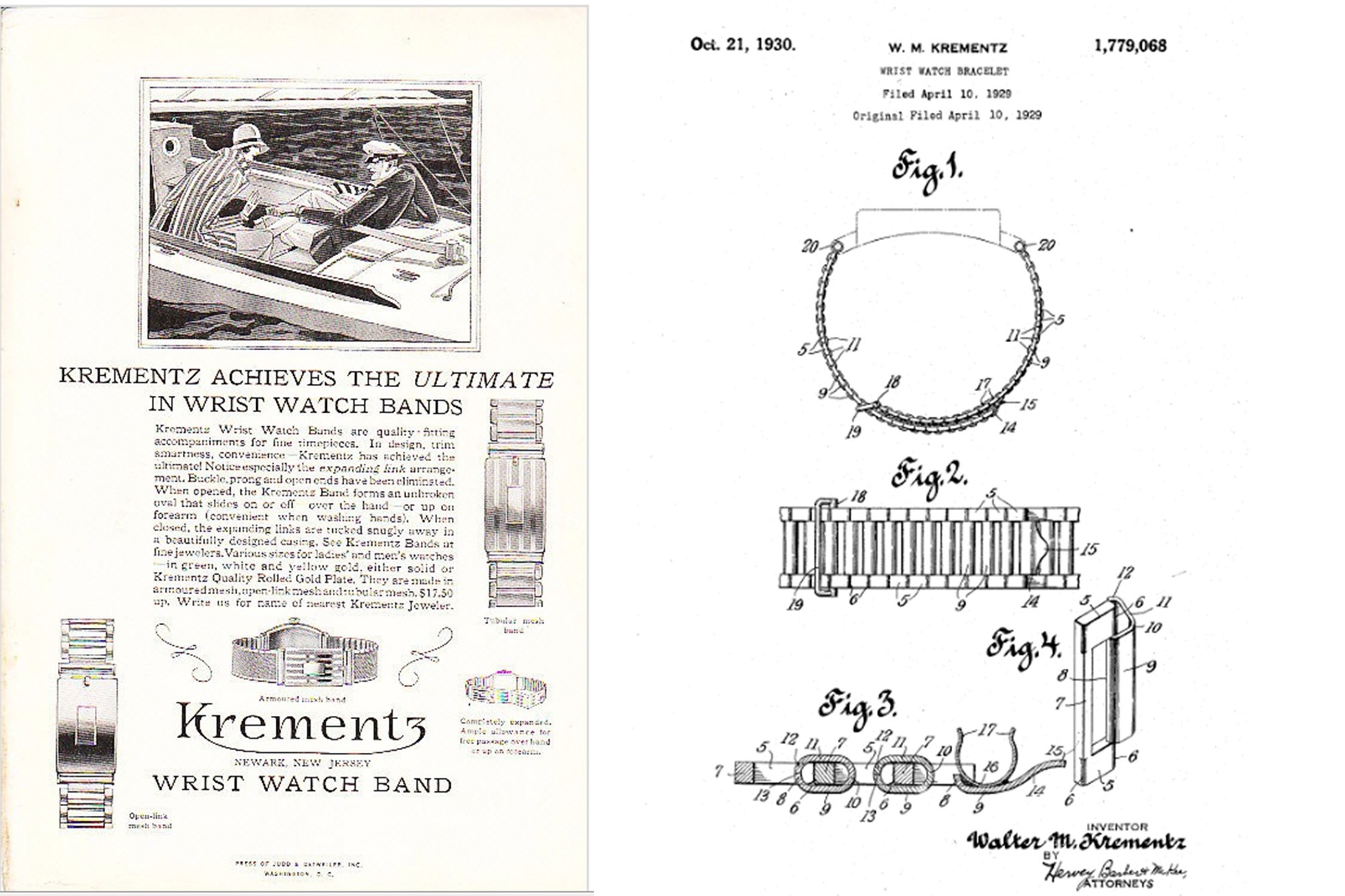
Rolex began offering the Bonklip as a popular alternative to leather straps in the 1930s, eventually transitioning to its iconic Jubilee and Oyster bracelets by the mid-1940s. The Bonklip design was patented in England in the late 1920s by B.H. Britton and Sons. While similar designs, such as the Krementz, emerged around the same time, the Krementz proved too expensive and ultimately failed in the market. The Bonklip, however, found widespread adoption.
During World War II, the Bonklip became a favorite among RAF pilots due to its durability, ease of adjustment, and corrosion-resistant stainless steel construction. It remained an officially issued item by the British Ministry of Defence post-war, with specific reference numbers assigned, such as ref. 6B/2763 (17.5mm) and 6B/3033 (20mm). Navigator watches for the RAF from IWC and Jaeger-LeCoultre were subsequently fitted with these reference-numbered Bonklip bracelets.
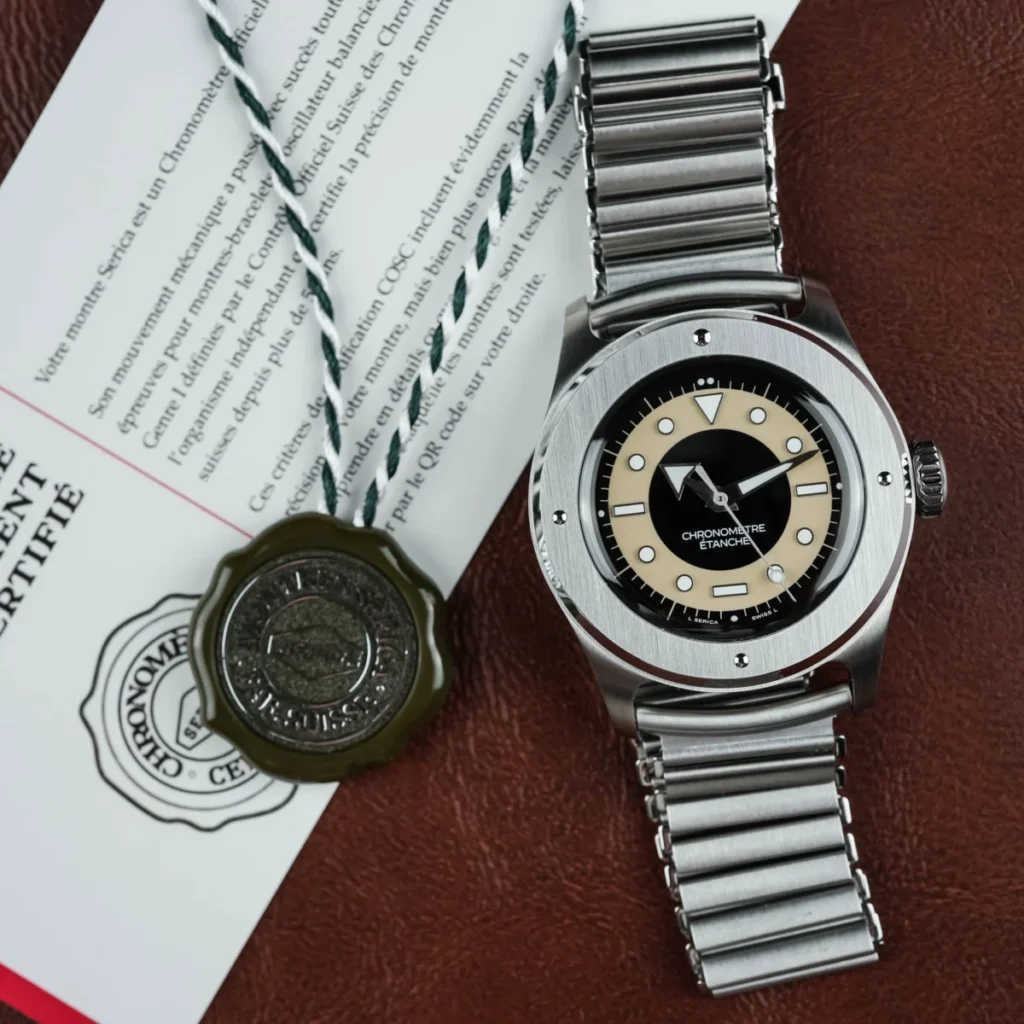
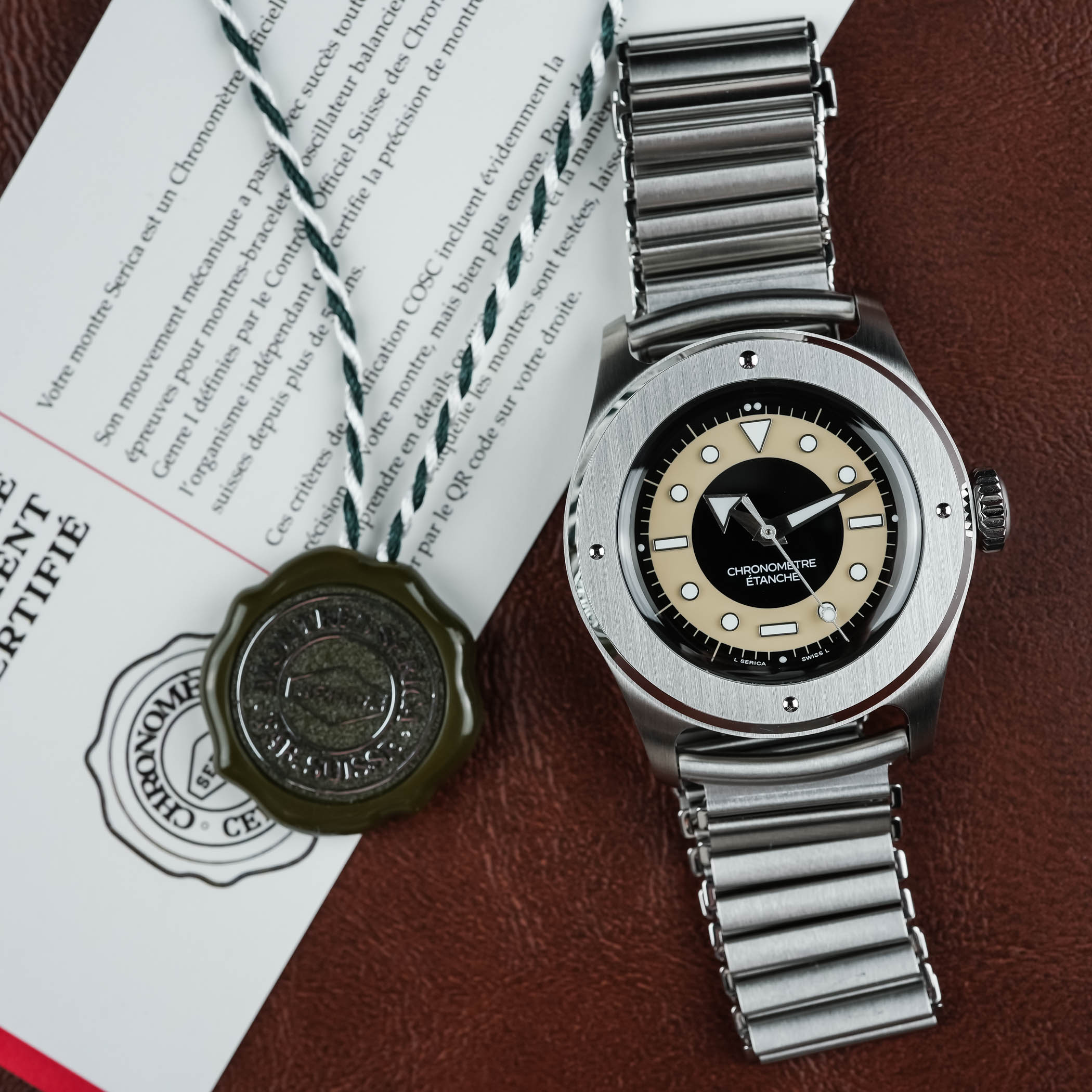
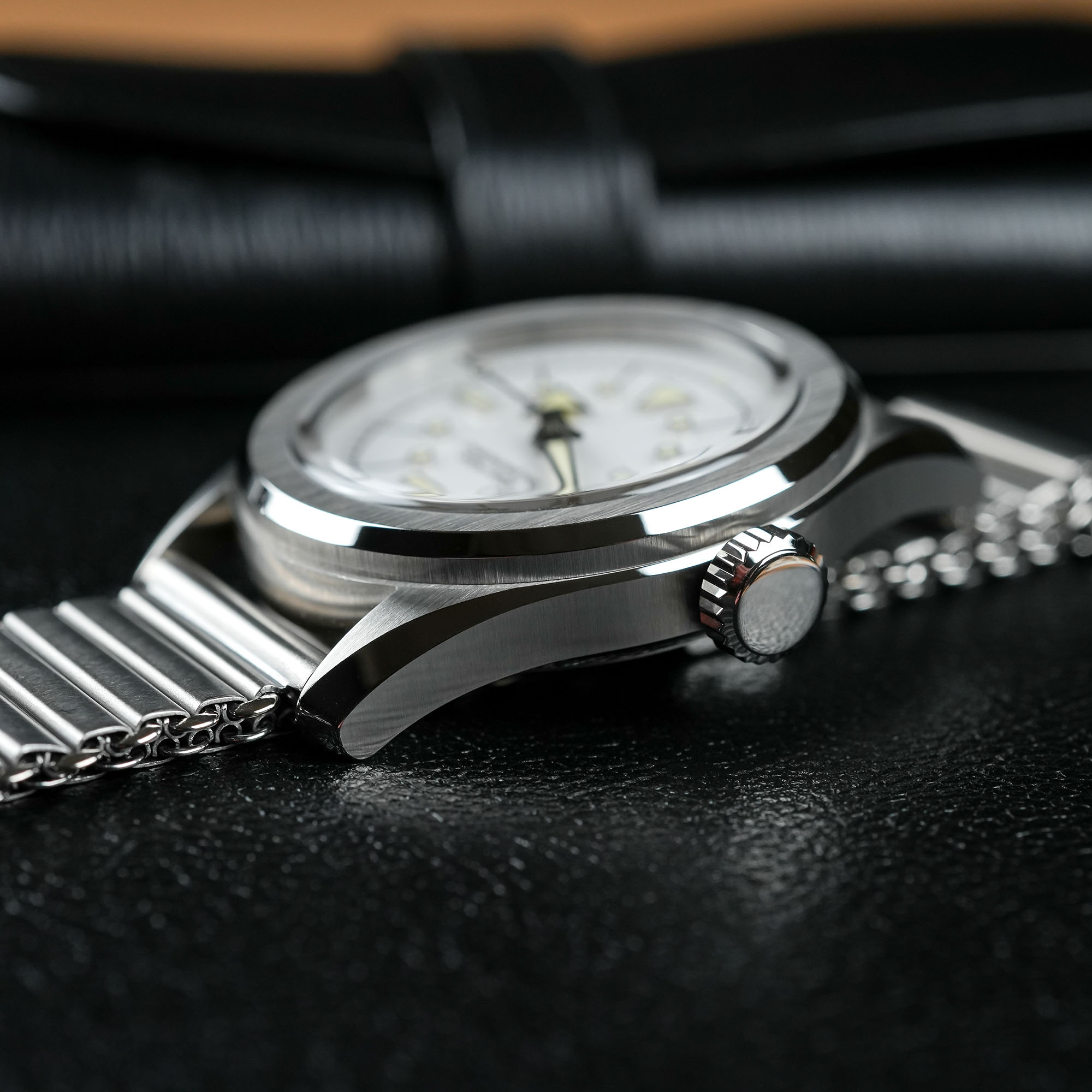
Today, the French brand Serica is renowned for its proprietary Bonklip bracelets, featured in its field and military-inspired collections. Aftermarket versions are also produced by companies like Forstner (the Forstner Klip) and Joseph Bonnie. While not the first metal wristwatch bracelet, the Bonklip was a pioneering example of an affordable, durable, and mass-produced option for both civilian and military markets.
Gay Frères: The Godfather of Luxury Metal Bracelets
While names like Gérald Genta and Hans Wilsdorf are widely recognized, the company Gay Frères often operates in relative obscurity, despite its profound impact on 20th-century metal bracelets, particularly in the luxury segment. Though now owned by Rolex, Gay Frères’ origins trace back to 1835, founded in Geneva by Jean-Pierre Gay and Gaspard Tissot. Initially specializing as a master chain-maker (or chaîniste) for pocket watch lanyards and also functioning as a jeweler, the company utilized precious metals. The advent of stainless steel in 1913 and the growing popularity of wristwatches spurred a shift in production towards wristwatch bracelets in the early 20th century.
During World War I, Gay Frères patented an early expanding metal bracelet in 1916 for trench watches, known as the "Army" bracelet. This design featured sliding metal link sections and internal springs, offering a durable and adaptable alternative to straps that could easily adjust to various wrist sizes or be worn over uniform sleeves.
Post-war, Gay Frères solidified its reputation as a designer and supplier of luxury wristwatch bracelets. Rolex became an early client, sourcing Bonklip bracelets. Crucially, Gay Frères went on to design the iconic riveted Oyster bracelet, which was patented by Rolex in 1947 and commercially released in 1948. The initial end links were straight, but by 1952, they were curved to offer a more integrated and flush aesthetic with the Oyster case. The Rolex GMT Master, ref. 6542, was the first Rolex watch to feature a standard flush-mounted Oyster bracelet. While other manufacturers, such as the US-based C&I, produced Oyster bracelets for Rolex in different regions during the 1950s, Gay Frères remained the preferred supplier, consistently delivering superior quality.
The Exquisite Beads-of-Rice Bracelet
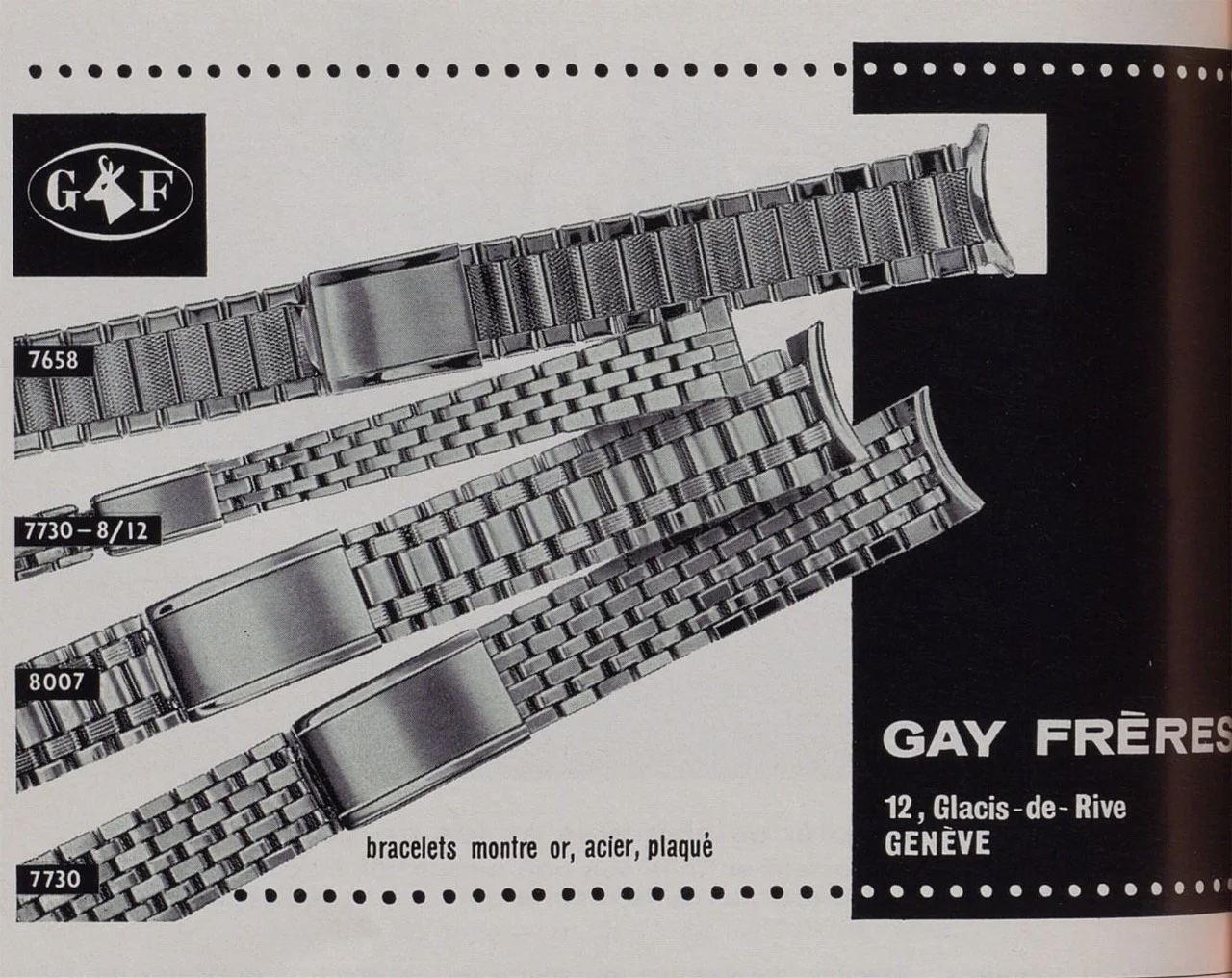
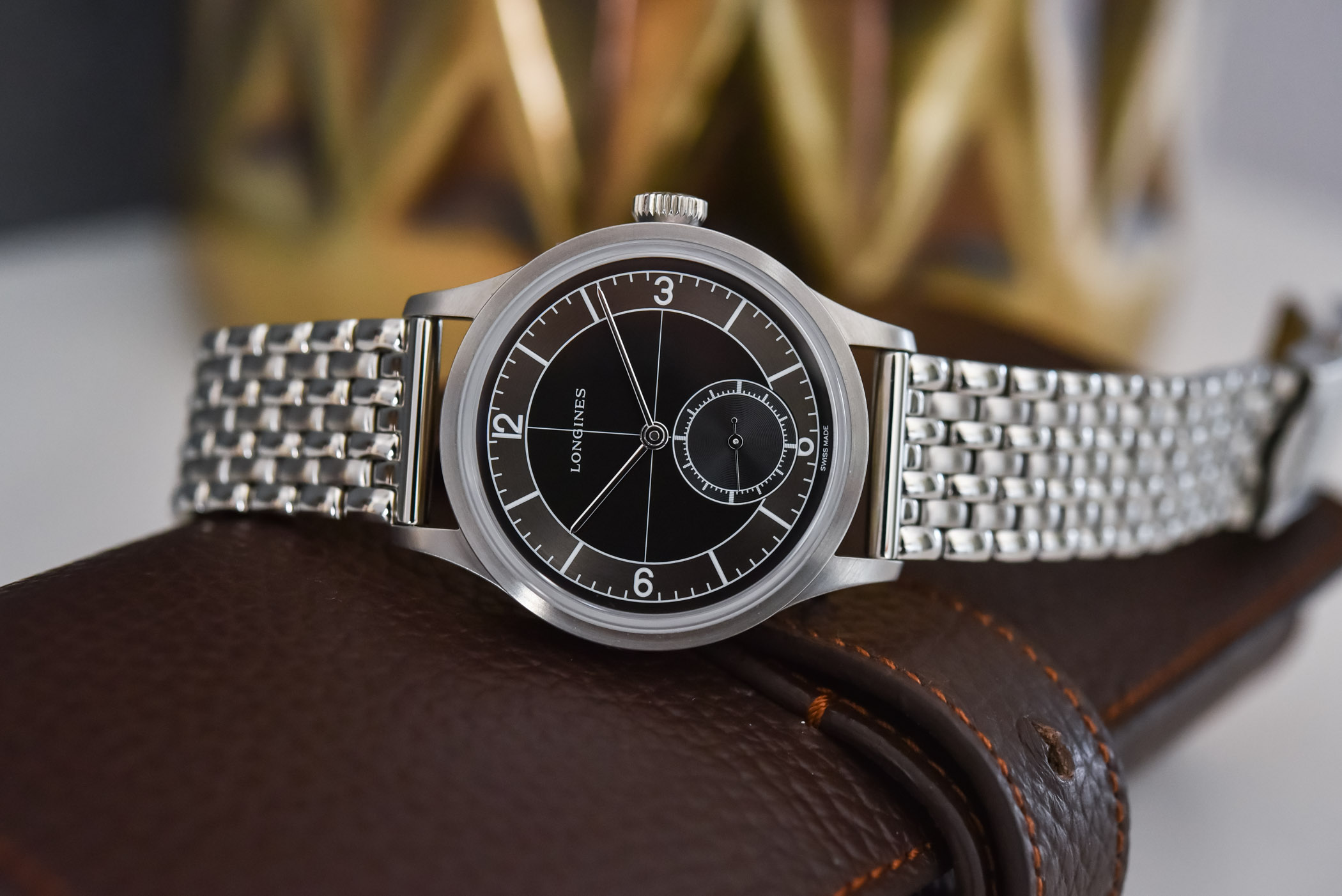
One of Gay Frères’ most celebrated designs is the "Beads-of-Rice" bracelet, introduced in the early 1940s. This intricate design, composed of rows of small, articulated, rice-shaped links, offered superior flexibility and comfort by conforming more closely to the wrist. It resembled heavy chainmail, providing a luxurious and substantial feel. Leading watchmakers like Patek Philippe and Vacheron Constantin quickly adopted the Beads-of-Rice for their dress watches and chronographs.
In the 1960s, Heuer’s chronographs, including the Carrera and Autavia models, prompted Gay Frères to adapt the Beads-of-Rice aesthetic. They introduced larger Oyster-style edge links, creating a design that approached the look of the Jubilee bracelet. Gay Frères was also responsible for other iconic bracelets, including the ladder bracelet for Zenith’s El Primero and integrated steel bracelets for Audemars Piguet’s Royal Oak and Patek Philippe’s Nautilus. By the mid-1970s, Gay Frères had grown to become Geneva’s largest factory, even surpassing some of the watchmaking firms it supplied. Rolex acquired the company in 1998, integrating its production capabilities and discontinuing collaborations with other brands.
Brogioli SA: Modern Innovation in Bracelet Manufacturing
Established in 1985 in the Italian-speaking region of Switzerland, Brogioli SA represents a more contemporary force in high-end bracelet manufacturing. Initially a metal and goldsmithing factory with a focus on precision casting for the eyewear industry, Brogioli transitioned its expertise to watch bracelets due to burgeoning demand and its relevant capabilities. Its clientele includes prestigious European watchmakers such as A. Lange & Söhne (for its Odysseus model), IWC, H. Moser & Cie, and Glashütte Original.
Brogioli SA masterfully blends traditional finishing techniques with advanced CAD/CAM systems and CNC machining to produce complex bracelets and clasps in precious metals, titanium, and stainless steel. The company is particularly recognized for its innovative clasp designs, including the ratcheting micro-adjustment clasp for A. Lange & Söhne and the on-the-fly micro-adjustment clasp for Glashütte Original.
The Rolex Trilogy: Oyster, Jubilee, and President
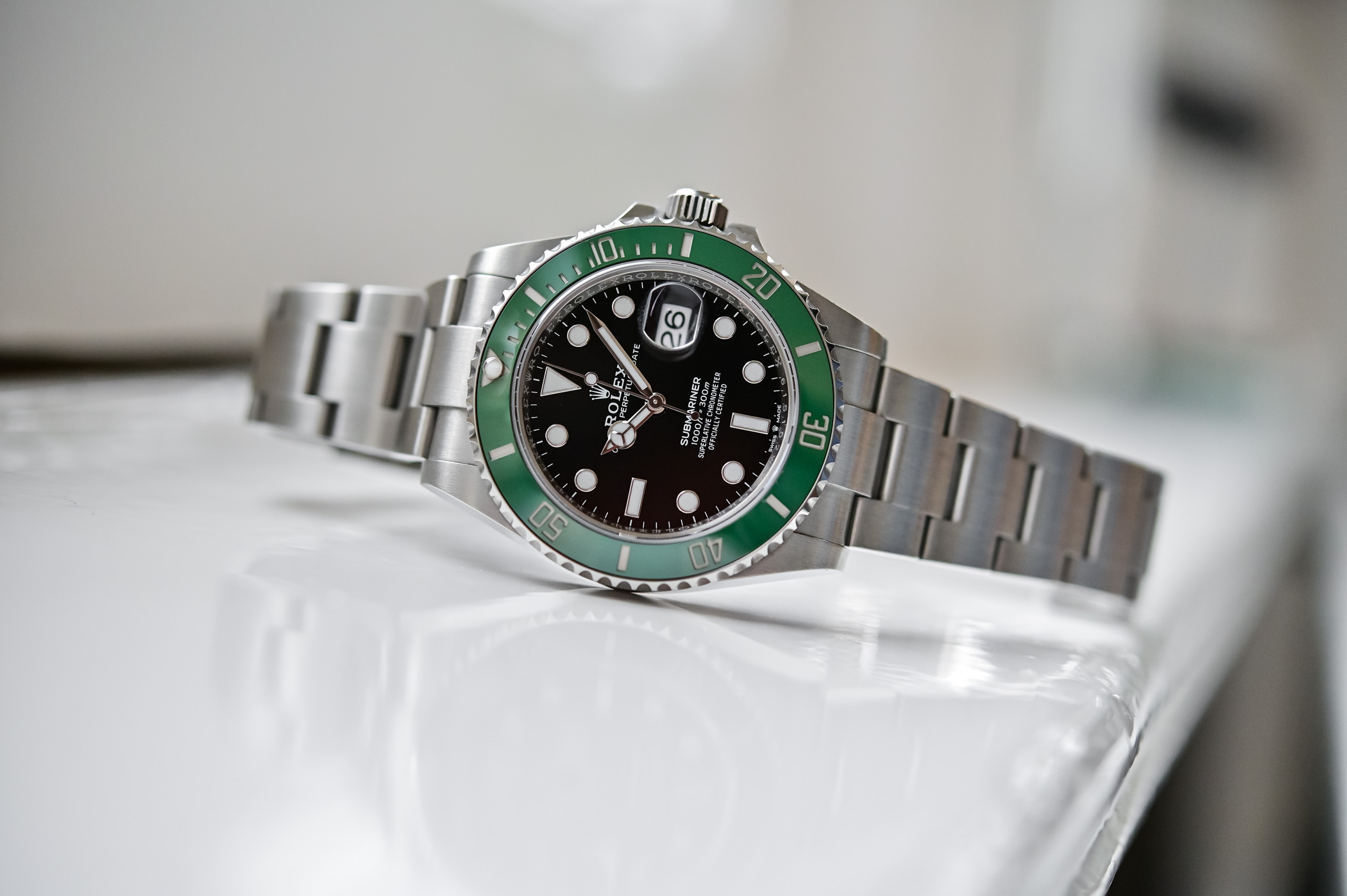
Rolex boasts three of the most famous and recognizable watch bracelets in the industry: the Oyster, the Jubilee, and the President.
The Enduring Oyster Bracelet
The Oyster bracelet, introduced by Gay Frères in 1947/1948, is a cornerstone of Rolex’s design heritage. Initially featuring hollow, riveted three-piece links, this iconic design was updated in the 1970s, though the links remained folded and hollow, making them prone to stretching over time. A significant evolution occurred in the 1990s with the introduction of solid links, which dramatically enhanced durability and provided a more substantial, premium feel. Solid end links, further improving robustness and eliminating case-bracelet rattle, were integrated in the late 1990s.
The Celebratory Jubilee Bracelet
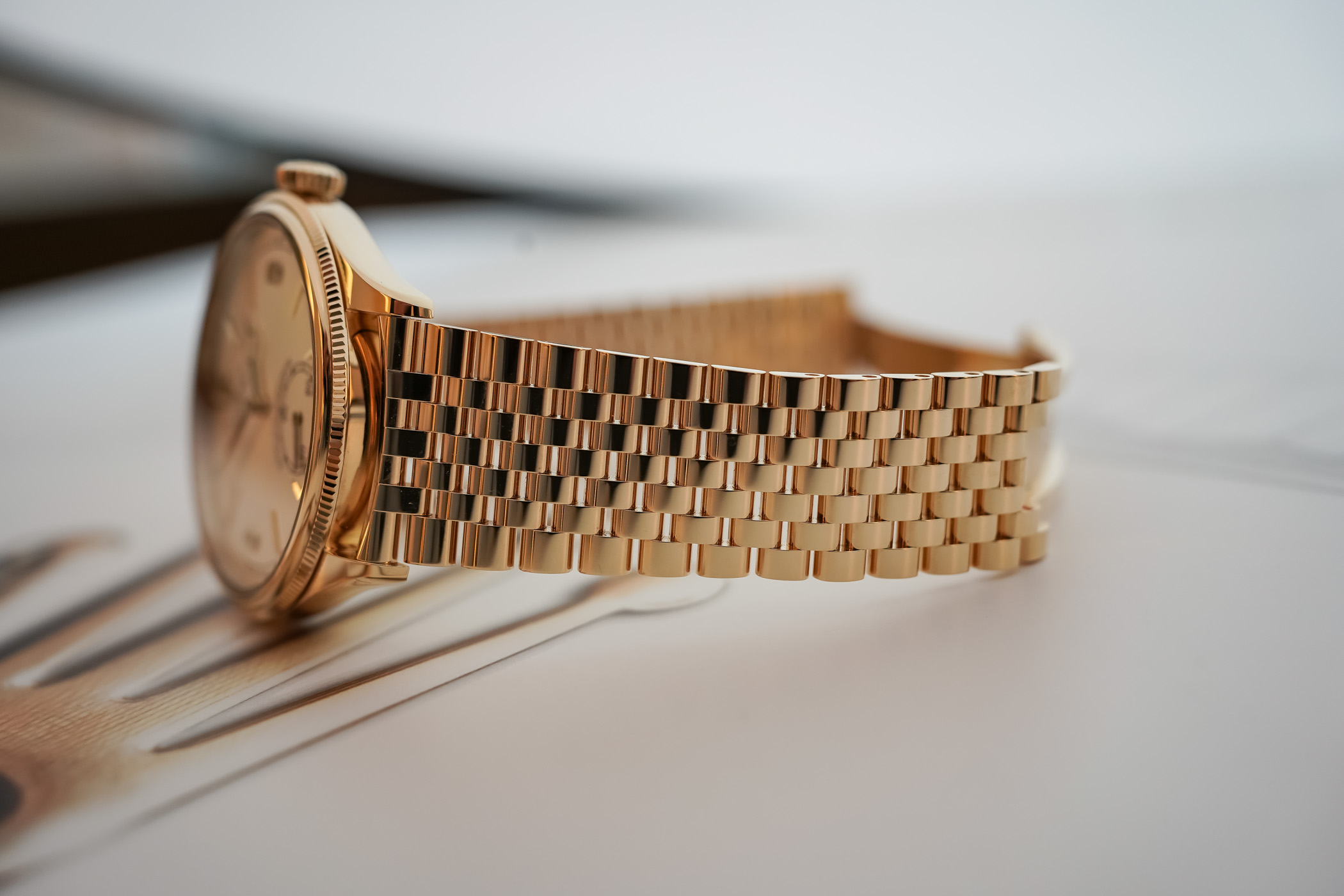
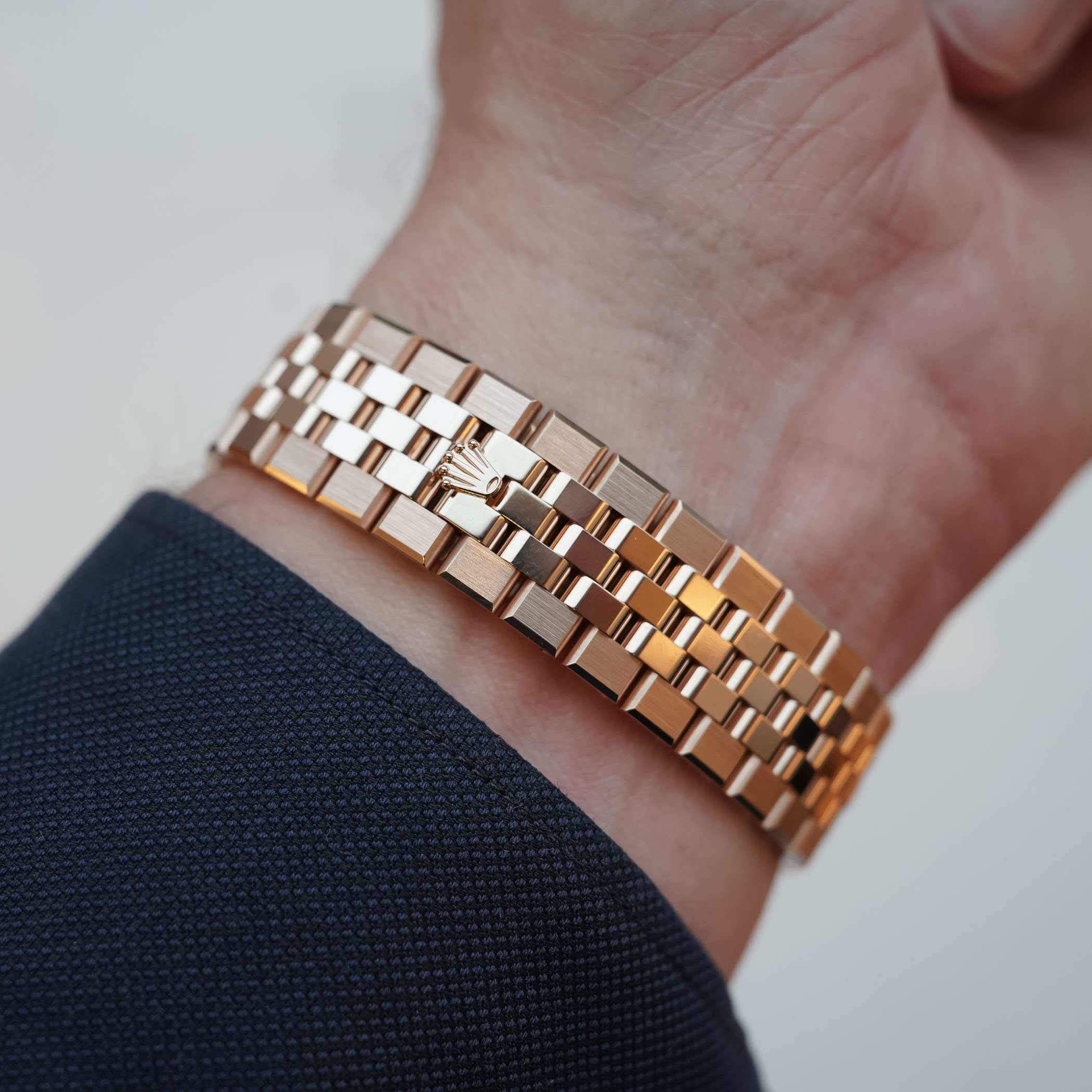
The five-link Jubilee bracelet debuted in 1945 with the launch of the Datejust, commemorating Rolex’s 40th anniversary. Its design featured polished three-beads-of-rice-style center links flanked by larger, brushed Oyster-style outer links. Initially produced only in 18k gold, two-tone Rolesor and steel variants were introduced in the 1950s. The Jubilee found its way onto the GMT-Master and early Day-Date models. Like the Oyster, early Jubilees used hollow, folded links, transitioning to solid links around 2003 for improved durability and stretch resistance. The weight difference between vintage hollow-link and modern solid-link versions is substantial, serving as a key identifier.
The Regal President Bracelet
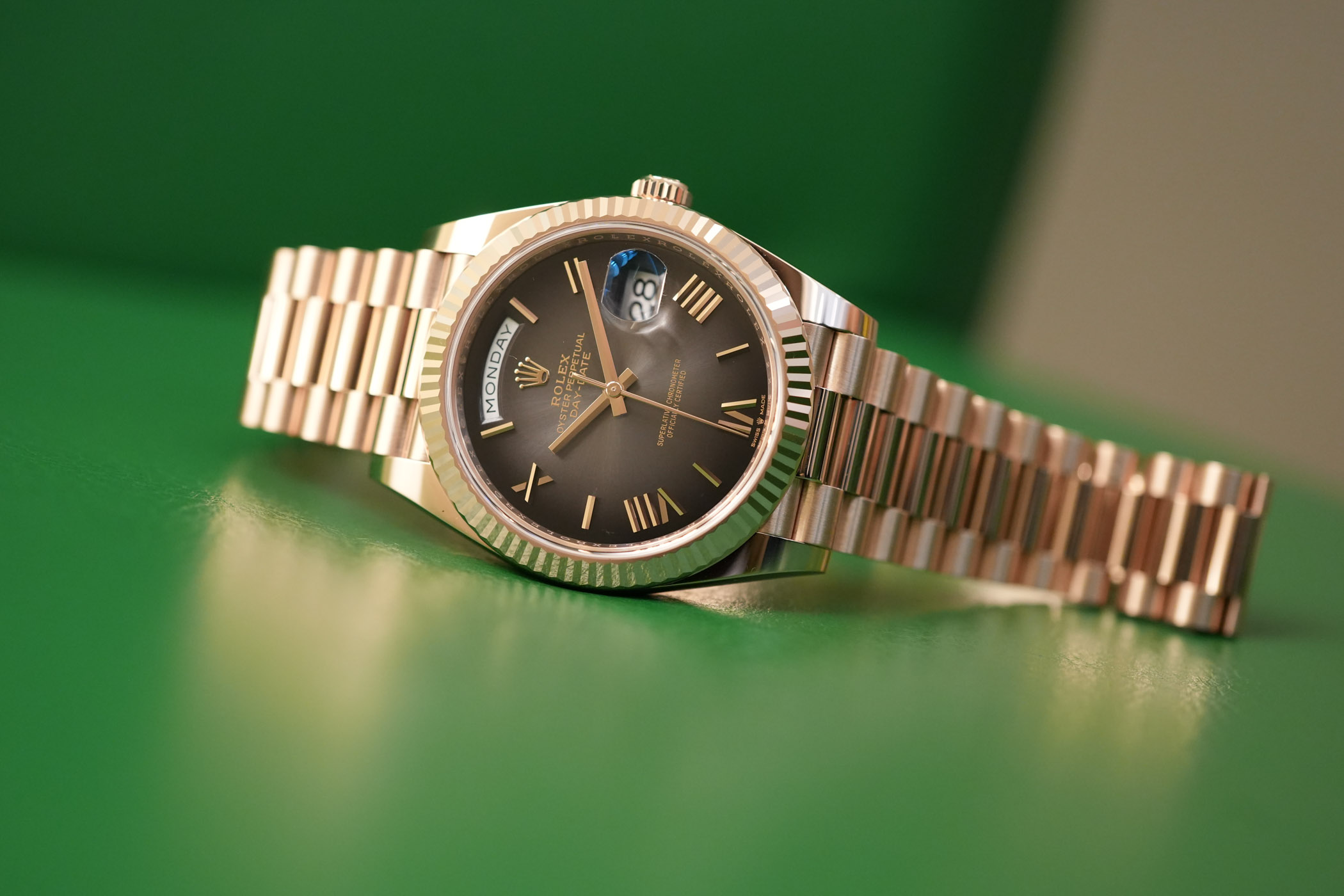
The President bracelet emerged a decade after the Oyster and Jubilee, specifically designed for the Day-Date model in 1956. While early Day-Date models sometimes featured leather or Jubilee straps, the President bracelet quickly became synonymous with the prestigious timepiece. It represents a blend of the Jubilee and Oyster, featuring a three-link design with rounded, Jubilee-esque links. The central "beads-of-rice" links of the Jubilee were replaced with a wider, semi-circular link. The President bracelet, and its accompanying Day-Date case, were exclusively produced in 18k gold or 950 platinum, making steel versions exceptionally rare "unicorns." While some Lady-Datejust models also feature the President bracelet, it remains most strongly associated with the Day-Date, often referred to as the "President" or "Presidential" watch, a moniker likely derived from its adoption by U.S. presidents and influential figures. Prior to 2000, President links were hollow; the transition to solid links significantly increased its weight, making platinum Day-Date models among the heaviest Rolex watches.
Gérald Genta’s Integrated Design Revolution
The concept of the integrated bracelet, where the bracelet seamlessly blends into the watch case, gained significant traction in the 1970s, largely driven by the visionary designs of Gérald Genta.
The Audemars Piguet Royal Oak
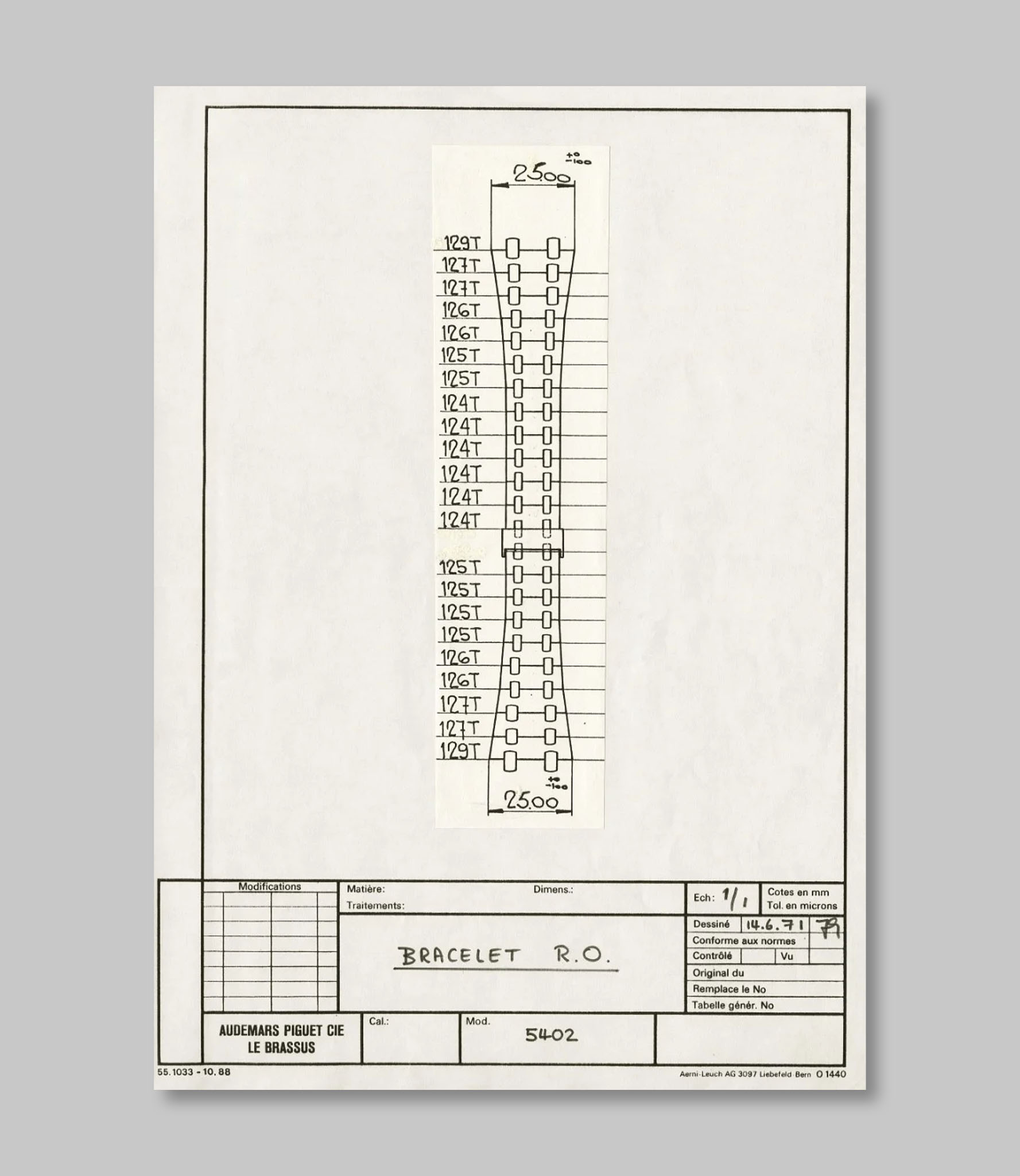
In 1972, commissioned by Audemars Piguet, Genta designed the groundbreaking Royal Oak Jumbo (ref. 5402). This luxury stainless steel sports watch, featuring an integrated bracelet, was revolutionary and became the most expensive steel watch on the market at the time. The bracelet (ref. 344) was not merely attached to the case but was an intrinsic part of its design, effectively serving as the first link. It comprised over 150 individual parts, many requiring 30 hours of meticulous hand-finishing. The bracelet tapered from the case with trapezoidal links connected by twin vertical counterparts, creating a distinctive and robust aesthetic. Production and hand-finishing were undertaken by Gay Frères, and the Royal Oak bracelet was the second most expensive component of the watch, surpassed only by its ultra-thin Jaeger-LeCoultre-based movement.
The Patek Philippe Nautilus
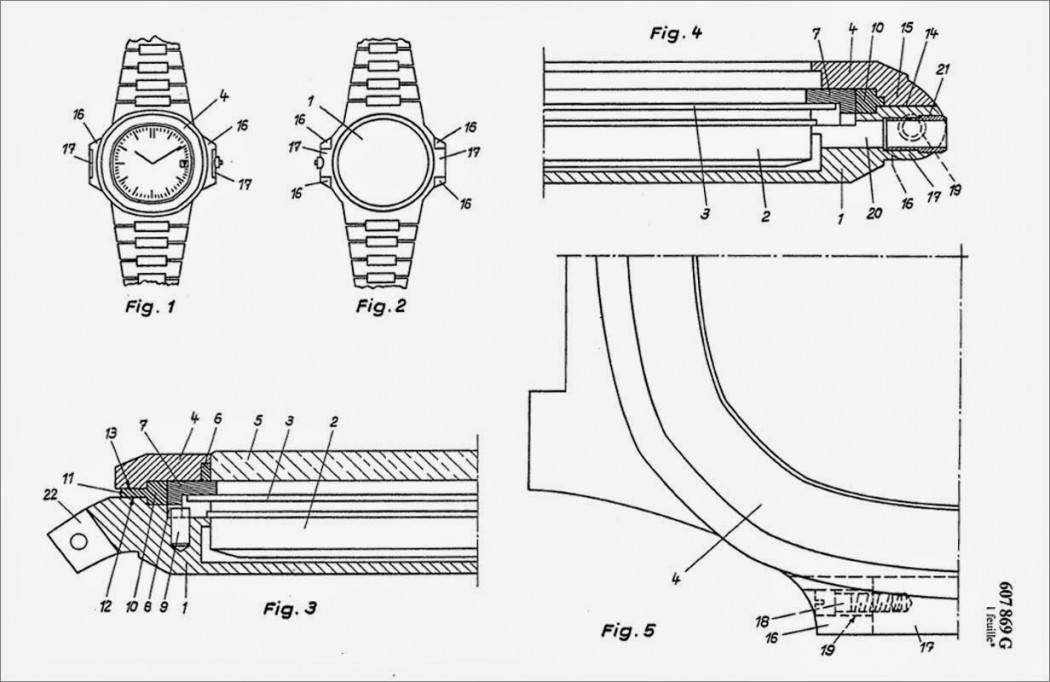
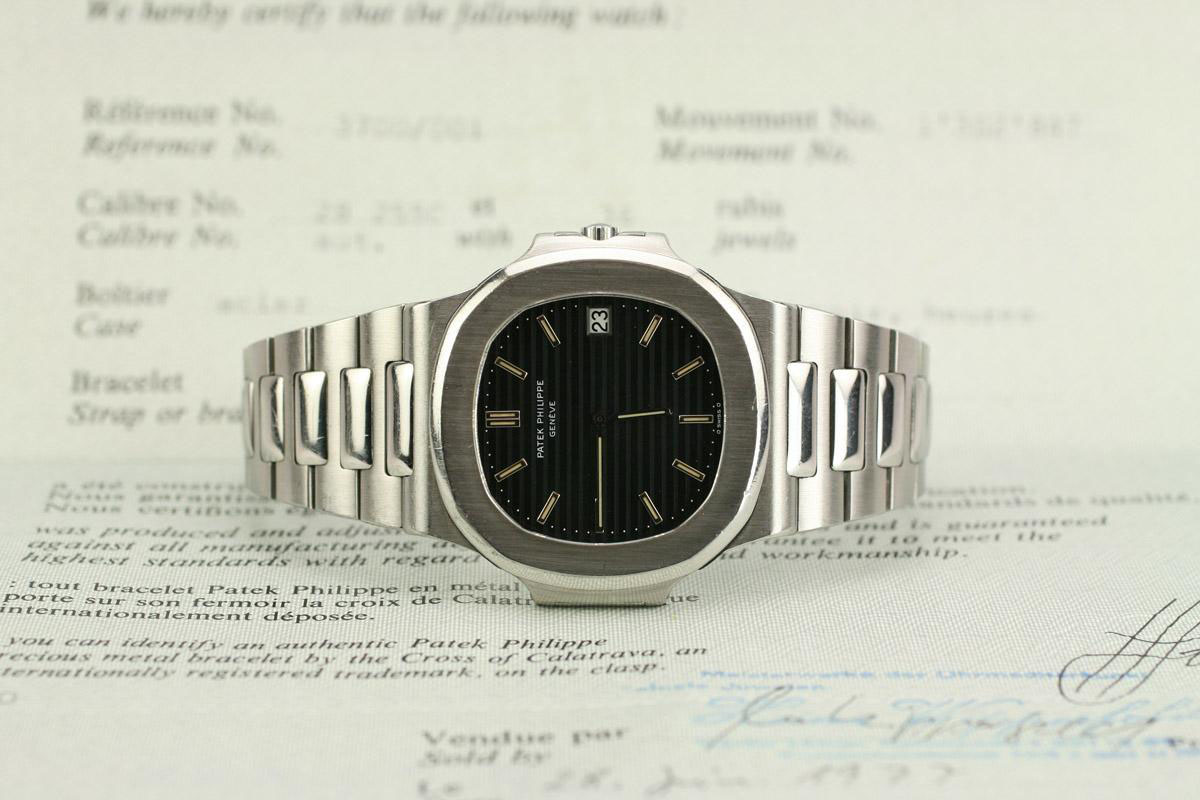
Genta struck again in 1976 with the design for Patek Philippe’s Nautilus. Inspired by the portholes of ocean liners, this second luxury stainless steel integrated sports watch featured a substantial case that earned it the "Jumbo" nickname. Unlike the Royal Oak’s angular design, the Nautilus bracelet had large, brushed H-shaped links interspersed with polished rectangular center links, lending it a dressier appearance. The original Nautilus, ref. 3700/1, featured a tapering bracelet and, like the Royal Oak, was second only to its movement in cost. The bracelet contained 159 parts, with all exterior surfaces hand-finished. While Patek Philippe had acquired its supplier Ateliers Réunis a year prior to the Nautilus’s release, allowing for more integrated production of the steel bracelet, precious metal versions were later produced by Gay Frères.
The 1970s saw a surge in integrated sports watches from various luxury brands. IWC’s anti-magnetic Ingenieur was redesigned by Genta in 1976 with an integrated H-link bracelet and a screw-on bezel. Vacheron Constantin’s 222, launched in 1977 and designed by Jörg Hysek, also featured an integrated bracelet. Piaget’s Polo, introduced in 1979, was a notable example of an 18k gold integrated watch with a quartz movement, characterized by its seamless blend of case and bracelet adorned with horizontal gadroons.
While the Royal Oak is credited with defining the integrated luxury sports watch, Omega’s 1969 Constellation featured an earlier integrated "sporty" design. This model, while dressier than the Royal Oak, connected via narrow inner links, showcasing the evolving concept of bracelet integration. Rolex’s 1964 King Midas and Zenith’s 1969 Defy also explored integrated or near-integrated designs, hinting at the future direction of watch bracelet evolution.
The Milanese Bracelet: A Timeless Weave
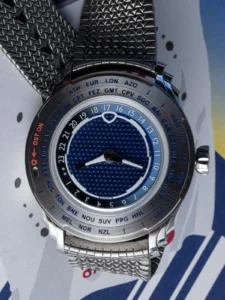
The Milanese bracelet, also known as mesh, is characterized by its tightly woven stainless steel construction, offering comfort, durability, and easy sizing, often with a clasp that can secure at any point along its length. While popularized in Pforzheim, Germany, in the 1920s, the fundamental design of chainmail dates back to antiquity. Milanese bracelets utilize spiral wire coils to create a flexible yet robust mesh. German artisans in Pforzheim, such as Vollmer and Staib, transformed traditional Italian goldsmithing techniques into industrial mass production in the 1920s. The weave can vary from a fine mesh resembling fabric to heavier "shark mesh" popular for dive watches in the 1970s, seen on models like the Omega Seamaster Ploprof and Breitling Superocean. The popularity of Milanese bracelets peaked in the 1970s and has seen a modern resurgence, partly influenced by the Apple Watch’s Milanese Loop and retro-modern designs like the titanium Omega Seamaster featured in the James Bond film No Time to Die.
Tool-Free Innovations: Enhancing User Experience
The 21st century has witnessed significant innovations aimed at simplifying bracelet adjustment and removal. For most of the 20th century, specialized tools were required to compress spring bars for bracelet changes, often leading to scratches on watch lugs. Around 2015, the introduction of quick-release levers on spring bars allowed for tool-free strap and bracelet changes, inspired by the smartwatch market.
Furthermore, the process of resizing bracelets, traditionally requiring specialized tools for pin or screw removal, has seen a breakthrough with systems like Timex’s "I-Size" system. This innovative approach allows for tool-free link removal and replacement by simply manipulating a spring-loaded outer link. Coupled with quick-release levers, this represents a significant advancement in user-friendly bracelet design, as seen on luxury Timex Atelier models and the Giorgio Galli S2Ti. Cartier’s Santos de Cartier also features a similar tool-free adjustment system.
Expandable Spring-Loaded Bracelets: A History of Stretch
The concept of an expandable bracelet, eliminating the need for a separate clasp, first emerged in 1906 with Edwin Harrop’s "Britannic" patent for women’s watches. This design featured miniature coil springs within the links, allowing for easy stretching. A more refined version was patented by Art Hadley in 1913, utilizing horizontal, scale-like links that expanded via internal U-shaped leaf springs.
A significant redesign occurred in 1936 with Karl Speidel’s "Scissors Action Expansion Band," which mimicked an accordion for smoother expansion. This design gained widespread popularity for men’s watches after World War II, notably with the Golden Knight bracelet. While convenient, vintage expansion bracelets often suffered from loss of spring tension over time, leading to reduced elasticity and a tendency to pull arm hair. Due to their complex internal structure and relatively low cost, they were often replaced rather than repaired.
From the 1950s to the 1970s, expansion bracelets were common as aftermarket or optional accessories, particularly on affordable watches. However, high-end brands like Omega and even early Rolex Submariner and Explorer models occasionally featured refined expansion bracelets from manufacturers like Gay Frères and Jacoby-Bender. Today, expansion bracelets remain popular as affordable aftermarket options, frequently paired with vintage or entry-level watches.
The evolution of metal watch bracelets, from the intricate craftsmanship of Gay Frères to the integrated designs of Gérald Genta and the user-friendly innovations of the 21st century, underscores their critical role in the functionality, aesthetics, and overall appeal of wristwatches. These advancements continue to shape the way we interact with and appreciate our timepieces, ensuring that the bracelet remains as vital to a watch’s identity as its movement.