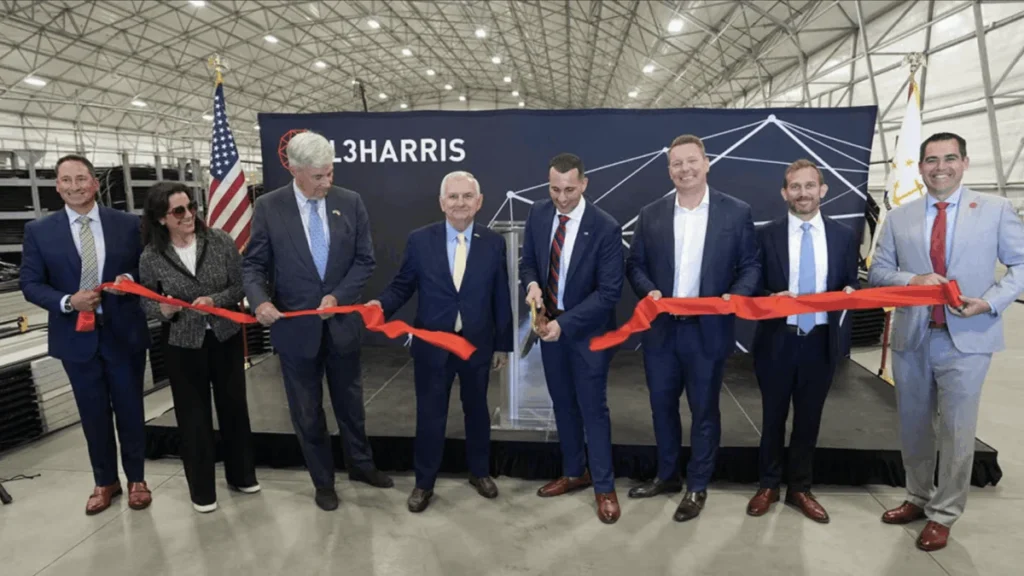
L3Harris Technologies, a global leader in aerospace and defense technology, has officially unveiled a cutting-edge 50,000-square-foot maritime production facility at ProvPort in Providence, Rhode Island. This significant $6 million investment is strategically designed to advance the development and delivery of sophisticated undersea training systems, critical for enhancing the operational readiness of the U.S. Navy and its allied forces in an increasingly complex global maritime landscape. The new facility underscores a pronounced and growing demand for advanced capabilities in undersea warfare, signaling a robust commitment to national security and regional economic growth.
The inauguration of this facility marks a pivotal moment for both L3Harris and the state of Rhode Island, reinforcing the state’s historical prominence in maritime defense innovation. As Senator Sheldon Whitehouse (D-R.I.) aptly stated, "Rhode Island has long led the maritime defense industry through innovation." This sentiment was echoed by other state officials, highlighting the facility’s role in strengthening the Ocean State’s "Blue Economy" – a diverse and thriving sector intrinsically linked to its extensive coastline and deep-rooted naval heritage.
Strategic Imperative: The Growing Need for Undersea Dominance
The modern naval battlespace is characterized by an escalating demand for superior undersea capabilities. Submarines, anti-submarine warfare (ASW), and autonomous underwater vehicles (AUVs) represent some of the most critical and complex domains of military operations. The ability to detect, track, and engage subsurface threats, or to conduct clandestine intelligence, surveillance, and reconnaissance (ISR) missions, is paramount for maintaining maritime superiority. Global geopolitical tensions, coupled with the proliferation of advanced submarine technologies among various nations, have intensified the strategic imperative for the U.S. Navy and its allies to possess unparalleled expertise and cutting-edge equipment in this arena.
Undersea training systems are not merely simulators; they are intricate technological ecosystems designed to replicate the challenging and dynamic conditions of the underwater environment. These systems integrate advanced sensor technologies, sophisticated acoustic modeling, realistic scenario generation, and data analytics to provide service members with immersive and effective training experiences. From honing sonar operator skills to practicing complex tactical maneuvers and understanding the intricacies of new propulsion systems, these training solutions are indispensable for preparing naval personnel for real-world engagements. The new L3Harris facility is poised to be a cornerstone in developing and deploying these next-generation training tools, ensuring that naval forces remain at the forefront of undersea warfare technology and doctrine.
L3Harris Technologies: A Powerhouse in Defense Innovation
L3Harris Technologies stands as a titan in the American aerospace and defense industry, headquartered in Melbourne, Florida. The company’s genesis in 2019 from the merger of Harris Corporation and L3 Technologies created a formidable entity with a diversified portfolio spanning air, land, sea, space, and cyber domains. This strategic alliance aimed to synergize Harris’s strengths in tactical radio and spaceborne systems with L3’s profound expertise in communication systems, avionics, and electronic warfare. The resulting L3Harris is a global innovator, consistently delivering advanced solutions for defense, intelligence, and commercial customers worldwide.
Within its vast operational scope, L3Harris has a significant footprint in maritime and undersea technologies. The company designs and manufactures a wide array of systems crucial for naval operations, including sonar systems, integrated shipboard communication systems, unmanned maritime vehicles, and, critically, advanced training and simulation solutions. The Providence facility represents a focused expansion of its capabilities in the undersea training sector, directly addressing a core need of the U.S. Navy. This investment not only enhances L3Harris’s competitive edge but also solidifies its position as a trusted partner in national defense, contributing directly to the readiness and technological superiority of naval forces.
Rhode Island’s Enduring Maritime Legacy and the Thriving "Blue Economy"
Rhode Island, often referred to as the "Ocean State," boasts a rich and enduring maritime legacy that profoundly shapes its identity and economy. For centuries, its strategic coastal location and deep-water ports have made it a vital hub for naval operations, shipbuilding, and maritime commerce. This historical context provides a fertile ground for defense contractors like L3Harris to thrive. The state’s "Blue Economy" is a testament to this deep connection, representing a robust economic engine valued at over $5.2 billion annually. This sector supports more than 36,500 jobs across seven core marine industries, including commercial fishing, aquaculture, marine trades, tourism, research, and, crucially, defense.
The L3Harris facility is more than just a new building; it is a significant contribution to this vibrant Blue Economy, as acknowledged by Representative Gabe Amo (D-R.I.). It is expected to create high-skill jobs, foster local partnerships, and attract further investment in marine-related technologies. The presence of major naval installations, such as Naval Station Newport, and academic institutions with strong marine science and engineering programs, provides a ready pipeline of skilled labor and research capabilities. This symbiotic relationship between defense industry, academia, and local workforce makes Rhode Island an ideal location for advancing critical maritime technologies. The new facility strengthens this ecosystem, ensuring Rhode Island remains a strategic asset in the national defense industrial base.
ProvPort: A Strategic Hub for Maritime Operations and Logistics
The selection of ProvPort as the site for L3Harris’s new facility is a strategic decision rooted in its inherent advantages. ProvPort, a major deep-water port in New England, offers a prime location with direct access to shipping lanes and robust transportation infrastructure. Its capabilities as a multi-modal terminal facilitate efficient logistics, enabling the seamless movement of materials, components, and finished systems. This accessibility is crucial for a production facility that serves a global defense customer base, requiring timely delivery and supply chain efficiency.
Beyond its logistical benefits, ProvPort provides access to a highly skilled maritime workforce. The region has a long history of industrial and maritime operations, fostering a labor pool with expertise in port operations, specialized maritime services, and complex manufacturing. This local talent is invaluable for L3Harris, reducing the need for extensive relocation or training of personnel. Furthermore, ProvPort has demonstrated a capacity for diverse industrial collaboration, including partnerships with entities like Waterson Terminal Services. This collaboration, particularly in leveraging local longshoremen’s expertise in offshore wind cable management, highlights the transferable skills and adaptable workforce available, which can be readily applied to the specialized demands of undersea technology production. Nino DiCosmo, President of Maritime, Space & Mission Systems at L3Harris, emphasized, "ProvPort gives us a strategic advantage with its prime location and access to a highly skilled maritime workforce, and we are proud to deepen our commitment to Rhode Island."
Facility Capabilities and Advanced Training Enhancement
The 50,000-square-foot facility is designed to be a hub of innovation for undersea training systems. While specific technologies developed within its walls are often classified due to their sensitive nature, it can be inferred that the facility will house advanced engineering labs, integration spaces, and potentially sophisticated simulation environments. These capabilities will enable L3Harris to develop and produce systems that enhance critical skills for service members, including:
- Sonar Operations: Training for the detection, classification, and tracking of submerged contacts using passive and active sonar.
- Anti-Submarine Warfare (ASW): Simulation of complex ASW scenarios, involving multiple platforms (surface ships, aircraft, submarines) and advanced weaponry.
- Navigation and Piloting: Realistic simulations for submarine crews to practice navigation in challenging underwater terrains and congested waters.
- Tactical Decision Making: Training systems that present high-fidelity tactical situations, allowing commanders and crews to practice decision-making under pressure.
- Maintenance and Repair: Hands-on training modules for technicians to become proficient in maintaining and repairing complex undersea equipment.
- Intelligence, Surveillance, and Reconnaissance (ISR): Development of systems to train personnel in collecting, analyzing, and disseminating critical intelligence from undersea assets.
The facility’s increased production capacity will directly translate into faster deployment of these crucial training assets to the U.S. Navy and its allies. This "speed and scale," as highlighted by Nino DiCosmo, is essential in an era of rapid technological evolution and dynamic global threats, ensuring that naval forces are always equipped with the most current and effective training tools.
Economic and Workforce Development Impact
The $6 million investment by L3Harris is poised to generate significant economic benefits for Rhode Island. While specific job numbers for this new facility were not detailed in the initial announcement, defense industry expansions typically lead to the creation of highly specialized, well-compensated positions in engineering, manufacturing, logistics, and skilled trades. These jobs contribute to a stronger local tax base and stimulate secondary economic activity through increased consumer spending and demand for local services.
The facility’s commitment to developing "highly skilled workers" aligns perfectly with broader state initiatives to bolster workforce development in advanced manufacturing and technology sectors. This includes potential collaborations with local educational institutions, vocational schools, and workforce training programs to ensure a steady supply of qualified individuals. Furthermore, the expansion strengthens the local supply chain by fostering demand for materials, components, and services from other Rhode Island-based businesses, creating a ripple effect of economic growth. The emphasis on local partnerships, including with Waterson Terminal Services for port operations, ensures that the economic benefits are broadly distributed within the community.
Official Reactions and Broader National Security Implications
The new L3Harris facility has garnered enthusiastic support from Rhode Island’s congressional delegation, underscoring its dual importance for both national security and state prosperity.
Senator Sheldon Whitehouse emphasized the state’s historical leadership and the facility’s contribution to the Blue Economy, stating, "The new L3Harris facility at ProvPort is another promising investment in the Ocean State’s Blue Economy." His remarks highlight the synergistic relationship between defense investment and regional economic development.
Representative Gabe Amo further elaborated on the multifaceted benefits, asserting, "The new facility will support the development of highly skilled workers, improve undersea training for service members, and strengthen our nation’s security. I remain committed to projects like this that spur innovation, grow jobs, and expand opportunity in our state." His statement encapsulates the core objectives: workforce enhancement, military readiness, and economic expansion.
Representative Seth Magaziner echoed these sentiments, reinforcing Rhode Island’s foundational role in maritime defense. "Rhode Island has always been at the forefront of our nation’s maritime defense industry," said Rep. Magaziner. "This new facility at ProvPort will continue that tradition by enhancing the undersea capabilities our service members rely on while creating good-paying jobs here in Rhode Island. I will continue working to support our nation’s security and Rhode Island’s defense economy."
Collectively, these statements underscore the strategic importance of this investment. By strengthening the national defense industrial base in a critical domain like undersea warfare, the facility enhances the resilience and capabilities of the U.S. military. This directly contributes to national security by ensuring that American and allied service members receive the best possible training to operate and maintain the sophisticated assets required for undersea superiority. The facility is not merely a production site; it is a strategic asset in the broader geopolitical competition, signaling a proactive approach to maintaining a technological and operational edge in the maritime domain.
Future Outlook and Commitment to Innovation
The establishment of the L3Harris maritime production facility in Providence represents a long-term commitment to advancing undersea warfare capabilities and investing in the region’s economic future. As the global security landscape continues to evolve, the demand for sophisticated, adaptable, and rapidly deployable defense technologies will only intensify. This facility positions L3Harris to meet those demands, fostering continuous innovation in undersea training systems.
The deepened commitment to Rhode Island, as articulated by L3Harris leadership, suggests potential for future expansions, increased technological development, and broader collaborations within the state’s robust maritime ecosystem. This ongoing investment will not only enhance the readiness of the U.S. Navy and its allies but also solidify Rhode Island’s reputation as a vital hub for defense innovation and a leader in the nation’s Blue Economy for decades to come. The facility stands as a testament to the power of public-private partnerships in driving both national security objectives and regional prosperity.