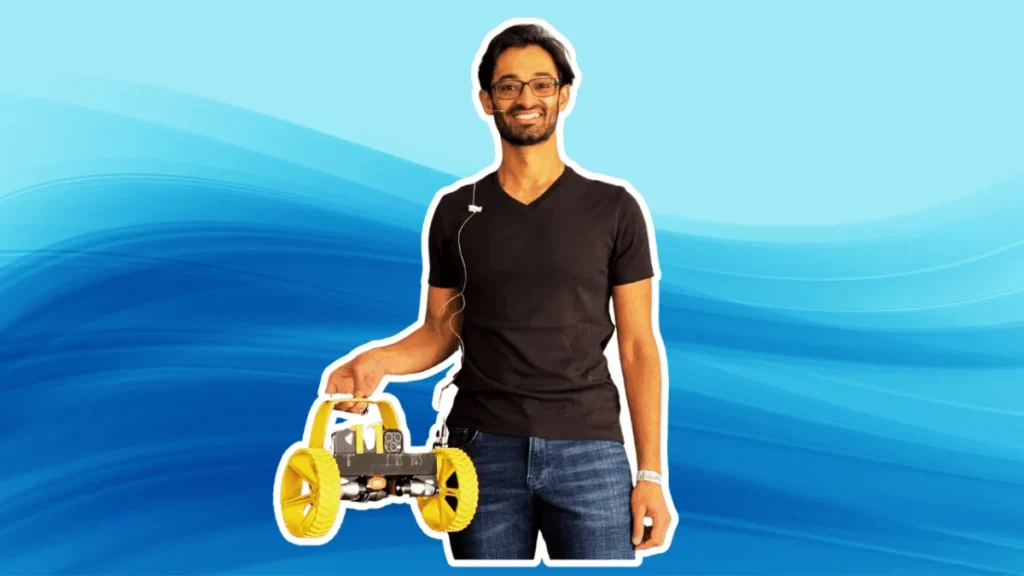
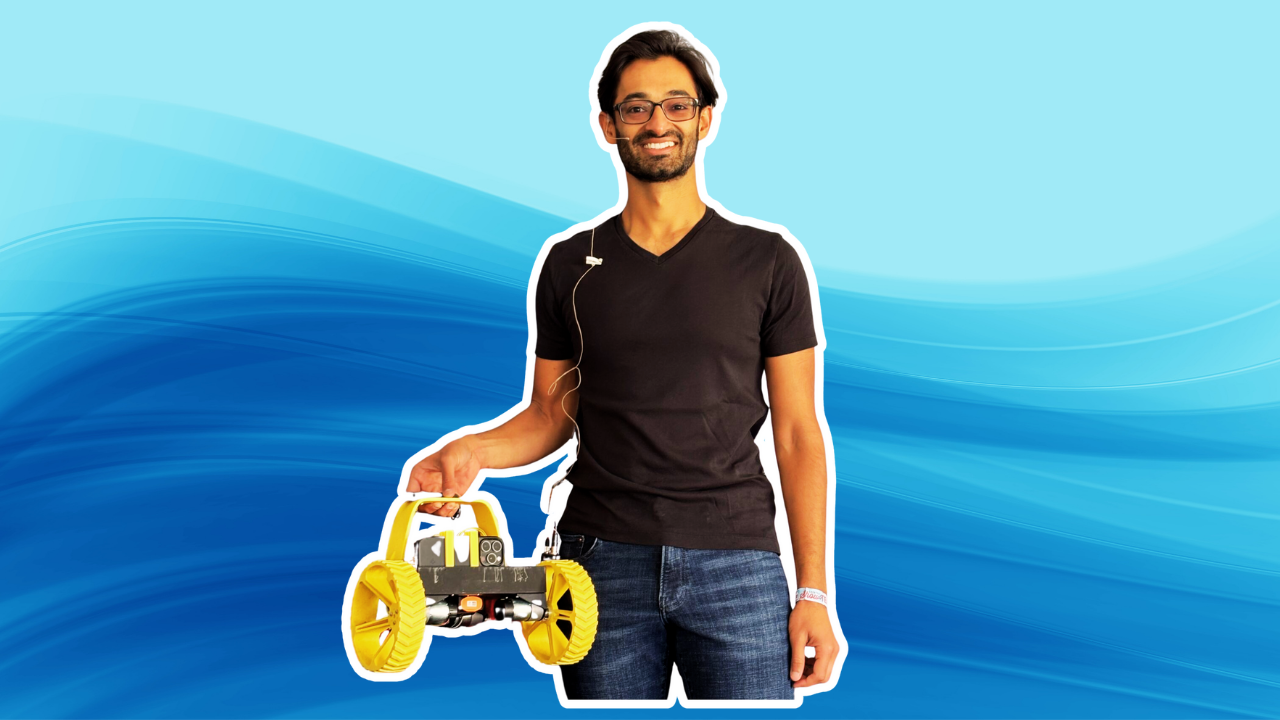
The annual Maker Faire Bay Area recently served as the distinguished platform for Survy Vaish, an innovative independent developer, to unveil his remarkable journey from a rudimentary concept to a fully autonomous outdoor robot. His presentation captivated attendees, illustrating the tangible, real-world process of transforming a nascent idea – "I want to build an autonomous robot" – into a sophisticated machine capable of navigating public parks and identifying objects. Vaish’s project stands as a compelling testament to the principle that groundbreaking innovation does not necessitate an extravagant laboratory or an limitless financial endowment; rather, it primarily requires initiative and a methodical approach to problem-solving. This endeavor effectively democratizes advanced robotics, demonstrating that accessible components and iterative development can yield impressive results, inspiring a new generation of makers to embark on their own technological explorations.
The Genesis of Autonomy: A Humble Beginning
Every significant technological breakthrough often traces its origins to a deceptively simple starting point, and Survy Vaish’s robot is no exception. His initial prototype, far from the polished, final product, began as a standard shoebox equipped with basic motors and wheels. This rudimentary setup, while unassuming in appearance, served a crucial purpose: to validate the most fundamental concept – movement. This stage deliberately eschewed complexity, focusing solely on proving that the core mechanism could propel itself. It was an exercise in minimalist design, stripping away all non-essential features to confirm the viability of the locomotion system. This approach underscores a core tenet of effective prototyping: start with the absolute simplest iteration to test the most critical hypothesis before incrementally adding layers of complexity. This initial phase, often overlooked in the narrative of successful projects, is foundational for identifying early-stage mechanical challenges and establishing a stable base for subsequent enhancements. The shoebox, a ubiquitous household item, symbolized the project’s commitment to accessibility, proving that advanced concepts could be explored using everyday materials. This foundational step, often termed a Minimum Viable Product (MVP) in software development, is equally critical in hardware, ensuring that the most basic functionality is robust before more complex systems are integrated.
The Iterative Heartbeat: Test, Fix, Iterate
Vaish’s development process is a masterclass in the engineering cycle of iteration, a methodology central to design thinking and agile development. His journey was not a linear progression towards perfection but a dynamic, cyclical engagement with challenges and solutions. The video documentation of his project vividly illustrates this authentic essence of engineering: failures were not roadblocks but invaluable data points, each one propelling the design forward. This relentless pursuit of improvement through continuous feedback loops is what differentiates a successful project from a mere concept.
The process unfolded through distinct, responsive stages, each driven by a newly identified problem or desired capability:
-
Initial Movement & Encountering Limitations (Phase 1: Basic Locomotion): After successfully demonstrating basic locomotion with the shoebox prototype, Vaish confronted the first major hurdle: the robot’s inability to interact intelligently with its environment. Without any sensory input, it was merely a motorized box, incapable of avoiding obstacles or understanding its surroundings. This immediately highlighted the need for perception. The robot could move, but it lacked awareness, making it unsuitable for any practical autonomous task. This phase typically involves basic motor control, power management, and structural integrity tests.
-
Integrating Environmental Awareness – Sensors (Phase 2: Reactive Navigation): The direct response to the lack of environmental understanding was the integration of sensors. These initial sensors, likely basic ultrasonic or infrared distance sensors, provided the robot with a rudimentary "sense" of its immediate vicinity. This allowed it to detect proximity to objects and implement basic avoidance behaviors, transitioning from blind movement to reactive navigation. This addition marked the first significant leap in the robot’s intelligence, moving it beyond a mere remote-controlled device towards semi-autonomy. The challenge here was not just adding sensors, but accurately interpreting their data and translating it into meaningful actions for the robot.
-
The Need for Processing – The Raspberry Pi (Phase 3: Intelligent Control): As the sensor data became more complex and the desired behaviors more intricate, the simple motor controller was no longer sufficient. A dedicated processing unit was required to interpret sensor readings, execute navigation algorithms, and manage overall system operations. This led to the integration of a Raspberry Pi, a compact and powerful single-board computer. The Raspberry Pi became the "brain" of the robot, enabling it to process incoming data, make decisions, and control its various actuators. Its open-source nature, robust community support, and GPIO (General Purpose Input/Output) pins for connecting various peripherals also made it an ideal choice for an independent maker, providing a flexible and expandable platform for control and computation. This phase involved writing code to integrate sensors, motors, and decision-making logic.
-
Advanced Perception and Navigation – Smartphone Integration (Phase 4: Advanced Autonomy): The aspiration for true outdoor autonomy – navigating a park and identifying specific objects – presented a new set of challenges that basic sensors and the Raspberry Pi alone could not fully address. Precise localization, high-resolution visual input, and robust computing power for advanced image processing were required. Vaish ingeniously addressed this by integrating a smartphone directly into the robot’s architecture. This was a pivotal decision, leveraging the immense computational power, sophisticated camera systems, and integrated GPS capabilities already present in a modern smartphone. The smartphone effectively provided:
- GPS: For accurate outdoor positioning and path planning, allowing the robot to know its precise location and plot routes.
- High-Resolution Camera: For advanced computer vision tasks, including object detection and recognition, enabling the robot to "see" and interpret its surroundings in detail.
- Onboard Processing Power: To run complex machine learning models for object identification and real-time image analysis, efficiently offloading some of the heavy computational tasks from the Raspberry Pi or complementing its capabilities.
- Connectivity: Potentially for remote monitoring, data logging, or cloud-based AI processing, enhancing its overall operational capabilities.
Each of these additions was a direct, problem-driven response to a limitation identified during extensive testing. This iterative loop of "test, analyze failure, design solution, implement, test again" is the bedrock of successful engineering, allowing for continuous refinement and progressive enhancement of the robot’s capabilities. It exemplifies the agile methodology applied to hardware development, where incremental improvements lead to exponential growth in functionality.
Maker Faire Bay Area: A Crucible of Innovation
The decision to showcase this project at Maker Faire Bay Area was highly strategic, given the event’s stature as a premier global gathering for innovators, educators, and enthusiasts. Originating in the San Francisco Bay Area in 2006, Maker Faire has evolved into a global phenomenon, often described as "the Greatest Show (and Tell) on Earth." Its mission is to celebrate arts, crafts, engineering, science projects, and the DIY (Do-It-Yourself) mindset. The Faire provides a unique platform for individuals like Survy Vaish to present their creations, share their methodologies, and inspire others. It fosters a vibrant community where ideas are exchanged, collaborations are formed, and the spirit of hands-on learning is paramount.
Historically, the Maker Faire movement emerged from the growing interest in personal fabrication, open-source hardware, and the desire to empower individuals to create. It champions the idea that everyone is a maker, regardless of professional background. Attendees at Maker Faire range from seasoned engineers and entrepreneurs to students and curious families, all united by a passion for creation and discovery. Vaish’s presentation resonated deeply within this context, embodying the Faire’s core values:
- Accessible Innovation: Demonstrating that high-tech projects can be built with readily available components, not just specialized industrial equipment.
- Learning by Doing: Highlighting the practical, hands-on journey of development, acknowledging failures as integral steps towards success.
- Community Sharing: Offering a detailed walkthrough of the build, complete with challenges and solutions, encouraging others to emulate or adapt his methods.
- STEM Engagement: Inspiring younger generations to pursue careers in science, technology, engineering, and mathematics through tangible, exciting projects.
The event’s atmosphere, buzzing with invention and shared knowledge, provided an ideal backdrop for Vaish to not only showcase his robot but also to articulate the philosophy behind its creation. The interactive nature of the Faire allowed for direct engagement, where Vaish could answer questions, elaborate on technical specifics, and provide encouragement to aspiring makers, reinforcing the idea that anyone can become a creator. The global reach of Maker Faire, with events held in over 40 countries, signifies the universal appeal of this maker culture and the growing desire for practical innovation.

The Thrilling Payoff: Autonomy in Action
The culmination of this rigorous iterative process is the final robot, a testament to thoughtful engineering and persistent development. What began as a mere shoebox transforms into a sophisticated blend of hardware and software, executing its mission with impressive autonomy outdoors. The robot, now equipped with its Raspberry Pi brain, an array of sensors, and the powerful visual and navigational capabilities of an integrated smartphone, can navigate complex outdoor environments such as a park. Its ability to identify specific objects within this dynamic setting signifies a significant leap from its humble origins. This capability implies the integration of advanced computer vision algorithms, likely employing machine learning models (such as convolutional neural networks, or CNNs) for real-time camera feed processing and accurate classification of detected items. This level of autonomy moves beyond simple obstacle avoidance, venturing into environmental understanding and goal-oriented interaction, demonstrating a functional proof-of-concept for a low-cost, intelligent mobile platform. The successful execution of its mission in a real-world environment validates the entire iterative design process, proving the efficacy of building complex systems from simple, accessible foundations. The transition from a controlled lab environment to the unpredictable variables of an outdoor setting represents a significant engineering challenge, which Vaish’s project successfully overcame.
Underlying Technologies and Their Democratization
Survy Vaish’s project is a powerful illustration of the ongoing democratization of advanced technologies, particularly in the fields of robotics and artificial intelligence. The accessibility of components and development tools has dramatically lowered the barrier to entry for individuals and small teams.
- Raspberry Pi: This credit-card-sized computer, central to Vaish’s robot, epitomizes the open-source hardware movement. It offers significant processing power for its cost (typically ranging from $35-$75 depending on the model), enabling complex computations, sensor data aggregation, and control logic. Its versatility and extensive community support, including readily available libraries and tutorials for Python and other programming languages, make it an ideal platform for robotics projects, from educational tools to sophisticated prototypes. The Raspberry Pi ecosystem has fostered countless innovations by making powerful computing affordable.
- Smartphone Integration: The strategic use of a smartphone is perhaps the most innovative aspect of this project in terms of accessibility and cost-effectiveness. Modern smartphones are packed with high-fidelity sensors (GPS, accelerometers, gyroscopes, magnetometers), powerful multi-core processors, high-resolution cameras, and robust wireless connectivity options (Wi-Fi, Bluetooth, cellular). By leveraging an existing smartphone, Vaish effectively integrated a cutting-edge, miniature supercomputer into his robot without incurring the prohibitive costs of custom-designed components. This approach significantly reduces the bill of materials and simplifies development, as developers can tap into established mobile operating system APIs for sensor access and image processing, bypassing the need to develop these capabilities from scratch. This strategy highlights resourcefulness and smart engineering.
- Open-Source Software and AI Frameworks: While not explicitly detailed in the original text, achieving object identification and autonomous navigation typically involves utilizing open-source software libraries and AI frameworks. Tools like OpenCV for computer vision, TensorFlow Lite or PyTorch Mobile for on-device machine learning inference, and various components of the Robot Operating System (ROS) can be run on platforms like the Raspberry Pi or directly on the smartphone. These resources provide pre-built algorithms and models, allowing makers to focus on application-specific challenges rather than building foundational AI logic from scratch. This collaborative development model significantly accelerates innovation by providing a shared foundation of tools and knowledge.
This convergence of affordable hardware and freely available software tools empowers individuals to tackle projects that were once the exclusive domain of large research institutions or well-funded corporations. The maker movement, exemplified by projects like Vaish’s, is a direct beneficiary of this technological democratization.
Inferred Statements and Community Impact
While direct quotes from Survy Vaish or Maker Faire organizers are not provided in the original content, we can infer significant sentiments and reactions based on the project’s nature and its presentation at such a public forum.
From Survy Vaish: His decision to share his journey publicly at Maker Faire Bay Area speaks volumes. It suggests a strong desire to inspire and educate. His approach likely stems from a belief that the "magic" of technology should be demystified, making it accessible to anyone with curiosity and dedication. He would likely emphasize:

- The power of starting small: "Don’t wait for perfection; just begin with what you have."
- The value of iteration: "Every failure is a step closer to success; embrace the learning process."
- The potential of accessible technology: "You already have powerful tools in your pocket – use them to innovate!"
His presentation is a call to action for aspiring makers, encouraging them to overcome the intimidation factor often associated with complex fields like robotics and to embrace the journey of creation.
From Maker Faire Organizers and Community: The inclusion of Vaish’s project at such a prominent event implies recognition of its educational value and its embodiment of the Maker Faire ethos. Organizers would likely view it as an exemplary project that showcases:
- Ingenuity and resourcefulness: Building advanced technology with humble beginnings and readily available components.
- Practical problem-solving: Demonstrating a clear progression from problem identification to effective, iterative solutions.
- Inspiration for the community: Motivating other attendees, from students to seasoned engineers, to pursue their own ambitious projects.
The community’s reaction would undoubtedly be one of admiration and engagement, with many likely approaching Vaish to learn more about his specific techniques, challenges, and the software implementations behind the robot’s intelligence. His project serves as a beacon, illustrating what is achievable with persistence, creativity, and a willingness to learn outside traditional institutional settings.
Broader Implications: Shaping the Future of DIY Robotics and STEM Education
Survy Vaish’s robot project carries significant implications that extend beyond the individual achievement, touching upon the future landscape of DIY robotics, STEM education, and grassroots innovation.
Future of DIY Robotics: This project hints at a future where sophisticated robotic systems are not just industrial tools or high-end consumer products but customizable, personal, and open-source platforms. As components become cheaper and more powerful, and as AI capabilities become easier to integrate through frameworks and libraries, the potential for individuals to build robots for specific personal, community, or even entrepreneurial needs expands exponentially. We could foresee a future where backyard robots assist with gardening, autonomous helpers monitor home security, or educational robots serve as interactive learning companions, all built and customized by enthusiasts. This shift democratizes access to robotic capabilities, fostering a culture of innovation from the ground up and potentially leading to a new wave of localized, specialized robotic solutions.
Impact on STEM Education: Vaish’s methodology provides a compelling blueprint for STEM (Science, Technology, Engineering, and Mathematics) education. By showcasing the entire iterative process, including setbacks and their solutions, it offers a realistic and relatable model for teaching engineering principles.
- Project-Based Learning: The robot’s development is a perfect example of project-based learning, where students are given a challenge and encouraged to experiment, fail, and iterate, rather than just passively absorbing theoretical knowledge.
- Interdisciplinary Skills: The project inherently integrates mechanical engineering (chassis design, motor mechanics), electrical engineering (wiring, power management), computer science (programming, algorithms, operating systems), and artificial intelligence (computer vision, navigation logic). This holistic approach prepares students for real-world engineering challenges.
- Problem-Solving Mindset: It emphasizes that real-world engineering is about continuous problem-solving, critical thinking, and adaptability, not just executing a perfect plan.
Educators can use such examples to inspire students, demonstrating that complex technologies are approachable and that the journey of discovery and problem-solving is as important as the final product.
Innovation Ecosystem: Projects like Survy’s contribute to a robust innovation ecosystem where grassroots efforts can spark new ideas and even lead to commercial ventures or academic research. The open sharing of knowledge and designs within maker communities fosters rapid prototyping and collaborative development, accelerating the pace of innovation. Small, independent makers, unconstrained by corporate structures or rigid research protocols, often bring fresh perspectives and disruptive solutions that might be overlooked in more formal settings. This bottom-up innovation complements top-down research and development, creating a diverse and resilient technological landscape.
Accessibility and Inclusivity: The core message that "you do not need a fancy laboratory or unlimited budget to start" is profoundly important for inclusivity in technology. It challenges the perception that high-tech fields are exclusive, opening doors for individuals from diverse backgrounds and economic situations to engage with and contribute to technological advancement. This fosters a more diverse talent pool and ensures that future technologies are developed with a wider range of perspectives and needs in mind, leading to more equitable and universally beneficial innovations.
In conclusion, Survy Vaish’s journey from a shoebox to an autonomous outdoor robot is more than just a successful engineering project; it is a powerful narrative about perseverance, ingenuity, and the transformative potential of accessible technology. His demonstration at Maker Faire Bay Area serves as an enduring inspiration, proving that with a clear vision, an iterative mindset, and a willingness to learn from every setback, anyone can embark on a journey of profound technological creation and contribute to the ongoing evolution of our interconnected world.