As global temperatures climb and polar ice sheets continue their accelerating melt, the resultant rise in sea levels is poised to fundamentally alter the chemistry of coastal and inland waterways. Among the most significant of these changes is saltwater intrusion—the process by which dense oceanic water pushes into freshwater environments such as rivers, estuaries, and coastal aquifers. While the physical impact of flooding is well-documented, a new study from the Massachusetts Institute of Technology (MIT) sheds light on a less visible but equally critical consequence: the radical transformation of microbial ecosystems that underpin the health of the planet’s aquatic environments.
The study, published in the journal Nature Microbiology, demonstrates that as salinity increases, microbial communities undergo a dramatic shift in composition. While these ecosystems appear resilient in terms of their total biomass production, they suffer a significant loss in biological diversity. This shift favors "generalist" species—microbes that grow rapidly and can tolerate higher salt concentrations—at the expense of specialized organisms that perform unique ecological functions. The findings suggest that while these environments may continue to "function" in the short term, their long-term stability and resilience against further environmental stressors may be severely compromised.
The Role of Microbes in Global Biogeochemical Cycles
To understand the stakes of the MIT study, one must first recognize the Herculean role played by microscopic organisms in aquatic environments. Microbial communities in rivers and estuaries are the primary engines of the carbon cycle. They are responsible for decomposing organic matter, such as dead algae and plant debris, converting it into nutrients that support the broader food web or sequestering it within the sediment.
In healthy freshwater and brackish systems, a high level of microbial diversity ensures that various specialized niches are filled. Some microbes are experts at breaking down complex cellulose, while others specialize in nitrogen fixation or the mitigation of toxic substances. This diversity acts as an ecological insurance policy; if one species fails due to a localized disturbance, others are typically available to fill the void. However, the MIT research suggests that rising salinity is systematically "canceling" this insurance policy by narrowing the field of active species.
Methodology: Testing Resilience in the Laboratory
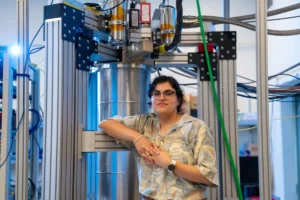
The research team, led by MIT postdoc Jana Huisman and senior author Jeff Gore, a professor of physics, sought to quantify exactly how varying salt levels affect the composition and productivity of natural microbial populations. The team collected water samples from three distinct locations in Massachusetts, each representing a different baseline of salinity:
- The Charles River (4 g/L): A predominantly freshwater environment influenced by urban runoff.
- Boston Harbor (30 g/L): A coastal marine environment with high salinity.
- Nahant Beach (35 g/L): A fully oceanic environment.
In the laboratory, these diverse communities were subjected to controlled environments with salt concentrations set at 16, 31, and 46 grams per liter (g/L). Over a period of two weeks, the researchers monitored two primary metrics: the growth rate (biomass production) and the taxonomic diversity of the communities.
The results revealed a striking paradox. Regardless of the salinity level, the overall growth rate of the communities remained remarkably stable. The microbes continued to multiply and produce biomass at a consistent pace. However, under the hood, the community structure was fracturing. At higher salinity levels, the number of distinct species plummeted. The communities became dominated by a small handful of fast-growing strains that outcompeted the more specialized, slower-growing inhabitants.
The Genetic "Speed Limit" of Microbial Growth
To explain why certain species thrived while others vanished, the researchers turned to genomic analysis. They focused on a specific genetic marker: the 16S rRNA gene copy number. In the world of microbiology, the number of copies of this gene serves as a reliable proxy for a microbe’s maximum potential growth rate. Essentially, more copies of the 16S rRNA gene allow a cell to produce ribosomes more quickly, enabling faster protein synthesis and more rapid cell division.
The MIT team found that as salinity increased, the species that remained were those with high 16S rRNA gene copy numbers. These "sprinters" of the microbial world are built for rapid expansion. While they are efficient at colonizing an environment quickly, they often lack the specialized metabolic capabilities of the "marathon runners"—the slower-growing species that maintain the complex chemical balances of a diverse ecosystem.
From the Lab to the Global Stage: Validating the Data
A critical component of the MIT study was determining whether these laboratory observations held true in the "wild." The researchers analyzed vast amounts of publicly available genomic data from natural aquatic ecosystems across the globe, including the Chesapeake Bay in the United States, the Gulf of Mexico, and the Baltic Sea in Northern Europe.
Across these diverse geographic locations, the pattern remained consistent. Environments with higher salinity levels showed a clear trend toward dominance by species with higher 16S rRNA gene copy numbers and lower overall diversity. This correlation suggests that the "salinity filter" observed in the lab is a universal phenomenon currently reshaping the world’s estuaries and coastal zones.
Jana Huisman, who hails from the Netherlands—a nation defined by its struggle with rising sea levels and a complex coastal delta—emphasized the importance of this finding. "You see the same signatures in such data, and that’s highly suggestive that what we found in the lab might also be true in natural environments," Huisman noted.
The Mechanics of Saltwater Intrusion
The context for this study is the accelerating rate of sea-level rise. According to the Intergovernmental Panel on Climate Change (IPCC), global sea levels have risen by about 20 centimeters (8 inches) since 1900, with the rate of increase nearly doubling in the last two decades. As the ocean rises, it creates a "saltwater wedge"—a layer of dense, salty water that crawls along the bottom of riverbeds, pushing miles inland.
This intrusion does not just affect the water column; it permeates the soil and groundwater. In places like the Delaware River or the Mississippi Delta, saltwater intrusion has already begun to threaten municipal drinking water supplies and agricultural land. The MIT study adds a new layer of concern: the biological "simplification" of these waters could lead to a breakdown in the natural filtration and nutrient-cycling services that healthy rivers provide.
Implications for Ecosystem Stability and Public Health
The loss of microbial diversity carries several high-stakes implications:
1. Reduced Resilience to Secondary Stressors
A diverse microbial community is better equipped to handle multiple stressors simultaneously, such as a sudden heatwave or a spike in chemical pollutants. By reducing these communities to a few fast-growing strains, rising salinity makes the ecosystem "brittle." If a new pathogen or toxin enters the system that the dominant fast-growers cannot handle, the entire microbial engine could stall, leading to mass die-offs of higher organisms like fish and shellfish.
2. Altered Carbon Cycling
While the MIT study showed that biomass production remained stable, it did not investigate the specific functions of the surviving microbes. If the specialized microbes responsible for sequestering carbon are replaced by species that release carbon dioxide or methane more readily, estuaries could flip from being carbon sinks to carbon sources, further exacerbating the greenhouse effect.
3. The Rise of Pathogens
Perhaps the most concerning implication is the identity of the "fast-growers." Many opportunistic pathogens, including certain species of Vibrio (which can cause cholera or severe wound infections), are known for their rapid growth rates and high 16S rRNA gene copy numbers. If rising salinity creates an environment that systematically favors fast-growing generalists, it may inadvertently pave the way for an increase in waterborne diseases.
Future Directions and Research
The MIT study serves as a foundational piece of a larger puzzle. Jeff Gore’s lab has previously investigated how rising temperatures favor slower-growing bacteria, suggesting that climate change is exerting multiple, sometimes conflicting, pressures on microbial life. The interplay between rising temperatures (favoring slow-growers) and rising salinity (favoring fast-growers) creates a complex tug-of-war that researchers are only beginning to map.
Moving forward, Huisman and her colleagues intend to delve deeper into the functional identity of the species that dominate high-salinity environments. "Whether you want faster-growing species to take over or not might also be related to what the identity of those species is," Huisman said. Determining whether these dominant strains are beneficial, neutral, or harmful is the next critical step for environmental scientists and policy makers.
The research was supported by the Human Frontier Science Program Fellowship and a Schmidt Science Polymath Award. As the world continues to grapple with the physical infrastructure needed to hold back the sea, this study reminds us that the most profound changes may be occurring at the microscopic level, reshaping the very chemistry of the water that sustains coastal life.