The landscape of motion control technology presents engineers with a fundamental decision: whether to opt for readily available, off-the-shelf servodrives or to invest in custom-engineered solutions. While standard servodrives serve as the backbone for a vast array of industrial, commercial, and consumer applications, delivering proven performance, immediate availability, and straightforward integration, an increasing number of specialized scenarios demand tailored approaches. This dichotomy reflects the growing complexity and diversification of modern machinery, where generic solutions often fall short of stringent performance, environmental, or spatial requirements. Industry analysis indicates a steady growth in the global servodrive market, projected to reach over $10 billion by 2028, with a significant portion of this expansion driven by the demand for specialized, high-performance, and compact solutions that often necessitate customization.
The Foundational Role of Standard Servodrives
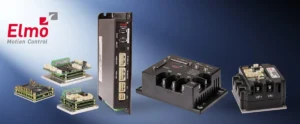
For decades, standard servodrives have been the workhorses of automated systems. Their appeal lies in their accessibility, cost-effectiveness, and broad compatibility. Typically available in panel-mounted or PCB-mounted formats, these units are designed to meet a wide range of common operational parameters, offering fixed ranges of operating voltages and output currents. Manufacturers often build in comprehensive protection features, such as over-temperature monitoring with adjustable thresholds and robust current protection (supporting both peak and continuous limits), which have evolved from desirable custom requests to standard offerings based on years of application experience. The straightforward nature of integrating these drives, coupled with preconfigured algorithms for basic velocity, torque, and positioning control, makes them ideal for applications where parameters align with typical specifications. Moreover, features like advanced Field Oriented Control (FOC) for brushless and closed-loop stepper motors, delivering good dynamic response and acceptable torque ripple, are increasingly standard, providing significant performance benefits without the need for bespoke development. Many standard drives also offer built-in motor databases and auto-tuning capabilities, enabling quick setup and optimization for common motor types.
The Imperative for Customization: Evolving Industry Demands

As industries push the boundaries of automation, miniaturization, and performance, the limitations of standard servodrives become apparent. The demand for customization has accelerated over the past decade, driven by several key factors: the miniaturization trend in electronics and robotics, the proliferation of specialized equipment in harsh or unique environments, the need for ultra-precise motion control in sensitive applications, and the integration of components into increasingly complex system architectures. This shift represents an evolution in engineering priorities, moving from "good enough" to "perfectly optimized."
Addressing Physical and Environmental Extremes
One of the most frequent drivers for custom servodrives stems from physical and environmental challenges. Specialized equipment often features highly constrained real estate for electronics, making the standard rectangular enclosures or PCB formats impractical. To overcome these limitations, suppliers offer several customized options:
- Board-Only Solutions: For high-volume Original Equipment Manufacturers (OEMs) who don’t require the full functionality and connectors of an enclosed product, board-only versions of standard products are available. These can be paired with custom heat sinks, allowing the same performance as standard units but in significantly smaller, application-specific packages. This approach optimizes space utilization and reduces material costs by eliminating unnecessary components.
- Integrated and Unique Form Factors: Embedded drives, which integrate directly with the motor to create a motor-mounted unit, eliminate external wiring and enclosures. For systems that cannot accommodate typical rectangular shapes, round drives designed to mount directly onto motor ends provide a compact solution. Further customization includes ultra-compact PCB assemblies or adapted standalone chassis mounts tailored to specific enclosure or mounting schemes, providing unparalleled flexibility in design.
- Environmental Ruggedization: Protecting sensitive electronics from contaminants is critical in many industrial settings. Custom drives can be enhanced with specialized covers, conformal circuit-board coatings, or even complete encasement in potting compound for ultimate contamination prevention. These modifications are particularly prevalent in sectors such as food and beverage processing, where hygiene standards are paramount; industrial machinery, exposed to dust, oil, and chemicals; and agricultural automation, facing extreme weather and debris. The global market for ruggedized electronics is growing, reflecting the increasing deployment of technology in challenging environments, and custom servodrives are a vital part of this trend.
Case Study: Agricultural Automation in Harsh Environments
A prime example of environmental ruggedization involves an IP69K-rated drive-motor package developed for an agricultural application. This solution required up to fifty drives and motors to be mounted onto a tractor implement, automatically controlling dispensing for each row in a field. The standard drive board and motor were housed within a sealed enclosure featuring waterproof cables and connectors. The IP69K rating, which signifies protection against high-pressure, high-temperature washdowns and dust ingress, ensured the assembly could withstand rigorous cleaning procedures. Furthermore, the design accounted for the extreme vibration inherent in tractor operation and the wide range of outdoor temperatures, ensuring reliable performance throughout planting and harvesting seasons. This level of environmental resilience is virtually impossible to achieve with off-the-shelf components.
Case Study: MIL-SPEC Compliance for Haptic Feedback
Another instance of extreme environmental adaptation involved a custom drive integrated into the joystick of a steering system requiring haptic force feedback. This application necessitated compliance with MIL-SPEC (Military Standard) requirements for shock, vibration, temperature, and ingress protection. The solution involved a conformally-coated board housed within a hermetically sealed package, demonstrating how custom engineering can meet the most demanding military-grade specifications, ensuring operational integrity in critical defense and aerospace systems.

Optimizing Power and Performance: Beyond Standard Ratings
The power requirements of a motor, dictated by its duty cycle and size, often extend beyond the fixed ranges offered by standard servodrives. While standard units provide defined operating voltages and output currents, many applications require precise power matching or levels that fall between typical specifications.
-
Precision Power Matching: A motor may require current or voltage levels that are not readily available in standard increments – for instance, an output between the continuous current ratings of standard models or a very specific voltage for optimal efficiency. Custom units allow for this precise tuning, ensuring the drive perfectly complements the motor’s operational parameters. For example, ElectroCraft offers standard drives scaled at 6-A, 12-A, 24-A, 40-A, and 50-A continuous, with the largest drive capable of 100-A peak. However, customers needing specific current ratings between these values can request custom configurations, reflecting the need for granular control over power delivery.
-
Universal AC Line Input and Power Factor Correction: A significant challenge for global OEMs is ensuring equipment compatibility across different electrical grids. A large OEM in laboratory diagnostics, for instance, required a drive to control a NEMA 34-frame BLDC motor in a low-current application (3 to 4 A). Critically, the drive needed universal AC line-input capability, accepting 85 to 265 Vac anywhere in the world without requiring jumper settings or physical adjustments. The customized solution integrated a power factor controller (PFC) that not only reduced harmonics on the AC line but also allowed operation at universal voltages, much like a laptop power supply. This eliminates the need to size electronics for the highest voltage (220 V) when operating at 120 V, thereby avoiding unnecessary costs and ensuring efficient, consistent DC power delivery regardless of the input.
-
Duty Cycle and Torque Demands: Applications with high acceleration or "pulse-duty" operations, common in robotics and packaging machinery, demand substantial peak current to generate the necessary peak torque for rapid starts and stops. While many standard drives allow peak currents double their continuous rating for short durations, exceeding these limits can lead to thermal damage and reduced performance. If the required peak and continuous currents surpass a standard drive’s capacity, a custom solution becomes essential to prevent overheating, extend component lifespan, and ensure consistent high-performance operation. This fine-tuning of power delivery mechanisms is a hallmark of custom drive engineering.

Navigating Regenerative Braking Challenges
Regenerative braking, where motors decelerate under load and generate energy that flows back into the drive, is a critical consideration in many applications, particularly in robotics, elevators, and gantries. Standard servodrives typically manage this excess energy with an onboard shunt regulator, which dissipates it as heat to maintain safe DC bus voltage levels. However, these internal shunts have fixed limits for the amount of regenerative power they can handle.
Applications with high-inertia loads or vertical axes, where gravity assists downward motion, can generate significantly more power than a standard shunt can safely dissipate. Exceeding these built-in limits can lead to overvoltage conditions, drive damage, or system shutdowns. In such scenarios, custom drives with enhanced regenerative capabilities or standard drives augmented with external shunt resistor modules become necessary. These solutions are engineered to safely manage and dissipate higher levels of regenerative energy, ensuring system stability and preventing costly failures. Furthermore, features like built-in electromagnetic brake control, which ElectroCraft integrates into its drives, are essential in vertical-axis and safety-critical applications, providing an additional layer of control and protection during power loss or emergency stops.
Advanced Control and Specialized Motion Profiles
The sophistication of motion control required by modern applications often exceeds the capabilities of standard, preconfigured algorithms. While standard drives offer robust FOC for brushless and closed-loop stepper motors, providing good dynamic response and acceptable torque ripple for most uses, some applications demand more.

-
Tailored Algorithms and Commutation: For highly specialized motion profiles, such as those requiring ultra-smooth motion at low speeds, minimal torque ripple, or exceptionally precise tracking, custom control algorithms and feedback processing are indispensable. Suppliers can develop custom-tuned FOC algorithms specifically matched to a motor’s unique electrical characteristics and an application’s performance requirements. The choice of commutation method is also critical; while simple trapezoidal commutation suffices for cost-sensitive applications, more advanced sinusoidal commutation with custom FOC algorithms is deployed when high efficiency and superior control resolution are paramount.
-
Case Study: Semiconductor Inspection Station Precision: The semiconductor industry exemplifies the need for extreme precision. An inspection station required positioning accuracy within 50 mrad of the commanded position for precise instrument alignment—a resolution beyond what any standard encoder could directly sense. A motion-technology supplier developed a unique algorithm using software interpolation to precisely control the torque vector in the motor, maintaining the required accuracy. This involved rescaling the drive’s voltage and current feedback to maximize resolution. By dropping the voltage of a standard 48-V drive to 12 V while maintaining a 16-bit PWM, each PWM step became four times smaller. Concurrently, the current measurement range was reduced from 10 A to 500 mA full-scale, effectively spreading the finite digital resolution of the analog-to-digital converter across a narrower range, thereby significantly increasing feedback resolution and fidelity.
-
Adaptation for Commercial Applications: This innovative fine-resolution technology was later adapted for a seemingly disparate application: a vinyl turntable manufacturer. The tight control facilitated by the custom algorithm enabled the detection of flaws in master discs by virtually eliminating "wow and flutter," demonstrating how highly specialized solutions can find broader commercial utility.
Integration and Communication Imperatives
The seamless integration of servodrives into larger, often complex communication networks and system architectures is another area where customization frequently becomes necessary.

-
Nonstandard Feedback Devices: While standard drives support common encoders and sensors using industry-standard interfaces (Hall sensors, optical encoders, Sin-Cos encoders, magnetic encoders, various serial encoder protocols), applications employing proprietary position sensing technology or nonstandard feedback devices require customized drives. These drives must be engineered to correctly accept, process, and communicate these specific signals. Furthermore, while standard drives offer basic fault diagnostics, custom versions can be configured to monitor and report specific internal functions, such as following error or other application-critical parameters, providing deeper diagnostic insights.
-
Bridging Communication Gaps with Custom Protocols: Standard drives typically support common industrial protocols like CANopen or EtherCAT. However, applications requiring integration with unique, specialized, or proprietary networks may necessitate custom solutions. Leading suppliers possess extensive experience in creating custom serial-based control protocols (e.g., RS-232 and RS-485) when standard interfaces cannot meet an application’s specific requirements. This capability is invaluable for integrating drives with legacy equipment or ensuring new accessories work harmoniously with existing systems that rely on proprietary communication schemes.
-
Custom I/O for Enhanced Functionality: Input/Output (I/O) customization is among the most frequently requested modifications. Custom drives can include modified firmware that allows I/O to invert inputs, provide specific indicator statuses, or report feedback based on unique control variables. For example, one motion-technology supplier developed a drive preconfigured to automatically select one of eight configurations based on I/O pin states. By using a custom harness that tied specific pins to ground, the drive detects and loads the appropriate configuration, eliminating the need for manual setup steps and streamlining deployment in high-volume manufacturing environments. In distributed control systems, custom features allow drives to function as intelligent nodes, commanding electronic gearing or complex motion trajectories for tightly coordinated or synchronized axes, crucial for advanced industrial automation, medical equipment, and semiconductor processing.
Economic and Strategic Implications
The decision between standard and custom servodrives is not merely technical; it carries significant economic and strategic implications for OEMs and end-users alike.

-
Cost vs. Benefit Analysis: While custom solutions involve an initial development investment, this cost is often justified for high-volume OEMs. By investing in a tailored solution, they avoid paying for unnecessary features present in standard drives, while gaining precisely optimized capabilities. This leads to a lower cost per unit over the product lifecycle and a superior final product. The return on investment for customization can be substantial, particularly when considering gains in efficiency, reliability, and market differentiation.
-
Competitive Advantage and Innovation: Custom drives provide a distinct competitive advantage. By enabling unique product features, superior performance, or the ability to operate in environments where standard solutions fail, customization allows OEMs to differentiate their offerings in crowded markets. This tailored approach fosters innovation, pushing the boundaries of what is possible in various industries, from advanced robotics to precision medical devices. As the demand for specialized automation grows, the ability to rapidly develop and integrate custom motion control solutions will be a key differentiator for industry leaders.
Strategic Approach to Customization
Given the complexities and potential benefits, a strategic approach to servodrive selection is crucial. Industry experts generally recommend starting with standard, off-the-shelf options to test and validate core performance requirements. This reduces initial risk by proving the basic concept before committing to custom development. If a standard drive performs well but requires specific enhancements, modifications, or integration into a unique system, that is the opportune moment to explore customization.
Engaging with suppliers who possess extensive customization experience, like ElectroCraft, is vital. Such partners can leverage their existing platforms and expertise to efficiently develop tailored solutions, bridging the gap between standard offerings and highly specialized application needs. This iterative process of testing, evaluating, and customizing ensures that the final solution is precisely optimized for performance, cost, and longevity, driving innovation across the industrial landscape. The dynamic interplay between standard and custom servodrives underscores the evolving nature of industrial technology, where flexibility and precision are increasingly paramount.