While the global automotive industry has largely fixated on the inexorable rise of battery electric vehicles (BEVs), a significant and persistent demand for liquid fuels continues to shape transportation landscapes worldwide. This ongoing reliance on combustion engines, particularly in emerging economies and for specific applications, has prompted innovative approaches to fuel sustainability. A compelling example of this is the recent pilot initiative in Spain spearheaded by automotive giants Toyota and BMW, in collaboration with energy leader Repsol, to demonstrate the viability of running existing vehicles exclusively on a fully renewable petrol alternative, Repsol’s Nexa 95. This project, bolstered by Bosch’s advanced ‘digital fuel tracking solution,’ signals a pragmatic acknowledgment that the transition to zero-emission mobility is not a monolithic, BEV-exclusive journey.
The impetus behind such initiatives is underscored by the substantial global market for liquid fuels, a reality that cannot be overlooked in the pursuit of decarbonization. While Europe and North America have aggressively pushed for BEV adoption, other regions, notably China, continue to rely heavily on internal combustion engines, albeit with a growing emphasis on cleaner alternatives. This is where methanol emerges as a particularly interesting contender, with China already dominating global production, accounting for approximately 60% of the world’s supply. Historically, a significant portion of this methanol has been derived from coal, a process with considerable environmental drawbacks. However, China’s strategic investments in e-methanol production, which utilizes renewable energy sources to synthesize methanol from captured carbon dioxide and hydrogen, are beginning to shift this paradigm. This commitment is not new; since 2019, China has actively supported the use of M100 (100% methanol) fuel in passenger vehicles, swiftly establishing itself as the world’s largest market for methanol-fueled automobiles.
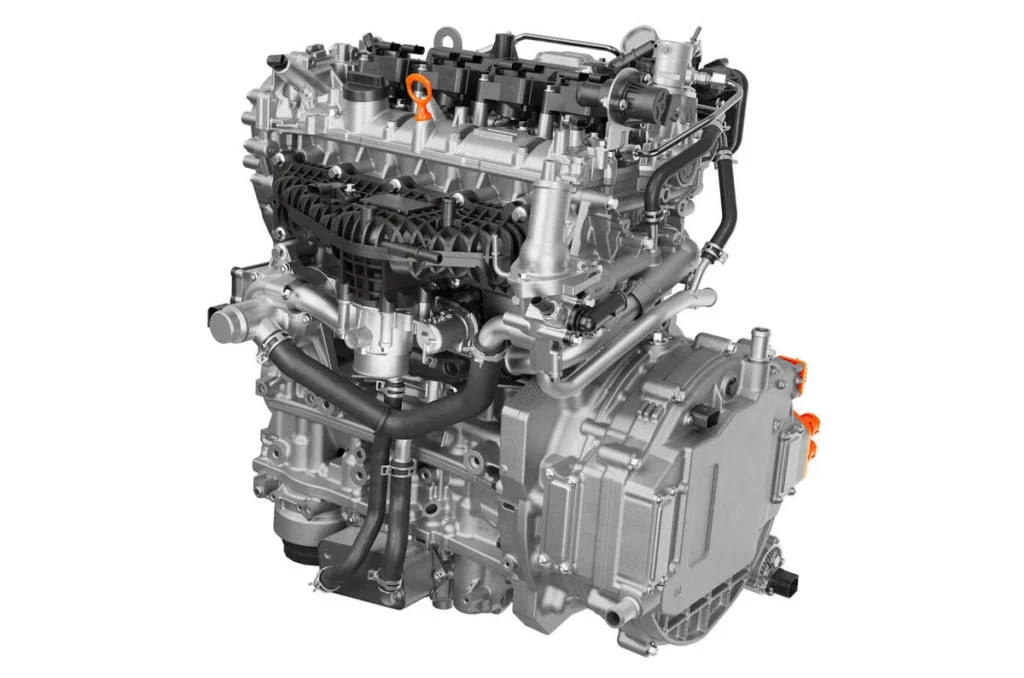
This burgeoning methanol ecosystem in China has directly influenced powertrain development. Horse Powertrain, a company at the forefront of innovative engine technologies, has recently unveiled its D20 Methanol, a sophisticated range-extender electric vehicle powertrain. At its core is a 2.0-litre turbo engine specifically engineered to combust M100 methanol. This engine is paired with an advanced axial-flux motor-generator, a design choice that represents a significant engineering leap.
The Engineering Prowess of Axial-Flux Motors
The D20 Methanol’s axial-flux motor-generator is a testament to cutting-edge electric propulsion design. Unlike conventional radial-flux motors, which are cylindrical in shape, axial-flux motors are characterized by a "pancake" or "biscuit tin" form factor – wider in diameter but significantly shorter. This geometric advantage translates into substantial benefits in terms of packaging and performance. The specific axial-flux motor integrated into the D20 is nearly half the length of a comparable radial-flux motor. Crucially, this compact design achieves an impressive 63% greater energy density by volume. This means it can generate 63% more power (in kW) for every unit of space it occupies, a critical factor in optimizing the overall efficiency and footprint of the range-extender system.
Furthermore, the motor incorporates a "yokeless" design. In traditional electric motors, a heavy iron disc, known as a yoke, is used to complete the magnetic circuit and mount the electrical coils. The yokeless configuration of the D20’s motor eliminates this heavy component, relying instead on lightweight materials and innovative design features to achieve the necessary magnetic field containment and coil support. This reduction in mass further contributes to the motor’s overall efficiency and power-to-weight ratio.
The electrical efficiency of this axial-flux motor is rated at an exceptional 96.4%. This high level of performance is partly attributable to the integration of an embedded silicon-carbide power module. Silicon carbide is a semiconductor material that exhibits superior electrical properties compared to traditional silicon, allowing for reduced energy losses during power conversion and greater thermal management capabilities. These advancements collectively ensure that the electric motor component of the D20 Methanol system operates at the peak of its potential.
Methanol Combustion: Efficiency and Cold-Start Solutions
The D20 Methanol powertrain boasts an impressive 47% energy conversion ratio from the M100 fuel to usable mechanical and electrical power. This figure is considered extremely efficient for an internal combustion engine, particularly one operating on a fuel like methanol. A key enabler of this high efficiency is the engine’s ability to perform ultra-lean burning of the M100 fuel. Ultra-lean burning involves using a significantly higher air-to-fuel ratio than conventional engines, which can lead to substantial improvements in fuel economy and a reduction in certain emissions.
Achieving ultra-lean burning reliably requires a sophisticated ignition system. The D20 Methanol is equipped with a high-energy ignition system specifically designed to ignite these extremely lean fuel-air mixtures. This advanced ignition technology is not only crucial for maximizing combustion efficiency but also addresses one of the inherent challenges associated with methanol fuel: cold-start performance. Methanol has a lower vapor pressure than gasoline, which can make ignition difficult in very cold temperatures. The new ignition system in the D20 is engineered to overcome this limitation, enabling the engine to be reliably started even in extreme conditions, down to -35 degrees Celsius.
Emissions Compliance and the Legacy of Methanol in Automotive History
The focus on emissions is paramount in modern automotive development, and the D20 Methanol powertrain is designed to meet stringent regulatory standards. It is engineered to comply with China’s CN6b emissions standard, which sets a limit of 35 mg/kWh for NOx emissions, and also meets the European Union’s proposed Euro 7 limit of 60 mg/km. This dual compliance demonstrates a forward-thinking approach, anticipating global regulatory trends and ensuring market accessibility.
The concept of using methanol as a vehicle fuel is not entirely new; it has roots stretching back decades, with a notable early exploration by DaimlerChrysler in 1999. The company launched the Necar 4, a hydrogen fuel cell electric vehicle based on the Mercedes A-Class, which notably ran on hydrogen reformed onboard from methanol. The rationale behind this approach was prescient: it envisioned that existing fuel station infrastructure could be adapted for methanol distribution with relatively minor modifications, such as installing liners in underground tanks and swapping out fuel pumps. This offered a potentially less disruptive and more cost-effective pathway to alternative fuels compared to the widespread development of entirely new hydrogen refueling networks.
Further bolstering the case for methanol, Nobel Prize-winning chemist George Olah championed its potential in an influential essay published in 2005. Olah advocated for a "methanol economy," proposing a future where methanol, derived from sustainable sources like renewable hydrogen or captured carbon dioxide, could form the backbone of transportation energy. While a complete transition to such an economy may still be a distant prospect, the underlying principles of sustainable methanol production and its versatility as a fuel continue to resonate.
Broader Implications for the Future of Mobility
The concurrent developments in Spain and China, alongside the technological advancements in powertrains like the D20 Methanol, highlight a nuanced and multifaceted approach to decarbonizing the transportation sector. While BEVs will undoubtedly play a dominant role, particularly in passenger car segments in developed markets, alternative liquid fuels such as renewable petrol and methanol offer pragmatic solutions for various segments of the global vehicle fleet.
Supporting Data and Market Trends:
- Global Fuel Demand: Despite the rise of EVs, global demand for liquid fuels remains substantial. The International Energy Agency (IEA) projects that while the share of oil in global energy consumption will decline, liquid fuels will still constitute a significant portion of the energy mix for transportation for decades to come, especially in sectors like heavy-duty trucking, shipping, and aviation, and in regions with less developed charging infrastructure.
- China’s Methanol Dominance: China’s production capacity for methanol stands at approximately 80 million metric tons per year, a figure that dwarfs that of other major producing nations. The country’s commitment to e-methanol production, with ambitious targets for scaling up capacity, indicates a long-term strategic vision for the fuel.
- Methanol Vehicle Growth: While precise global figures for methanol-fueled vehicles are challenging to aggregate comprehensively, China’s domestic market has seen a notable increase in the adoption of M100 vehicles, particularly in commercial fleets and taxis, driven by both policy support and economic factors.
- Renewable Fuel Advancements: The development of synthetic fuels, including e-petrol and e-methanol, is gaining traction globally. Companies are investing in facilities to produce these fuels from renewable electricity and captured CO2, aiming to create carbon-neutral alternatives that can utilize existing internal combustion engine technology.
Chronology of Key Developments:
- 1999: DaimlerChrysler introduces the Necar 4, demonstrating hydrogen fuel cell technology powered by onboard methanol reformation.
- 2005: George Olah publishes his influential essay advocating for a "methanol economy."
- 2019: China begins actively supporting the use of M100 fuel in passenger vehicles, establishing its leadership in this segment.
- Present: Toyota, BMW, Repsol, and Bosch launch a pilot program in Spain to test renewable petrol in existing vehicles. Concurrently, Horse Powertrain unveils its D20 Methanol range-extender EV powertrain designed for M100 fuel.
Analysis of Implications:
The strategic importance of these initiatives lies in their potential to prolong the life and sustainability of the existing global vehicle fleet. For regions where rapid electrification faces significant infrastructural and economic hurdles, renewable liquid fuels offer a more immediate pathway to emissions reduction. The Toyota-BMW-Repsol project in Spain, for instance, demonstrates that consumers with existing gasoline-powered vehicles could potentially transition to a lower-carbon fuel without requiring the purchase of a new vehicle or extensive infrastructure overhauls. This approach addresses the significant challenge of vehicle parc turnover, which can take over a decade in many markets.
Furthermore, the development of advanced methanol engines, such as the D20 Methanol, showcases that internal combustion engines can still achieve remarkable levels of efficiency and environmental compliance when paired with innovative fuels and technologies. The ability to operate on a carbon-neutral fuel like e-methanol, coupled with advanced emissions control and high energy conversion ratios, presents a compelling case for its application in range-extender electric vehicles, commercial fleets, and potentially in niche segments where battery-only solutions are less practical.
The emphasis on e-methanol production in China is particularly noteworthy. If scaled effectively, this process could transform a fuel historically associated with fossil fuels into a truly sustainable option. The ability to produce methanol from renewable electricity and captured CO2 not only offers a cleaner fuel but also presents a potential carbon capture and utilization pathway, turning a greenhouse gas into a valuable commodity.
However, challenges remain. The widespread availability and cost-competitiveness of truly renewable methanol and e-petrol are critical factors for their broader adoption. The energy intensity of producing e-fuels and the efficiency of the conversion processes are subjects of ongoing research and development. Nevertheless, the continued investment and innovation in these areas suggest a growing recognition that a diverse portfolio of sustainable mobility solutions, beyond just BEVs, will be necessary to achieve global decarbonization goals. The resurgence of methanol, supported by major industrial players and underpinned by technological advancements, signals that liquid fuels, in their renewable forms, are far from obsolete and will likely play a significant role in the future of transportation.