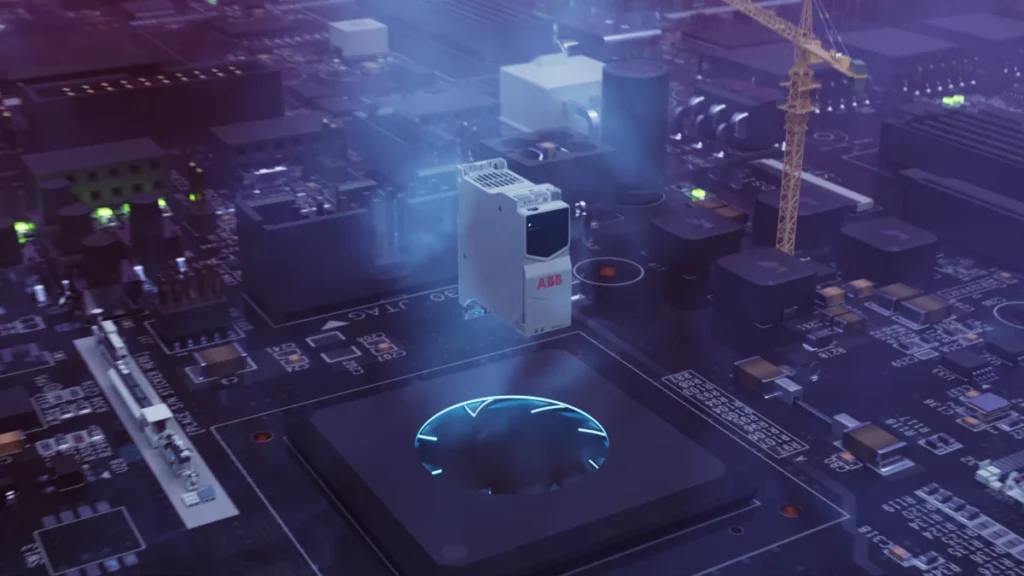
Global circularity has slipped to 6.9%, a concerning statistic from the most recent Circularity Gap Report that starkly indicates industries are consuming resources at a rate significantly faster than they can be recuperated, exacerbating environmental challenges and posing structural hurdles for long-term corporate competitiveness. This precipitous decline underscores an urgent imperative for industries worldwide to fundamentally rethink their operational paradigms, moving away from linear "take-make-dispose" models towards more regenerative and restorative approaches. In this critical context, the role of efficient motor drives emerges as a pivotal solution, offering a tangible pathway to help bridge this widening resource gap and drive industries towards a more sustainable future. Anne Franzas, Global Product Manager for Circularity at ABB, succinctly encapsulates this challenge, highlighting the direct link between resource consumption and industrial efficiency.
The Alarming Decline in Global Circularity and Its Implications
The 2025 Circularity Gap Report serves as a sobering benchmark, revealing a persistent trend of diminishing global circularity. This annual assessment, which measures the proportion of materials reused and recycled in the global economy, has shown a consistent downward trajectory, signaling a profound systemic failure to transition towards sustainable resource management. The current figure of 6.9% means that over 93% of the materials entering the global economy are new, virgin resources, destined for eventual waste streams, rather than being cycled back into productive use. This alarming statistic is not merely an environmental concern; it represents a significant economic vulnerability. Industries face escalating raw material costs, supply chain disruptions due to resource scarcity, and increasing regulatory pressure to reduce their environmental footprint. For companies, particularly those heavily reliant on manufacturing and industrial processes, long-term competitiveness is inextricably linked to their ability to innovate and adopt designs that not only consume fewer resources but also extend product lifespans and facilitate the preservation and recovery of critical raw materials (CRMs). These CRMs, ranging from rare earth elements to specific metals, are the bedrock of modern technologies, from electric vehicles to advanced industrial automation, and their finite nature necessitates a strategic shift in industrial design and operation.
The Pivotal Role of Variable Frequency Drives (VFDs)
Within the vast landscape of industrial automation, Variable Frequency Drives (VFDs), also known as inverters or adjustable speed drives, stand out as long-life infrastructure assets. These sophisticated electronic devices control the speed and torque of AC electric motors by varying the frequency and voltage of the electrical power supplied to the motor. Their inherent design and operational characteristics directly influence energy consumption, operational uptime, and waste generation over decades of continuous use. For manufacturers and operators, the selection and deployment of VFDs are no longer merely technical decisions driven by immediate performance metrics; they are strategic choices with profound implications for environmental stewardship and economic resilience.
Historically, the definition of "premium" in industrial equipment, including VFDs, has often been narrowly confined to initial purchase price and basic energy efficiency ratings. However, the pressing realities of resource depletion, climate change, and evolving regulatory landscapes demand a more comprehensive and holistic redefinition. A truly premium VFD in the 21st century must extend beyond these traditional metrics to encompass durability, inherent reliability, material-efficient design, and, crucially, the ability to retain value and utility across multiple life cycles. This expanded definition acknowledges that the total cost of ownership and the true environmental impact are determined by a product’s entire lifecycle, from raw material extraction through design, manufacturing, operation, maintenance, and eventual end-of-life recovery.

Embracing Circularity: From Design Conception to End-of-Life
The concept of circularity, often mistakenly perceived as an end-of-life consideration focused solely on recycling, must be integrated much earlier in the product lifecycle for industrial drives. For these complex systems, circularity begins at the fundamental levels of design, material selection, and planned operating life. The preservation and efficient use of CRMs have transitioned from a niche concern to a central strategic priority for drive manufacturers. This paradigm shift mandates that equipment be engineered with fewer dependencies on scarce resources, exhibit significantly longer operational lifetimes, possess higher recoverability rates for components and materials, and offer clearer traceability of their constituent elements.
For leading drive manufacturers, this commitment to circularity translates into a multi-faceted approach:
- Design for Longevity and Reliability: Engineering robust products that withstand harsh industrial environments, thereby extending their service life and delaying the need for premature replacement. This involves rigorous testing and selection of components.
- Material Efficiency and Modularity: Developing designs that minimize material input, especially CRMs, and prioritize the use of readily available, recyclable, or recycled materials. Modularity allows for easy repair, upgrade, and component replacement, extending the life of the core unit.
- Energy Efficiency Optimization: Integrating advanced control algorithms and power electronics to maximize energy savings throughout the drive’s operational spectrum, significantly reducing the carbon footprint of industrial processes.
- Enhanced Serviceability and Upgradeability: Designing VFDs that are easy to maintain, diagnose, and upgrade with new features or components, ensuring their relevance and performance evolve with technological advancements and changing customer needs.
- End-of-Life Recovery and Remanufacturing: Establishing robust take-back schemes and remanufacturing programs to ensure that valuable materials and components are recaptured and reintroduced into the production cycle, rather than ending up in landfills.
Reliability, therefore, ceases to be merely an engineering target for operational uptime; it transforms into a fundamental resource-conservation strategy. By designing for maximum reliability, manufacturers directly contribute to reducing the consumption of non-renewable materials and mitigating the environmental impact associated with new production.
Material Efficiency: A Core Tenet of Circular Design
A crucial aspect of this circular approach is the proactive reduction of material usage. Every kilogram of material avoided in the manufacturing process and every kilowatt-hour saved over a drive’s operational life directly contributes to the preservation of finite non-renewable materials and accelerates progress towards global climate goals. Recent design innovations from forward-thinking suppliers exemplify this commitment. For instance, the adoption of modular architectures and lightweight construction techniques not only reduces the overall material demand for VFDs but also offers significant ancillary benefits such as enhanced installation flexibility and reduced shipping costs. These advancements are often the result of extensive research and development, including rigorous quality and reliability testing. Laboratories, such as ABB’s facility in Helsinki, employ advanced techniques like electron microscopy, accelerated aging simulations, and exposure to extreme vibration and corrosion to meticulously investigate the mechanisms of component degradation. This deep understanding informs design improvements, ensuring that VFDs are built to last as long as possible, thereby safeguarding CRMs and extending the utility of embedded resources.
Energy Efficiency: The Untapped Decarbonization Opportunity

While material efficiency is paramount, the most significant circularity impact from industrial drives undoubtedly stems from their energy efficiency capabilities. A staggering proportion of global electricity – estimated to be over 40% – is converted into motion by industrial motors. Alarmingly, a substantial number of these industrial motors still operate "direct-on-line" (DOL), meaning they run at full speed regardless of the actual load conditions, with any necessary speed or flow reduction achieved through inefficient mechanical throttling. This widespread practice represents one of the largest and most readily addressable opportunities for industrial decarbonization globally.
The adoption of VFDs offers a transformative solution. By enabling precise speed control, VFDs can reduce a motor’s energy consumption by a remarkable 25% to 70%, depending on the application and load profile. Beyond the immediate energy savings, VFDs contribute to increased process yield, reduced wear and tear on mechanical systems (leading to lower maintenance costs and longer equipment life), and a significant reduction in unnecessary electricity use. This multi-faceted benefit underscores why increasing the adoption rates of VFDs is one of the most effective strategies to curtail total lifecycle material and energy consumption across virtually all industrial sectors. The environmental dividends are substantial, encompassing reduced greenhouse gas emissions, decreased demand for fossil fuels for electricity generation, and a lighter burden on natural resources.
Beyond Efficiency Ratings: True Premium Performance
However, merely looking at efficiency ratings, while important, only tells part of the story. A truly premium drive, aligned with circular economy principles, must perform reliably over the long term, thereby delaying replacement cycles and minimizing costly downtime. This sustained reliability directly alleviates pressure on critical raw material supply chains by extending the useful life of existing assets. This holistic perspective is at the very core of circular design, emphasizing endurance and sustained utility.
Furthermore, premium VFDs must be designed with an inherent capacity for adaptation and evolution. In an era of rapid technological advancement, fluctuating customer requirements, dynamic digital ecosystems, and constantly evolving regulatory expectations, industrial equipment must retain relevance. This necessitates modular, forward- and backward-compatible architectures. Such designs reduce the need for complete unit replacements, ensuring that CRM-intensive components remain in productive use for extended periods. For example, upgradable electronics, cooling modules, and firmware-based performance enhancements can extend the usefulness of a VFD without consuming new materials or requiring the disposal of an otherwise functional unit. Digital diagnostics play a crucial role here, enabling predictive maintenance that prevents premature component replacement and optimizes service schedules, thereby avoiding the wasteful spare-parts usage often associated with rigid, fixed service schedules.
The Economic and Environmental Imperatives of Circular VFDs
In a world increasingly characterized by constrained material resources, volatile supply chains, and rising energy costs, the strategic imperative for CRM-efficient and energy-efficient drives is undeniable. They are not merely an environmentally responsible choice but have become strategically indispensable for businesses aiming for long-term profitability and resilience. The economic benefits are manifold: lower operational costs due to reduced energy consumption, extended asset lifespans leading to deferred capital expenditure, reduced maintenance costs, and enhanced productivity through optimized processes. Environmentally, the benefits are equally compelling: reduced carbon emissions, decreased waste generation, and a lower overall ecological footprint.

When the operational life of a VFD finally concludes, its journey within the circular economy continues. Robust take-back and remanufacturing programs ensure that valuable materials and components from end-of-life units are reclaimed, refurbished, and reintroduced into the production cycle. This proactive approach prevents their technical and material value from being lost to waste streams, closing the loop on resource consumption. This process often involves disassembling units, testing components, replacing worn parts, and reassembling them to meet original specifications, sometimes even improving upon them with new technologies.
The Road Ahead: Accelerating Adoption and Fostering Innovation
The challenge and opportunity for industries in the decade ahead are clear: to fundamentally rethink the definition of "premium." Given that industrial drives and motors convert more than 40% of global electricity into motion, their collective ability to accelerate the green transition is immense. However, this potential can only be fully realized if several critical conditions are met. Firstly, the adoption rate of VFDs must significantly increase, particularly in the vast number of currently under-automated DOL applications that continue to waste colossal amounts of energy. This requires greater awareness, supportive policies, and accessible financing mechanisms for businesses, especially SMEs, to invest in these transformative technologies. Secondly, the drives themselves must be meticulously engineered for circular material flows, integrating the principles of longevity, repairability, upgradeability, and recyclability from inception.
This holistic approach to industrial drives is not just about compliance or corporate social responsibility; it is about creating a more resilient, efficient, and profitable industrial landscape. By embracing circular economy principles in the design, deployment, and end-of-life management of VFDs, end-users can simultaneously boost their performance and profitability while contributing to the creation of a leaner, cleaner, and ultimately more sustainable global industry. The transition is not without its complexities, requiring collaboration across supply chains, innovative business models, and a sustained commitment to research and development. However, the benefits – both economic and environmental – are too significant to ignore, positioning circular VFDs as a cornerstone of future industrial sustainability.
ABB | abb.com/global/en/areas/motion






