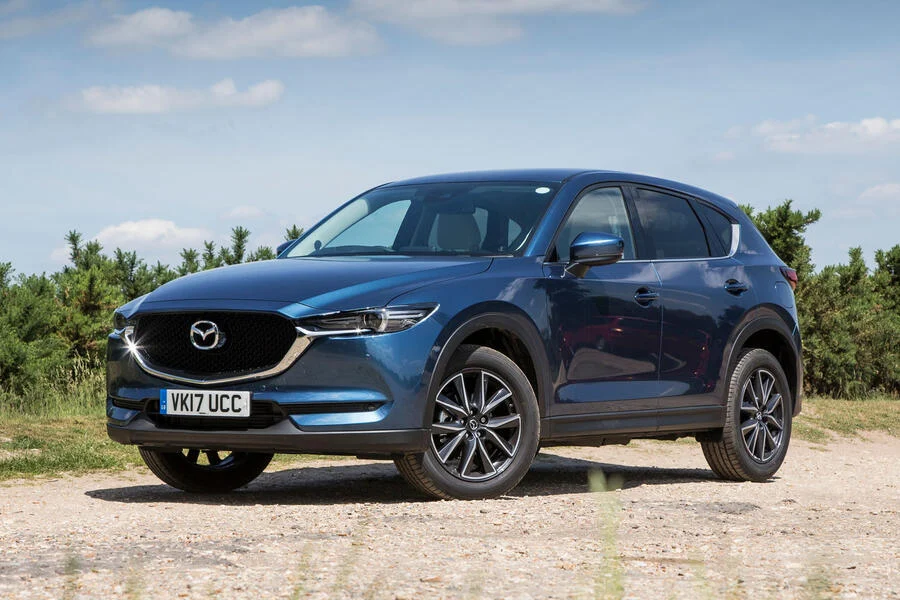
The Mazda CX-5 has long stood out in the crowded family SUV segment, not just for its appealing aesthetics and practical dimensions, but for its remarkable ability to inject genuine driving enjoyment into a class often characterized by sensible compromises. While naturally aspirated petrol engines can sometimes feel underpowered in larger vehicles, particularly on longer journeys, the CX-5’s 2.2-litre diesel engine emerges as a significantly more satisfying powertrain choice, offering a potent blend of torque and fuel efficiency that enhances the overall driving experience.
For those prioritizing economy and a smooth, effortless drive, the 148bhp front-wheel-drive variant of the 2.2-litre diesel presents a compelling proposition. This engine delivers robust torque, making it feel responsive and capable, even when fully loaded. Crucially, it achieves an impressive 55 miles per gallon (mpg) on longer runs, a figure that contributes significantly to its cost-effectiveness for families who frequently undertake road trips or longer commutes. Stepping up to the more powerful 181bhp four-wheel-drive version, while offering enhanced traction and performance, sees a slight reduction in fuel economy, typically hovering around 50 mpg. This still represents a commendable efficiency for an SUV of its size and capabilities, making it a sensible choice for those who require the added security of all-wheel drive without a drastic penalty at the pump.
The enduring appeal of the CX-5 lies in its ability to transcend the purely rational decision-making process that often dictates the purchase of a crossover. While it undeniably ticks all the boxes for practicality and running costs, it also manages to engage the driver and passengers on an emotional level. It’s a testament to Mazda’s engineering philosophy, which consistently prioritizes the "Jinba Ittai" – the oneness of horse and rider – a concept that translates into a car that feels connected to the road and intuitive to control. While it may not possess the outright sporting pedigree of the iconic MX-5, the CX-5 achieves a remarkable feat by seamlessly blending the agile driving dynamics typically associated with a hatchback with the elevated driving position and versatility of an SUV. This duality, coupled with its stylish exterior design, a well-appointed and comfortable interior, and a strong set of practical credentials, solidifies its position as a standout option in its class.
What We Said Then: A Testament to Early Acclaim
The initial reception for the CX-5 was overwhelmingly positive, with Autocar’s review from June 28, 2017, highlighting its multifaceted strengths. The assessment lauded the vehicle for its attractive visual design, a refined and pleasant interior, and an engaging driving experience. The article emphasized its cost-effectiveness and perfectly judged sizing, stating that it "comfortably eclipses the bulk of a running order that previously outranked it." This statement underscored the CX-5’s ability to outperform its competitors and position itself as a truly compelling alternative to the segment’s established leaders. The review concluded that it offered "arguably the most compelling mainstream alternative to the segment’s current benchmark," a powerful endorsement that resonated with buyers and critics alike.
An Owner’s Perspective: Real-World Satisfaction
The enduring quality and driver satisfaction of the CX-5 are further corroborated by the experiences of its owners. Sergei Pokrovskii, an owner of an early second-generation Sport Nav model, shared his positive experience. Aware of potential issues with the 2.2-litre diesel engine in the first generation, he opted for a newer model, a decision he has not regretted. He particularly praised the enhanced interior of the second-generation model, noting the "upmarket" feel and appearance of the white leather trim in his car. After accumulating 50,000 miles, Pokrovskii reported no mechanical issues and continues to achieve "more than 50mpg," a testament to the diesel engine’s efficiency and reliability in this iteration. This owner’s account provides valuable real-world validation of the vehicle’s long-term ownership proposition and the effectiveness of the improvements made in subsequent generations.
Buyer Beware: Navigating Potential Pitfalls
While the Mazda CX-5 generally offers a strong ownership proposition, prospective buyers should be aware of a few key considerations, particularly when exploring the used market.
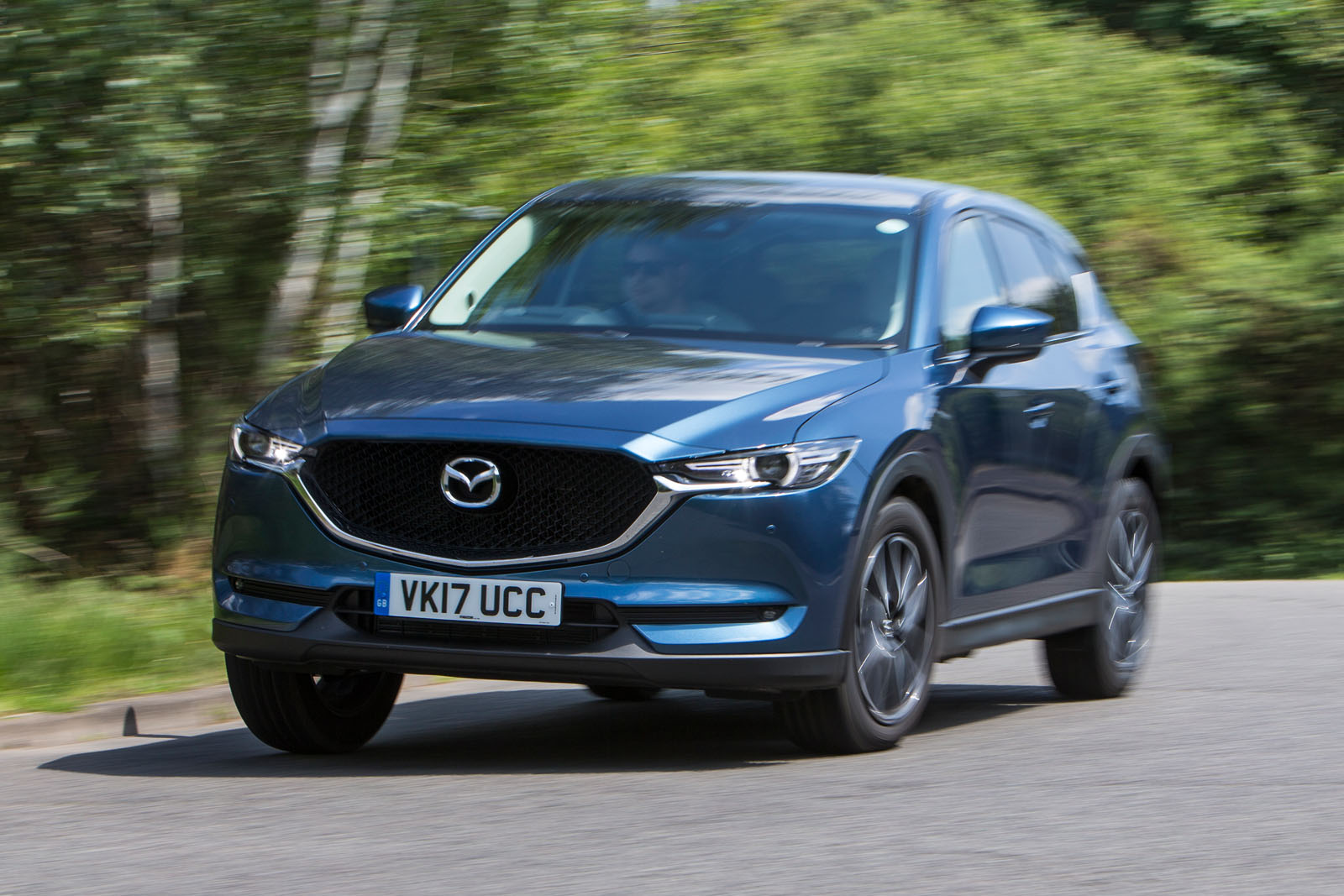
Engine Considerations: The 2.2-litre Diesel
The 2.2-litre diesel engine, while a capable performer, has historically been subject to some scrutiny. It’s important to note that by the time it was integrated into the Mk2 CX-5, many of the earlier issues had been addressed. However, a persistent tendency for the diesel particulate filter (DPF) to suffer costly problems remains a concern, especially if the vehicle is predominantly used for short urban journeys or exclusively within city limits. DPFs are designed to capture exhaust soot and regenerate by burning it off at higher temperatures, a process that requires sustained periods of higher engine load and exhaust temperatures. Frequent short trips prevent this regeneration cycle, leading to the filter becoming clogged. Owners who primarily drive in such conditions should be particularly diligent in their maintenance and consider occasional longer drives to facilitate the DPF’s self-cleaning process.
Vehicle Excise Duty (VED)
The cost of taxing a CX-5 varies depending on the specific model and its emissions. The majority of CX-5 models fall into a lower VED band, costing around £200 per year. However, the flagship Takumi diesel variants and the 2.5-litre petrol models are subject to a higher annual tax of £620. This higher rate applies until the vehicle reaches five years old, after which it reduces to the standard £200 annual fee. Potential buyers should factor these VED costs into their overall ownership budget.
Infotainment System
The CX-5’s infotainment system is generally lauded for its intuitive design. The inclusion of a rotary dial controller, while a common feature in many vehicles, can take some getting used to for drivers accustomed to touchscreen-only interfaces. A significant enhancement for later models, particularly those from 2019 onwards, was the addition of Apple CarPlay and Android Auto integration. This significantly improves smartphone connectivity and access to preferred navigation and entertainment apps, a feature highly valued by many modern drivers.
Gearbox Performance
Both the manual and automatic transmissions fitted to the CX-5 are generally considered mechanically reliable. However, owners have noted that the automatic gearbox can, at times, feel somewhat sluggish in its responses. This can also have a noticeable impact on fuel economy, with some drivers reporting a reduction of up to 5 mpg compared to manual transmission equivalents. The automatic transmission was standard on the more powerful 2.5-litre petrol models but was an optional extra on other engine variants, offering buyers a choice based on their driving preferences and priorities.
The Evolution of the CX-5: A Timeline of Refinement
The Mazda CX-5’s journey has been one of continuous refinement and adaptation, driven by customer feedback and evolving automotive technology.
- 2012: The first generation of the Mazda CX-5 is launched, introducing Mazda’s "Kodo – Soul of Motion" design language and "Skyactiv" technologies. This marked a significant shift for Mazda, emphasizing driving dynamics and fuel efficiency across its model range. The 2.2-litre diesel engine makes its debut, and while praised for its performance, early models attract some attention for potential DPF-related issues.
- 2015: A mid-cycle facelift for the first-generation CX-5 brings subtle styling enhancements, interior improvements, and updated safety features. Mazda continues to address and refine the diesel engine’s performance and emissions control systems.
- 2017: The second-generation Mazda CX-5 is unveiled. This redesign represents a more substantial evolution, featuring a sleeker, more mature exterior, a significantly upgraded interior with improved materials and technology, and further enhancements to the Skyactiv chassis and powertrains. The interior improvements, such as the upmarket white leather trim mentioned by owner Sergei Pokrovskii, become a key selling point. The 2.2-litre diesel engine in this generation is further refined, aiming to mitigate earlier concerns.
- 2019: The infotainment system receives an important update with the introduction of Apple CarPlay and Android Auto compatibility, enhancing connectivity and user experience. This addition makes the CX-5 more competitive in terms of modern in-car technology.
- Ongoing: Mazda continues to produce the CX-5, with various model year updates focusing on incremental improvements in efficiency, technology, and safety features, cementing its status as a consistent performer in the compact SUV market.
The Broader Impact: Redefining the Family SUV
The success of the Mazda CX-5 has had a tangible impact on the family SUV segment. By proving that practicality and driving pleasure can coexist, it has encouraged other manufacturers to place greater emphasis on the driving experience of their SUVs, moving beyond mere utility. The CX-5’s ability to appeal to both the "head" and the "heart" has broadened the appeal of SUVs, attracting buyers who might have previously shied away from the perceived compromises of the segment. Its enduring popularity and consistent critical acclaim serve as a benchmark for what a well-rounded family crossover can and should be. The CX-5 demonstrates that a vehicle designed for everyday family life does not need to be dull or unengaging, offering a compelling blend of performance, efficiency, style, and driving satisfaction that continues to resonate with a wide audience of car buyers.
In conclusion, the Mazda CX-5 stands as a prime example of a vehicle that successfully navigates the often-conflicting demands of the modern car market. Its thoughtful engineering, engaging driving dynamics, and stylish presentation have cemented its reputation as a class leader. While potential buyers should remain informed about specific model year considerations, particularly concerning the diesel engine’s DPF, the overall ownership experience remains exceptionally positive. The CX-5 is more than just a practical family hauler; it’s a car that can genuinely be enjoyed, a rare and valuable attribute in its segment.