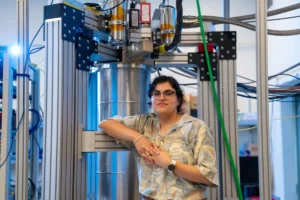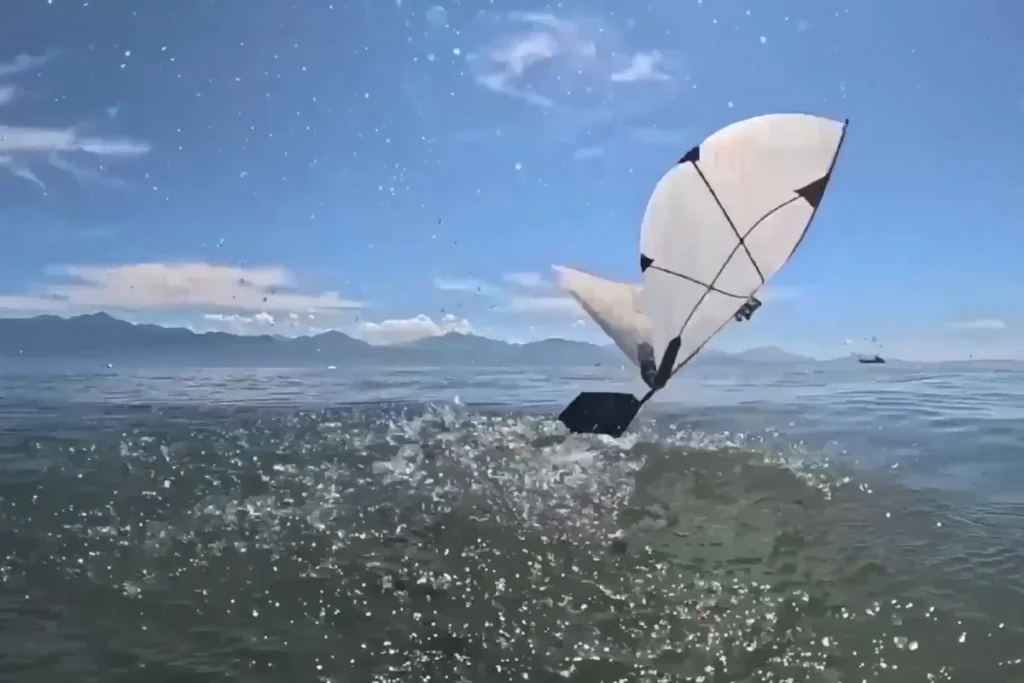
Engineers at the Massachusetts Institute of Technology (MIT) and EPFL in Lausanne, Switzerland, have unveiled a groundbreaking robotic system capable of navigating both air and water with remarkable fluidity, drawing direct inspiration from nature’s most versatile aviators: diving birds. This innovative "flapping-wing aerial-aquatic vehicle," or FAAV, represents a significant leap forward in robotic design, overcoming long-standing challenges associated with transitioning between mediums with vastly different physical properties. The research, which details the robot’s design, experimental validation, and potential applications, was recently published in the esteemed journal Science, marking a pivotal moment in the development of multi-modal robotic systems.
The Avian Muse: Nature’s Multi-Medium Masters
The inspiration for the FAAV stems from a select group of approximately 100 bird species—including loons, gulls, puffins, and petrels—that possess the extraordinary ability to both fly through the air and propel themselves underwater. These natural marvels deftly plunge into aquatic environments to hunt for prey, then effortlessly launch back into the sky, continuing their journey through the air. Their unique physiological and biomechanical adaptations allow them to effectively generate lift and thrust in two dramatically different fluid environments. For centuries, this dual capability has captivated naturalists and scientists alike, posing a formidable challenge for replication in artificial systems. The MIT and EPFL team meticulously studied these birds, analyzing their wing movements, body dynamics, and take-off strategies to inform the design of their pioneering robot.
Engineering the FAAV: Bridging the Air-Water Divide
The FAAV is a testament to sophisticated biomimetic engineering. Weighing less than 300 grams (approximately half a pound), the robot features a central fuselage housing its power and control systems, two flexible, flapping wings, and a steerable tail. A key design element is the modularity of its wings and tail, which can be interchanged with different sizes to optimize performance for specific tasks or environmental conditions. This adaptability mirrors the subtle adjustments birds make to their wing configurations when moving between flight and diving.
The core challenge in creating a robot capable of traversing both air and water lies in the immense difference in density and viscosity between the two mediums. Water is nearly 1,000 times denser than air, meaning that the forces required for movement, such as lift and drag, vary drastically. A design optimized for aerial flight typically struggles in water, and vice versa. Traditional aerial drones are ill-suited for underwater exploration, and submersibles cannot take flight. The FAAV confronts this fundamental dichotomy head-on, leveraging flapping-wing mechanics that can be adapted for both environments.
The Research Journey: From Concept to Lake Geneva
The development of the FAAV involved a rigorous research process, combining theoretical modeling with extensive experimental validation. The chronology of this scientific endeavor can be broadly outlined as follows:
- Inspiration and Literature Review (Early Stages): The team, led by Raphael Zufferey, assistant professor of mechanical engineering at MIT and head of the AURA Lab, began by thoroughly reviewing existing scientific literature on diving birds. They compiled data on species like puffins, petrels, and kingfishers, observing flapping frequencies (e.g., smaller birds flap around 10 times per second in air and four times per second in water) and wing morphologies. This foundational biological data provided critical parameters for the robot’s design.
- Conceptual Design and Prototyping (Design Phase): Based on the biological insights, engineers conceived a robot with a bird-like form factor. The design emphasized flexible wings made of thin membranes coated with hydrophobic nanoparticles to facilitate water shedding, and a motorized tail for pitch control. A waterproof electric motor drives a crankshaft, translating rotational motion into the flapping action of the wings.
- Controlled Laboratory Experiments (Water Tank Trials): Initial experiments were conducted in a controlled water tank environment. This allowed the researchers to systematically test various combinations of wing sizes (small: 60 cm, medium: 80 cm, large: 100 cm), flapping frequencies, and tail angles. The robot was placed half a meter below the surface, programmed to execute specific flight patterns, and observed to identify the conditions under which it could successfully transition from swimming to launching into the air.
- Field Validation (Lake Geneva Trials): Following successful tank trials, the FAAV was deployed in a more realistic natural setting: Lake Geneva in Switzerland. These field tests provided invaluable data on the robot’s performance in a larger, less controlled environment, confirming its ability to reliably swim, launch, and fly.
- Data Analysis and Optimization (Post-Experimentation): The data collected from both sets of experiments were meticulously analyzed to refine the robot’s parameters. The team identified that medium-sized wings offered the optimal balance for both aerial lift and underwater propulsion. They also discovered a critical take-off angle of 70 degrees, steep enough to prevent wingtips from dragging on the water surface during the leap.
- Publication (Dissemination of Results): The culmination of this research was the publication of their findings in Science, sharing the methodology, results, and implications with the global scientific community.
Critical Findings: Unlocking the Secret to Aerial-Aquatic Transition
The experimental phase yielded several crucial insights into the mechanics of the FAAV’s dual-medium operation:
- Optimal Wing Configuration: The medium-sized wings (80 cm wide) proved most effective for achieving reliable transitions. The wings’ flexibility was also identified as a key factor, needing to be pliable enough to minimize amplitude in water while retaining sufficient rigidity to generate lift in air. This delicate balance is central to multi-medium efficiency.
- Flapping Frequencies and Speeds: The robot demonstrated impressive performance metrics, swimming through water at speeds approaching 1 meter per second when flapping at approximately 5 Hertz (five flaps per second). In the air, it achieved speeds of around 6 meters per second at similar flapping frequencies. These speeds and frequencies closely mimic those observed in actual diving birds, validating the biomimetic approach.
- The 70-Degree Leap: A specific take-off angle of 70 degrees was found to be critical for a successful transition from water to air. This steep pitch allows the robot to break the surface tension and generate sufficient aerial thrust without its wingtips interfering with the water, which could cause it to tip back.
- A "Feet-Free" Takeoff: Perhaps one of the most surprising findings was that the FAAV could launch from the water’s surface without the need for a paddling maneuver, unlike many natural diving birds (e.g., puffins, ducks) that use their feet in conjunction with wings and tail for takeoff. This suggests that, at least for robotic systems, a highly optimized flapping and tail-pitching mechanism can negate the need for additional propulsion from appendages, simplifying design and operation.
A New Era for Environmental Monitoring and Scientific Exploration
The implications of the FAAV’s success are profound, particularly for oceanography, marine biology, and environmental monitoring. Traditional methods for collecting aquatic data often involve large, expensive ocean vessels or specialized underwater drones that are limited to a single medium. The FAAV offers a compelling alternative, promising a significant reduction in cost and an expansion of operational capabilities.
Raphael Zufferey articulates this vision: "Our dream vision is for oceanographers, marine biologists, and members of coastal communities to launch this robot from a boat, or from shore, and it would fly close to the area of interest, such as an iceberg or a port facility, or over a pod of whales. It would dive into the water to take a measurement or collect a sample, and fly back to deliver the data at a fraction of the cost of traditional methods. Then it could go back out to dive for more."
The ability to rapidly traverse vast distances in the air, then precisely dive into and operate within aquatic environments, opens up unprecedented opportunities:
- Rapid Environmental Sampling: The FAAV could enable frequent and widespread data collection, flying to remote or hazardous aquatic regions (e.g., near melting icebergs, active volcanoes, or in storm-affected areas) that are inaccessible or too dangerous for human-crewed vessels.
- Marine Ecosystem Monitoring: Researchers could deploy FAAVs to observe marine wildlife, track migratory patterns, monitor water quality, and detect pollution events in real-time, providing a more comprehensive understanding of ocean health.
- Infrastructure Inspection: Coastal facilities, port infrastructure, offshore wind farms, and underwater pipelines could be inspected more efficiently and safely by these robots, identifying potential issues before they escalate.
- Search and Rescue Operations: In disaster scenarios involving marine environments, FAAVs could quickly survey large areas, locate distressed individuals, or identify submerged debris, significantly aiding rescue efforts.
- Climate Change Research: The robot’s capacity for repeated, cost-effective data collection could revolutionize climate change research, allowing for more granular monitoring of ocean temperatures, salinity, and other vital indicators over time.
The AURA Lab’s Vision and Future Directions
The AURA Lab at MIT, led by Professor Zufferey, is dedicated to engineering small, unobtrusive aerial and aquatic vehicles inspired by nature’s biomechanics. Their mission is to create robotic tools that can explore and monitor the health of oceans and waterways without disturbing the natural environment. The FAAV is a prime example of this philosophy.
Looking ahead, the team is focused on several key areas for improvement and expansion:
- Enhanced Maneuverability: Current efforts include refining the wing design to allow for turning in addition to flapping up and down, which would significantly increase the robot’s agility and navigational precision in both air and water.
- Robustness in Turbulent Conditions: Future tests will assess the FAAV’s performance in more challenging environments, such as choppy waters and strong winds. Developing robust control algorithms and physical designs capable of withstanding turbulent conditions is crucial for real-world deployment.
- Sensor Integration: Integrating advanced sensors for water quality analysis, sonar for underwater mapping, and high-resolution cameras for visual data collection will transform the FAAV into a comprehensive data acquisition platform.
- Swarm Robotics: The long-term vision includes deploying multiple FAAVs in a coordinated swarm, enabling even more extensive and synchronized data collection across vast marine areas.
Broader Impact and Future Outlook
The development of the FAAV represents more than just an engineering feat; it signifies a paradigm shift in robotic design and a renewed understanding of biomimicry’s potential. By successfully emulating the multi-modal capabilities of diving birds, the MIT and EPFL researchers have opened the door to a new class of aerial-aquatic drones and vehicles. This breakthrough is expected to garner significant attention from various scientific and industrial sectors, including oceanography, environmental science, defense, and logistics.
The economic implications are substantial. By offering a "fraction of the cost of traditional methods," as Zufferey notes, the FAAV promises to democratize access to critical environmental data, making it feasible for more institutions and communities to engage in vital monitoring and research. This could accelerate scientific discovery, improve environmental stewardship, and provide crucial data for policy-making.
The project was supported, in part, by a prestigious Marie Skłodowska-Curie Actions fellowship grant, underscoring the international recognition and importance of this innovative research. The collaboration between MIT, EPFL, and Northwest Indian College in Bellingham, Washington, highlights the interdisciplinary and global nature of cutting-edge scientific inquiry. As the FAAV continues to evolve, it stands poised to redefine how humanity interacts with and understands the intricate, interconnected environments of our planet.