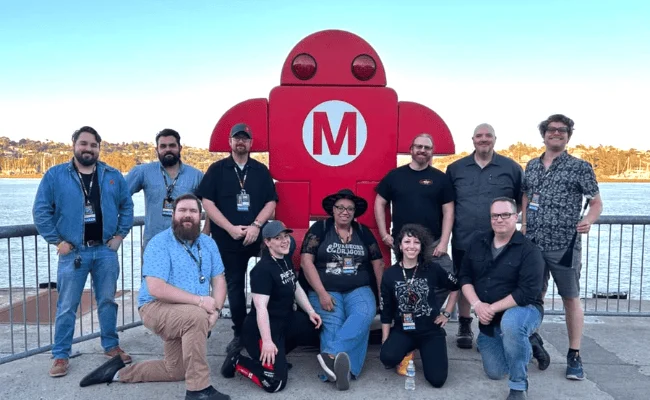
In an era increasingly dominated by computer-generated imagery (CGI), a notable shift toward the visceral impact of practical effects is capturing the attention of both industry professionals and global audiences. Jesse Velez, a distinguished animatronics designer, recently offered an unprecedented look into the intricate process behind the creation of one of the most iconic science fiction props in recent memory: the fully wireless, portable animatronic hand known affectionately as "Thing" from the critically acclaimed Netflix series Wednesday. His presentation at Maker Faire Bay Area 2025 served as a testament to the enduring power of tangible artistry and engineering innovation, revealing how this remarkable creation transcended its on-screen role to become a global ambassador for the series, engaging with fans and cast members across continents.
The Phenomenon of Wednesday and the Birth of "Thing"
Wednesday, which premiered on Netflix in November 2022, quickly became a global sensation, breaking viewership records and solidifying its place as one of the platform’s most successful English-language series. The show, a spin-off from The Addams Family, focuses on Wednesday Addams’s years as a student at Nevermore Academy. Central to her adventures and a fan-favorite character from the original mythology is "Thing," a disembodied, sentient hand that serves as Wednesday’s loyal companion, spy, and occasional confidant. Unlike many fantastical elements in contemporary television, the creators of Wednesday, including executive producer and director Tim Burton, known for his distinctive visual style and frequent use of practical effects, opted for a physical, animatronic rendition of "Thing" to enhance its realism and tactile presence on screen. This decision was pivotal, setting the stage for Velez and his team to bring a truly unique character to life.
The character’s origins in The Addams Family canon date back to Charles Addams’s original cartoons, where "Thing" (originally a full-body character whose presence was often implied by a hand reaching out) evolved into a standalone, disembodied hand by the time of the 1960s television series. This legacy informed the design imperative for the Netflix adaptation: "Thing" needed to be expressive, autonomous, and physically convincing, capable of conveying emotion and personality without a face or body. This requirement presented a significant challenge and an exciting opportunity for animatronics specialists.
Engineering an Icon: From Concept to Global Ambassador
Jesse Velez, a seasoned animatronics designer with a portfolio spanning various film and television productions, was tasked with transforming the conceptual "Thing" into a functional, interactive prop. The initial brief was ambitious: create a fully wireless, portable animatronic hand that could mirror human movements in real-time, enabling seamless interaction with the Wednesday cast and live audiences during high-profile promotional events. The ultimate goal was to allow "Thing" to travel globally, appearing at premieres and fan engagements in major cities such as Los Angeles, New York, Seoul, Istanbul, and London, providing a unique and memorable interactive experience.
The project commenced with a fundamental prototype: a simple hand mechanism capable of basic walking movements. This initial phase was crucial for validating core concepts related to locomotion, balance, and the integration of control systems. Velez’s approach, characteristic of many innovative makers, involved a creative amalgamation of off-the-shelf components and custom-fabricated parts. This "hacking together" methodology allowed for rapid iteration and adaptation, circumventing the lengthy and often costly development cycles associated with purely bespoke engineering.
The technical specifications for the final animatronic "Thing" were demanding. It needed to be lightweight enough for portability, robust enough to withstand extensive travel and live interactions, and possess a sophisticated wireless control system that allowed a performer to operate it remotely and spontaneously. This real-time control capability was paramount, as it enabled "Thing" to improvise, react to its environment, and engage authentically with people, a quality that distinguishes it sharply from pre-programmed robots or CGI constructs.
Key "ingredients" in its construction, though not exhaustively detailed in the original brief, would logically include:
- Miniaturized Servo Motors: High-torque, precise servos for each digit and potentially the wrist, allowing for intricate articulation and lifelike movements. The challenge here is balancing power with size and weight constraints.
- Custom-Machined Components: Lightweight, durable materials like aluminum, carbon fiber, or high-strength plastics would be used for the internal skeleton and joint mechanisms to reduce overall weight while maintaining structural integrity.
- Advanced Microcontroller: A powerful, compact microcontroller (e.g., Arduino, Raspberry Pi, or a specialized robotics controller) to interpret control signals and translate them into servo commands.
- Wireless Communication Module: A robust, low-latency wireless system (e.g., custom RF, Wi-Fi, or Bluetooth variants optimized for robotics) to transmit commands from the performer’s control unit to the animatronic hand in real-time.
- Power Management System: Compact, high-density batteries (e.g., LiPo) with efficient power distribution to ensure sufficient operating time for live events without frequent recharging.
- Sensors (Potentially): While primarily performer-controlled, some feedback sensors (e.g., for position, force) could enhance responsiveness or provide diagnostic data.
- Articulated Skin/Shell: A flexible, durable, and realistic outer layer, likely made from silicone or similar materials, meticulously sculpted and painted to match the on-screen character’s appearance.
The ingenuity lay not just in sourcing these components but in integrating them seamlessly into a compact, anthropomorphic form. The team faced challenges in power consumption, signal reliability in diverse environments (from crowded red carpets to international airports), and ensuring the animatronic’s movements were fluid and natural, avoiding the "robotic" jerkiness often associated with early animatronics. The successful execution of these technical hurdles allowed "Thing" to transcend its prop status and become a character in its own right during its public appearances.
A Global Promotional Tour and Unprecedented Fan Interaction
Following its successful development, the animatronic "Thing" embarked on an extensive global promotional tour for Wednesday. Its appearances alongside the cast, including lead actress Jenna Ortega, created a unique dynamic that blurred the lines between fiction and reality. At red carpet events, press junkets, and fan meet-and-greets, "Thing" was able to interact spontaneously, waving, giving high-fives, and even playfully "stealing" items from cast members, much to the delight of onlookers.
The impact of "Thing’s" presence was multifaceted:

- Enhanced Authenticity: For fans, seeing a tangible "Thing" interacting in the real world reinforced the show’s aesthetic and commitment to its characters, deepening their immersion.
- Viral Marketing: Videos and photos of "Thing" on the red carpet quickly went viral across social media platforms, generating immense buzz and free publicity for Wednesday. Its distinct presence made it highly shareable content.
- Unique Fan Engagement: Unlike traditional celebrity appearances, "Thing" offered an unconventional and memorable interaction. It wasn’t just about seeing a star; it was about interacting with a piece of the show’s magic itself.
- Cast Reactions: The cast members themselves often reacted with genuine amusement and surprise to "Thing’s" impromptu actions, further cementing its persona as a mischievous, beloved character. This organic interaction enhanced the promotional narrative.
The global tour underscored the animatronic’s robustness and the effectiveness of its design. From the bustling streets of New York to the historical backdrops of Istanbul, "Thing" performed flawlessly, a testament to the meticulous engineering and artistic vision behind its creation. This extensive public deployment proved that sophisticated practical effects could be both studio-quality and road-ready.
The Resurgence of Practical Effects in a Digital Age
Jesse Velez’s work on "Thing" is more than a behind-the-scenes anecdote; it represents a significant chapter in the ongoing dialogue between practical effects and CGI in the entertainment industry. For decades, practical effects — ranging from miniatures and prosthetics to animatronics and pyrotechnics — were the backbone of fantastical filmmaking. Classics like Jurassic Park (1993) showcased animatronic dinosaurs that still hold up remarkably well, often delivering a sense of weight and presence that even advanced CGI struggles to replicate. Similarly, the original Star Wars trilogy relied heavily on models, puppets, and suitmation, contributing to its timeless appeal.
However, with the rapid advancement of computer graphics in the late 20th and early 21st centuries, CGI became increasingly prevalent, offering unparalleled flexibility, scalability, and often, perceived cost-effectiveness. The ability to create entire worlds, armies of creatures, and complex magical effects entirely within a computer revolutionized filmmaking. Yet, a counter-movement has steadily gained traction, fueled by filmmakers and audiences who appreciate the tangible quality of practical effects. Films like Mad Max: Fury Road (2015) and Christopher Nolan’s Dunkirk (2017) deliberately emphasized practical stunts and effects, earning critical acclaim for their visceral impact.
The decision to use an animatronic "Thing" in Wednesday aligns perfectly with this resurgence. Tim Burton, a director known for his distinctive visual style, often champions practical effects, believing they ground fantastical elements in a palpable reality. A CGI hand, while technically feasible, might have lacked the nuanced physical presence and the subtle imperfections that make Velez’s animatronic so compelling. Practical effects inherently possess a "weight" and interaction with real light and shadows that CGI, no matter how sophisticated, sometimes struggles to emulate perfectly, leading to the "uncanny valley" effect where digital creations feel almost, but not quite, real.
Jesse Velez, the Maker Movement, and the Future of Tactile Experiences
Velez’s presentation at Maker Faire Bay Area 2025 highlights the symbiotic relationship between professional animatronics and the broader "maker movement." Maker Faires are global events celebrating innovation, creativity, and the DIY spirit, where individuals showcase their projects, ranging from robotics and 3D printing to traditional crafts. Velez’s philosophy of "creatively hacking together off-the-shelf and purpose-built components" resonates deeply with the maker ethos. It underscores that groundbreaking innovation doesn’t always require limitless budgets or proprietary technologies but often stems from ingenuity, resourcefulness, and a deep understanding of materials and mechanics.

His work exemplifies how the skills honed by independent makers and small studios can directly contribute to high-profile entertainment productions. It democratizes access to complex fields like animatronics, demonstrating that individuals with passion and technical acumen can create objects of professional quality. This blend of art and engineering, often seen in the maker community, is precisely what brings complex sci-fi dreams to life, one servo and line of code at a time.
The broader implication of "Thing’s" success, and Velez’s work in general, is that "The Future is Tactile." In an age of digital saturation, where much of our interaction with media occurs through screens, there is a growing appreciation for tangible spectacle. The visceral thrill of seeing something real, complex, and seemingly alive right in front of you offers a powerful counterpoint to the omnipresence of digital content. This isn’t merely nostalgia; it’s a recognition of the unique psychological and emotional impact that physical objects and live interactions can have. For entertainment, this means a renewed focus on immersive experiences that engage multiple senses, moving beyond purely visual stimulation.
Broader Impact and Implications
The success of the animatronic "Thing" has several far-reaching implications for the entertainment industry and beyond:
- Revalidation of Practical Effects: It serves as a powerful case study for integrating practical effects into modern high-budget productions, demonstrating their effectiveness not just for on-screen realism but also for innovative promotional strategies.
- Innovation in Fan Engagement: The interactive animatronic set a new benchmark for how intellectual property can engage with its audience outside of traditional media, offering a living, breathing extension of the show’s universe.
- Empowerment of Independent Creators: Velez’s achievement highlights the significant contributions of specialized animatronics and practical effects artists, often operating outside major studios, to mainstream entertainment. It underscores the value of niche expertise and creative problem-solving.
- Technological Accessibility: The reliance on a "hack together" approach demonstrates that sophisticated results can be achieved by creatively combining accessible technologies, inspiring a new generation of makers and engineers.
- Shifting Audience Preferences: The enthusiastic reception for "Thing" suggests a latent desire among audiences for more tangible, authentic experiences, perhaps as a counter-reaction to the sometimes sterile perfection of pure CGI. This could influence future production decisions across various media.
In conclusion, Jesse Velez’s animatronic "Thing" is more than just an impressive prop; it is a symbol of artistic innovation, engineering prowess, and the enduring appeal of practical effects. Its journey from a simple prototype to a global icon, engaging with millions and sparking conversations about the nature of realism in media, underscores a vital truth: in a world increasingly mediated by screens, the magic of something real, complex, and alive right in front of us remains profoundly powerful. As Velez continues to delve into animatronics, practical effects, and the relentless creativity that brings our wildest sci-fi dreams to life, his work serves as a beacon for the tactile future of entertainment, proving that the blend of art and engineering can indeed transcend the digital divide.