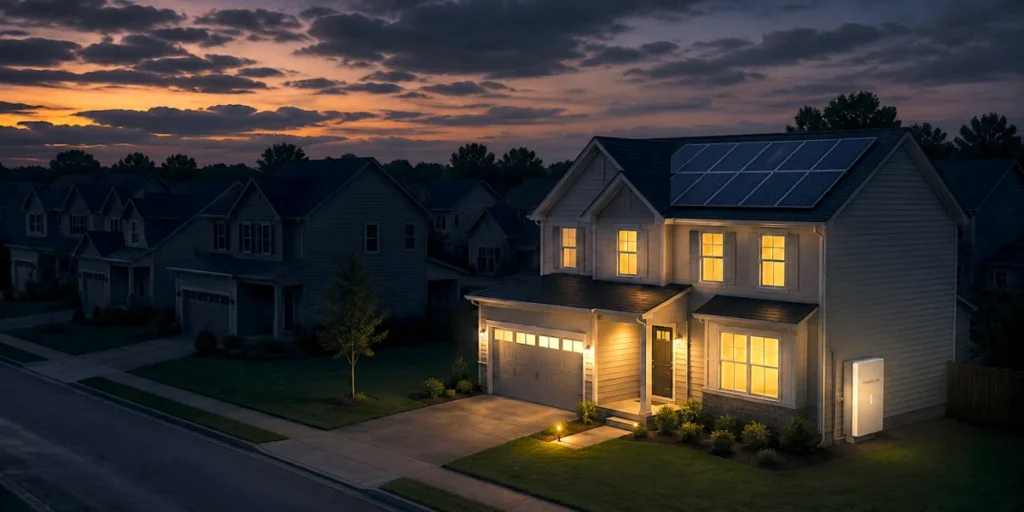
Between increasingly extreme weather events, escalating electricity demands driven by technological advancements, and the rapid expansion of power-hungry data centers, the concept of energy independence is shifting from a niche concern for preppers to a pragmatic necessity for widespread energy security. This evolving landscape is prompting a significant surge in homeowners seeking robust solar-plus-battery energy solutions. While Tesla’s Powerwall has long been a dominant player, the market is now brimming with compelling alternatives, offering advanced features that extend far beyond simply keeping the lights on during an outage.
The recurring monthly power outages across the United States in 2026 have underscored a critical vulnerability in the nation’s energy infrastructure. These widespread disruptions, often affecting millions of Americans, have ignited a national conversation about the reliability of the existing grid and the urgent need for greater energy resilience at both the individual and community levels. Factors contributing to this persistent instability include a confluence of aging infrastructure, increasingly severe weather patterns exacerbated by climate change, and a rapidly growing demand for electricity from burgeoning sectors like artificial intelligence and advanced manufacturing.
This article delves into the growing market for home battery storage systems, exploring several leading alternatives to the well-known Tesla Powerwall. These systems are not only designed to provide backup power but also offer a suite of sophisticated functionalities that enhance energy management and reduce reliance on the traditional grid.
The Shifting Energy Landscape: A Growing Need for Resilience
The year 2026 has been marked by an unprecedented series of grid disruptions. From debilitating winter storms that froze power lines in the Midwest to scorching heatwaves that strained electricity networks in the South, the nation has experienced significant power outages with alarming regularity. These events have highlighted the fragility of a centralized energy system susceptible to both natural and man-made challenges.

The demand for electricity is on an upward trajectory, fueled by several key drivers:
- Extreme Weather Events: The frequency and intensity of extreme weather, including hurricanes, wildfires, and prolonged heatwaves and cold snaps, are placing unprecedented stress on power grids, leading to more frequent and widespread outages. For instance, the August heatwave in the Southwest led to rolling blackouts affecting over a million residents, while a December ice storm in the Northeast caused extended power losses for hundreds of thousands.
- Data Center Expansion: The exponential growth of artificial intelligence and cloud computing has led to a massive increase in the construction and operation of data centers. These facilities are voracious consumers of electricity, placing significant additional load on an already strained grid infrastructure. The energy consumption of a single large data center can be equivalent to that of a small city.
- Electrification of Transportation and Homes: The ongoing transition to electric vehicles (EVs) and the electrification of home heating and appliances are further increasing overall electricity demand. While a positive step towards decarbonization, this shift requires a corresponding upgrade and reinforcement of the power grid to accommodate the increased load.
In this context, home energy storage systems are emerging as a crucial component of energy resilience. They offer homeowners the ability to generate, store, and manage their own electricity, providing a buffer against grid failures and offering potential cost savings.
Exploring the Leading Home Battery Solutions
While the Tesla Powerwall remains a popular choice, homeowners now have a diverse range of high-performance alternatives to consider. These systems often incorporate advanced features that provide greater flexibility, scalability, and integration with other home energy technologies. The following list, presented in alphabetical order by brand, highlights some of the most compelling options available:
Anker SOLIX X1: Modular Power for Scalable Needs
The Anker SOLIX X1 is engineered for exceptional modularity, allowing homeowners to tailor their energy storage capacity to their specific requirements. The system begins with a base unit offering 5 kWh of energy storage, utilizing low-profile LiFePO4 batteries. The true strength of the X1 lies in its ability to stack additional storage modules, enabling users to scale up their system to an impressive 180 kWh. This flexibility is ideal for homeowners who are interested in the benefits of home battery storage but are uncertain about their long-term energy needs. They can start by addressing their most critical power requirements and gradually expand their system as their needs evolve.

Key features of the Anker SOLIX X1 include:
- Scalability: Users can add battery modules to increase capacity from 5 kWh up to 180 kWh.
- Advanced Backup Features: The system includes automatic storm preparation protocols and a rapid 20-millisecond automatic switchover time, ensuring minimal disruption during power outages.
- Durability: The X1 features an IP66-rated weatherproof enclosure, designed to withstand outdoor elements.
- Extended Warranty: A 10-year warranty provides long-term peace of mind for this critical home infrastructure.
Anker’s commitment to user-friendly energy solutions is evident in the SOLIX X1’s design, making it an attractive option for those seeking a future-proof and adaptable home battery system.
BLUETTI EP800: Grid-Independent Power with Smart Charging
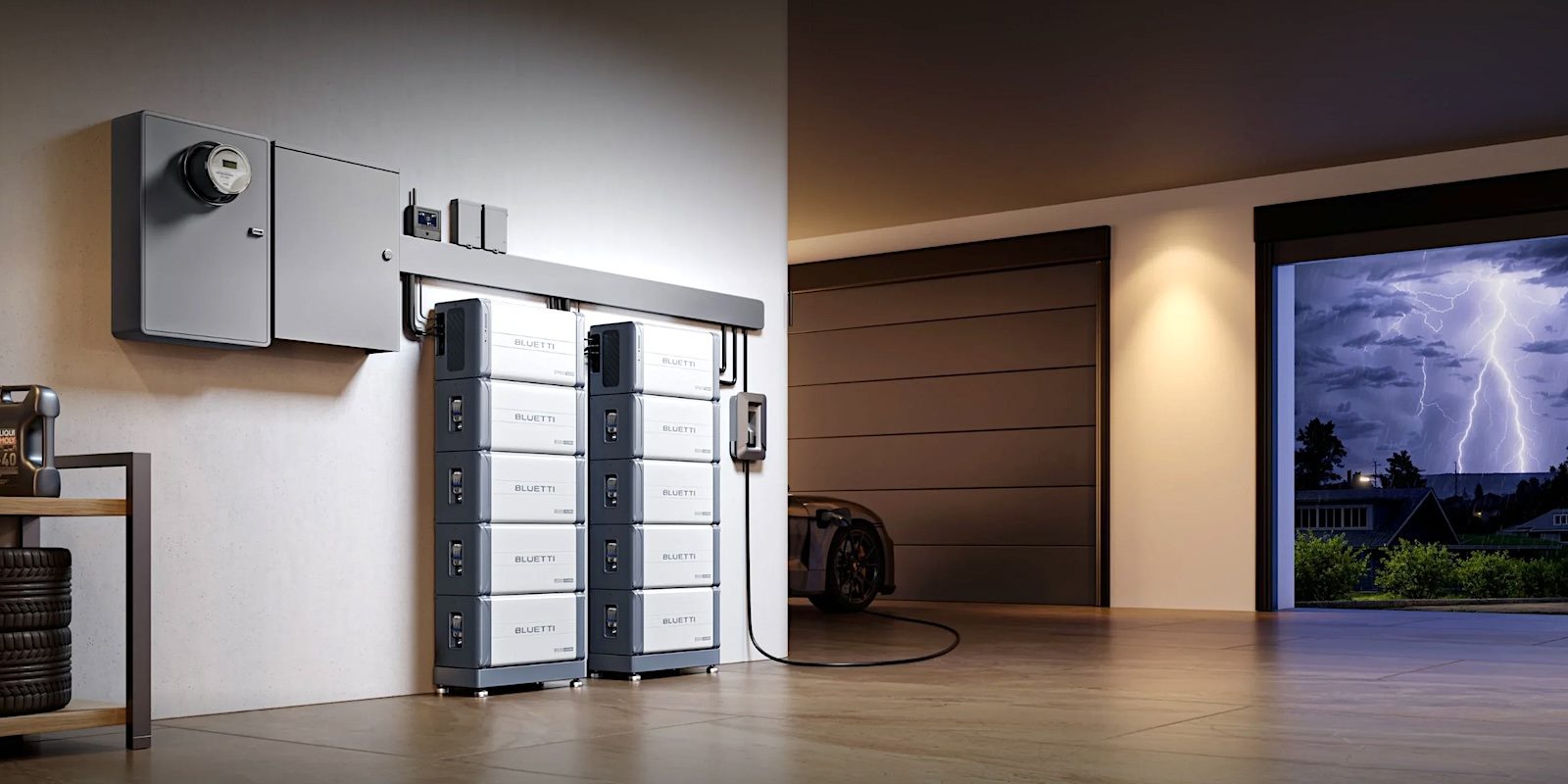
BLUETTI, a company renowned for its portable power stations, has entered the home battery market with the modular EP800 system. This system is built around the EP800 inverter and a series of B500 battery packs. A standard configuration with two battery packs offers 9.92 kWh of storage, expandable to nearly 40 kWh with additional units, providing up to 7.6 kW of output power.
The EP800 is designed to integrate seamlessly with rooftop solar panels and microinverters. However, it also offers a significant advantage: the ability to charge from the grid during off-peak hours when electricity rates are lower. This stored energy can then be used during peak demand periods, offering substantial cost savings. This feature makes the EP800 a compelling option even for renters or homeowners who may not have rooftop solar installations but are looking for energy independence and savings.
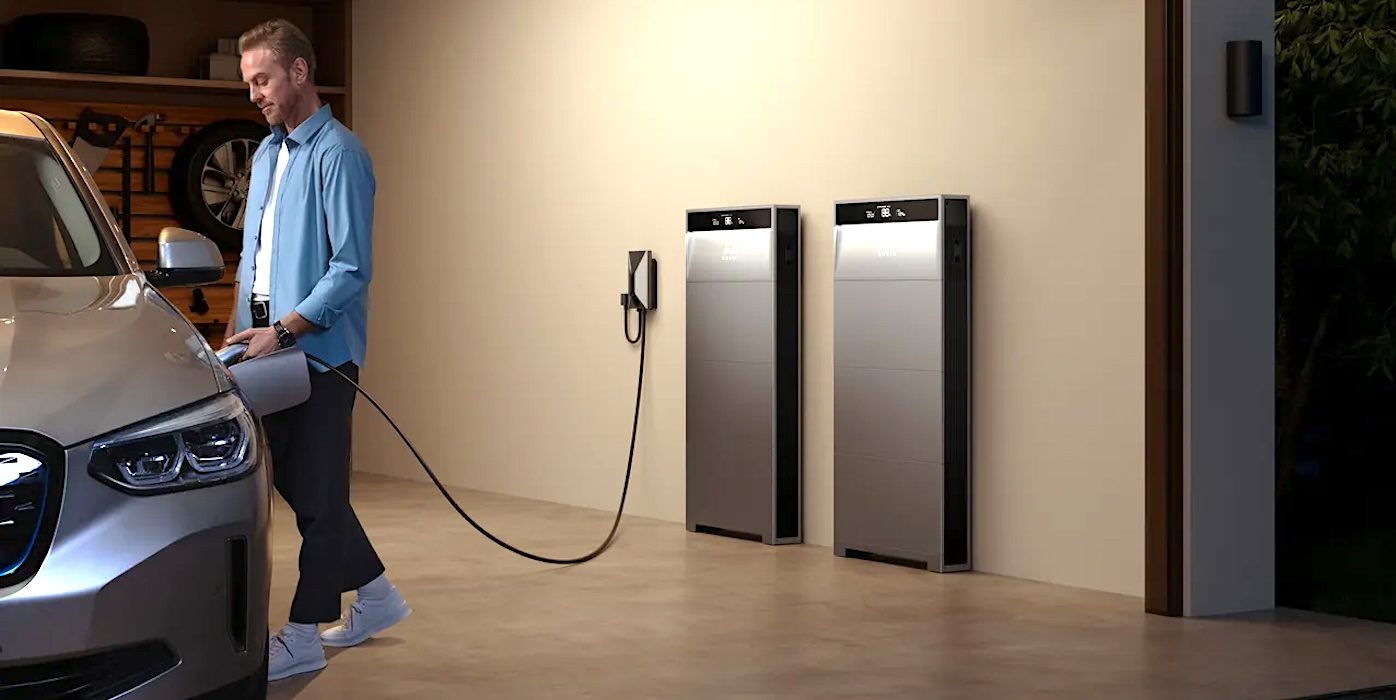
Notable attributes of the BLUETTI EP800 include:
- Modular Design: The system can be expanded by adding more B500 battery packs.
- Grid Charging Capability: Allows for off-peak electricity charging, providing time-of-use savings without solar.
- Versatile Integration: Compatible with rooftop solar and microinverters.
- Targeted Application: An attractive solution for those seeking backup power and grid-independent operation, even without a full solar setup.
The EP800’s dual functionality—providing backup power and enabling energy arbitrage—positions it as a versatile solution for a wide range of consumers.
Enphase IQ Battery 5P: A Comprehensive Ecosystem Approach
For homeowners seeking a unified energy ecosystem that integrates EV charging, whole-home battery backup, and solar power, Enphase offers a robust suite of solutions. The Enphase IQ Battery 5P is designed to function as a complete off-grid system, empowering homeowners to power their homes independently of the utility grid for extended periods. This is achieved by combining the IQ Battery 5P with IQ8 series microinverters and a third-party standby AC generator, along with their Sunlight JumpStart feature for rapid solar recovery.
Enphase’s approach emphasizes seamless integration and smart control. The IQ line of products, including their EV chargers, are Wi-Fi enabled and can be managed through a smartphone app, offering users comprehensive control over their home energy consumption. This holistic approach ensures that all components of the home energy system work in concert, maximizing efficiency and reliability.
Key aspects of the Enphase IQ Battery 5P system:
- Off-Grid Capability: Designed to provide complete energy independence from the utility grid.
- Integrated Ecosystem: Seamlessly combines solar, battery storage, and EV charging.
- Smart Control: Wi-Fi enabled for remote monitoring and management via a smartphone app.
- Advanced Technology: Utilizes IQ8 microinverters and Sunlight JumpStart for optimized solar performance.
Enphase’s commitment to creating a fully integrated and intelligent home energy management system makes the IQ Battery 5P a strong contender for those looking for a comprehensive solution.
FranklinWH aPower S: Sleek Design and Simplified Installation
The FranklinWH aPower S distinguishes itself with a sleek, minimalist design that mirrors the integrated aesthetic often praised in the Tesla Powerwall. This system consolidates the battery and inverter into a single unit, simplifying the installation process. Each aPower S unit provides 15 kWh of usable energy and can deliver up to 10 kW of continuous power. For larger homes or those with higher energy demands, multiple aPower S batteries can be interconnected to create a more robust system.
A significant advantage of the aPower S is its flexibility in integration. It can be wired into existing solar installations, offering a straightforward upgrade path for homeowners who already have solar panels. Furthermore, the aPower S can be controlled virtually as part of a larger Virtual Power Plant (VPP) scheme, making it an attractive option for homeowners looking to participate in grid services or maximize the value of their stored energy.

Highlights of the FranklinWH aPower S:
- Integrated Design: Combines battery and inverter into a single, aesthetically pleasing unit.
- Simplified Installation: Reduces complexity and time for professional setup.
- Scalable Capacity: Multiple units can be combined for increased energy storage and power output.
- VPP Integration: Enables participation in virtual power plants for potential grid service revenue.
FranklinWH’s focus on design, ease of installation, and smart grid integration makes the aPower S a compelling choice for modern homeowners.
GM Energy Home System: A Synergistic Approach with EVs
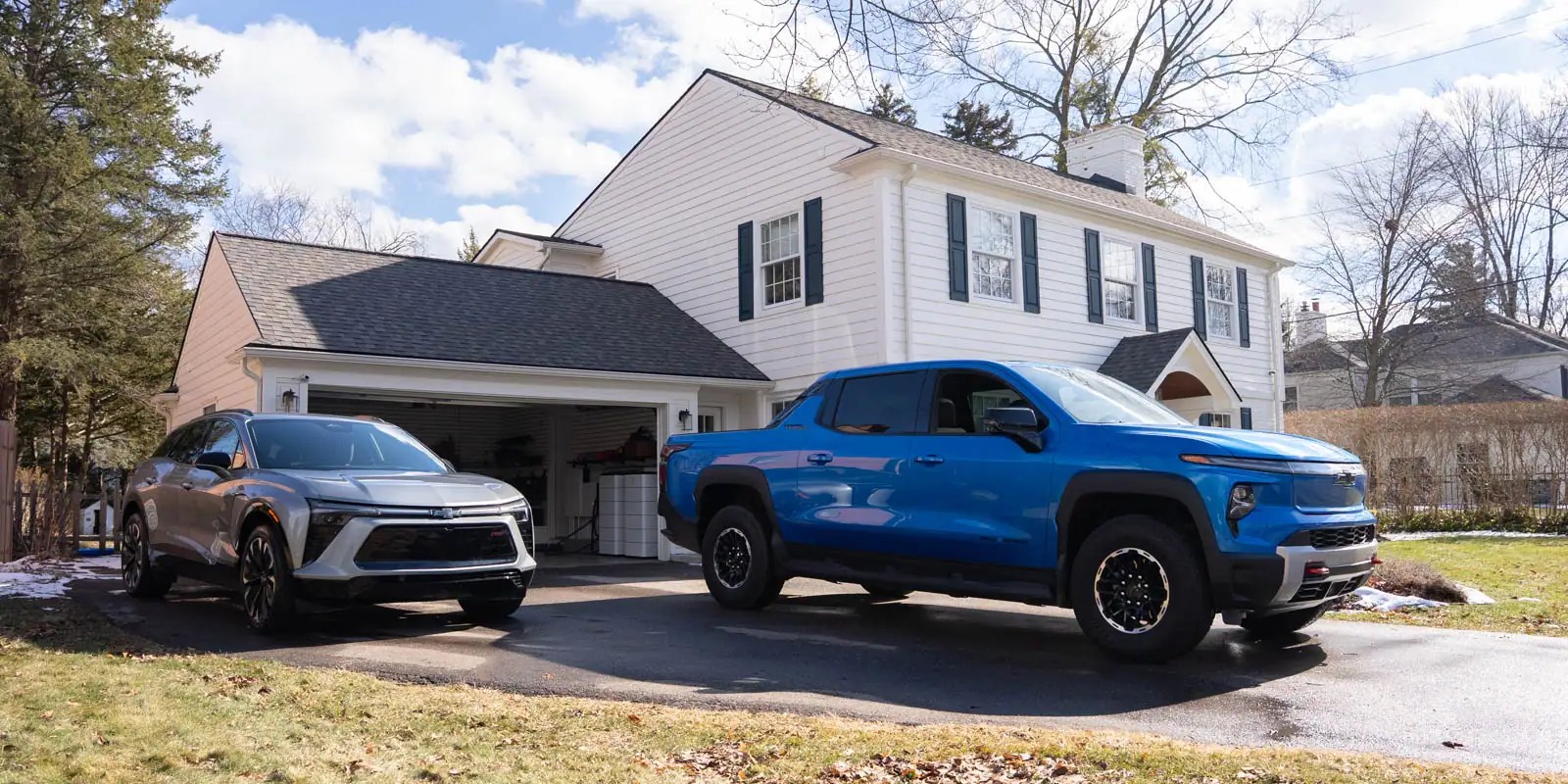
The GM Energy Home System represents a deeply integrated approach to EV charging, battery backup, and solar power, offering a comprehensive energy independence solution. This system aims to provide all the functionalities of a conventional home solar battery while enhancing flexibility through seamless integration with GM electric vehicles. This synergy allows homeowners to leverage the energy stored in their EV batteries to extend backup power duration during emergencies or to power their homes during grid outages. Conversely, the home’s solar battery can be used to provide power for an EV during a prolonged outage.
Installation of the GM Energy Home System is managed through Qmerit, GM’s chosen installation partner, in collaboration with GM dealerships. For those who prefer to work with their own electrical contractors, the 10.6 kWh Home System is also available for direct purchase from the GM Energy website, with pricing starting around $11,897 as of this writing.
Key features of the GM Energy Home System:
- EV Integration: Works seamlessly with compatible GM EVs for bi-directional power flow.
- Comprehensive Backup: Provides full home battery backup capabilities.
- Solar Integration: Designed to work with existing or new solar installations.
- Flexible Purchasing: Available through GM dealers and direct online purchase.
The GM Energy Home System’s unique integration with electric vehicles offers an expanded dimension of energy resilience and utility for homeowners.
Sigenergy V2X: Enabling Vehicle-to-Home Charging for More EVs
For EV enthusiasts eager to utilize the energy stored in their vehicles to power their homes, Sigenergy offers a promising solution. While Tesla’s Cybertruck is currently the only Tesla model officially supporting bi-directional charging (Vehicle-to-Grid/Home or V2G/V2H), Sigenergy’s V2X system extends this capability to a broader range of popular EV models. This includes many Tesla Model 3 and Model Y owners who have been awaiting V2H functionality.
The Sigenergy V2X system is compatible with several EV models supporting the DIN70121 protocol, as well as various VW, Audi, Porsche, and Mercedes-Benz models using the ISO15118-2 protocol. This broad compatibility makes the V2X system a significant advancement for EV owners looking to unlock the full potential of their vehicle’s battery for home backup and grid services.
Key features of the Sigenergy V2X:
- Broad EV Compatibility: Supports V2H charging for a wide range of EV models beyond Tesla.
- Protocol Support: Works with DIN70121 and ISO15118-2 protocols.
- Powerwall Competitor: Offers an alternative to Tesla’s established battery storage solution.
Sigenergy’s V2X system is a crucial development in enabling widespread vehicle-to-home power capabilities, enhancing the utility of electric vehicles.
Villara VillaGrid+: Premium Performance with LTO Chemistry
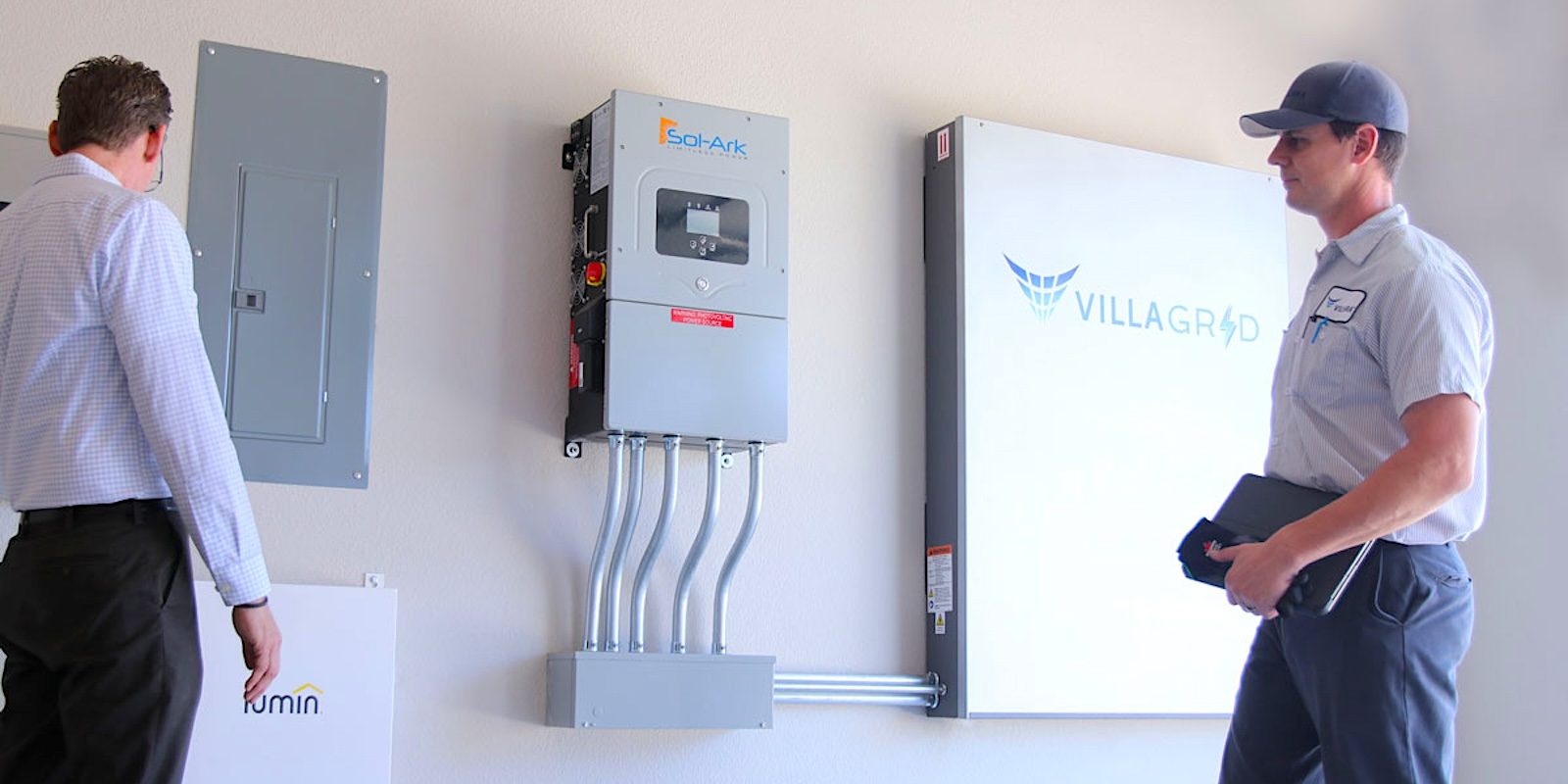
The Villara VillaGrid+ has garnered significant praise from energy industry experts, particularly from EnergySage, a leading platform for solar and energy storage comparisons. EnergySage ranks the VillaGrid+ highly due to its advanced lithium-titanium-oxide (LTO) battery chemistry. Unlike traditional lithium-ion batteries, LTO offers superior recharge capabilities, leading to longer lifespan cycles. Furthermore, LTO batteries are inherently safer as they do not contain carbon, significantly reducing the risk of thermal runaway.
While the VillaGrid+ represents a premium option, often at a higher upfront cost than competitors like the Tesla Powerwall, its advanced chemistry and extended warranty justify the investment for many. Villara backs its LTO batteries with an impressive 20-year warranty, doubling the typical 10-year warranty offered by most manufacturers, including Tesla. This longevity and safety profile are key differentiators for the VillaGrid+. Although specific pricing can vary, Villara’s other products suggest a per-kWh cost that can be nearly double that of the Tesla Powerwall, reflecting the advanced technology and extended lifespan.

Key advantages of the Villara VillaGrid+:
- LTO Battery Chemistry: Offers superior safety, longevity, and faster recharge cycles.
- Extended Warranty: A 20-year warranty provides exceptional long-term peace of mind.
- High Performance: Delivers reliable and safe energy storage.
- Premium Option: Positioned for homeowners seeking the highest level of safety and durability.
The Villara VillaGrid+ exemplifies a commitment to cutting-edge battery technology, offering a long-term, high-performance energy storage solution.
Implications for Energy Independence and Grid Stability
The proliferation of advanced home battery solutions signifies a critical shift in how Americans approach energy consumption and reliability. As the nation grapples with an aging grid infrastructure and the increasing impacts of climate change, these technologies empower individuals to take greater control over their energy supply.
The widespread adoption of solar-plus-battery systems can contribute to grid stability by reducing peak demand on utility networks. During times of high demand, homeowners can draw power from their stored energy, alleviating pressure on the grid and potentially preventing blackouts. Furthermore, these systems foster a more distributed and resilient energy infrastructure, less susceptible to single points of failure.

As the trend towards energy independence accelerates, homeowners are increasingly recognizing the strategic value of investing in reliable and advanced home energy storage. The growing array of sophisticated options available, each with its unique strengths and features, ensures that consumers can find a solution that best meets their specific needs and contributes to a more secure and sustainable energy future. The recurring power outages of 2026 serve as a stark reminder that while the grid remains essential, individual resilience through home energy storage is no longer a luxury but a prudent necessity.