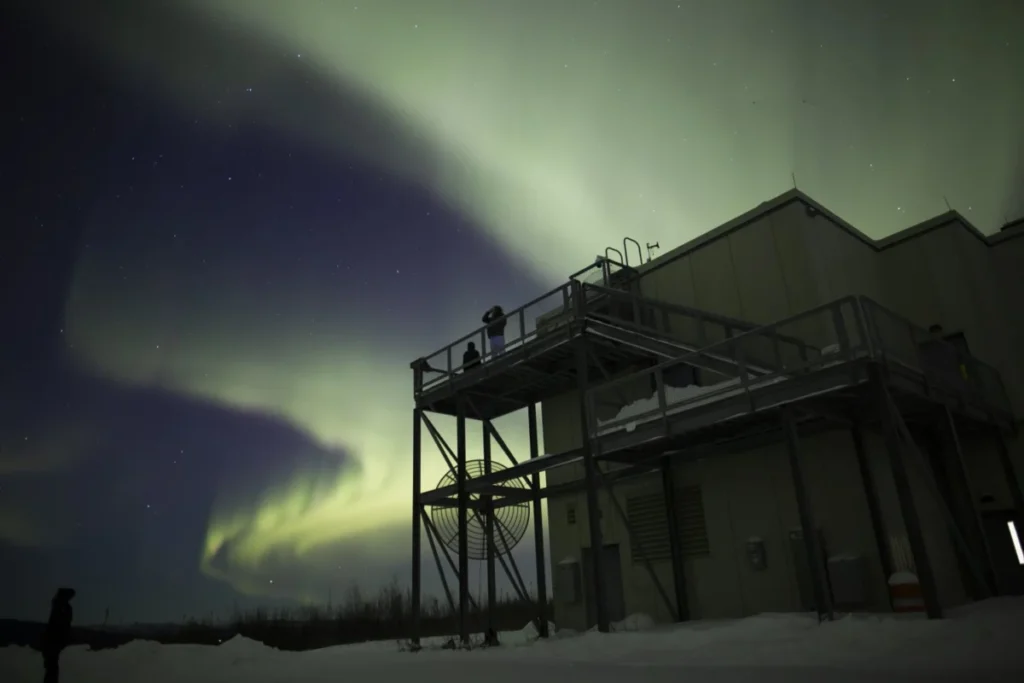
For the graduate students of the Massachusetts Institute of Technology, the standard academic schedule of lectures and laboratory sessions was recently replaced by a grueling nocturnal existence in the frozen wilderness of the American North. In Fairbanks, Alaska, a specialized team of researchers found themselves waking at noon to begin a workday dictated not by the rising sun, but by the unpredictable arrival of the aurora borealis. This mission, known as the Geophysical Plasma Observation Expedition (GPOE), represents a unique intersection of high-level plasma physics, extreme field engineering, and student-led scientific initiative.
The primary objective of the expedition was to utilize the Earth’s upper atmosphere as a natural laboratory for studying plasma phenomena. While plasma—the fourth state of matter consisting of ionized gas—is the most abundant form of ordinary matter in the universe, it remains notoriously difficult to observe in a controlled environment at a large scale. The aurora provides a rare, visible manifestation of plasma behavior as charged particles from the solar wind interact with the Earth’s magnetosphere. However, capturing this data requires more than just high-end sensors; it requires the physical and mental fortitude to operate in some of the most inhable conditions on the planet.
The Physicality of Field Research in the Sub-Arctic
Operating out of the Poker Flat Research Range, a facility managed by the University of Alaska Fairbanks Geophysical Institute, the MIT team faced environmental hurdles that tested the limits of their equipment and their endurance. Temperatures frequently plummeted to -25 degrees Fahrenheit, a level of cold that fundamentally alters the behavior of materials and electronics. In these conditions, the sun sets before 3:00 p.m., leaving the researchers to work in near-total darkness, illuminated only by red headlamps designed to preserve their night vision for optical observations.
The extreme thermal environment presented an immediate threat to data integrity. Leonardo Corsaro, a PhD student in physics at the MIT Plasma Science and Fusion Center (PSFC), noted that the cold rendered standard power management systems nearly useless. Laptops that indicated a full charge would often drain to empty within ten minutes of exposure to the Alaskan air. This created a high-stakes "race against time" where researchers had to transfer massive amounts of observational data to ruggedized storage units before their hardware succumbed to the freezing temperatures.
Beyond the technical failures, the logistics of movement in the Alaskan interior added a layer of physical exhaustion to the scientific mission. To achieve a wide enough baseline for three-dimensional reconstruction of the aurora, the team had to deploy camera systems in remote locations far from established roads. Leon Nichols, another PhD student at the PSFC, explained that navigating through deep, uncompacted snow can result in a metabolic burn of up to 900 calories per hour. To mitigate this, the team utilized cross-country skis to access terrain that would have otherwise been unreachable, highlighting the unconventional skill sets required for this brand of field science.
Technological Innovation and Multi-Instrumental Analysis
The 2024 iteration of the GPOE was the most technologically ambitious to date. The team deployed an array of all-sky camera systems across a 100-mile span. these cameras utilize specialized lenses to capture a 360-degree view of the celestial hemisphere, allowing for the tracking of auroral structures as they evolve across the sky. By synchronizing these images from multiple locations, the researchers can use triangulation to determine the altitude and volume of the plasma formations, contributing to long-term goals of 3D auroral modeling.
However, visual data is only one piece of the puzzle. To correlate the visible light with the underlying electromagnetic forces, the team paired the cameras with magnetometers. These devices measure fluctuations in the Earth’s magnetic field caused by the massive electrical currents—known as Birkeland currents—that flow through the ionosphere during an auroral event.
In a significant expansion of the project’s scope, this year’s mission also incorporated muon detectors. Muons are high-energy subatomic particles created when cosmic rays or high-energy solar particles collide with the Earth’s atmosphere. By monitoring muon counts alongside visual and magnetic data, the MIT researchers are exploring whether correlations exist between particle flux and specific types of auroral activity. This multi-messenger approach offers a more holistic view of the complex interactions between solar activity and the terrestrial environment.
Observations During a Historic Solar Maximum
The timing of the expedition was strategically chosen to coincide with the peak of Solar Cycle 25. The sun operates on an approximately 11-year cycle of activity, and the current period has proven to be more active than initial forecasts suggested. During their stay in Fairbanks, the MIT team witnessed the strongest solar storm to hit Earth in two decades. This G5-class geomagnetic storm produced auroras of such intensity that they were visible far beyond the polar regions, but from their vantage point in Alaska, the students were "immersed" in the phenomenon.
Sydney Menne, a PhD student in nuclear science and engineering, described the experience as transformative, noting that the scale of the aurora made the researchers feel removed from the Earth itself. The team was able to document a variety of rare phenomena, including "pulsating auroras." Unlike the typical flowing curtains of light, pulsating auroras appear as patches of luminosity that blink on and off with rhythmic precision, sometimes multiple times per second. These are thought to be caused by complex "wave-particle interactions" in the outer magnetosphere, and the high-resolution data captured by the GPOE team provides fresh material for analyzing these elusive events.
From Student Initiative to Institutional Program
The GPOE is notable not only for its scientific output but also for its origins. The program was born in 2023 from the frustration of graduate student Shon Mackie, who sought more hands-on opportunities for plasma diagnostics. Recognizing the impending solar maximum, Mackie proposed a student-led expedition to the PSFC leadership. The response from the center’s then-director, Dennis Whyte, was famously brief: "Sounds cool, literally! PSFC will fund this."
In the two years since its inception, the project has evolved from a grassroots effort into a sophisticated research cycle. The expedition is entirely student-driven; the participants are responsible for every stage of the process, including instrument design, site logistics, data collection, and post-processing. This compressed scientific cycle—moving from concept to peer-reviewed publication within a few months—is a rarity in the world of academic physics, where projects often span years or decades.
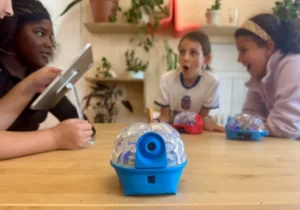
The program’s impact has also extended to the global educational community. Through a collaboration with the MIT Museum and the MIT Nord Anglia Collaboration, 65 high school students from 20 different countries were invited to participate in the design and construction of the all-sky camera housings. These 13 student-built cameras were part of the fleet deployed in the Alaskan wilderness, providing a direct link between classroom learning and frontline scientific discovery.
Broader Implications for Space Weather and Infrastructure
The research conducted by the GPOE team has implications that reach far beyond the halls of MIT. Understanding the behavior of plasma in the upper atmosphere is critical for the field of space weather. As modern society becomes increasingly dependent on satellite technology, GPS, and transcontinental power grids, the vulnerability to solar activity grows.
Large-scale geomagnetic storms can induce currents in power lines that cause catastrophic transformer failures, and they can alter the density of the upper atmosphere, increasing drag on low-Earth orbit satellites. By refining our understanding of how these storms manifest as plasma structures, the GPOE data helps improve predictive models that can provide early warnings for utility companies and satellite operators.
Furthermore, the team’s development of low-cost, scalable instrumentation is democratizing auroral research. Their designs for magnetometers and all-sky cameras are being adopted by other research institutions and community science initiatives, allowing for a much denser global network of atmospheric monitoring than was previously possible with expensive, government-funded installations alone.
Conclusion: The Reality of Plasma
For the researchers involved, the expedition served as a potent reminder of the difference between theoretical physics and the natural world. In the sterile environment of a laboratory or the controlled parameters of a computer simulation, plasma can appear predictable and neat. However, standing in the Alaskan snow at midnight, watching billions of watts of power shimmer across the sky, offers a different perspective.
As Leonardo Corsaro reflected, seeing the electric currents and flows shift overhead brought a "sense of reality" to the concepts he studies daily. The GPOE mission demonstrates that even in an era of advanced simulation and remote sensing, there is no substitute for direct observation. Through their work in the freezing dark of Fairbanks, these students are not only advancing our understanding of the universe’s most common state of matter but are also reclaiming the spirit of scientific adventure. The data gathered during this historic solar cycle will likely inform plasma research for years to come, while the program itself stands as a model for student-led innovation in the physical sciences.