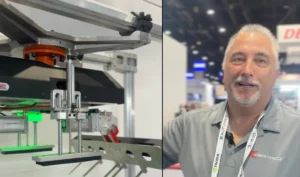
In the pursuit of true precision within advanced motion control applications, a singular focus on individual component specifications often falls short, necessitating a comprehensive approach centered on meticulous system integration. Corey Foster, Director of Automation Sales & Application Engineering at Valin Corporation, highlights that while individual mechanics, motors, drives, and controls each possess their own impressive specifications, the ultimate system performance is a direct reflection of how these disparate elements are harmonized and integrated. This perspective underscores a critical paradigm shift in high-precision engineering, moving beyond mere product selection to a profound understanding of the entire operational ecosystem.
The discussion surrounding high-precision motion control frequently commences with an assessment of mechanical components, where actuators are typically evaluated based on standard metrics such as repeatability, accuracy, and load capability. For numerous applications, this foundational understanding suffices. However, as industries push the boundaries of technological capability, requiring motion systems that operate at or beyond micron-level accuracy, the conventional relevance of these specifications begins to diminish. It becomes imperative to delve into the intricate interplay between components, recognizing that the sum is far greater, and often more fragile, than its parts. This article, the culmination of a series, zeroes in on the often-underestimated yet absolutely critical elements of system integration itself, building upon earlier explorations into mechanics, motors, and drives.
The Evolving Landscape of Precision Motion Control
From Basic Automation to Nanometer Accuracy
The evolution of industrial automation has been marked by an relentless drive towards greater precision. Decades ago, the primary goal was simply to automate repetitive tasks, where positional accuracy within millimeters was often sufficient. Early motion control systems, while revolutionary for their time, were relatively simple, comprising basic mechanical linkages, pneumatic or hydraulic actuators, and rudimentary electrical controls. The specifications of individual components were often the primary, and sometimes only, consideration for system designers.
However, the late 20th and early 21st centuries witnessed a dramatic acceleration in technological demands. Industries such as semiconductor manufacturing, medical device production, advanced optics, and aerospace began to require precision levels unheard of before. Wafer fabrication, for instance, demands positioning accuracy in the nanometer range for lithography and inspection processes. Surgical robots need sub-millimeter precision to perform minimally invasive procedures, and high-resolution 3D printing relies on micron-level control for layer deposition. This escalating demand has rendered a component-centric view increasingly inadequate, exposing the limitations of relying solely on manufacturer datasheets.
Market Drivers and Economic Imperatives
The global motion control market, estimated to be valued at over $15 billion in 2023 and projected to grow at a compound annual growth rate (CAGR) exceeding 6% through the next decade, is largely driven by these demands for enhanced precision and automation. Key sectors contributing to this growth include:
- Semiconductor Industry: Constant innovation in chip design necessitates ever-finer control over manufacturing processes.
- Medical & Pharmaceutical: The development of advanced diagnostics, robotic surgery, and automated drug delivery systems relies heavily on precise motion.
- Aerospace & Defense: Precision assembly of complex components, sophisticated testing equipment, and advanced targeting systems are critical.
- Automotive: The shift towards electric vehicles and autonomous driving requires precision manufacturing for battery components, sensors, and assembly lines.
- Robotics: Collaborative robots (cobots) and advanced industrial robots require greater positional accuracy and repeatability to work alongside humans or perform delicate tasks.
Industry analysts consistently highlight that the economic implications of precision are substantial. Errors introduced by insufficient precision can lead to significant material waste, increased production time, product recalls, and ultimately, a loss of competitive advantage. Conversely, achieving higher precision through meticulous integration can unlock new manufacturing capabilities, reduce operational costs, and enable the creation of innovative products, yielding substantial returns on investment. The drive for precision is, therefore, not merely a technical challenge but a strategic economic imperative.
Beyond the Datasheet: The Integration Imperative
The journey towards true precision, as Foster points out, necessitates a deeper understanding that extends beyond the specifications printed on a datasheet. These specifications, while valuable, often rest upon a series of "hidden assumptions" about the operating environment and the surrounding system. Neglecting these assumptions during installation and operation can lead to performance shortfalls, even with the most advanced individual components.
The Holistic View: Mechanics, Motors, Drives, and Controls
This series has systematically peeled back the layers of a motion control system, revealing the critical details often overlooked. Part one examined the mechanics, highlighting factors like bearing deflection, body stiffness, and structural smoothness – elements rarely explicitly detailed in standard specifications but crucial for foundational stability. Part two shifted focus to motors, exploring how design, construction quality, and manufacturing tolerances significantly impact their performance. The third installment delved into the intricacies of drives and controls, emphasizing the importance of their design features and capabilities in translating commands into precise movements.
Ultimately, the overarching theme is that countless subtle details, absent from conventional data sheets, possess the power to either fulfill or shatter the high-performance expectations of an entire system. As motion systems transcend micron-level accuracy, the traditional definitions of accuracy and repeatability become increasingly nuanced, demanding sophisticated engineering judgment. The series aims to equip engineers, designers, and system integrators with the insights necessary to recognize the profound importance of every decision made during the assembly of a high-precision motion system. This understanding applies equally to the integration of components across what Foster delineates as three general tiers of performance: basic, specification-level, and the critical "pushing-beyond-the-specifications" performance.
Unmasking Hidden Assumptions and Integration Pitfalls

Many initial system concepts may appear to function adequately upon first assembly. However, as time progresses, wear occurs, or demands for improved performance arise, latent issues stemming from inadequate integration become apparent. Analogous to a paper airplane that initially flies well but deteriorates with repeated use, the quest for sustained and enhanced performance necessitates meticulous attention to every "fold" and connection within a motion control system. Optimal performance is not an inherent quality of a subsystem but an emergent property of the meticulously engineered whole.
Real-world examples vividly illustrate how integration failures can undermine even the best-specified components:
- Mounting Surface Criticality: Mechanical actuators inherently assume a certain degree of flatness and stability from their mounting surfaces. If a precision linear motor is mounted on a non-planar or vibrating base, its specified accuracy and repeatability will be compromised. The forces and stresses introduced by an uneven mount can distort the actuator’s internal structure, leading to inconsistent movement.
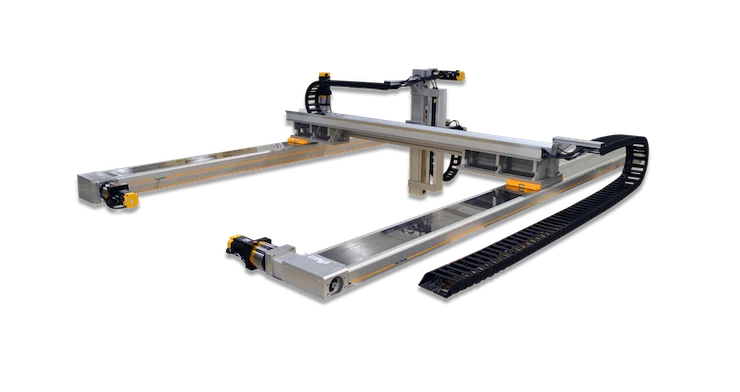
- Alignment Challenges in Multi-Axis Systems: Consider a precision linear motor operating in conjunction with linear bearings on both sides. This creates a three-component system that demands precise alignment. Misalignment, even by a few tens of microns, can induce mechanical binding, leading to uneven friction, accelerated wear, increased motor load, and in severe cases, complete seizure of movement. Similarly, two long, parallel belt and pulley actuators, common in gantry systems, face an additional challenge: matching their travel lengths and ensuring consistent belt tension. Variations in tension directly impact the distance covered per pulley revolution, potentially leading to significant positional discrepancies (e.g., a 5 mm variance over two meters) in applications demanding synchronous movement.
- Power Quality and Environmental Factors: Drives and controllers, often developed and tested in controlled lab environments with stable, clean power, may encounter significant issues when deployed in industrial settings. Industrial environments are often rife with electrical noise, voltage fluctuations, and ground loops. Without proper grounding techniques, shielding, and Electromagnetic Compatibility (EMC) filters, these "dirty power sources" can severely degrade controller performance, leading to erratic behavior, communication errors, and reduced precision. Furthermore, thermal management is frequently overlooked. A system assembled in a climate-controlled workshop might perform poorly or fail entirely when deployed in a hot factory. Thermal expansion and contraction can directly impact mechanical alignments, induce stresses, and affect the performance characteristics of motors and sensors, preventing the system from meeting its performance requirements.
Best Practices for Seamless Integration
Achieving the "pushing-beyond-the-specifications" tier of performance demands the consistent implementation of several best practices during the integration process:
Engineering for Robustness and Repeatability
- Precision Mounting Surfaces: It is paramount that the surfaces to which actuators are mounted meet or exceed the assumed standards of the actuators and the application. This often requires machined surfaces with specified flatness and parallelism.
- Dowel Pinning and Kinematic Mounts: For systems requiring high repeatability upon disassembly and reassembly (e.g., for maintenance or module replacement), dowel pins can be strategically used between actuators and their mounting surfaces. In ultra-high precision systems, kinematic mounts, which constrain motion in specific degrees of freedom while allowing for thermal expansion without inducing stress, are often employed.
- Encoder Alignment: For linear, rotary, or ring-type encoders, precise alignment is non-negotiable. This often necessitates specialized fixtures and high-resolution measurement tools (e.g., laser interferometers, autocollimators) to ensure that the encoder accurately reflects the true position of the moving element, minimizing Abbe error.
Strategic Cable Management and Environmental Control
- Optimized Cable Routing: Cable routing is a discipline often underestimated. To prevent electromagnetic interference (EMI), lower-power signal cables should be routed separately from, and ideally perpendicularly to, high-power motor and drive cables. Running them in parallel over long distances creates opportunities for induced noise. Coiling excess high-power cable should also be avoided, as it can create inductive loops that generate EMI. Proper cable management includes using shielded cables, ferrite beads, and ensuring correct grounding.
- Environmental Isolation: Ultra-high precision systems are highly susceptible to environmental disturbances. Isolating the system from these factors is critical.
- Vibration Damping: Vibration isolators (e.g., pneumatic isolation tables) help decouple the system from floor vibrations originating from nearby machinery or external sources.
- Temperature Control: Maintaining a stable, temperature-controlled environment minimizes thermal expansion and contraction effects on mechanical components and sensor accuracy. The most demanding precision systems are often housed in dedicated temperature-controlled cleanrooms, sometimes even built on separate foundations to eliminate ground-borne vibrations.
- Humidity and Contamination Control: In sensitive applications, controlling humidity and particulate contamination prevents corrosion, static discharge, and interference with optical components.
The Systems Engineer’s Mindset: A Paradigm Shift
Ultimately, the success of any high-performance motion control system hinges on adopting a systems engineer’s mindset. This involves moving beyond the role of a mere "product selector" to a comprehensive understanding of how every component interacts within the broader system and its operational environment.
Fostering Interdisciplinary Collaboration
A systems engineer’s approach inherently requires interdisciplinary collaboration. Mechanical engineers must understand the sensitivities of electrical components to vibration and thermal changes. Electrical engineers must grasp the mechanical implications of cable routing and power quality. Software engineers need to develop control algorithms that account for real-world mechanical imperfections and sensor limitations. This integrated approach ensures that design decisions in one domain do not inadvertently create insurmountable challenges in another.
The Cost of Oversight vs. The Value of Meticulous Design
The "questions unasked" during the design and integration phases are often the ones that resurface as costly failures, production delays, and compromised performance. The initial investment in meticulous design, thorough testing, and robust integration practices may seem higher upfront, but it pales in comparison to the costs associated with troubleshooting, redesign, and lost productivity due to poorly integrated systems. Meticulous integration not only ensures peak performance but also enhances system reliability, extends operational lifespan, and simplifies maintenance.
Key considerations for engineers during the integration process include:
- How will component A’s thermal expansion affect component B’s alignment over the operating temperature range?
- What are the actual impedance characteristics of the power supply and how will they interact with the drive’s filters?
- Are there any resonant frequencies within the mechanical structure that could be excited by the motor’s operating range?
- How will wear on a specific bearing translate into cumulative error over the system’s expected lifespan?
- What are the failure modes of the integrated system, and how can they be mitigated or predicted?
- Is the control loop tuned to account for the actual dynamic characteristics of the integrated mechanical system, not just the motor’s ideal response?
Future Trajectories: Smart Integration and Predictive Analytics
Looking ahead, the field of motion control integration is poised for further advancements. The advent of Industry 4.0, with its emphasis on interconnected systems, real-time data, and artificial intelligence, promises to revolutionize how precision is achieved and maintained.
- Digital Twins: Creating precise digital models of physical systems allows engineers to simulate integration scenarios, predict performance under various conditions, and identify potential issues before physical assembly.
- Predictive Maintenance: Integrating sensors and analytics to monitor system health in real-time can detect early signs of misalignment, wear, or power anomalies, enabling proactive intervention rather than reactive repair.
- Self-Optimizing Systems: Future control systems, empowered by machine learning, may be able to dynamically adjust parameters to compensate for environmental changes, component wear, and minor misalignments, thereby maintaining peak precision autonomously.
- Modular and Configurable Systems: The development of highly standardized, yet configurable, sub-modules with well-defined interfaces will simplify integration and reduce the likelihood of compatibility issues.
In conclusion, the journey to unparalleled precision in motion control is not a matter of chance or the sum of isolated capabilities; it is an outcome of deliberate, meticulous, and holistic system integration. As industries continue to demand ever-higher levels of performance, the role of the systems engineer, adept at navigating the complex interplay between mechanics, electronics, and software, will become increasingly pivotal. The ultimate success of advanced motion control applications will undeniably rest on the mastery of these critical integration practices.