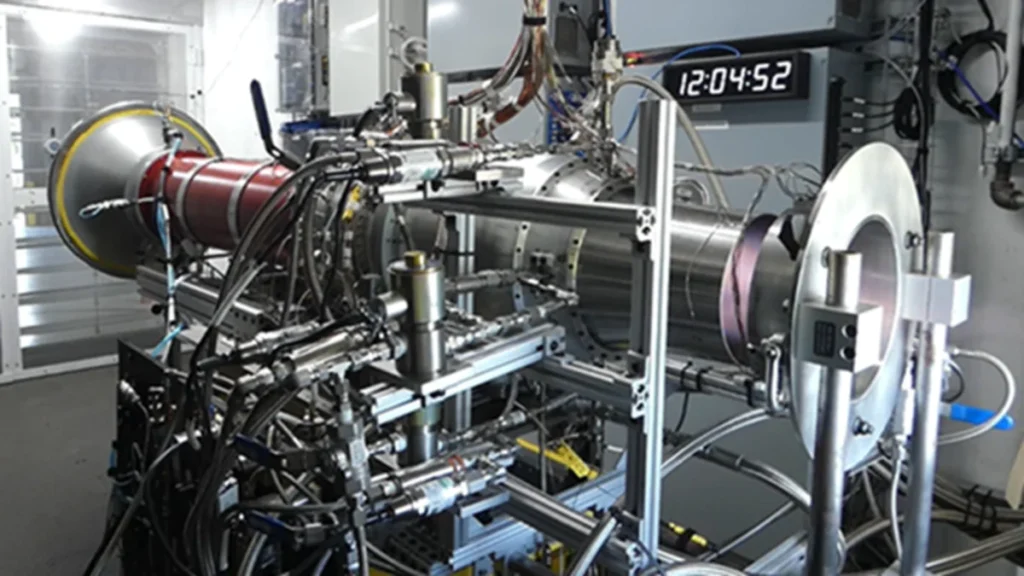
The U.S. Air Force has officially selected the F143 turbofan as a critical second-source propulsion system for its Joint Air-to-Surface Standoff Missile (JASSM) program. This significant development follows the engine’s successful completion of rigorous altitude testing last year, marking a pivotal step in enhancing the resilience and affordability of the nation’s defense supply chain. Developed through a collaborative effort between California-based Kratos Defense & Security Solutions and Ohio-based aircraft engine giant GE Aerospace, the engine, previously known as the GEK800, received its official U.S. Military Engine Type Designation F143-ZZ-100 on Monday, August 17. Concurrently, the joint venture secured an Engineering, Manufacturing and Development (EMD) contract from the Air Force, solidifying its role in supporting the Pentagon’s strategic imperative for more affordable, mass-producible jet engines crucial for modern warfare.
Bolstering National Security Through Diversified Propulsion
The decision to introduce a second-source engine for the JASSM program is a cornerstone of the Pentagon’s broader strategy to enhance industrial base capacity, foster competition, and mitigate supply chain vulnerabilities. In an increasingly complex global security landscape, ensuring uninterrupted access to critical components for high-demand weapon systems like the JASSM is paramount. The JASSM is a stealthy, long-range precision cruise missile designed to strike high-value, well-defended targets from standoff ranges, minimizing risk to launching aircraft. Its operational importance to the U.S. Air Force and allied nations, including Australia, Canada, Finland, and Poland, cannot be overstated, making the reliability and availability of its propulsion system a top priority.
The existing JASSM propulsion system, while effective, represents a single point of failure risk in the supply chain. By introducing the F143 as a viable alternative, the Air Force aims to create a robust, competitive industrial base. This strategy not only reduces the potential for delays or disruptions due to issues with a single supplier but also is expected to drive down costs through competitive bidding, aligning perfectly with the Pentagon’s push for "affordable mass" – the ability to produce large quantities of advanced munitions cost-effectively.
"This reflects years of disciplined engineering to deliver propulsion systems that meet the evolving, mission-critical requirements of our military customers," stated Amy Gowder, President and CEO of GE Aerospace Defense & Systems, underscoring the dedication and technical prowess invested in the F143’s development. The strategic implications extend beyond immediate missile production, laying the groundwork for a more agile and responsive defense manufacturing ecosystem.
The F143 Turbofan: A Journey from Concept to Flight-Ready
The F143, initially conceived as the GEK800, is an 800-pound-thrust (3.56-kilonewton) turbofan engine meticulously engineered for long-range missiles and a variety of uncrewed applications. The collaborative journey between Kratos and GE Aerospace began in 2023, initiating a Technology Maturation and Risk Reduction (TMRR) phase. This crucial initial period focused on refining the engine’s design, proving its foundational technologies, and mitigating potential engineering challenges through extensive testing.
The development was a testament to effective public-private partnerships, combining significant internal investments from both Kratos and GE Aerospace with critical support and funding from the Air Force Research Laboratory (AFRL). This collaborative funding model accelerated the development cycle, allowing engineers from both firms to rapidly iterate and refine the engine’s design and performance parameters. From the project’s inception, the team achieved remarkable progress, completing more than 50 engine starts in ground tests at their state-of-the-art facilities. These ground tests were fundamental in validating the engine’s core functionality, starting reliability, and initial performance metrics under controlled conditions.
A Rigorous Testing Regimen: Conquering Altitude Challenges
A pivotal milestone in the F143’s development occurred in October 2025 with the successful completion of comprehensive altitude testing at Purdue University’s renowned Maurice J. Zucrow Laboratories. These laboratories are globally recognized for their advanced propulsion research and testing capabilities, providing an ideal environment to simulate the extreme conditions an engine would face during high-altitude flight.
The altitude testing campaign commenced in late September 2025, systematically progressing through a series of increasingly demanding trials. This included simulating various atmospheric pressures and temperatures encountered at different altitudes, assessing the engine’s performance across its operational envelope. The culmination of these tests involved pushing the engine to its inherent limits, meticulously evaluating its stability, efficiency, and durability under maximal stress.
Mark Rettig, Vice President at GE Aerospace, lauded the propulsion system’s exceptional performance and robust durability following the tests. "Our joint team successfully expanded the altitude testing envelope and identified the engine’s rotor speed limits and compressive system boundaries," Rettig explained. This detailed understanding of the engine’s operational characteristics and limits is invaluable, providing critical data for its integration into the JASSM and other advanced platforms, ensuring its reliability and safety across its intended flight regimes. The successful completion of these rigorous tests was a prerequisite for the Air Force’s final selection and paved the way for the EMD contract.
A Chronology of Milestones
The development and selection of the F143 engine have followed a precise and accelerated timeline:
- 2023: Kratos Defense & Security Solutions and GE Aerospace initiate the Technology Maturation and Risk Reduction (TMRR) phase for the GEK800 engine, with significant support and funding from the Air Force Research Laboratory (AFRL). Initial ground testing begins, accumulating over 50 successful engine starts.
- Late September 2025: Comprehensive altitude testing of the GEK800 engine commences at Purdue University’s Maurice J. Zucrow Laboratories, designed to simulate various flight conditions.
- October 2025: The GEK800 successfully completes all phases of altitude testing, proving its performance and durability under simulated operational environments and validating its readiness for further development.
- Monday, August 17, 2026: The U.S. Air Force officially grants the GEK800 the U.S. Military Engine Type Designation F143-ZZ-100. Simultaneously, Kratos and GE Aerospace are awarded an Engineering, Manufacturing and Development (EMD) contract, formally selecting the F143 as a second-source engine for the Joint Air-to-Surface Standoff Missile (JASSM) program.
Official Endorsements and Strategic Vision
The official announcements were met with strong endorsements from the leadership of both developing companies, highlighting the strategic importance of the F143. Amy Gowder reiterated the significance of the achievement: "The F143-ZZ-100 designation and EMD award are a testament to the strong performance and capability of the GEK800 engine and the strength of our partnership with Kratos." Her comments underscore not only the technical success of the engine but also the effective collaboration that brought it to fruition.
Eric DeMarco, CEO of Kratos, emphasized the broader national security implications of the partnership. He articulated the joint commitment to strengthening the domestic defense industrial base: "Kratos and GE Aerospace are making significant investments with our government partners, to support U.S. National Security priorities." DeMarco further stated that the companies are actively working with the U.S. Air Force to expand domestic jet engine production and are investing alongside government partners to boost manufacturing capabilities for critical defense assets such as drones, missiles, and other advanced systems. This proactive approach to industrial capacity building is vital in an era demanding rapid innovation and large-scale production of advanced military hardware.
From the U.S. Air Force’s perspective, while no direct quote was provided in the original announcement, the decision logically signifies a strong endorsement of the F143’s technical maturity, cost-effectiveness, and potential to enhance mission readiness. The Air Force’s selection of a second source reflects a strategic imperative to diversify its procurement, ensuring a more resilient and competitive supply chain for critical weapon systems like the JASSM. This move is consistent with broader Department of Defense directives to foster innovation, reduce sole-source dependencies, and achieve better value for taxpayer dollars.
Broader Implications and Future Applications
The selection of the F143 as a second-source engine for the JASSM program has far-reaching implications, extending beyond the immediate benefit to missile propulsion.
Industrial Base Expansion and Economic Impact: This contract provides a substantial boost to the U.S. defense industrial base. It fosters job creation in high-tech manufacturing and engineering sectors across California and Ohio, supporting local economies and strengthening national capabilities. The sustained demand for engines will necessitate investments in manufacturing infrastructure and skilled labor, creating a more robust foundation for future defense production needs.
Enhanced Supply Chain Resilience: The recent global supply chain disruptions have highlighted the vulnerabilities inherent in single-source procurement. By adding the F143, the Air Force significantly enhances its resilience against potential production bottlenecks, material shortages, or geopolitical disruptions that could impact a sole supplier. This diversification ensures a steady flow of engines, critical for maintaining JASSM production rates and readiness.
Cost Efficiency Through Competition: Introducing a qualified second supplier invariably introduces competition, which is a powerful driver for cost reduction. As both engine providers vie for contracts, they are incentivized to optimize production processes, innovate designs for efficiency, and offer more competitive pricing. This aligns with the Pentagon’s goal of achieving "affordable mass," allowing the Air Force to procure more missiles within budget constraints.
Technological Advancement and Innovation: The F143 represents the cutting edge of compact turbofan technology. Its development by Kratos, known for its expertise in unmanned systems and advanced defense solutions, in partnership with GE Aerospace, a titan in aviation propulsion with over a century of innovation, showcases a blend of agility and established excellence. This collaboration could lead to further advancements in engine performance, fuel efficiency, and maintainability, benefiting future generations of defense systems. The engine’s proven performance during altitude testing suggests a robust and reliable design capable of meeting stringent military requirements.
Versatility for Future Unmanned Systems: While initially designated for JASSM, the F143’s specifications as an 800-pound-thrust turbofan make it highly versatile. It is poised to power a range of other uncrewed aerial vehicles (UAVs), including collaborative combat aircraft (CCA) and various long-range cruise missiles. This modularity is crucial for the future of military aviation, allowing for standardized components across different platforms, which can streamline logistics, maintenance, and overall cost of ownership. The ability to deploy a proven, reliable engine across multiple platforms is a strategic advantage, accelerating the development and deployment of next-generation unmanned systems.
Strategic Geopolitical Context: In an era of renewed great power competition, the ability to project power with long-range, precision-guided munitions like JASSM is a cornerstone of U.S. national security strategy. The increased capacity and resilience in JASSM engine production directly contribute to the United States’ ability to deter aggression and respond effectively to threats globally. The demand for such standoff weapons is rising among U.S. allies as well, making a robust supply chain even more critical.
GE Aerospace, with its formidable installed base of approximately 49,000 commercial and 29,000 military aircraft engines, and a global team of roughly 53,000 employees, brings unparalleled experience and scale to this partnership. The company’s long-standing commitment to shaping the future of aviation through continuous innovation ensures that the F143 will benefit from a legacy of excellence and a forward-looking approach to propulsion technology. The integration of Kratos’s agile development methodology, particularly in the unmanned systems domain, with GE’s vast engineering and manufacturing prowess, positions the F143 as a highly promising and strategically important component of the U.S. defense arsenal for decades to come.