Researchers at the Swiss Federal Institute of Technology Lausanne (EPFL) have unveiled a groundbreaking advancement in additive manufacturing, offering a significantly improved method for 3D printing high-quality metals and ceramics. This innovative technique, detailed in a recent publication in the prestigious journal Advanced Materials, addresses critical limitations of existing vat photopolymerization methods, paving the way for the creation of stronger, more precise, and versatile three-dimensional objects. The development promises to accelerate innovation across various high-tech sectors, from aerospace and automotive to biomedical and energy technologies.
The Challenge of Traditional Vat Photopolymerization
Vat photopolymerization, a popular 3D printing technique, operates by immersing a build platform in a vat of light-sensitive liquid resin. A light source, typically a laser or ultraviolet (UV) projector, precisely cures specific areas of the resin layer by layer, solidifying it to form the desired object. This method excels at producing intricate geometries and fine details, making it attractive for prototyping and the creation of complex designs. However, its inherent reliance on photopolymer resins has historically restricted its application to materials that can be directly solidified by light.
While considerable research has been dedicated to transforming these printed polymer structures into more robust materials like metals and ceramics, these existing post-processing methods have consistently encountered significant hurdles. Daryl Yee, who leads the Laboratory for the Chemistry of Materials and Manufacturing at EPFL’s School of Engineering, highlights these persistent challenges. "These materials tend to be porous, which significantly reduces their strength, and the parts suffer from excessive shrinkage, which causes warping," he explains. The porosity results from incomplete filling of the polymer matrix with the precursor metal or ceramic compounds, leading to internal voids. Excessive shrinkage, a common issue during the high-temperature sintering or pyrolysis processes required to convert polymers to denser materials, can distort the printed object, compromising dimensional accuracy and mechanical integrity. These flaws have limited the practical adoption of photopolymerization for producing functional metal and ceramic components that demand high performance and precision.
A Paradigm Shift: The Hydrogel Framework
The EPFL team’s novel approach circumvents these limitations by fundamentally altering the material deposition and conversion process. Instead of attempting to incorporate metal or ceramic precursors directly into a light-curable resin, their method begins with a simpler, more accessible 3D printing process. The researchers first utilize a water-based gel, known as a hydrogel, to print a precise framework. Hydrogels are biocompatible, readily available, and can be easily manipulated and printed with high fidelity using standard vat photopolymerization techniques, as they are themselves light-sensitive polymers. This initial hydrogel print serves as a highly accurate, three-dimensional mold or template.
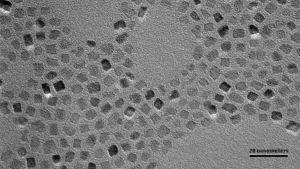
Following the printing of this hydrogel "blank" structure, the team embarks on a meticulously controlled multi-step process to infuse it with the desired metallic or ceramic components. The printed hydrogel is submerged in a solution containing metal salts. Through a series of carefully orchestrated chemical reactions, these metal salts are converted into extremely fine metal-containing nanoparticles. These nanoparticles are then chemically bonded and spread uniformly throughout the porous network of the hydrogel.
"Repeating this process multiple times allows them to create composites with very high metal content," Yee states. This iterative "growth cycle" is crucial. Each immersion and chemical conversion step deposits more nanoparticles within the hydrogel matrix, progressively increasing the density and ultimately the metallic or ceramic content of the composite structure. The number of these growth cycles, typically ranging from five to ten, is a key parameter that dictates the final material composition and properties.
From Gel to Dense Object: The Final Transformation
Once the desired metal or ceramic content has been achieved through the repeated infusion and conversion cycles, the final step involves removing the hydrogel scaffolding. This is accomplished through a controlled heating process. The heat causes the hydrogel to decompose and evaporate, leaving behind a solid, dense object composed entirely of the deposited metal or ceramic material. Crucially, this resulting object precisely replicates the intricate shape of the original printed hydrogel framework.
A significant advantage of this staged approach is its inherent versatility. Because the metal salts are introduced after the 3D printing of the hydrogel template, the same precisely printed hydrogel structure can be used as a foundation to fabricate a wide array of different materials. By simply changing the type of metal salt solution used in the infusion steps, researchers can produce objects made from various metals (such as iron, silver, and copper, as demonstrated in their study), ceramics, or intricate composites thereof. This modularity offers unprecedented flexibility in material selection and design, moving away from the traditional constraint of needing a specific light-curable resin for each desired material outcome.
Enabling High-Quality, Accessible Manufacturing
Daryl Yee summarizes the impact of their work: "Our work not only enables the fabrication of high-quality metals and ceramics with an accessible, low-cost 3D printing process; it also highlights a new paradigm in additive manufacturing where material selection occurs after 3D printing, rather than before." This shift in paradigm is profound. It decouples the geometric complexity achievable through 3D printing from the material constraints of the initial printing process, opening up vast new possibilities for functional component design and manufacturing. The use of readily available hydrogels and relatively common chemical processes further contributes to the accessibility and potential cost-effectiveness of this new manufacturing route.
Targeting Advanced 3D Architectures with Enhanced Performance
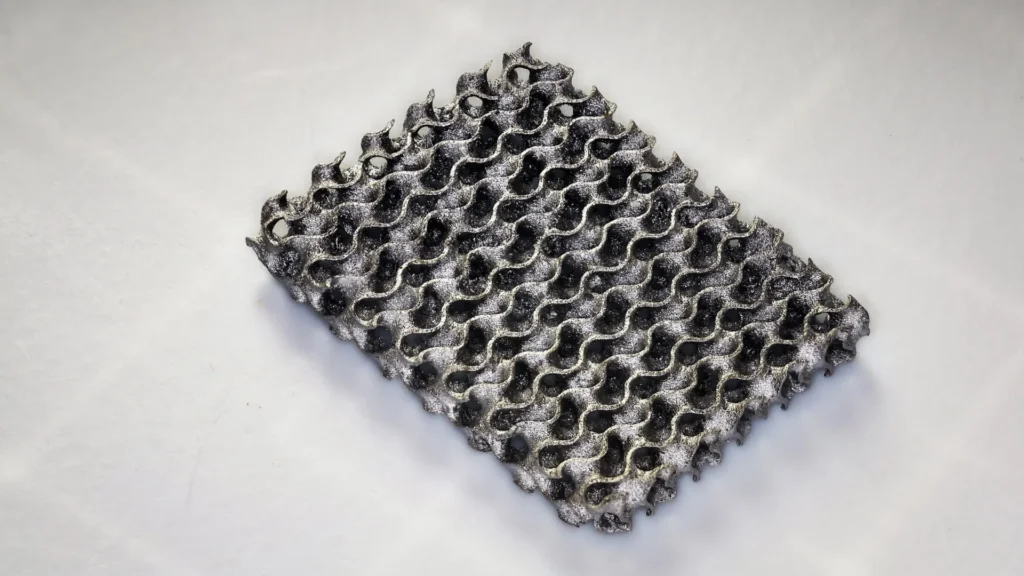
To validate their technique and showcase its capabilities, the EPFL team fabricated complex mathematical lattice structures known as gyroids. These gyroids were produced from iron, silver, and copper, demonstrating the method’s ability to yield strong yet highly intricate designs. Gyroid structures are of particular interest in advanced engineering due to their unique properties, such as high surface area, excellent mechanical stability, and optimized fluid flow characteristics.
The researchers rigorously tested the mechanical strength of these 3D-printed gyroids using a universal testing machine, a standard piece of equipment for evaluating the mechanical properties of materials. This machine applies increasing pressure to a sample until it deforms or fractures, providing precise quantitative data on the material’s load-bearing capacity.
The results were remarkably impressive. "Our materials could withstand 20 times more pressure compared to those produced with previous methods, while exhibiting only 20% shrinkage versus 60-90%," reports Yiming Ji, a PhD student and the first author of the study. This dramatic improvement in strength (a twenty-fold increase) and reduction in shrinkage (from potentially over 90% down to a mere 20%) directly addresses the core weaknesses identified in earlier post-processing techniques. The significantly lower shrinkage is a testament to the uniform and dense deposition of the metallic or ceramic nanoparticles within the hydrogel framework, minimizing internal voids and stress concentrations that often lead to warping and reduced strength.
Implications for High-Tech Industries
The EPFL team’s breakthrough holds substantial implications for industries requiring advanced 3D architectures that must simultaneously be strong, lightweight, and possess intricate geometries. These include:
- Sensors: The high surface area and controlled porosity achievable with this method are ideal for developing highly sensitive and efficient chemical or physical sensors. The ability to integrate metallic components with precise structures can enhance signal transduction and response times.
- Biomedical Devices: The biocompatibility of hydrogels and the potential to create porous metallic scaffolds for bone regeneration or drug delivery systems are significant. The precise control over structure and material composition could lead to implants that better integrate with human tissue.
- Energy Conversion and Storage: Devices for energy applications often rely on materials with large surface areas and specific electrochemical properties. For example, metal catalysts are fundamental to many fuel cells and electrochemical reactors, enabling efficient conversion of chemical energy into electricity. High-surface area metals fabricated with this technique could significantly improve the performance and efficiency of such devices. Advanced cooling technologies, crucial for managing heat in high-power electronics and energy systems, could also benefit from the optimized thermal properties of these complex metal structures.
Future Directions and Industrial Adoption
Looking ahead, the EPFL research team is actively focused on refining their process to facilitate broader industrial adoption. One key area of development is further increasing the density of the printed materials. While already significantly improved, achieving even higher densities can lead to enhanced mechanical properties and reduced weight.
Another critical focus is on optimizing the processing time. The current method, while yielding superior results, involves multiple iterative infusion steps. These repeated steps, essential for building up the material density, make the overall process more time-consuming compared to conventional 3D printing techniques that directly produce polymer parts. To address this, Yee and his team are exploring automation solutions. "We are already working on bringing the total processing time down by using a robot to automate these steps," Yee states. Robotic automation can streamline the repetitive infusion and washing cycles, significantly reducing manual labor and accelerating the manufacturing workflow.
Broader Impact on Additive Manufacturing
The research from EPFL represents more than just an incremental improvement in 3D printing technology; it signifies a fundamental shift in how advanced materials can be fabricated. By decoupling material composition from the initial printing geometry, this approach liberates designers and engineers from previous constraints. The ability to print a generic structure and then imbue it with a diverse range of high-performance materials opens up new avenues for rapid prototyping, customization, and on-demand manufacturing of complex components that were previously unachievable or prohibitively expensive. The potential for this technology to democratize the creation of advanced metal and ceramic parts, making them accessible through a lower-cost and more versatile 3D printing process, is substantial. As the technology matures and processing times decrease, its integration into industrial production lines is likely to accelerate, driving innovation across a multitude of scientific and technological frontiers.