The Raspberry Pi Foundation has officially announced a significant expansion of its global "Experience AI" initiative, targeting the educational landscapes of Australia and Aotearoa New Zealand. Supported by a generous $1.2 million grant from Google.org, the philanthropic arm of Google, this strategic expansion aims to equip 5,000 educators with the tools and knowledge necessary to deliver high-quality artificial intelligence (AI) education to an estimated 150,000 students by the year 2028. This move marks a pivotal step in addressing the growing demand for AI literacy in the Southern Hemisphere, ensuring that the next generation of learners is prepared for a workforce and society increasingly defined by algorithmic systems.
The initiative is designed to move beyond the mere usage of AI tools, focusing instead on a deep, foundational understanding of how these technologies function, the ethical considerations they entail, and the societal impacts they generate. By partnering with local educational leaders, the Raspberry Pi Foundation intends to tailor its global curriculum to the specific cultural and academic contexts of both nations, fostering an environment where young people can transition from passive consumers of technology to informed, critical creators.
A Strategic Partnership for Global AI Literacy
The Experience AI programme is a collaborative effort between the Raspberry Pi Foundation and Google DeepMind, one of the world’s leading AI research laboratories. The curriculum provides free, comprehensive educational resources, including lesson plans, teacher training modules, and hands-on classroom activities. These resources are designed to demystify complex concepts such as machine learning, neural networks, and data bias, making them accessible to students of various ages and backgrounds.
Since its inception, Experience AI has achieved remarkable global scale. To date, the programme has trained over 50,000 educators worldwide, reaching an estimated 4.8 million young people. Its resources are currently utilized in over 195 countries and have been translated into 22 languages. The programme’s effectiveness and reach were recently recognized on the international stage when it was named a laureate of the 2025 UNESCO King Hamad Bin Isa Al-Khalifa Prize for the Use of ICT in Education. This expansion into Australia and New Zealand represents the latest chapter in a broader mission to democratize AI knowledge and bridge the burgeoning digital divide.
Implementation in Australia: Strengthening the Human Lens in Tech
In Australia, the Raspberry Pi Foundation has partnered with the Computer Science Education Research Group (CSER) at the University of Adelaide. CSER is widely recognized for its leadership in digital technologies education and its commitment to providing evidence-based professional development for teachers. The partnership aims to integrate AI literacy into the existing Australian curriculum, providing educators with the confidence to lead discussions on the technology’s role in modern life.
Professor Katrina Falkner, Pro-Vice-Chancellor of Learning and Teaching at the University of Adelaide, emphasized that the partnership arrives at a critical juncture for Australian schools. According to Professor Falkner, the goal is to help students develop "self-regulated learning skills" that are essential for thriving in a world where AI is ubiquitous. She noted that educators serve as the primary safeguard for ensuring that "critical thinking, ethical judgement, creativity, and meaningful human connection" remain at the forefront of AI adoption. By empowering teachers, the programme seeks to prepare students for future careers where collaboration with AI tools will be a standard requirement rather than an optional skill.
Aotearoa New Zealand: Prioritizing Digital Equity and Cultural Context
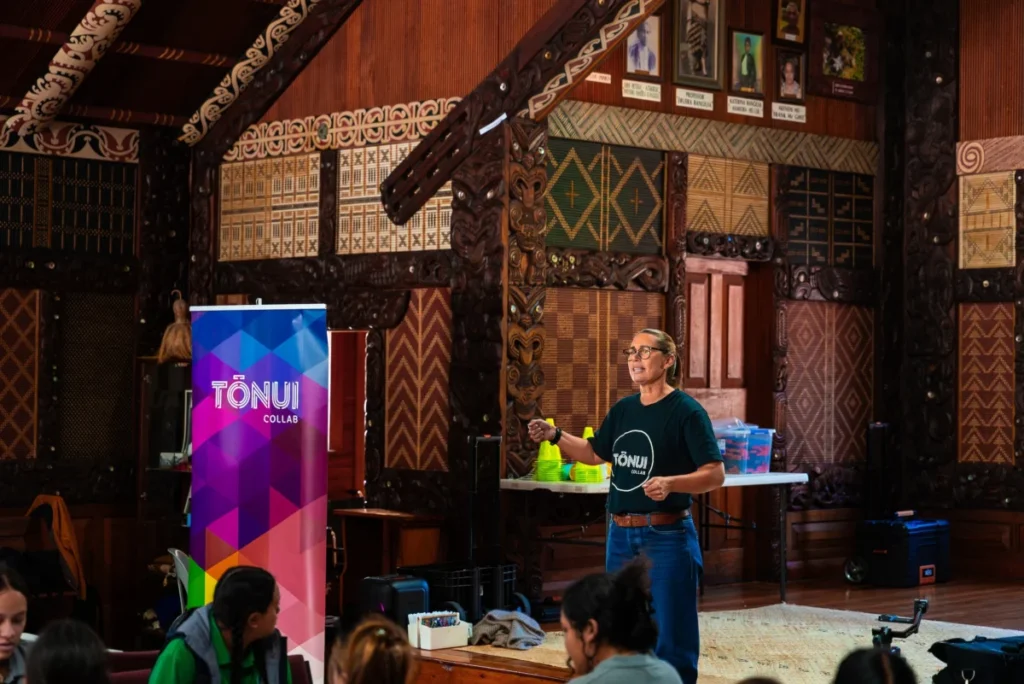
In Aotearoa New Zealand, the programme takes on a distinct cultural and social dimension through a partnership with the Tōnui Collab Charitable Trust. As a Māori-led organization, Tōnui Collab is dedicated to creating innovative STEM (Science, Technology, Engineering, and Mathematics) opportunities that resonate with indigenous perspectives and local values. The expansion into New Zealand is not merely a transfer of resources but a process of "contextualization" to ensure the curriculum is meaningful to the local population.
Shanon O’Connor, Director of Tōnui Collab, highlighted that this initiative—or kaupapa—is fundamentally about fostering digital equity. O’Connor stated that the programme is designed not just for "tech enthusiasts" but for all rangatahi (youth) to ensure they have the tools to navigate a technology-shaped world. A significant portion of the New Zealand rollout will focus on tikanga (customs and ethics) and kōrero (discussion) regarding data bias and how it specifically impacts Māori communities. By addressing the "digital chasm" rather than just the "digital divide," the partnership aims to ensure that Māori voices and responsibilities are central to the conversation about AI engagement.
Chronology of the Experience AI Global Rollout
The expansion into Oceania is the result of several years of developmental milestones:
- 2022-2023: The Raspberry Pi Foundation and Google DeepMind begin the co-development of Experience AI, responding to the sudden surge in public-facing generative AI tools.
- Late 2023: The programme officially launches, offering free resources to teachers globally. Initial pilot programs in the UK and Europe show high engagement levels.
- 2024: The network of global partners expands to include organizations in Africa, Asia, and the Americas, leading to the training of tens of thousands of educators.
- Early 2025: Experience AI receives the UNESCO King Hamad Bin Isa Al-Khalifa Prize, solidifying its status as a premier global educational initiative.
- Mid-2025: Google.org commits $1.2 million for the specific expansion into Australia and Aotearoa New Zealand, leading to the current partnership announcements with CSER and Tōnui Collab.
- 2025-2028: The implementation phase, during which 5,000 educators will be trained across the two nations to reach the 150,000-student target.
Supporting Data and the Regional AI Landscape
The investment comes at a time when both Australia and New Zealand are grappling with the integration of AI in public sectors. According to recent industry reports, AI is expected to contribute trillions to the global economy by 2030, but a significant "skills gap" remains a primary barrier to realizing this potential.
In Australia, a 2023 report by the CSIRO’s Data61 suggested that the nation will need an additional 161,000 specialized technology workers by 2030. Furthermore, the Australian Government’s "Australian Framework for Generative AI in Schools," released in late 2023, underscores the necessity of ethical and safe AI use in educational settings. The Raspberry Pi Foundation’s initiative directly supports these national priorities by providing the practical resources needed to implement these frameworks.
In New Zealand, the Digital Technologies and Hangarau Matihiko curriculum already emphasizes the importance of understanding how digital systems work. However, specific AI training for teachers has remained inconsistent. The $1.2 million funding aims to standardize this training, ensuring that rural and indigenous communities are not left behind as urban centers rapidly adopt new technologies.
Ethical Frameworks and Broader Implications
One of the standout features of the Experience AI programme is its heavy emphasis on ethics. Rather than focusing solely on the mechanics of coding, the curriculum asks students to consider:
- Data Bias: How historical prejudices can be baked into algorithms, leading to unfair outcomes in hiring, policing, or social services.
- Transparency: The "black box" nature of AI and the importance of being able to explain how a machine reached a specific decision.
- Environmental Impact: The massive energy consumption required to train large language models.
- Social Responsibility: The role of the developer and the user in ensuring technology serves the public good.
This holistic approach is intended to produce "AI-literate citizens" who can participate in democratic debates about the regulation and governance of technology. As AI continues to influence how information is accessed and how problems are solved, the ability to think critically about these systems becomes a fundamental civic skill.
Looking Toward 2028
The Raspberry Pi Foundation’s expansion into Australia and Aotearoa New Zealand represents a proactive response to one of the most significant technological shifts in human history. By focusing on the "train-the-trainer" model—educating teachers who then educate thousands of students—the programme ensures a sustainable and scalable impact.
With the continued support of Google.org and the expertise of local partners like the University of Adelaide and Tōnui Collab, the Experience AI programme is set to become a cornerstone of the regional educational strategy. The initiative not only promises to bridge the digital divide but also to empower young people in Oceania to become leaders and innovators in the global AI landscape, ensuring that the technology of the future is built on a foundation of equity, ethics, and human-centric design.