Photographers at NASA’s Johnson Space Center in Houston are more than just image-makers; they are the visual chroniclers of humanity’s audacious journey into the cosmos. Their lenses have captured some of the most defining moments in human spaceflight, preserving a legacy of exploration that spans decades and ignites aspirations for future generations. From the rigorous astronaut training and intricate engineering tests to the high-stakes drama of mission control and the triumphant celebrations of groundbreaking achievements, these artists and technicians are instrumental in documenting not only the technical marvels of space travel but also the human spirit and collaborative endeavors that make it all possible. This article delves into the experiences and perspectives of these dedicated individuals, exploring the stories behind the iconic images that have shaped NASA’s narrative and continue to define its ongoing quest to push the boundaries of human knowledge and presence beyond Earth.
A Legacy Etched in Light: The Photographers of Johnson Space Center
For over half a century, NASA’s human spaceflight program has been inextricably linked to visual storytelling. The photographers stationed at the Johnson Space Center are at the forefront of this endeavor, tasked with translating complex scientific and engineering feats, intense human dedication, and moments of profound discovery into compelling imagery. Their work serves multiple critical functions: documenting progress for historical archives, informing the public about NASA’s achievements, inspiring future scientists and engineers, and fostering a sense of national pride and global unity around the shared pursuit of space exploration. The individuals highlighted here represent a continuous thread of visual documentation, each bringing their unique skills, perspectives, and passion to the mission of capturing the essence of human spaceflight.
Robert Markowitz: Three Decades of Documenting Space Exploration’s Evolution
For over three decades, NASA photographer Robert Markowitz has been a constant presence, meticulously documenting the individuals and pivotal milestones that have shaped NASA’s human spaceflight program. His distinguished career has traversed the entirety of the Space Shuttle era, a significant portion of the 25 years of continuous human presence aboard the International Space Station (ISS), and the nascent stages of the Artemis program, which aims to return humans to the Moon. Markowitz’s deep immersion in these historic periods provides a unique vantage point on the evolution of space exploration.
"My favorite part of this job has always come down to the range of assignments we take on and the people I get to work with every day," Markowitz shared. This sentiment underscores the dynamic and human-centric nature of his work. The sheer variety of tasks, from capturing the intimate moments of astronaut preparation to documenting large-scale engineering marvels, ensures that no two days are the same.
A particularly poignant highlight of Markowitz’s early career involved his role as the behind-the-scenes still photographer for nearly every KC-135 zero-gravity flight during the filming of the iconic film "Apollo 13." These parabolic flights, designed to simulate weightlessness, were crucial for filming the movie’s space sequences. "Looking back as a 25-year-old photographer at Johnson, I don’t think I fully appreciated how unique an opportunity it was to be there documenting those moments," he reflected. This experience, while perhaps not fully grasped at the time, represents a significant intersection of cinematic storytelling and actual spaceflight simulation, placing him at the heart of a project that brought the realities of space missions to a global audience.
Markowitz attributes his professional growth not only to technical skill development but also to his evolution as a communicator. The demands of his role, whether photographing dozens of individual portraits in a single day or orchestrating a complex 300-person group photo, have continuously honed his ability to adapt, collaborate effectively, and forge genuine connections with a diverse array of individuals. This interpersonal skill is paramount in an environment where the subjects are often highly trained professionals operating under immense pressure.
"This work has shaped not just my career, but my life," Markowitz stated with profound sincerity. "Being part of a team that captures and preserves the story of human spaceflight continues to be one of the great honors of my time at Johnson." His words encapsulate the profound impact of dedicating one’s professional life to documenting endeavors that inspire awe and push the boundaries of human achievement. His images are not just records; they are testaments to human ingenuity, perseverance, and the enduring dream of exploring the unknown.
Bill Stafford: The Art and Science of Capturing Space’s Essence
NASA photographer Bill Stafford’s journey to the Johnson Space Center began serendipitously during his senior year of college. A friend, then completing a photography internship at the center, alerted him to an opening on the photography team. Possessing a long-standing fascination with science and technology, Stafford recognized this opportunity as a unique confluence of his interests, offering a chance to combine his photographic skills with an extraordinary environment dedicated to advancing humanity’s reach into space.
Stafford approaches each assignment with a dual perspective: viewing it as both a technical challenge and a profound storytelling opportunity. He navigates the inherent constraints of working in environments with challenging lighting, tight timing, and limited access by employing a sophisticated understanding of composition and visual psychology. His goal is to guide the viewer’s eye through the image, conveying the narrative and emotional weight of the subject.
"My favorite part of the job is the problem-solving that comes with it," Stafford explained. This highlights the analytical and creative thinking required to overcome the logistical and environmental hurdles inherent in documenting space missions and their support systems.
Working at Johnson has significantly sharpened these instincts as he photographs everything from intricate spacecraft and critical hardware to the astronauts themselves and the vast network of personnel behind NASA’s human spaceflight endeavors. The subjects he captures often carry immense historical significance and symbolic weight, and Stafford strives to ensure his photographs reflect this gravity.
"So many of the subjects I photograph carry weight and history that I want the image to reflect," he stated. This deep respect for the subject matter drives his commitment to producing images that are not only technically proficient but also emotionally resonant and historically accurate. His work contributes to the collective memory of space exploration, ensuring that the achievements and the spirit of innovation are vividly preserved for future generations.
James Blair: From Photojournalism to Lunar Ambitions
NASA photographer James Blair’s career trajectory began in the dynamic world of photojournalism, with experience ranging from newspapers across the country to serving as a photographer and photo editor for a publication in Ecuador. This global perspective and his foundational skills in visual storytelling have taken him around the world, a path that has continued at Johnson. His assignments at the center are diverse, encompassing the demanding astronaut training regimens and even geology field training in remote locations like Iceland, which often simulates extraterrestrial environments.
"Since I was very young, I have always been fascinated by spaceflight and the technology it takes to reach beyond Earth’s atmosphere," Blair confessed, revealing the lifelong passion that fuels his current role. This innate curiosity about the cosmos is a common thread among many in the space exploration field.
At Johnson, Blair seamlessly integrates his extensive photojournalism background with his lifelong fascination for space. He dedicates himself to documenting the individuals and the cutting-edge technology that are actively shaping NASA’s next era of exploration. This includes the development of systems designed to facilitate humanity’s return to the Moon and eventual journeys to Mars.
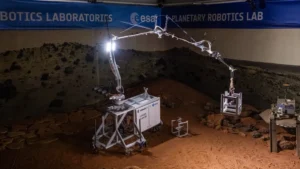
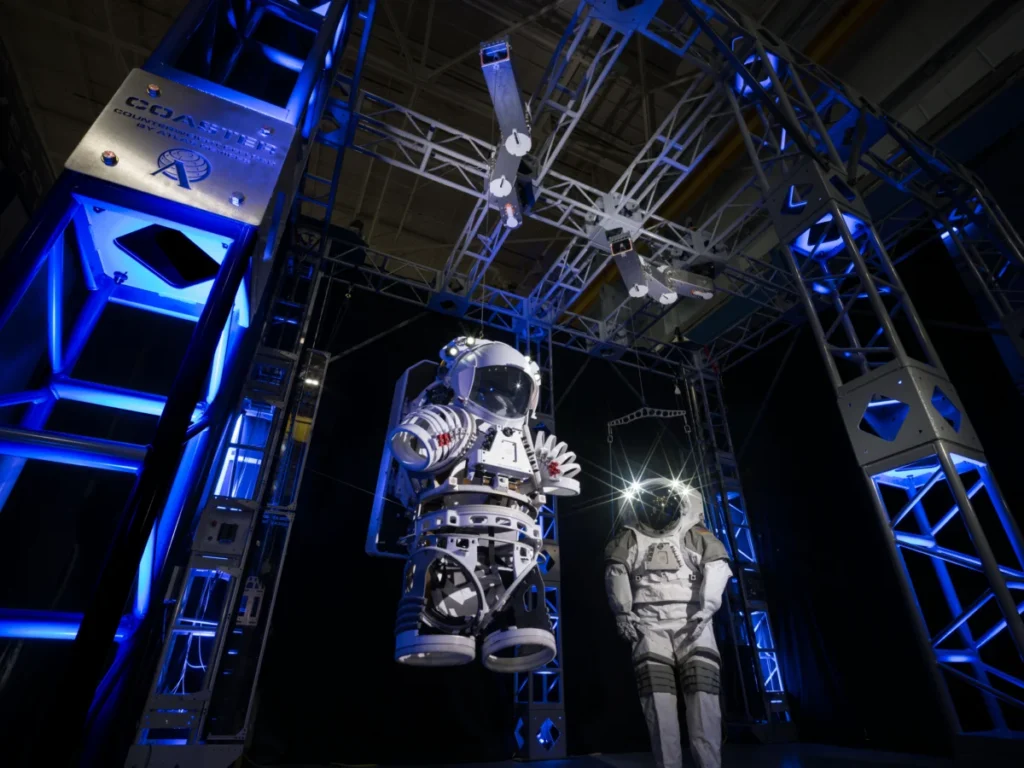
"I enjoy documenting the new hardware that is being developed to return us to the Moon," he elaborated. "From spacesuits to rovers and potential lunar habitats, I get to show the world what NASA has in store for the future of human spaceflight." His work provides a tangible glimpse into the future, transforming abstract concepts and blueprints into compelling visual realities for the public. Blair’s photographs serve as a vital bridge between the intricate scientific and engineering efforts at NASA and the broader global audience eager to witness these advancements.
Helen Arase Vargas: Documenting History with Professionalism and Public Trust
NASA photographer Helen Arase Vargas’s professional journey began in photojournalism and reporting in Southern California, a foundation that instilled in her a strong sense of journalistic ethics and a commitment to public service. Her career path then led her to Boeing’s scientific photography team in El Segundo, where her experience photographing aerospace projects ignited an unexpected passion that eventually drew her to the Johnson Space Center.
"The best part of the job is my coworkers; cheesy, but there is so much to learn from everyone," Arase Vargas said, highlighting the collaborative and intellectually stimulating environment at Johnson. "Our core team has so much knowledge. They are all quick to offer help and are great humans." This emphasis on teamwork and shared expertise is crucial in a field that demands constant learning and adaptation.
Arase Vargas believes that much of the work undertaken at Johnson directly reflects the journalism ethics she learned early in her career, fulfilling her inherent desire to serve the public interest by providing accurate and compelling visual accounts of significant human endeavors. The sheer variety and volume of her assignments have also been instrumental in her professional development, fostering greater comfort in diverse working environments while continually refining her craft.
For Arase Vargas, documenting a pivotal moment like the Artemis II crew’s return to Ellington Field in Houston carried a heightened sense of responsibility. This mission, marking a significant step in the program to return humans to the lunar surface, was met with immense public interest. "The world is watching, and all that imagery must be rushed out by the lab," she explained. "Your photo could be the one that ends up on every news site, and you don’t want to miss capturing the joy and celebration the moment deserves." This quote underscores the pressure and the profound impact of her role, where a single image can encapsulate the culmination of years of effort and the hopes of millions. Her work ensures that these historic moments are not only recorded but also imbued with the emotion and significance they command.
Luna Posadas Nava: Inspiring Future Exploration Through Representation
NASA photographer Luna Posadas Nava’s path to Johnson is a testament to the diverse routes that lead to careers in space exploration. Her background spans emerging technologies, optics, and imaging systems, as well as extensive experience photographing artists across the East Coast. This rich tapestry of experience has fueled a desire to visualize and expand the perceived boundaries of what is possible, a philosophy that resonates deeply with NASA’s mission.
Joining Johnson shortly before the launch of NASA’s Artemis II mission, one of Posadas Nava’s formative experiences involved contributing to the global dissemination of "Moon Joy." She documented the Science Evaluation Room, a critical hub where scientists collaboratively conducted real-time lunar science observations during the mission’s lunar flyby. Witnessing this intense period of scientific engagement was profoundly inspiring for her.
"It was inspiring to witness the team at work and especially meaningful to see so many women contributing to the mission’s science," Posadas Nava remarked. This observation speaks to the evolving landscape of STEM fields and the importance of diverse representation in scientific and technical endeavors.
The positive response from women in her personal life and observed online reinforced for Posadas Nava the potent power of representation through photography. She believes that seeing oneself reflected in narratives can unlock new possibilities and aspirations. "When we see ourselves in stories, we imagine new futures," she stated. "I hope my work helps more people see themselves in the story of exploration, because what we see shapes what we believe is possible." Her perspective highlights the profound societal impact of NASA’s visual communications, aiming to broaden participation in space exploration by showcasing its diverse and inclusive present and future.
David DeHoyos: A Lifelong Journey from Houston to the Stars
Growing up in Houston during the iconic Apollo era, NASA photographer David DeHoyos harbored an early and enduring ambition to be part of the space industry. His initial spark of interest in photography was ignited by his mother’s Kodak Instamatic camera, a humble beginning that blossomed through his school years and a decade of dedicated work in photo labs. This journey culminated in 1991 when his path led him to Johnson’s photo lab, eventually transitioning him behind the camera as a NASA photographer.
After more than three decades at Johnson, DeHoyos emphasizes that connecting with people remains one of the most rewarding aspects of his job. He relishes the opportunity to learn about the individuals whose stories he documents, to share his extensive knowledge of Johnson Space Center with visitors and new employees, and, perhaps most importantly, to inspire the next generation of explorers and innovators.
"I keep an assortment of NASA goodies in my camera bag, and the ultimate joy I get is giving a pin or sticker to a child and seeing their little faces just light up," DeHoyos shared, illustrating his commitment to fostering enthusiasm for space exploration. "It just warms my heart to encourage a youngster to work hard and pursue their dreams because that’s how I got here." This personal anecdote underscores the cyclical nature of inspiration within NASA – those who were inspired by the space program are now inspiring others to follow similar paths.
For DeHoyos, photography is also a profound method of preserving moments that gain significance and resonance over time. The act of capturing a scene is intertwined with the challenge of technical mastery. "I love the process of figuring out technical details to create an image that will make someone say, ‘Wow, cool shot, how did you do that?’" he explained. This dedication to technical excellence, combined with a deep understanding of visual storytelling, ensures that his photographs not only document history but also captivate and educate viewers, fostering a lasting appreciation for the extraordinary achievements of human spaceflight. His work is a testament to the enduring power of visual communication in inspiring wonder and driving progress.