Designers, engineers, medical professionals, and hobbyists alike increasingly rely on the transformative power of 3D printing for rapid prototyping and the creation of functional objects, ranging from intricate movie props and bespoke medical devices to architectural models and personalized consumer goods. A critical, yet historically underserved, aspect of this workflow is the accuracy of print previews. Users need to confidently ascertain that a fabricated object will not only function as intended but also possess the desired visual characteristics. However, conventional 3D printing software often prioritizes functional previews, leaving users with a disconnect between the digital model and the final printed product in terms of color, texture, and shading. This discrepancy frequently leads to costly and time-consuming reprints, resulting in significant waste of valuable materials and human effort.
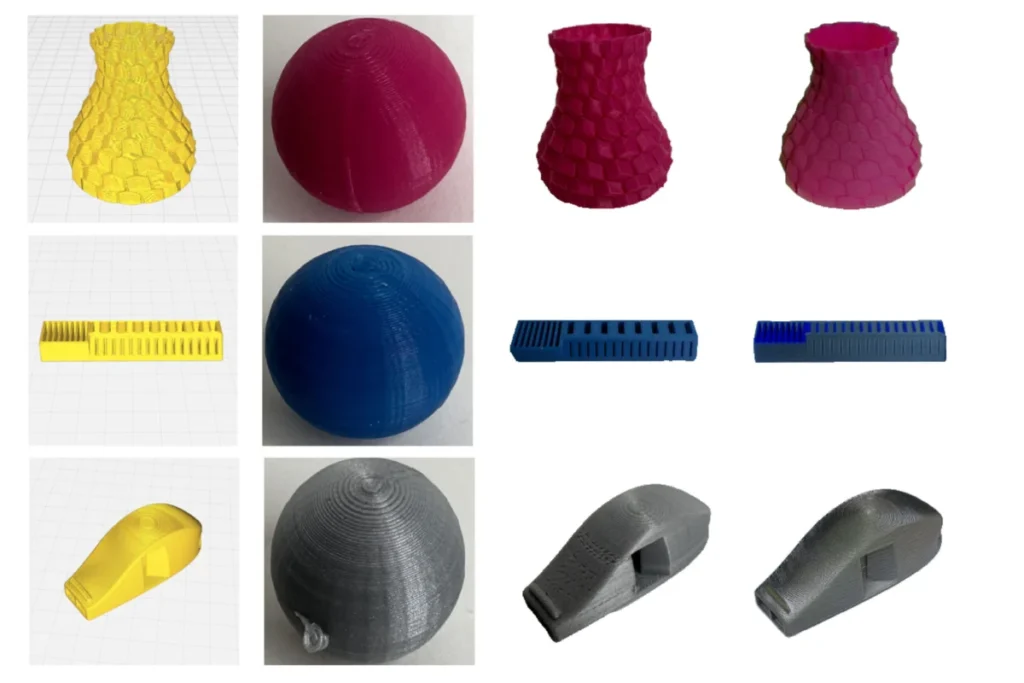
Addressing this persistent challenge, a collaborative team of researchers from the Massachusetts Institute of Technology (MIT) and other leading institutions has developed an intuitive and powerful preview tool, christened VisiPrint. This innovative system places a paramount emphasis on the aesthetic representation of 3D-printed objects, aiming to bridge the gap between digital design and tangible reality with unprecedented accuracy. VisiPrint empowers users to upload a simple screenshot of their object from their existing 3D-printing software, coupled with a single image of the intended print material. From these readily available inputs, the artificial intelligence-powered system autonomously generates a highly realistic rendering, forecasting how the fabricated object is likely to appear.
The VisiPrint system is engineered for broad compatibility, designed to seamlessly integrate with a diverse array of 3D-printing software and to accommodate virtually any material example. Its sophisticated algorithms delve beyond mere color matching, meticulously considering crucial aesthetic attributes such as glossiness, translucency, and the subtle nuances introduced by the fabrication process itself. These factors collectively influence the final appearance of a 3D-printed object, and VisiPrint’s ability to account for them marks a significant advancement in preview technology.
Addressing a Critical Gap in 3D Printing Workflows
The implications of VisiPrint’s aesthetics-first approach are far-reaching, with particularly promising applications in specialized fields. In dentistry, for instance, clinicians could leverage VisiPrint to ensure that temporary crowns and bridges precisely match the visual characteristics of a patient’s natural teeth, enhancing both patient satisfaction and aesthetic outcomes. Similarly, in the realm of architecture, designers can utilize the tool to gain a more accurate assessment of the visual impact of their models before committing to physical prints, thereby refining their designs and communicating their vision more effectively to clients and stakeholders.
Maxine Perroni-Scharf, an electrical engineering and computer science (EECS) graduate student and the lead author of the research paper detailing VisiPrint, underscored the environmental and economic rationale behind the project. "3D printing can be a very wasteful process," Perroni-Scharf stated. "Some studies estimate that as much as a third of the material used goes straight to the landfill, often from prototypes the user ends up discarding. To make 3D printing more sustainable, we want to reduce the number of tries it takes to get the prototype you want. The user shouldn’t have to try out every printing material they have before they settle on a design." This sentiment highlights the dual benefit of VisiPrint: improving user experience and contributing to a more sustainable manufacturing ecosystem.
The research team behind VisiPrint comprises a distinguished group of academics. Alongside Perroni-Scharf, the paper’s authors include Faraz Faruqi, a fellow EECS graduate student; Raul Hernandez, an MIT undergraduate; SooYeon Ahn, a graduate student at the Gwangju Institute of Science and Technology; Szymon Rusinkiewicz, a professor of computer science at Princeton University; William Freeman, the Thomas and Gerd Perkins Professor of EECS at MIT and a member of the Computer Science and Artificial Intelligence Laboratory (CSAIL); and Stefanie Mueller, an associate professor of EECS and Mechanical Engineering at MIT, and a member of CSAIL, who served as the senior author. This collaborative effort is set to be formally presented at the prestigious ACM CHI Conference on Human Factors in Computing Systems, a key venue for advancements in human-computer interaction.
The Technical Foundation: Fused Deposition Modeling and AI Integration
The VisiPrint system’s development focused on Fused Deposition Modeling (FDM), the most prevalent type of 3D printing technology. FDM operates by melting a thermoplastic filament and extruding it through a fine nozzle to build an object layer by layer. The inherent nature of this process introduces complexities in achieving accurate aesthetic predictions. The melting and extrusion of the material can alter its inherent appearance, while the height of each deposited layer and the specific path traced by the nozzle can subtly influence the surface finish and overall visual texture of the final object.
To surmount these challenges, VisiPrint employs a sophisticated architecture comprising two interconnected Artificial Intelligence models. The system’s preview generation is initiated by two fundamental inputs: a digital design screenshot from the user’s "slicer" software – the program that translates a 3D model into layer-by-layer instructions for the printer – and an image of the print material. This material image can be sourced from online repositories or captured from a physical sample.
Upon receiving these inputs, a powerful computer vision model meticulously extracts key features from the material sample that are critical to its visual properties. These extracted features are then fed into a generative AI model. This second model is responsible for computing the object’s geometry and internal structure, crucially incorporating the "slicing" pattern that dictates how the nozzle will deposit material for each layer.
A pivotal innovation within VisiPrint lies in its specialized "conditioning" method. This technique involves the careful fine-tuning of the AI model’s internal parameters to guide its output. By applying this conditioning, the model is compelled to adhere strictly to the planned slicing pattern and to respect the physical constraints inherent in the 3D-printing process. This meticulous control ensures that the generated preview accurately reflects the layer-by-layer fabrication method.
The researchers’ conditioning approach utilizes a depth map, which preserves the object’s three-dimensional shape and shading, in conjunction with an edge map. This edge map is designed to highlight the internal contours and structural boundaries of the object, providing crucial geometric information. "If you don’t have the right balance of these two things, you could end up with bad geometry or an incorrect slicing pattern," Perroni-Scharf explained. "We had to be careful to combine them in the right way." This delicate balancing act is central to VisiPrint’s ability to produce visually faithful and structurally accurate previews.
A User-Centric Design for Enhanced Accessibility
Beyond its advanced AI capabilities, the VisiPrint team prioritized creating an accessible and user-friendly interface. This intuitive platform allows users to effortlessly upload the necessary images and evaluate the generated previews. For more experienced users and advanced makers, the VisiPrint interface offers the flexibility to adjust multiple settings, enabling finer control over aesthetic outcomes, such as modulating the influence of specific colors on the final appearance.
It is important to note that VisiPrint’s aesthetic preview is designed to complement, rather than replace, the functional previews typically provided by slicer software. VisiPrint does not estimate critical functional aspects like printability, mechanical feasibility, or the likelihood of print failure. Its focus remains squarely on visual fidelity.
To rigorously assess the effectiveness of VisiPrint, the researchers conducted a comprehensive user study. Participants were tasked with comparing VisiPrint’s previews against those generated by other available methods. The results were overwhelmingly positive: nearly all participants reported that VisiPrint provided a superior overall appearance and a more accurate textural representation when compared to the printed objects. Furthermore, the VisiPrint preview generation process proved remarkably efficient, averaging approximately one minute per preview. This performance was more than twice as fast as any competing method evaluated in the study.
"VisiPrint really shined when compared to other AI interfaces," Perroni-Scharf remarked. "If you give a more general AI model the same screenshots, it might randomly change the shape or use the wrong slicing pattern because it had no direct conditioning." This direct comparison highlights the advantage of VisiPrint’s specialized, conditioned approach for the specific task of 3D printing preview generation.
Future Directions and Broader Impact
Looking ahead, the research team has identified several areas for future development. They aim to address potential artifacts that can arise when previews involve extremely fine details. Additionally, they plan to incorporate features that will enable users to optimize aspects of the printing process beyond just the material color, potentially extending to surface finishes and other visual attributes.
Perroni-Scharf reiterated the broader significance of their work in the context of sustainable manufacturing. "It is important to think about the way that we fabricate objects. We need to continue striving to develop methods that reduce waste. To that end, this marriage of AI with the physical making process is an exciting area of future work." This vision aligns with a growing global imperative to develop more environmentally responsible and economically efficient production methods.
Patrick Baudisch, a professor of computer science at the Hasso Plattner Institute who was not involved in the VisiPrint research, offered a compelling perspective on the technology’s potential impact. " ‘What you see is what you get’ has been the main thing that made desktop publishing ‘happen’ in the 1980s, as it allowed users to get what they wanted at first try," Baudisch observed. "It is time to get WYSIWYG for 3D printing as well. VisiPrint is a great step in this direction." This analogy powerfully captures the transformative potential of VisiPrint in bringing a similar level of predictability and user confidence to the world of 3D printing.
The research underpinning VisiPrint received crucial support from various funding bodies, including an MIT Morningside Academy for Design Fellowship and an MIT MathWorks Fellowship, underscoring the institutional recognition of its innovative nature and potential impact. As 3D printing continues its rapid evolution, tools like VisiPrint are poised to play a pivotal role in making the technology more accessible, efficient, and sustainable for a wider range of users and applications. The ability to accurately preview the aesthetic outcome before committing to material and time represents a significant leap forward, promising to reduce waste, enhance design quality, and ultimately democratize the creation of physical objects.