The Evolution of the Maker Movement in Germany
The Maker Faire brand, which originated in the United States in 2006, found a particularly fertile ground in Hannover, a city globally recognized as a hub for industrial trade fairs. Since its German debut over a decade ago, the event has mirrored the rapid advancement of consumer-accessible technology. What began with simple soldering workshops and basic 3D printing demonstrations has transformed into a sophisticated showcase of artificial intelligence (AI), advanced robotics, and complex circular economy solutions.
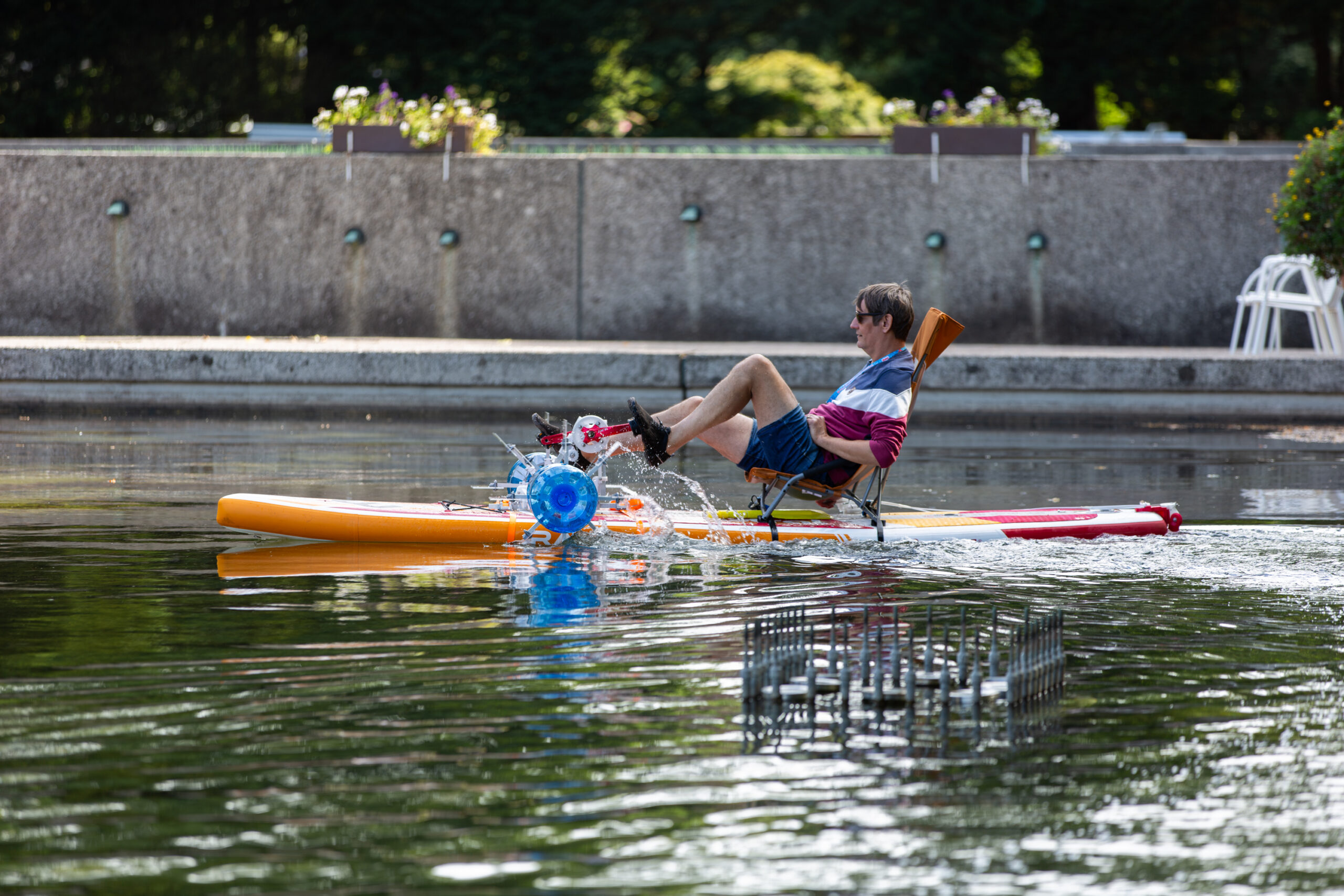
Daniel Rohlfing, Head of Events and Sales at Maker Faire Deutschland, emphasizes that the festival’s success lies in its ability to humanize technology. "Maker Faire thrives on people who turn unusual ideas into impressive projects," Rohlfing noted during the event’s preparation. "Whether it’s art, robotics, or high tech—here, technology becomes an experience, and everyone can take part." This philosophy of "participatory technology" is what separates the Maker Faire from traditional trade exhibitions, allowing visitors to engage directly with the creators and the machines they build.
Artistic Engineering: Large-Scale Installations
The 2026 iteration features several centerpiece installations that blur the line between industrial design and fine art. Among the most anticipated is "BuzzBird," a mechanical avian sculpture with a five-meter wingspan. Designed by Berlin-based artist and product designer Eitan Rieger, the project is a study in biomimicry and human-machine interaction. The sculpture utilizes complex linkages to replicate the flapping motion of a bird, responding to the movements of spectators in real-time.

Complementing the aerial spectacle is "FlowerPower," a monumental steel installation by New Zealander Bibi Jordan. Constructed entirely from salvaged car hoods, the project serves as a commentary on industrial waste and the potential for upcycling. The sculpture is equipped with sophisticated image-processing cameras and hydraulic systems. As crowds gather, the flower "senses" the activity level and gradually unfurls its metallic petals. The performance culminates in a dramatic fire finale, where synchronized flames erupt from the center of the bloom, showcasing a seamless blend of computer vision, mechanical engineering, and pyrotechnics.
Electrical Engineering and Synchronized Performance
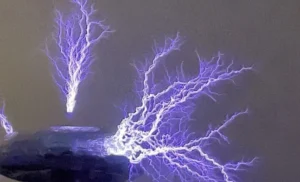
For many attendees, the "Voltronics" show represents the pinnacle of electrical engineering as performance art. The display centers on two 2.2-meter-high Tesla coils, which act as high-frequency resonant transformer circuits. These coils generate massive electrical discharges, producing lightning bolts that reach lengths of up to three meters.

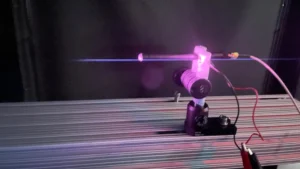
Unlike traditional Tesla coil demonstrations, Voltronics utilizes solid-state technology to modulate the frequency of the sparks, effectively turning the lightning bolts into plasma speakers. This allows the electrical discharges to "play" music by vibrating the air at specific audible frequencies. For the 2026 event, the performance will be further enhanced by laser animations synchronized to the electrical pulses, providing a multi-sensory exploration of electromagnetism.
Advancements in Robotics and Automation
The 2026 exhibitor list includes over 200 participants, with approximately one-third appearing in Hannover for the first time. This influx of new talent is particularly visible in the robotics sector. One standout project is "C2H6O," a precision cocktail-mixing robot. Named after the chemical formula for ethanol, the machine utilizes an ESP32 microcontroller and 3D-printed components to manage 13 different liquid ingredients.

The developer of C2H6O is scheduled to deliver a technical lecture titled "From Cocktail to Prototype: Concept Development of a Cocktail Machine," which will detail the iterative design process from initial CAD sketches to the final functional prototype. This focus on the "how-to" is a staple of the Maker Faire, providing aspiring engineers with a roadmap for their own projects.
In the realm of entertainment technology, "Flipper to go" bridges the gap between tactile mechanical gaming and modern digital immersion. This project is a portable virtual reality (VR) pinball machine. By decoupling the pinball experience from the traditional, heavy wooden cabinet, the creators have developed a compact system that uses VR headsets to provide spatial depth while maintaining the haptic feedback of physical flippers and plungers.

Sustainability and the Circular Economy
In alignment with Germany’s national focus on environmental sustainability, Maker Faire Hannover 2026 places a heavy emphasis on "Green Making." This is exemplified by projects that transform domestic waste into functional items or educational tools. Daniel Bachfeld, editor of Make: magazine, will demonstrate a pneumatic machine capable of recycling plastic bottle caps into "Makeys"—the stylized robot mascots of the Maker movement.
Furthermore, the event will showcase solutions for 3D printing waste. As additive manufacturing becomes more common in households, the volume of failed prints and support material waste has increased. New systems on display will demonstrate how this thermoplastic waste can be shredded, melted, and extruded back into usable filament, closing the loop of the manufacturing process.

Maritime Technology and Scientific Education
The 2026 fair also dives into specialized fields such as marine technology. A notable project involves the creation of low-cost hydrophones—underwater microphones—using piezoelectric speakers salvaged from greeting cards. By reversing the transducer’s function, makers can record underwater acoustic environments for less than €10. This project is accompanied by open-source documentation and transistor circuit calculations, aimed at democratizing oceanographic research.
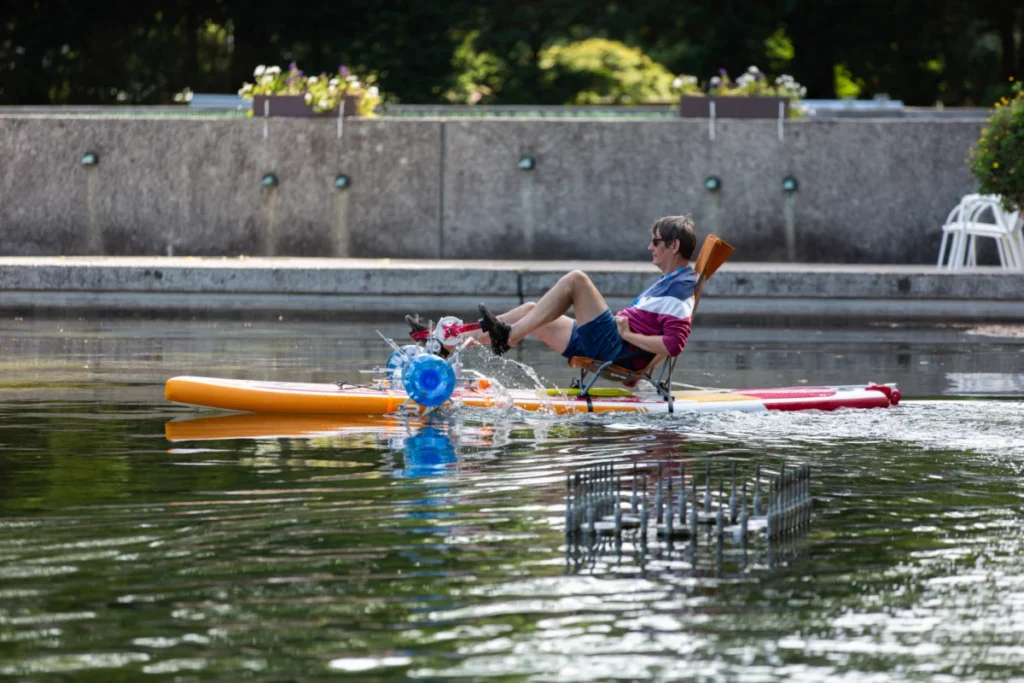
For those interested in civil engineering and climate change, a portable wave pool simulator will be on display. This educational tool uses a 3D-printed wave generator to test different dike structures and coastal protection concepts. Visitors can use Lego bricks to design their own breakwaters and planting schemes, observing in real-time how different configurations mitigate erosion and wave impact.

The Intersection of Music and Data Visualization
Tetsuji Katsuda’s "Music Train" offers a unique perspective on media art by visualizing musical compositions through kinetic motion. The installation consists of 12 model train tracks, each corresponding to a note on the chromatic scale. When a user plays a connected electronic piano, the trains move forward based on the frequency and duration of the notes played.
This system allows for a physical "data map" of a song. For instance, a piece in C major will see the "Do" (C) and "Sol" (G) trains advance further than others. This visualization provides a tangible way for children and non-musicians to understand the underlying structure of musical theory and composition.

Educational Impact and the MINT Initiative
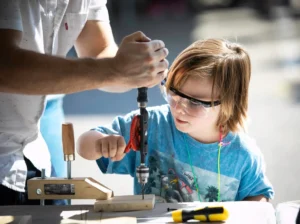
Maker Faire Hannover serves as a vital component of the MINT (Mathematics, Informatics, Natural Sciences, and Technology) initiative in Germany. By providing a low-threshold entry point into complex subjects, the event inspires the next generation of engineers and scientists.
A key highlight of this educational outreach is the "Maker Escape Advent Calendar," developed in collaboration with the kit manufacturer Franzis. Moving away from traditional sweets, this calendar provides electronic components behind each door, culminating in a fully assembled device by Christmas Eve. At the Hannover event, the Heise Make team will unveil the 2026 concept, which includes free daily 3D-printable model files during the month of December.

Conclusion and Broader Implications
The 13th Maker Faire Hannover is more than a weekend festival; it is a reflection of the evolving relationship between society and technology. By fostering an environment where "failing forward" is encouraged and trade secrets are shared openly, the event strengthens the global Maker community’s role in local innovation.
As industrial manufacturing trends toward mass customization and decentralized production, the skills showcased at the Hannover Congress Centrum—rapid prototyping, coding, and systems integration—become increasingly relevant to the broader economy. The event stands as a testament to the fact that when technology is made accessible, it ceases to be a black box and becomes a tool for creative expression and problem-solving. Whether through the lens of a fire-breathing steel flower or a DIY hydrophone, Maker Faire Hannover continues to prove that the most significant innovations often begin with a simple question: "What happens if I try this?"