CAMBRIDGE, MA – The potential for a single broken motor to cripple a busy factory floor, leading to extensive downtime and the costly logistical challenge of sourcing replacement parts from distant distributors, is a persistent vulnerability in modern manufacturing. Traditionally, the creation of complex electric machines, from the motors that power industrial equipment to intricate components in advanced robotics and medical devices, has been confined to specialized manufacturing hubs, requiring expensive, bespoke machinery and multi-stage, intricate processes. However, a transformative breakthrough from researchers at the Massachusetts Institute of Technology (MIT) is poised to democratize the production of these essential components. A team of MIT scientists has developed a novel multimaterial 3D-printing platform capable of fabricating complete electric machines in a single, integrated printing step, heralding a new era of localized, on-demand manufacturing.
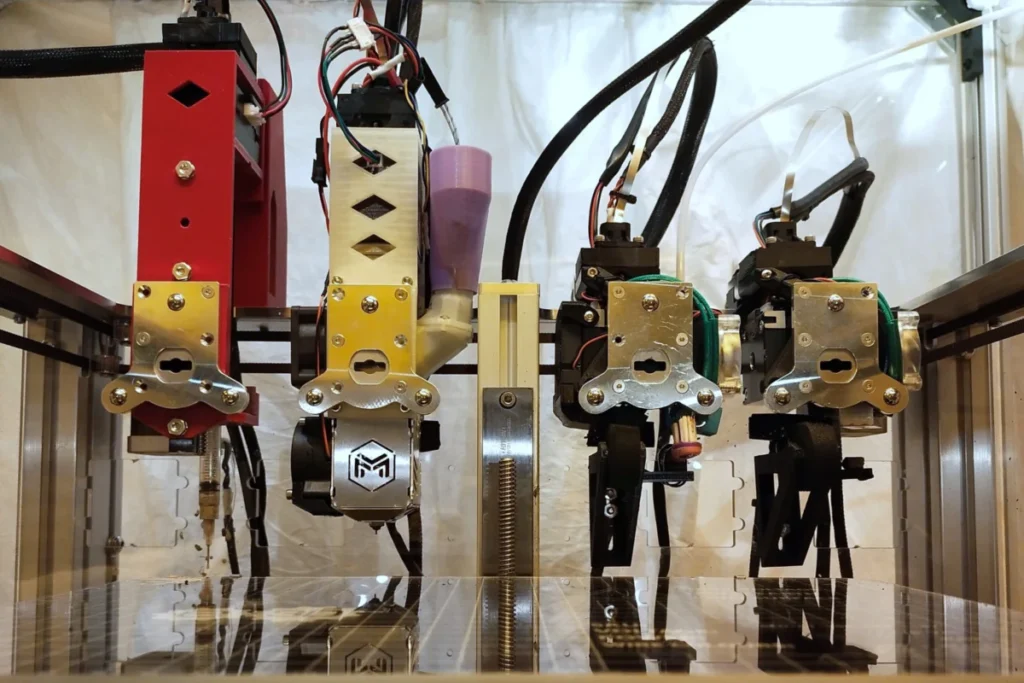
This pioneering system is engineered to process a diverse array of functional materials simultaneously, including critically important electrically conductive and magnetic substances. It employs a sophisticated arrangement of four extrusion tools, each meticulously designed to accommodate various forms of printable feedstock. The printer intelligently cycles through these extruders, depositing material by precisely squeezing it through a nozzle to construct a device layer by meticulous layer. This integrated approach bypasses the need for separate assembly and post-processing steps that have historically characterized the manufacturing of such complex electromechanical systems.
The researchers have already demonstrated the efficacy of their platform by successfully producing a fully 3D-printed electric linear motor within a matter of hours. This intricate device was fabricated using five distinct materials, and remarkably, required only a single post-processing step to achieve full functionality. Crucially, the performance of this novel, 3D-printed motor met or even surpassed that of comparable motors produced through more conventional, labor-intensive fabrication methods that often necessitate additional, time-consuming post-processing.
This advancement carries profound implications for the future of manufacturing. In the long term, this versatile 3D printing platform could empower rapid, on-site fabrication of highly customizable electronic components. Industries ranging from robotics and automotive to aerospace and medical technology stand to benefit significantly, enabling them to produce tailored parts for specific applications with substantially reduced material waste and accelerated development cycles.
"This is a great feat, but it is just the beginning," stated Luis Fernando Velázquez-García, a principal research scientist in MIT’s Microsystems Technology Laboratories (MTL) and senior author of the paper detailing this innovation, published in the journal Virtual and Physical Prototyping. "We have an opportunity to fundamentally change the way things are made by making hardware onsite in one step, rather than relying on a global supply chain. With this demonstration, we’ve shown that this is feasible." Velázquez-García was joined on the research paper by EECS graduate students Jorge Cañada, who served as the lead author, and Zoey Bigelow.
Revolutionizing Material Handling in Extrusion 3D Printing
The foundation of this breakthrough lies in the researchers’ focus on extrusion 3D printing, a well-established technique that builds objects by depositing material through a nozzle. However, the challenge of fabricating an electric machine, which inherently requires a combination of materials with distinct functionalities – such as electrically conductive materials for current flow and hard magnetic materials for generating magnetic fields essential for energy conversion – presented a significant hurdle.
Most existing multimaterial extrusion 3D printing systems are limited to handling only two materials, and typically those in the same physical form, like filament or pellets. To overcome this limitation, the MIT team designed and retrofitted an existing 3D printer with four specialized extruders. Each extruder was engineered to handle a different form of feedstock, allowing for unprecedented material versatility. The design of each extruder was carefully balanced to meet the specific requirements and constraints of the materials they were intended to process. For instance, the electrically conductive material needed to be curable without excessive heat or UV light, as these conditions could degrade the performance of sensitive dielectric materials. Furthermore, the highest-performing conductive materials often come in the form of inks, which require a pressure-based extrusion system – a process with vastly different operational demands compared to standard extruders that melt filament or pellets using heated nozzles.
"There were significant engineering challenges," Velázquez-García elaborated. "We had to figure out how to marry together many different expressions of the same printing method – extrusion – seamlessly into one platform." The researchers addressed these complexities by integrating strategically placed sensors and developing a novel control framework. This advanced system ensures that the platform’s robotic arms can consistently pick up and put down each tool, and that each nozzle moves with exceptional precision and predictability. This meticulous control is paramount to ensuring that each printed layer aligns perfectly, as even minute misalignments can compromise the performance of the final, functional machine.
The Birth of a 3D-Printed Linear Motor
Following the refinement of their advanced printing platform, the researchers embarked on fabricating a linear motor. Unlike rotary motors, which generate rotational motion, linear motors produce motion in a straight line. These are vital components in a wide array of applications, including sophisticated pick-and-place robotics systems, precision optical equipment, and automated baggage handling conveyors.
The fabrication process for the linear motor was remarkably efficient, taking approximately three hours to complete. Post-printing, only a single step was required: magnetizing the hard magnetic materials to activate the motor’s full operational capabilities. The researchers estimate the material costs for producing one of these motors to be a mere 50 cents. In terms of performance, the 3D-printed motor demonstrated the capacity to generate several times more actuation force than a commonly used type of linear engine that relies on complex hydraulic amplification systems. This performance metric underscores the potential for additive manufacturing to produce components that are not only faster and cheaper to make but also superior in functionality.
"Even though we are excited by this engine and its performance, we are equally inspired because this is just an example of so many other things to come that could dramatically change how electronics are manufactured," Velázquez-García emphasized. The team’s vision extends beyond this initial success. Future research aims to integrate the magnetization step directly into the multimaterial extrusion process, enabling a truly one-step fabrication. They also plan to demonstrate the fabrication of fully 3D-printed rotary electrical motors and to augment the platform with additional tools. This expansion would facilitate the monolithic fabrication of even more complex electronic devices, further pushing the boundaries of what is possible with additive manufacturing.
Broader Implications and Future Outlook
The implications of this MIT research extend far beyond the immediate applications of electric motors. The ability to print complex electromechanical devices on demand and with high degrees of customization could fundamentally alter global supply chains. Instead of relying on geographically dispersed factories and lengthy shipping times, businesses could potentially manufacture critical components locally, reducing lead times, minimizing inventory, and enhancing resilience against disruptions. This localized manufacturing model also promises significant environmental benefits through reduced transportation emissions and minimized material waste inherent in traditional subtractive manufacturing processes.
The researchers’ achievement has already garnered attention from the broader scientific and technological community. Gizmodo, in a report by Justin Caffier, highlighted the speed and cost-effectiveness of the new platform, noting that the team "decimated the usual production time for such a device and brought the material costs down to around $0.50." This widespread recognition points to the significant impact this innovation is expected to have across various industries.
The research was supported by grants from Empiriko Corporation and the La Caixa Foundation, underscoring the collaborative and well-funded nature of this advanced research endeavor. As the technology matures, it holds the promise of not only streamlining manufacturing processes but also fostering innovation by making complex hardware more accessible for development and prototyping. The ability to rapidly iterate on designs and produce functional prototypes in-house could accelerate the pace of technological advancement across numerous fields, from consumer electronics to advanced scientific instrumentation. The development of this multimaterial 3D printing platform by MIT researchers represents a pivotal step towards a future where complex, functional devices can be created with unprecedented ease, speed, and efficiency, ushering in a new paradigm for hardware manufacturing.