The rapid expansion of data centers across the United States is placing an unprecedented strain on the national electricity grid, prompting researchers to seek innovative, decentralized power solutions. As these facilities grow in both size and computational intensity, the energy required to power high-performance servers and the massive cooling systems they necessitate has reached a critical inflection point. According to the Electric Power Research Institute (EPRI), data centers could account for as much as 9% of total annual U.S. electricity generation by the year 2030. This represents a significant leap from 2023, where data centers were responsible for approximately 4% of the nation’s total electricity demand. In response to this looming energy crisis, a multi-institutional research team led by the McKelvey School of Engineering at Washington University in St. Louis has unveiled a breakthrough in fuel cell technology that could revolutionize how these "digital factories" are powered.
The research, published on August 6, 2026, in the prestigious journal Nature Nanotechnology, details a new approach to designing low-temperature fuel cell catalysts. Led by Gang Wu, the Elvera and William R. Stuckenberg Professor at Washington University, the team has developed a unique carbon nanostructure that significantly improves the efficiency and durability of platinum-based catalysts. By enabling data centers to generate their own electricity on-site through the conversion of hydrogen and other fuels, this technology offers a viable path toward reducing the burden on the aging American energy grid while supporting the sustainability goals of the tech industry.
The Escalating Energy Demand of the Digital Age
The surge in electricity consumption is largely driven by the explosion of generative artificial intelligence (AI), cloud computing, and the increasing digitalization of the global economy. Modern data centers are no longer just warehouses for servers; they are high-density energy hubs. A single AI-driven search query can consume ten times the electricity of a traditional keyword search, and the hardware required to process these requests generates immense heat.
In regions such as Northern Virginia—often referred to as "Data Center Alley"—the concentration of these facilities has already forced utility companies to reconsider their long-term infrastructure plans. The strain is twofold: first, the sheer volume of power required is outstripping local generation capacity; second, the volatility of the grid makes it difficult for data centers, which require 99.999% uptime, to rely solely on external providers. This environment has created an urgent market for "behind-the-meter" power solutions. Fuel cells, which produce electricity through a chemical reaction rather than combustion, have long been a candidate for this role, but their widespread adoption has been hindered by the high cost and limited lifespan of their internal components.
Overcoming the Platinum Catalyst Paradox
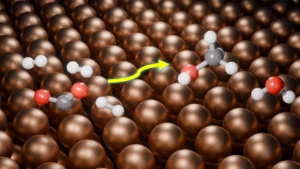
At the heart of a fuel cell is the catalyst, the material responsible for facilitating the reaction between hydrogen and oxygen. For decades, platinum has been the gold standard for these catalysts due to its high catalytic activity. However, platinum is a precious metal with a volatile market price and limited global supply. To make fuel cells commercially viable for massive installations like data centers, researchers have focused on "stretching" small amounts of platinum by breaking the metal down into nanoparticles.
While nanoparticles increase the surface area available for chemical reactions—thereby using less metal to achieve the same power output—they introduce a significant durability problem. During the rigorous operation of a fuel cell, these tiny platinum particles tend to migrate, dissolve, or clump together (a process known as sintering). As the particles grow larger or disappear, the catalyst loses its effectiveness, leading to a steady decline in the fuel cell’s performance.
To combat this, scientists have turned to platinum intermetallic catalysts, where platinum is alloyed with a non-precious metal like cobalt in a highly ordered atomic structure. These intermetallic arrangements are theoretically much more stable and active than random alloys. However, creating these ordered structures typically requires high-temperature annealing. If the temperature is too low, the atoms do not arrange themselves properly; if the temperature is too high, the nanoparticles clump together, destroying the high surface area needed for efficiency.
A Structural Breakthrough: Radial Nanochannels
Gang Wu and his team, which included collaborators from Brookhaven National Laboratory, Lawrence Berkeley National Laboratory, Northeastern University, and the University of Pittsburgh, solved this "tradeoff" by engineering a sophisticated housing for the catalyst. They developed a new carbon support structure consisting of porous, hollow carbon spheres. These spheres are not merely shells; they contain orderly radial nanochannels that act as protective "compartments" for the platinum-cobalt nanoparticles.
"Our strategy is using this new carbon nanostructure to synthesize platinum-cobalt intermetallic nanoparticles that can reduce precious metal content and enhance activity and stability," Wu explained. "Traditionally, there would be a tradeoff between size and stability, but with the ordered carbon nanochannel host, platinum-cobalt nanoparticles can be confined and remain stable at very small particle size even at high temperatures."
The structural design allowed the researchers to heat the catalyst to 1000°C—a temperature previously considered too high for maintaining small particle sizes. At this extreme heat, the platinum and cobalt atoms were able to achieve a "best-in-class" ordered intermetallic structure. Meanwhile, the radial nanochannels prevented the particles from clumping, keeping them smaller than 5 nanometers and evenly distributed throughout the support material.
Performance Data and Long-Term Durability
The results of the laboratory testing were unprecedented. The new catalyst material was subjected to 150,000 severe voltage cycles, a rigorous test designed to simulate years of heavy-duty operation. Most conventional catalysts show significant degradation after 30,000 to 50,000 cycles. However, the Washington University-led team’s catalyst retained 85% of its initial performance after the full 150,000 cycles.
Based on these results, the researchers estimate that the catalyst could provide approximately 25,000 hours of stable operation. For a data center, this longevity is crucial. It reduces the frequency of maintenance and the total cost of ownership, making fuel cells a competitive alternative to diesel backup generators or massive lithium-ion battery arrays.
Furthermore, the architecture of the carbon support offers secondary benefits. The hollow spheres and open nanochannels provide a streamlined pathway for the movement of protons, oxygen, and water within the fuel cell electrode. This improved mass transport ensures that the fuel cell can operate at high power densities without "flooding" or suffocating the active catalyst sites.
Chronology of Development and Collaborative Research
The development of this technology followed a multi-year timeline of iterative testing and advanced characterization:
- Conceptualization (2022-2023): The team identified the thermal instability of Pt-Co intermetallics as the primary barrier to high-performance fuel cells.
- Synthesis of the Carbon Host (2023-2024): Researchers experimented with various carbon morphologies, eventually landing on the hollow sphere with radial channels using a template-assisted method.
- High-Temperature Annealing Trials (2024-2025): The team tested the limits of the confinement effect, successfully reaching 1000°C without significant nanoparticle growth.
- Advanced Characterization (2025): Using synchrotron X-ray techniques at Brookhaven and Berkeley, the team confirmed the atomic-level ordering of the intermetallic structure.
- Final Testing and Publication (2026): Long-term durability tests were completed, confirming the 150,000-cycle stability.
The collaboration across various national laboratories was essential for this breakthrough. Brookhaven National Laboratory provided the specialized imaging tools necessary to see the individual atoms within the nanoparticles, while Lawrence Berkeley National Laboratory assisted in modeling the electrochemical behavior of the porous carbon structure.
Analysis of Broader Implications and Industry Impact
The implications of Wu’s research extend far beyond the server rooms of Big Tech companies. While data centers are the most immediate beneficiaries due to their urgent need for localized, high-capacity power, the improved fuel cell technology has significant potential in the transportation sector.
Heavy-Duty Transportation:
Hydrogen fuel cells are increasingly viewed as the primary solution for decarbonizing long-haul trucking, shipping, and even aviation—sectors where the weight and charging time of batteries are prohibitive. The increased durability and reduced platinum requirements of this new catalyst could lower the entry barrier for fuel-cell-powered freight fleets.
The Hydrogen Economy:
This research aligns with the broader U.S. Department of Energy (DOE) "Hydrogen Shot" initiative, which aims to reduce the cost of clean hydrogen to $1 per kilogram within a decade. By improving the efficiency of the "end-use" technology (the fuel cell), the overall value proposition of the hydrogen economy becomes more robust.
Grid Resilience:
By moving large-scale energy consumers like data centers toward self-generation, the national grid becomes more resilient. During periods of peak demand or extreme weather, data centers utilizing fuel cells can operate independently, preventing localized blackouts and reducing the need for utilities to fire up carbon-intensive "peaker" power plants.
Future Outlook and Commercialization
Professor Wu has already filed a patent for the carbon nanostructure technology through the Washington University Office of Technology Management. The next steps involve scaling the production of the catalyst from laboratory quantities to industrial volumes.
Industry experts suggest that for this technology to reach its full potential, partnerships with energy companies and data center operators like Amazon Web Services (AWS), Google, and Microsoft will be vital. These companies have already begun investing in hydrogen pilot programs. The ability to utilize a catalyst that is both more durable and less reliant on expensive precious metals could be the catalyst—literally and figuratively—that shifts these pilot programs into mainstream infrastructure.
"Eventually, through further development and collaboration with industry partners, we’ll be able to solve the remaining catalyst problems and significantly advance fuel cell technologies for powering our future more efficiently and sustainably," Wu stated.
As the U.S. continues to grapple with the dual challenges of a digital infrastructure boom and the need for a green energy transition, the work coming out of the McKelvey School of Engineering provides a scientifically grounded beacon of hope. By mastering the microscopic world of carbon channels and platinum atoms, researchers are paving the way for a more stable and sustainable macroscopic world.