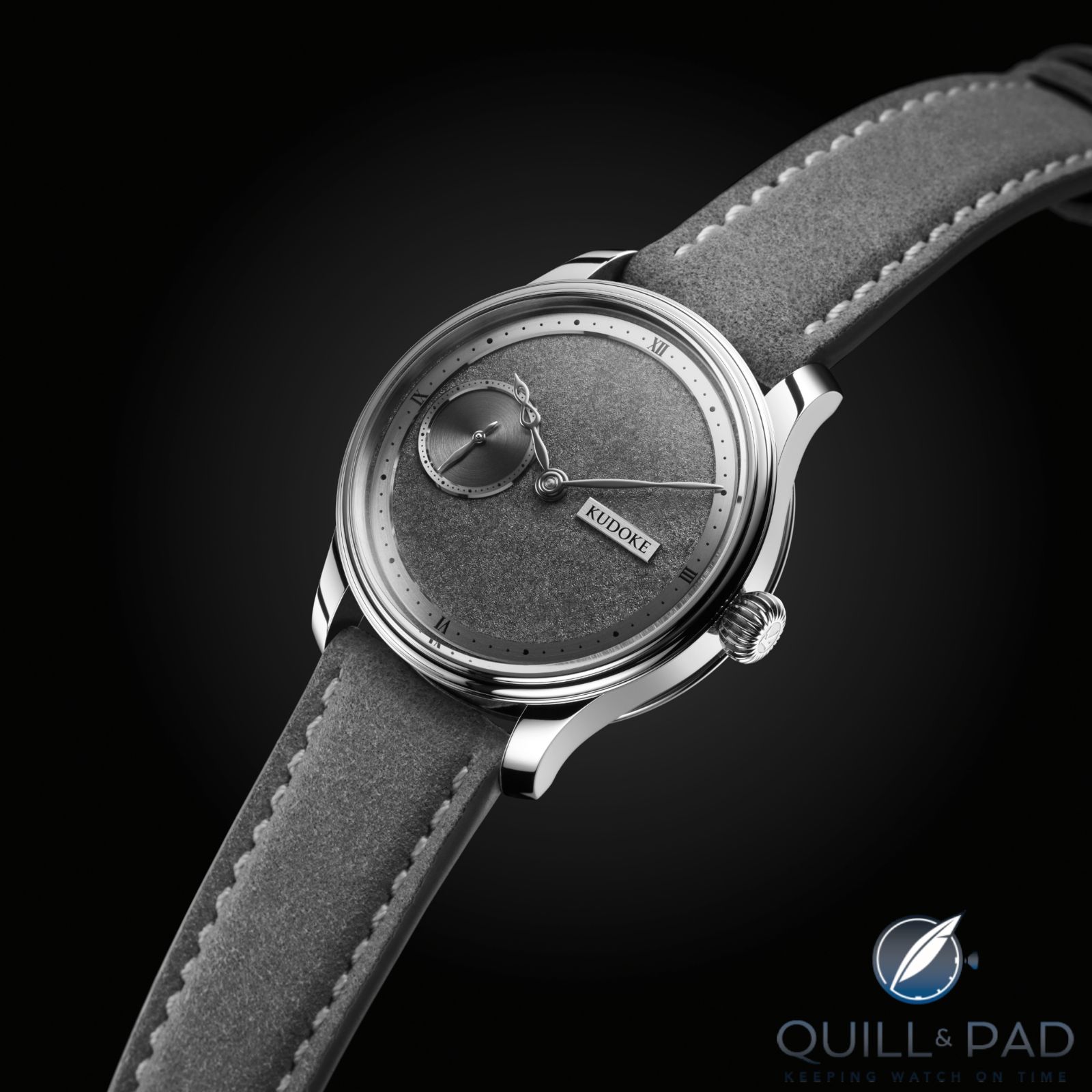
In early April 2026, Kudoke introduced its Handwerk collection’s leading models, the Kudoke 1 and 2, adorned with exquisite Tremblage dials. This revival of a centuries-old hand-engraving technique, characterized by a uniform yet seemingly chaotic texture, adds a distinctive and luxurious dimension to the brand’s timepieces. The tremblage method, which involves the meticulous and repetitive application of a burin across a surface in various directions, creates a unique matte finish that sets it apart from more structured engraving styles like guilloché or figurative motifs. This intricate process demands exceptional skill and significant time from the engraver, explaining its rarity in modern watchmaking.
The Allure of Tremblage: A Historical Perspective
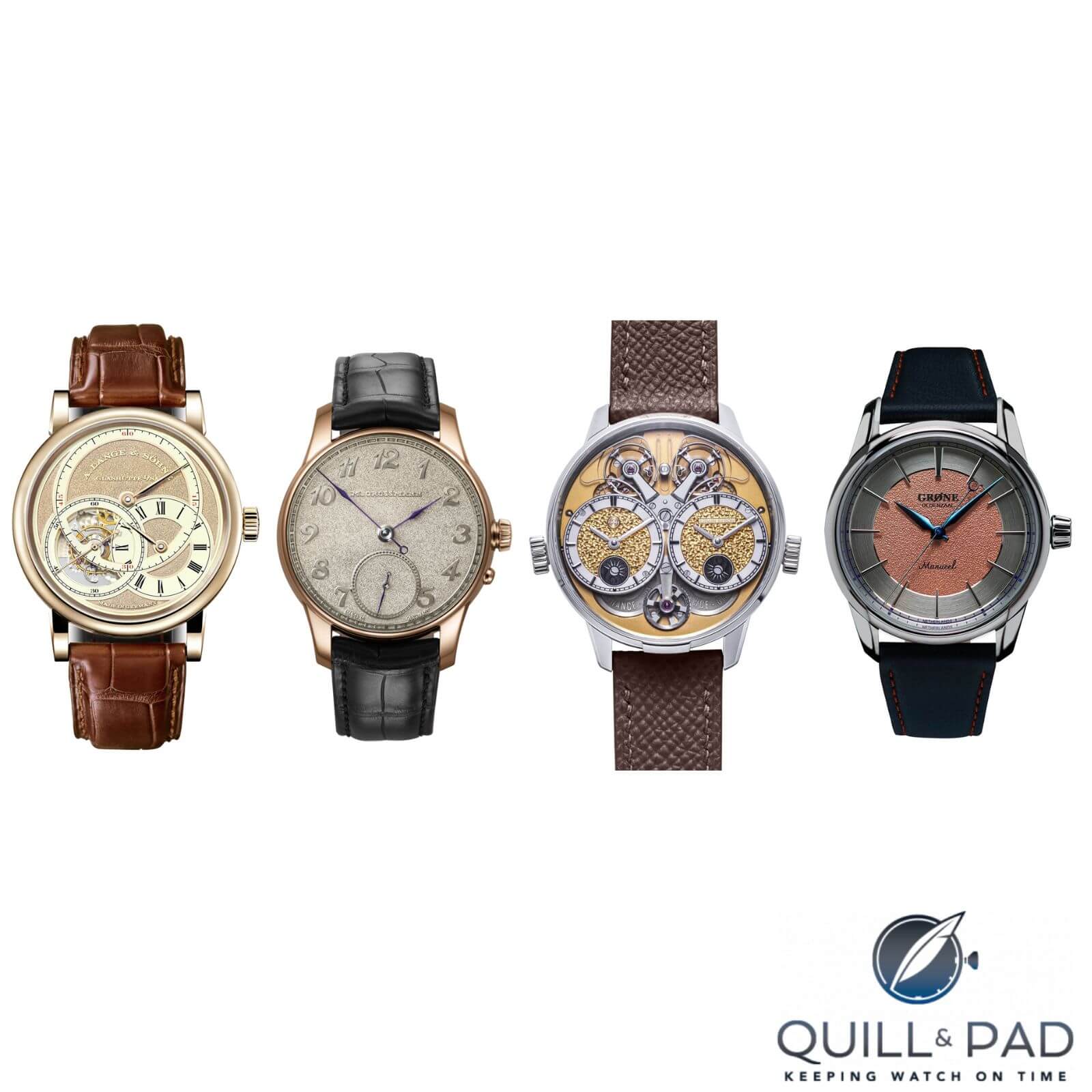
The art of tremblage engraving, though demanding, has a distinguished lineage in horology. A. Lange & Söhne is credited with reintroducing this complex technique to contemporary watchmaking, notably within their exclusive Handwerkskunst line, known for its limited production. The debut of tremblage in modern horology can be traced back to 2011 with the Richard Lange Tourbillon “Pour le Mérite” Handwerkskunst Ref. 761.050, a piece produced in a mere 15 units. This pioneering effort by Lange highlighted the technique’s potential for creating visually arresting and deeply textured dials.
Following in the footsteps of A. Lange & Söhne, Moritz Grossmann, a fellow resident of Glashütte, embraced tremblage in 2021. Their initial offering featured a nickel silver dial, where the natural patina of the metal interacted with the tremblage engraving to produce unpredictable and captivating color shifts. This initial success led to the expansion of Moritz Grossmann’s Tremblage line, which now encompasses several core designs, including the Backpage Tremblage, Tourbillon Tremblage, Tremblage Gold, and Tremblage Green. The growing visibility of these models in the market suggests a positive reception and increasing demand for this specialized artistry.
The growing trend of incorporating tremblage into high-end watchmaking has seen further expansion in recent years. In 2024, Grönefeld’s sub-brand, Grönefeld Oldenzaal (Manueel One watches), joined the ranks of watchmakers employing this technique. This was followed in 2025 by Armin Strom, with their limited-edition Armin Strom 1766 “Tremblage” watch, reportedly limited to just five pieces. The 2026 introduction of tremblage versions of the Kudoke 1 and Kudoke 2 models firmly establishes this decorative style as a significant trend in haute horlogerie.
Stefan Kudoke’s Ingenious Approach to Tremblage
Stefan Kudoke, the driving force behind Kudoke, has demonstrated a remarkable ability to offer collector-grade watches at accessible price points, a feat he has achieved with his latest tremblage-decorated timepieces. His innovative approach to the tremblage technique allows for its integration without the exorbitant costs often associated with such artisanal embellishments. Kudoke’s strategy involves several key elements:
Firstly, he utilizes a brass plate as the dial base, foregoing more expensive materials like solid gold or German silver. This cost-effective choice does not compromise the aesthetic appeal, as the tremblage finish itself becomes the focal point.
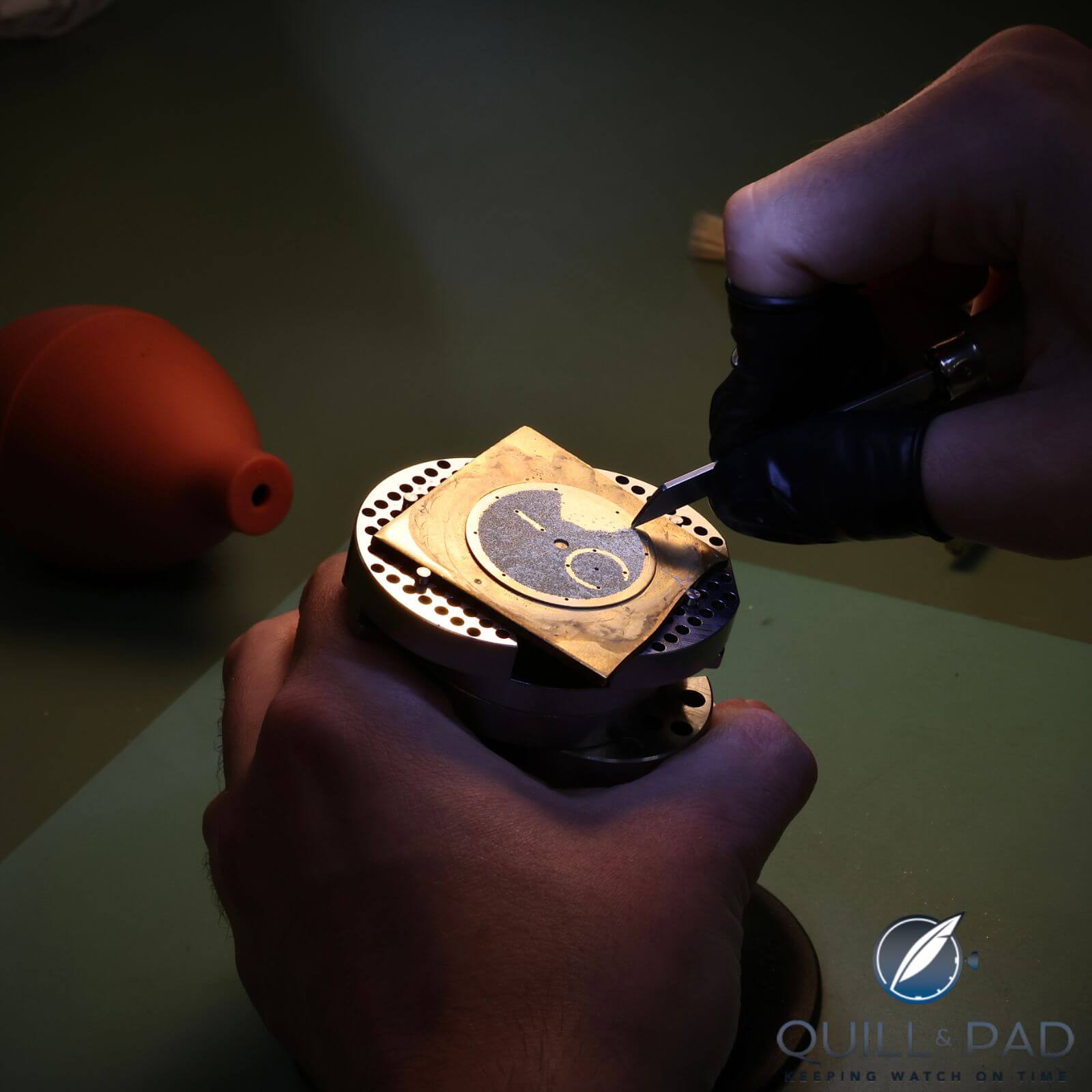
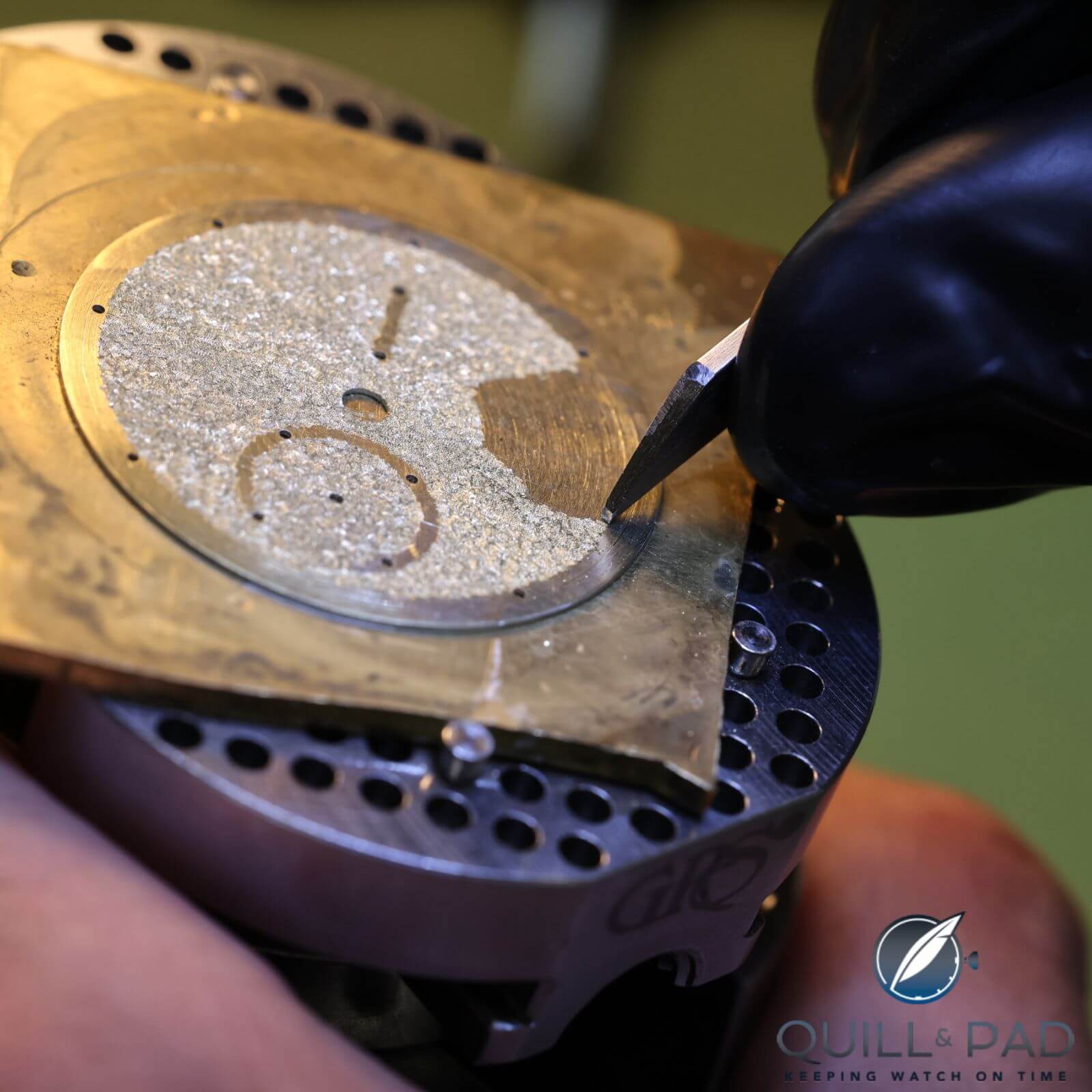
Secondly, the design of the dials is based on a flat plate that is subsequently electroplated and fitted with appliqués. This construction method streamlines the engraving process. When the tremblage is applied, the areas adjacent to the appliqués do not require meticulous finishing right up to the edge, as these margins are concealed beneath the applied elements. This significantly reduces the labor-intensive nature of the engraving.
Thirdly, Kudoke employs a serrated burin for the engraving. This specific tool allows him to achieve a consistent tremblage texture much more rapidly than traditional methods, further contributing to the watch’s affordability without sacrificing the characteristic visual effect.
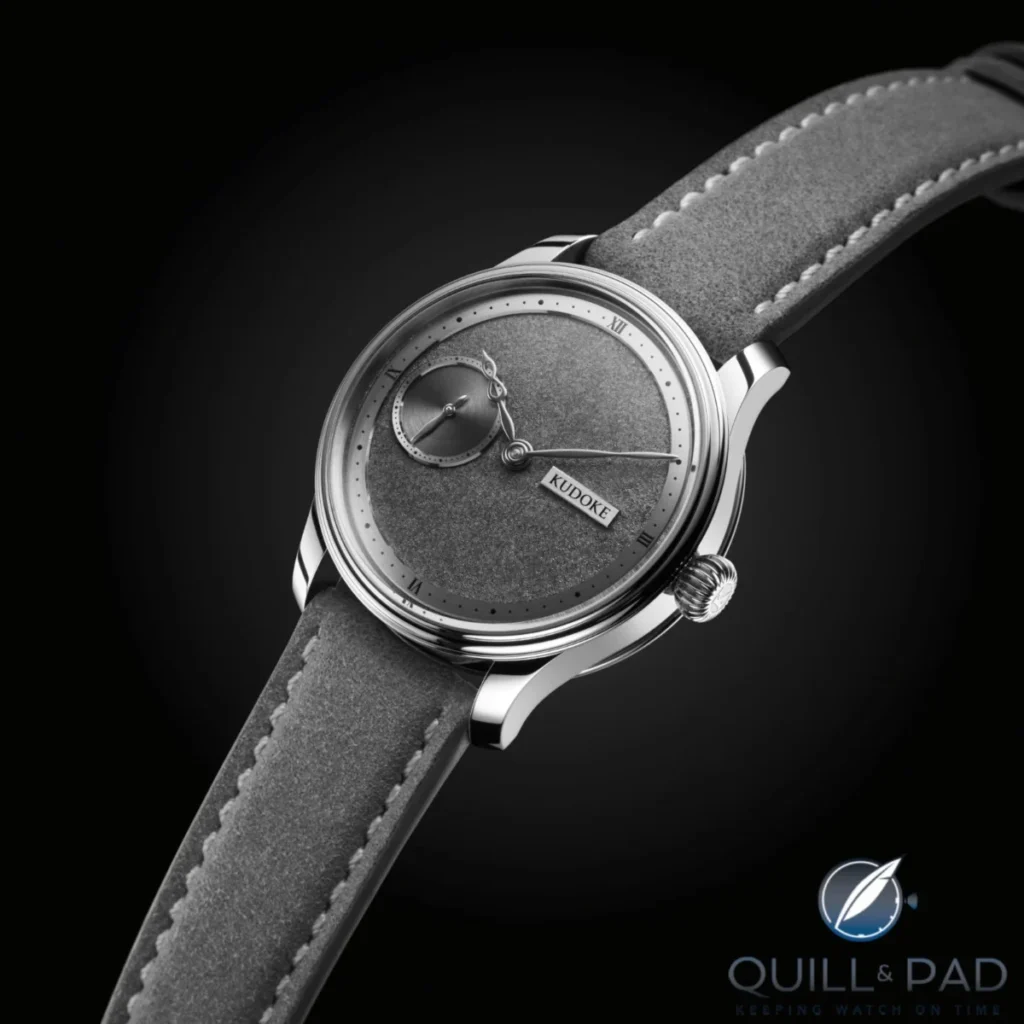
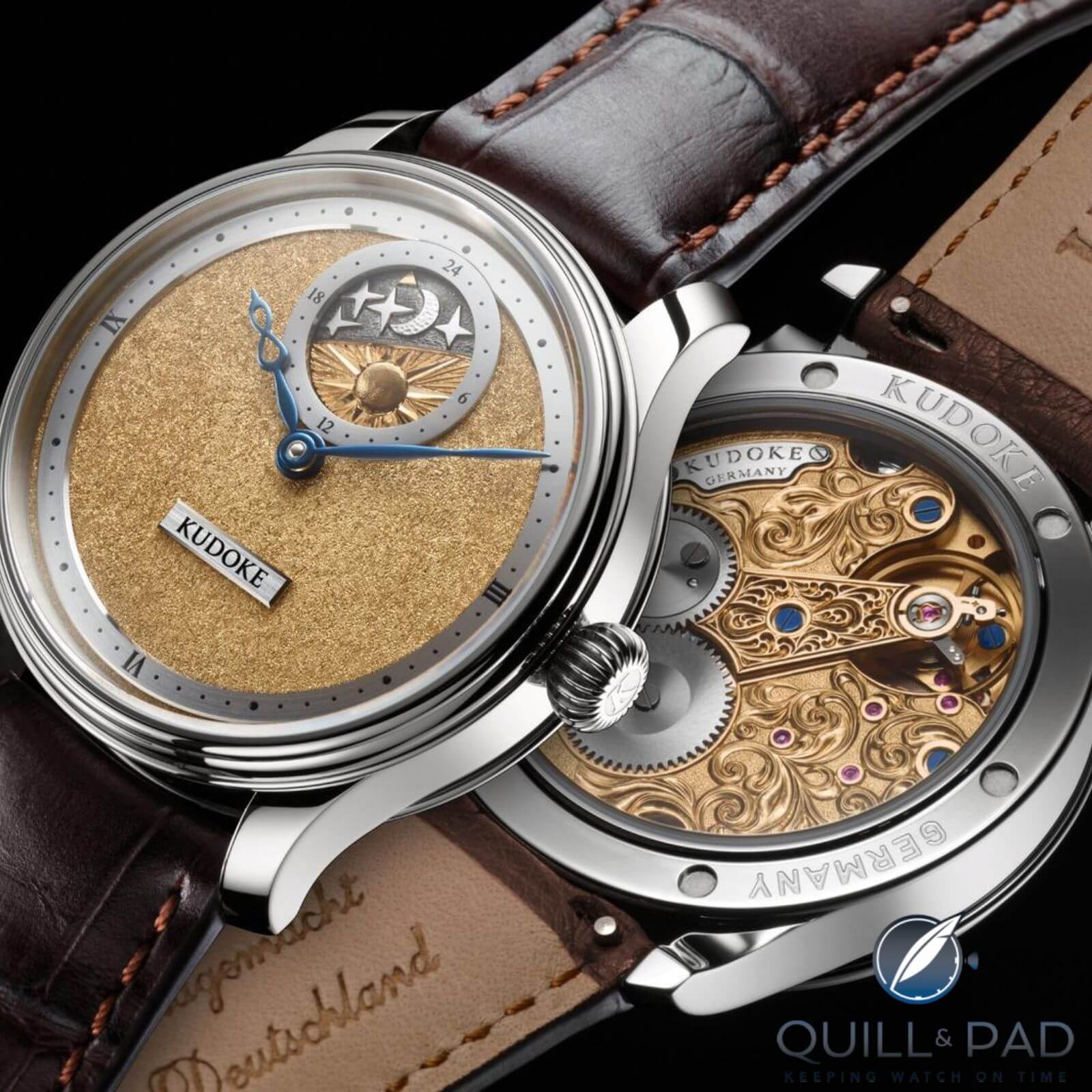
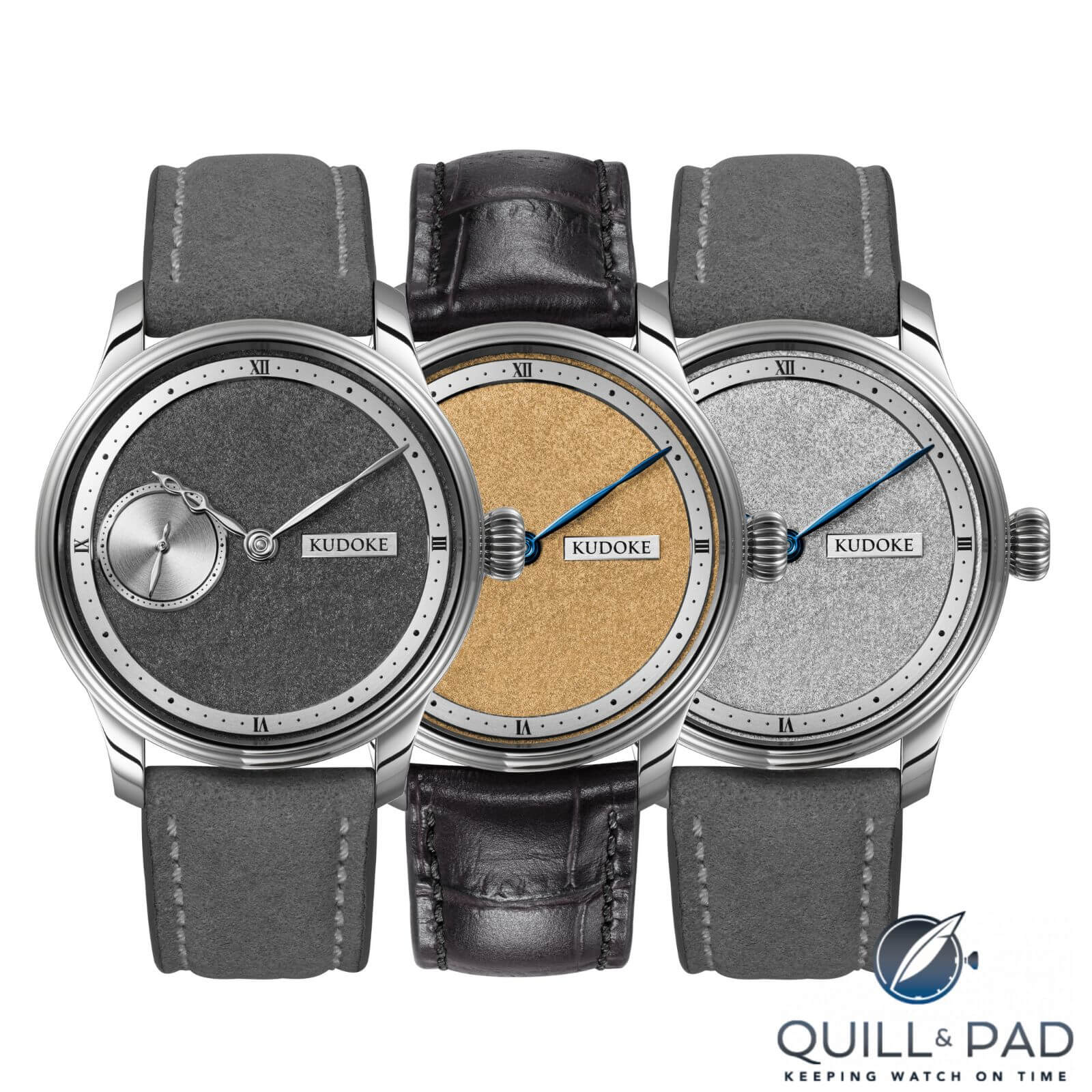
Kudoke’s primary focus with these tremblage dials is to maximize the visual impact of the textured surface. In the Kudoke 1 model, the extensive tremblage dial is complemented by a small seconds subdial positioned at 9 o’clock. The Kudoke 2 model integrates the tremblage dial with a sophisticated day/night indicator.
Aesthetic Character: Austere, Military, and Enduring
The uniform, chaotic texture achieved through tremblage engraving imparts a distinct aesthetic to these watches, elevating them beyond typical decorative timepieces. The resulting matte finish lends them a subtly austere and almost military character. This is not a flamboyant or overly ornate style; instead, it presents a compelling blend of severe decoration and understated elegance, appealing to collectors who appreciate a more robust and less ostentatious design language.
Kudoke offers the Kudoke 1 Tremblage in three distinct versions, each featuring a different dial plating: gold-plated, rhodium-plated, and black rhodium-plated. All three variations are aesthetically convincing, but the versions adorned with blued hands possess a particularly captivating archaic charm. This is partly due to the choice of spade-and-whip hand shapes, which, coincidentally or intentionally, first appeared in the late 18th century. John Arnold, a prominent watchmaker of that era, was among the first to regularly incorporate such hands into his timepieces in the 1770s.
The distinctive double-ended hour hand on the Kudoke 1, designed by Stefan Kudoke to evoke the infinity symbol, also draws a parallel to the double-spade hour hand commonly found on traditional half-hunter pocket watches. This connection to historical pocket watch design might even inspire a future iteration with a half-hunter case cover, should the opportunity arise.
The Heart of the Matter: Kudoke’s Kaliber 1 Movement
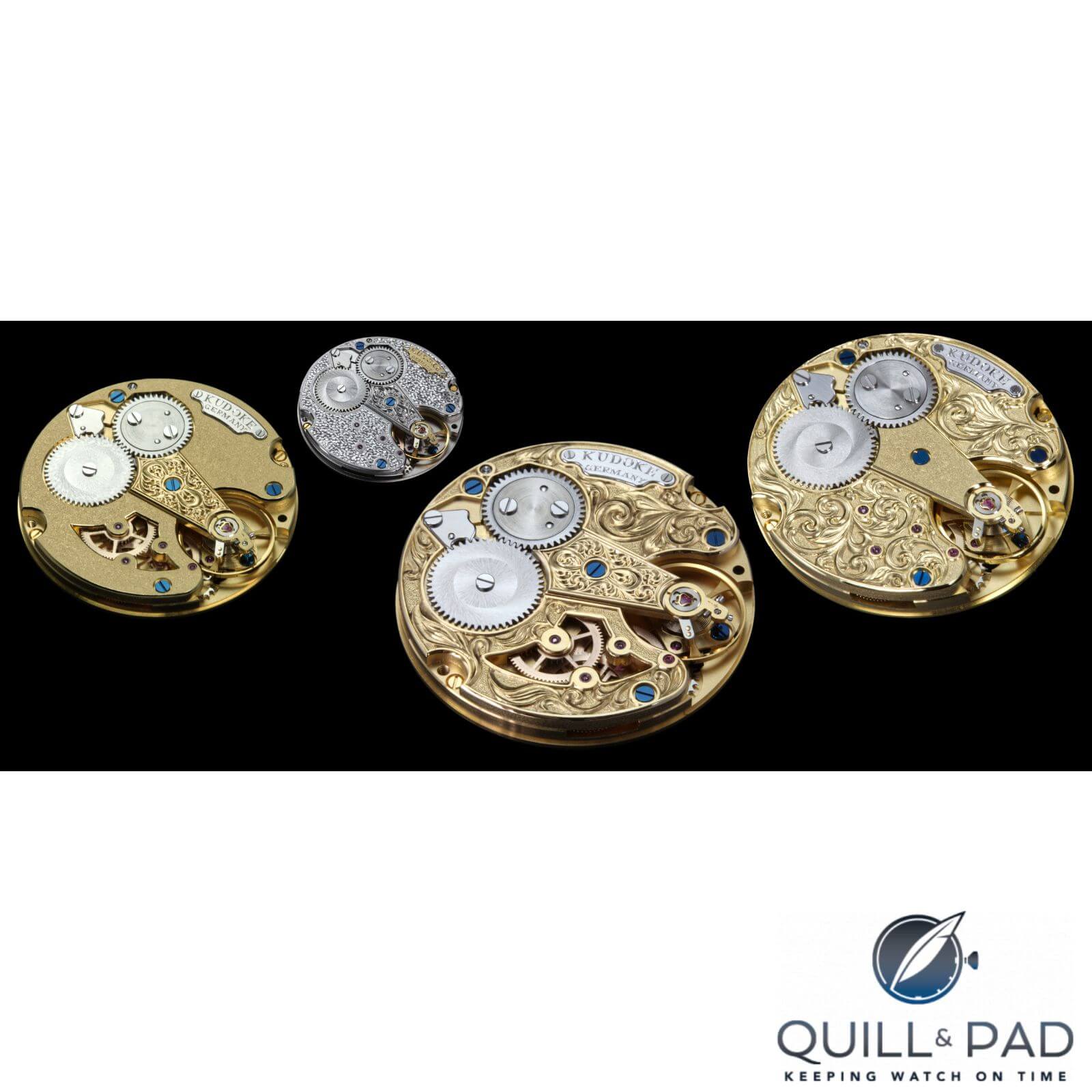
When examining a timepiece from an independent and innovative brand like Kudoke, the natural inclination is to turn it over and explore the movement. The sapphire caseback reveals the brand’s bespoke Kaliber 1, a movement that stands in stark contrast to the ubiquitous ETA or Unitas calibers often found in watches from smaller brands. The Kaliber 1 is not an industrial, mass-produced movement; it represents a deliberate choice for uniqueness and artisanal craftsmanship.
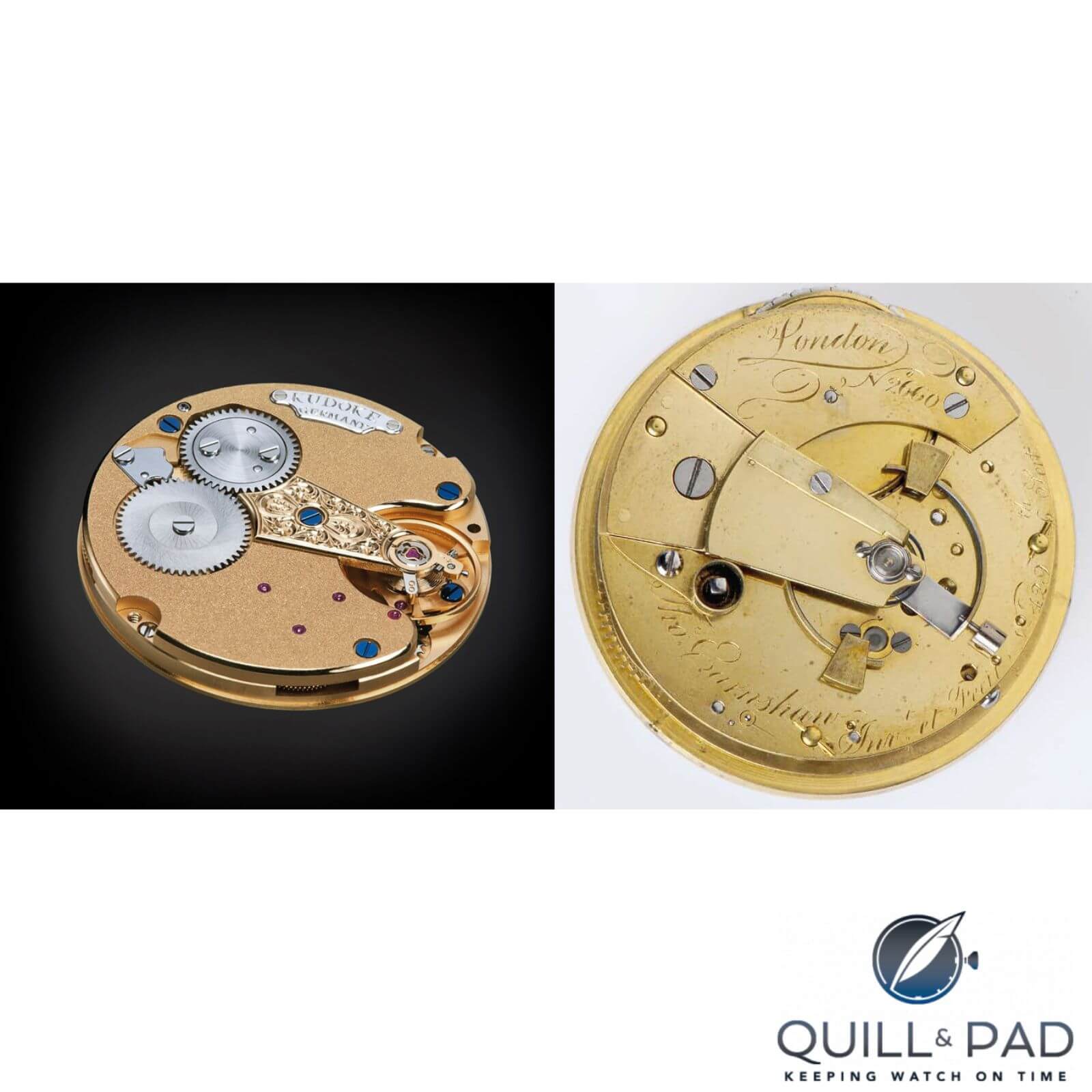
The design of Kaliber 1 is immediately striking and clearly distinctive. Stefan Kudoke himself has shared that its origins can be traced back to an antique English pocket watch caliber from the 19th century that he acquired. The architectural style of this caliber emerged in the latter part of the 18th century, a period when English watchmakers like John Arnold and Thomas Earnshaw began to move away from the ornate Baroque balance cocks. Influenced by the burgeoning Industrial Revolution, they favored a more symmetrical and functional aesthetic, incorporating simply shaped, stepped trapezoidal balance cocks.
The central balance cock of Kudoke’s Kaliber 1, elevated slightly above the symmetrical mainplate and flanked by the crown wheel and ratchet wheel, is a defining feature. Its unique arrangement can make its historical lineage difficult to discern without additional context. Research into the internet reveals the fascinating and unusual history behind this distinctive caliber.
The 7750 Legacy: A Foundation for Innovation
The story of Kaliber 1’s development is intertwined with a common challenge faced by independent watchmakers in the early 2000s. The strategic decision by Nicolas Hayek Sr. of Swatch Group in 2002 to cease supplying ébauches (unfinished movements) to external companies spurred many independent brands to seek alternative solutions.
Richard Habring, an Austrian independent watchmaker renowned for his adaptations of the Valjoux 7750 chronograph caliber, opted for a proactive approach. He decided to develop his own base caliber, drawing upon the well-established architecture of the 7750. This was a feasible strategy, as the intellectual property rights for the 7750, originally developed in 1972, had long since expired.
Habring’s approach involved utilizing the fundamental kinematic principles of the base movement, essentially stripping down the 7750 to its core components, excluding the chronograph and self-winding mechanisms. This led to the development of the A11 caliber in 2011, representing Habring’s refined interpretation of the 7750’s fundamental structure as it might have existed if it had remained a simpler manual-winding movement.
Richard Habring was not alone in this endeavor. Naoya Hida, a Japanese entrepreneur who founded his eponymous brand in 2018, also leverages a stripped-down 7750 caliber as the foundation for his collection’s movements. Around the same period, in 2018, Stefan Kudoke began a collaboration with Richard Habring, adapting the A11 caliber to his own design principles, featuring a symmetrical layout and a central balance cock.
Acknowledging the Enduring Value of the 7750 Remnant
The decision by independent watchmakers like Habring, Hida, and Kudoke to utilize the core structure of the 7750 caliber can be understood within the context of horological evolution. By the early 1970s, Swiss watchmakers had indeed mastered the art of producing simple, manual-winding calibers with essential functions – typically two or three hands, with the optional small seconds subdial adding minimal kinematic complexity.
It is important to note that at the time of the 7750’s introduction in the early 1970s, automatic winding was considered an advanced feature, and its combination with a chronograph represented a significant technical innovation. The evolution of self-winding chronographs is further illustrated by the fact that the first automatic Rolex Daytona was introduced in 1988, a full 16 years after the Valjoux 7750.
Panerai also utilized a modified version of the 7750 caliber. Reportedly, Soprod stripped down the 7750 to create its three-hand OP III self-winding caliber in the late 1990s. Panerai’s rationale for using this caliber during the early and mid-Richemont era was its inherent characteristic of a small seconds subdial at the 9 o’clock position. This layout allowed Panerai to emulate a rugged military aesthetic, drawing inspiration from the 1956 Egiziano models that featured the Angelus cal. SF240 movement with its similarly positioned small seconds. This design choice supported the brand’s established military image. As an interesting aside, Panerai also employed the OP III in its more decorative Sealand line, launched in 2002.
Kudoke’s Distinctive Contribution to Decorative Watchmaking
Within the relatively niche category of watches featuring tremblage finishing, Kudoke timepieces distinguish themselves with a unique and recognizable style. This individuality is a key attribute, offering a refreshing perspective on decorative watchmaking. Stefan Kudoke presents a vision of decorative timepieces that avoids excessive ornamentation, standing apart from many contemporary pieces that can feel overwhelming in their embellishment.
The Kudoke 1 Tremblage, available in gold-plated, rhodium-plated, and black rhodium-plated dial variants, showcases this philosophy. The addition of blued spade-and-whip hands further enhances the vintage appeal, creating a harmonious blend of historical craftsmanship and modern watchmaking. The Kudoke 2 Tremblage, with its integrated day/night indicator, also benefits from the textured backdrop of the tremblage dial, which serves to accentuate the visual complexity of its complications.
The enduring appeal of Kudoke’s tremblage watches lies in their ability to combine meticulous artisanal decoration with a grounded, almost austere aesthetic, proving that luxury and understated elegance can coexist harmoniously. This approach ensures that Kudoke timepieces are not merely decorative objects but are also highly desirable mechanical instruments with a unique horological narrative.