HUNTSVILLE, Ala. – The ambitious, multilayered missile defense shield championed by the Trump administration, known as Golden Dome, has established its inaugural operational site at Fort Story, Virginia, a senior Pentagon official announced today. This development marks a significant step forward for a program aimed at bolstering the nation’s homeland defense against evolving ballistic missile threats.
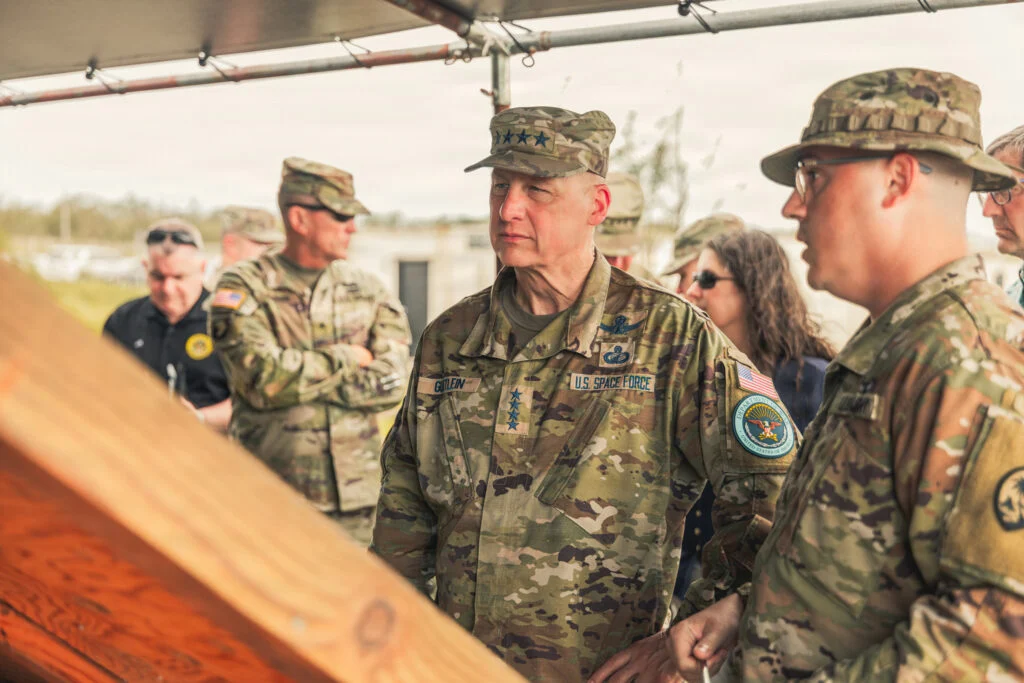
General Michael Guetlein, the program manager for Golden Dome, revealed this milestone during his keynote address at the Space and Missile Defense Symposium held in Huntsville. "We are digging dirt around the homeland," Guetlein stated, underscoring the tangible progress being made in establishing this critical defensive infrastructure. The initiative remains on track for full operational capability by 2028, a timeline President Donald Trump has publicly affirmed, aiming for deployment before the end of his term in early 2029.
While Guetlein confirmed the Fort Story site as the program’s first operational location, he declined to provide specifics regarding the number or precise locations of other planned Golden Dome sites. This deliberate ambiguity is a common characteristic of highly sensitive national security programs, designed to maintain operational security and avoid revealing tactical details to potential adversaries.
The development of Golden Dome has involved rigorous testing and validation processes. Guetlein highlighted that the program has successfully conducted two major tests to date, with one notable exercise taking place at the White Sands Missile Range in New Mexico. The specifics of the equipment tested during these exercises were not disclosed, aligning with established protocols for classified military operations.
Reflecting on the program’s progress, Guetlein recounted a significant challenge issued in January of this year to the Missile Defense Agency (MDA). "In January this year, I gave a challenge to the Missile Defense Agency of what test I needed to happen in the summer of 2026," he explained. "A whole host of other agencies all came together in less than six months, starting from scratch, and delivered what I will argue is the most complex integrated missile defense test that we had pulled off as a nation."
This collaborative effort, Guetlein emphasized, yielded crucial insights. Both tests, he stated, "demonstrated that the capabilities that we are putting together, both command and control, our sensor network and our effectors, are going to be effective against the threats as they are currently designed." However, he also tempered this optimism with a realistic assessment of the remaining work, noting that the White Sands test "is a fraction of what we’ve got to do to deliver what they’ve asked us to do in ’28." This suggests that while foundational capabilities have been validated, the full integration and deployment of the comprehensive Golden Dome architecture require further extensive development and testing.
A Layered Defense: The Space-Based Interceptor Component
A critical and technologically advanced element of the Golden Dome initiative is its space-based interceptor (SBI) layer. Guetlein announced that this vital component has successfully met the first of four planned developmental milestones, referred to as "gates." This achievement is particularly noteworthy given the competitive nature of the SBI program. Earlier this year, the U.S. Space Force selected twelve companies to advance their SBI technologies and vie for contracts collectively valued at up to $3.2 billion.
"All of the providers that are part of the competition are progressing exceptionally well, and Gate One just came to a closure," Guetlein informed reporters, signaling a successful conclusion to the initial phase of development. The competition is structured around a rigorous four-gate process, designed to ensure the viability and effectiveness of the space-based interceptors before large-scale procurement.
The Four-Gate Competition for Space-Based Interceptors:
- Gate One: Design and Component-Level Testing: This initial phase focuses on establishing robust designs for the interceptors and validating the performance of individual components through rigorous testing. The successful completion of Gate One indicates that the conceptual and foundational engineering aspects are sound.
- Gate Two: Capability for Outer Space Deployment: The objective here is to develop and construct a functional prototype or a system capable of being deployed into the space environment. This involves addressing the unique challenges of space-hardened hardware and launch readiness.
- Gate Three: In-Orbit Performance Validation: Once deployed, the SBI capability must demonstrate its effectiveness and reliability in the actual space environment. This gate assesses how the system performs under the extreme conditions of orbit.
- Gate Four: Integration within the Golden Dome Architecture: The final gate focuses on proving that the space-based interceptor can effectively communicate with, receive targeting data from, and operate in conjunction with the broader Golden Dome network, including ground-based sensors and command and control systems.
"Once [competitors] get through all those four gates, four tests, if you will, in a prize-based competition, then we will make a decision" regarding procurement, Guetlein explained. This phased approach, coupled with a competitive framework, aims to drive innovation while ensuring fiscal responsibility. Guetlein has previously emphasized his commitment to affordability, stating he will not proceed with the SBI layer if it proves to be economically unfeasible.
The involvement of major aerospace and defense contractors underscores the significance of the SBI program. Executives from Lockheed Martin and Northrop Grumman, both selected by the Space Force for SBI development, indicated at separate media briefings that they are on schedule to demonstrate their technologies on orbit by the end of 2027. This timeline aligns with the broader Golden Dome deployment schedule, suggesting a coordinated effort among industry partners.
The Digital Backbone: ApexR and Artificial Intelligence
Beyond the physical infrastructure and interceptor capabilities, the Golden Dome program is also investing heavily in its digital and data processing capabilities. Guetlein revealed the establishment of a "digital ecosystem" named ApexR, designed to centralize and analyze vast amounts of sensor data. This system will leverage artificial intelligence (AI) to process and interpret incoming information, enabling more rapid and effective decision-making during Golden Dome operations.
The integration of AI into missile defense systems is a burgeoning trend, promising to enhance threat detection, tracking, and engagement capabilities. By consolidating data from a diverse array of sensors – potentially including ground-based radar, sea-based platforms, and satellites – ApexR aims to create a comprehensive and near real-time understanding of the threat landscape. This enhanced situational awareness is crucial for effectively countering advanced and rapidly evolving missile threats.
Broader Context and Implications
The Golden Dome initiative represents a significant evolution in U.S. missile defense strategy. While previous systems have focused on specific threat vectors or geographic regions, Golden Dome envisions a more comprehensive, multilayered approach designed to counter a wider range of ballistic missile threats, including intercontinental ballistic missiles (ICBMs) and potentially hypersonic glide vehicles. The program’s emphasis on a distributed network of ground-based, sea-based, and space-based assets aims to create a resilient and adaptable defense.
The program’s roots can be traced back to increasing concerns over the missile proliferation activities of nations like North Korea and Iran, as well as the ongoing modernization of Russia’s and China’s strategic missile arsenals. The development of a robust homeland missile defense system is seen by many as a necessary deterrent and a means to protect critical infrastructure and civilian populations.
Timeline of Key Developments (Inferred and Reported):
- Early 2020s: Initial conceptualization and planning for a multilayered missile defense shield, building upon existing missile defense technologies.
- Trump Administration: Formal initiation and prioritization of the Golden Dome program with specific deployment goals.
- January 2024: General Guetlein issues a critical test challenge to the Missile Defense Agency for a complex integrated test.
- Summer 2024: Successful execution of a highly complex integrated missile defense test at White Sands Missile Range, New Mexico, involving multiple agencies.
- Early 2024: U.S. Space Force selects twelve companies to mature Space-Based Interceptor (SBI) technology.
- 2024: Golden Dome program achieves "Gate One" closure for the SBI component, confirming design and component-level testing.
- Present (Late 2024): First operational site established at Fort Story, Virginia. Program on track for 2028 operational capability.
- 2025-2027: Continued testing, development, and integration of Golden Dome components, including further SBI development and potential on-orbit demonstrations by industry partners.
- 2028: Targeted full operational capability for the Golden Dome multilayered missile defense shield.
The success of Golden Dome hinges on the effective integration of its various components – sensors, command and control systems, and interceptors – across multiple domains. The program’s reliance on advanced technologies, including AI and space-based assets, positions it at the forefront of modern defense capabilities. However, challenges related to cost, technological maturity, and the ever-evolving nature of missile threats will continue to demand vigilance and adaptability from program managers and policymakers alike. The strategic implications of a fully operational Golden Dome are significant, potentially altering the calculus of deterrence and enhancing the United States’ ability to respond to a wide spectrum of ballistic missile attacks.