The realm of space exploration and engineering is currently experiencing an unprecedented surge of innovation, marked by ambitious technological advancements, pioneering scientific endeavors, and the rapid commercialization of orbital activities. From the audacious prospect of establishing data centers beyond Earth’s atmosphere to the intricate dance of robotic explorers charting distant moons, humanity’s reach into the cosmos is expanding at an accelerated pace, presenting both boundless opportunities and significant challenges. This dynamic landscape encompasses everything from breakthroughs in propulsion and navigation to critical considerations for orbital sustainability and the psychological well-being of future space inhabitants.
The Dawn of Orbital Infrastructure and Commercial Ventures
One of the most transformative developments on the horizon is the emergence of space-based data centers. A U.S. startup, backed by industry giants like NVIDIA, is spearheading efforts to build data centers in orbit, potentially offering an astounding 20 GW of computing capacity. The rationale behind such a bold move lies in circumventing terrestrial limitations: the vacuum of space provides natural cooling, reducing the immense energy costs associated with cooling massive server farms on Earth. Furthermore, placing data centers in orbit could significantly reduce latency for critical applications, particularly those involving real-time processing of satellite data or advanced AI operations that benefit from proximity to space-based sensors. This venture signals a shift towards viewing space not just as a frontier for exploration, but as a viable domain for essential commercial infrastructure, promising a new era of distributed computing and potentially altering the global digital landscape.
Complementing this, NASA is actively funding projects aimed at streamlining commercial space sample returns. An "orbital hangar" concept, for instance, seeks to make the process of bringing samples back from space cheaper and faster. This initiative is crucial for fostering a robust space economy, as it enables more frequent and cost-effective retrieval of materials, whether for scientific analysis, resource utilization, or even future space manufacturing. The ability to efficiently transport resources to and from Earth is a cornerstone of sustainable off-world operations and will be vital for supporting lunar bases, asteroid mining, and deep space missions.
Advancements in Propulsion and Launch Capabilities
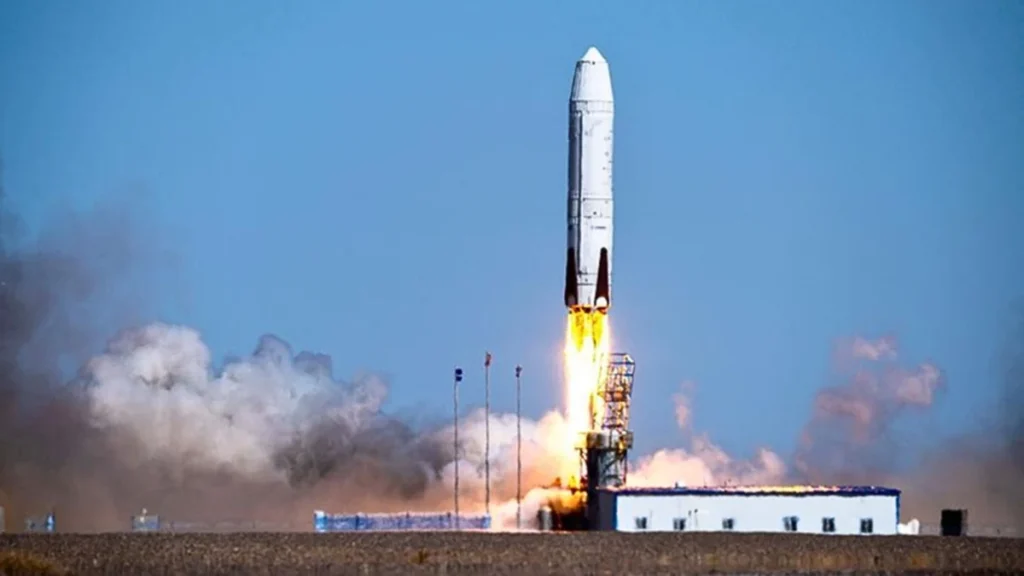
The race for efficient and reliable space access continues to intensify, with a strong focus on reusable rocket technology. China’s LandSpace recently made headlines by achieving the world’s first stainless-steel booster recovery, a feat that, in some respects, surpasses SpaceX’s early reusable rocket milestones by demonstrating a different material approach. This achievement underscores the global competition in space launch capabilities and the rapid advancements being made by various nations and private entities. Reusable rockets are paramount for reducing the cost of spaceflight, making it more accessible for commercial ventures, scientific missions, and even space tourism.
Beyond reusability, innovations in launch flexibility are also gaining traction. Rocket Lab’s GHOST (Global Horizontal On-demand Space Transport) system aims to enable rocket launches from virtually anywhere on Earth. Such portable launch capabilities would revolutionize responsive space access, allowing for rapid deployment of satellites in response to unforeseen events or evolving needs, thereby enhancing national security, disaster response, and commercial flexibility.
The underlying engineering prowess driving these advancements extends to the components themselves. The development of the world’s most powerful superconducting magnetic actuator, now spaceflight-ready, represents a significant leap. Such actuators are critical for precision control and maneuvering of spacecraft, extending mission life, and enabling more complex orbital operations, from satellite servicing to advanced scientific instrument pointing.
However, the inherent risks of spaceflight remain a stark reality. China’s Long March 7A rocket, for example, tragically exploded just 85 seconds after liftoff, resulting in the loss of the ChinaSat-4B satellite. This incident serves as a potent reminder of the immense technical challenges and high stakes involved in rocket engineering, where even minor anomalies can lead to catastrophic failures. Despite these setbacks, the global space industry continues to push the boundaries, learning from failures to refine designs and improve reliability.
Charting the Cosmos: Deep Space Exploration and Scientific Discovery
The quest for knowledge about our universe remains a powerful driver for space exploration. Missions are being planned to delve into the cosmic dark ages, with a new satellite slated to search for a 13.5-billion-year-old signal from the far side of the Moon. This ambitious project aims to capture the faint echoes of the universe’s earliest epochs, offering insights into the formation of the first stars and galaxies. The far side of the Moon provides a uniquely radio-quiet environment, shielded from Earth’s pervasive electromagnetic interference, making it an ideal location for such sensitive astronomical observations.
Meanwhile, NASA is investing in audacious concepts for exploring distant worlds, such as silent ion-powered robot swarms designed to map subsurface caves on Saturn’s enigmatic moon Titan. Titan, with its thick atmosphere and hydrocarbon lakes, is considered a prime target for astrobiological research, potentially harboring unique forms of life or prebiotic chemistry. These robotic swarms represent a paradigm shift in planetary exploration, allowing for distributed sensing and detailed mapping of complex, inaccessible environments.
Space-based observatories continue to deliver breathtaking revelations. Stunning images captured by powerful telescopes routinely reveal the universe in extraordinary detail, showcasing phenomena from distant nebulae to intricate galactic structures. These observatories, like the James Webb Space Telescope (JWST) and its predecessors, are indispensable tools for astrophysics, allowing scientists to study exoplanets, stellar evolution, and the fundamental forces shaping the cosmos, pushing the boundaries of human understanding.
New discoveries continue to challenge existing astrophysical models, as evidenced by the identification of the "first known black hole star" fueled by something "stranger than reality." Such findings often lead to re-evaluating our understanding of fundamental physics and the extreme conditions that exist in the universe, opening new avenues for theoretical and observational research.

On the Moon itself, overcoming extreme environmental conditions is critical for sustained presence. A nuclear-powered heater is being developed to keep spacecraft alive through the Moon’s freezing two-week night. Lunar nights plunge temperatures to below -170 degrees Celsius, posing an immense challenge for electronic systems and batteries. Radioisotope Heater Units (RHUs) or more substantial radioisotope thermoelectric generators (RTGs) offer reliable, long-duration power and heat, essential for robotic landers and future human habitats to survive these prolonged periods of darkness and extreme cold.
Navigating and Sustaining Our Orbital Environment
As space activity proliferates, the imperative for robust navigation systems and sustainable orbital practices becomes paramount. NASA is testing a first-of-its-kind spacecraft navigation system that operates without GPS. This innovation, likely relying on X-ray pulsar navigation (XNAV) or autonomous star-tracker systems, is crucial for deep space missions where GPS signals are unavailable, and for enhancing the resilience of Earth-orbiting assets against potential signal jamming or interference. Such autonomous capabilities are vital for the increasing number of satellites and future space infrastructure.
The burgeoning number of satellites and launch activities also exacerbates the issue of space debris. The expected re-entry of NASA’s Swift Observatory after a failed rescue attempt highlights the critical need for effective end-of-life management for satellites. When a mission concludes, spacecraft should ideally be deorbited to burn up in the atmosphere or maneuvered to a graveyard orbit. The failure to do so contributes to the growing problem of orbital debris, which poses a significant threat to operational satellites and human spaceflight.
Addressing this, innovative solutions like a "3-orbit spacecraft" are being developed to help remove satellites nearing their end of life. Active Debris Removal (ADR) technologies, which involve capturing and deorbiting defunct satellites and rocket stages, are becoming increasingly important for maintaining a safe and sustainable orbital environment. Without effective debris management, certain orbital highways could become unusable due to the risk of collisions.
Furthermore, the strategic implications of space are becoming increasingly complex. China’s reusable rocket advances, for instance, are not only economic but also have the potential to strengthen the People’s Liberation Army’s (PLA) "space-based kill chain." This refers to the military’s ability to utilize satellites for reconnaissance, targeting, and potentially engaging adversaries, underscoring the dual-use nature of many space technologies. The discussion around electromagnetic weapons, as explored by experts like Winnie Lai of Auriga Space, further highlights the growing concerns about space security and the potential for conflict in orbit.
In response to these evolving threats and the need for enhanced space situational awareness, robots could be deployed to build giant metamaterial radars in space to track hidden threats. Such advanced orbital radar systems would provide unprecedented capabilities for monitoring space traffic, identifying potential threats, and ensuring the safety and security of vital space assets. Autonomous construction in space could significantly reduce launch mass and enable the deployment of larger, more complex structures than currently possible.
Human Factors and the Future of Living in Space
As humanity looks towards longer-duration missions to Mars and beyond, understanding the human element becomes critical. U.S. engineers are actively mapping 14 human emotions to design healthier space habitats. The psychological challenges of isolation, confinement, and long-term exposure to microgravity are significant. By integrating psychological and physiological factors into habitat design, engineers aim to create environments that promote well-being, enhance crew performance, and ensure the success of extended missions. This holistic approach acknowledges that the success of future space exploration hinges not only on technological prowess but also on the resilience and adaptability of the human spirit.
The confluence of these advancements—from robust launch systems and orbital infrastructure to deep space science and human-centric habitat design—paints a picture of a space sector brimming with activity. The "About Space" section from Interesting Engineering accurately captures this complexity, emphasizing that space is fundamentally an engineering problem and a scientific one. It involves building systems that can survive harsh environments and using them to collect data that can’t be gathered any other way. The focus remains on how these missions are planned, built, and run, the constraints that shape engineering choices (mass limits, radiation, extreme temperatures, long delays), and the painstaking process of transforming raw data into usable science.
The Broader Impact and Future Outlook
The current trajectory of space exploration and engineering holds profound implications for society. Economically, the commercial space sector is booming, attracting significant investment and fostering a competitive environment that drives innovation. New industries are emerging, from in-space manufacturing and resource utilization to space tourism and orbital data services. Scientifically, humanity is on the cusp of unprecedented discoveries, probing the origins of the universe, searching for life beyond Earth, and expanding our fundamental understanding of physics and cosmology.
However, this rapid expansion is not without its challenges. The increasing complexity of orbital activity necessitates robust international cooperation on space traffic management, debris mitigation, and the peaceful use of outer space. The militarization of space poses geopolitical risks, demanding careful diplomacy and the establishment of clear norms of behavior. Funding for ambitious projects remains a constant consideration, often requiring a delicate balance between public and private investment.
In conclusion, the current era is a testament to human ingenuity and our enduring drive to explore and understand the cosmos. The array of projects, from advanced rockets and orbital data centers to deep space probes and psychologically optimized habitats, signifies a transformative period. Rather than treating space as a mere aspiration or spectacle, the emphasis is firmly on practical function: missions that deliver lasting scientific value, systems that operate reliably, and the sustained effort required to keep space both useful and usable for generations to come. The next few decades promise to be the most exciting in the history of space, as these engineering breakthroughs and scientific pursuits converge to redefine humanity’s place in the universe.