The landscape of many-body quantum physics has been fundamentally expanded following the announcement that a research team has successfully demonstrated the creation of an exotic class of quantum states known as fractional Fermi seas. This breakthrough, detailed in a study published in the prestigious journal Physical Review Letters, represents a collaborative effort between the experimental research group led by Hanns-Christoph Nägerl at the University of Innsbruck and theoretical physicist Alvise Bastianello of the Centre National de la Recherche Scientifique (CNRS) and Université Paris-Dauphine. The discovery marks a significant departure from established theoretical models, specifically challenging the long-held Tomonaga-Luttinger liquid theory, which has served as the primary framework for understanding one-dimensional quantum systems for decades. By pushing quantum particles far from their equilibrium states through periodic manipulation, the researchers have uncovered a new critical phase of matter that exhibits a "hidden order" and unique statistical properties, potentially paving the way for advanced quantum simulation and a deeper understanding of non-equilibrium thermodynamics.
The Foundation of One-Dimensional Quantum Mechanics
To understand the significance of the fractional Fermi sea, it is necessary to examine the foundational principles of quantum statistics. In the macroscopic world, particles generally follow classical mechanics, but at the atomic and subatomic scales, particles are categorized as either bosons or fermions. Fermions, which include electrons, protons, and neutrons, are governed by the Pauli Exclusion Principle, a rule stating that no two identical fermions can occupy the same quantum state simultaneously. At temperatures approaching absolute zero, fermions settle into the lowest available energy states, stacking "neatly" from the bottom up. This collection of filled states is referred to as the "Fermi sea," and the energy level of the highest occupied state is known as the Fermi level.
In three-dimensional space, the behavior of these particles is well-described by Fermi liquid theory. However, when particles are confined to a single dimension—essentially forced to move along a line—their interactions become much more significant. In 1D, particles cannot move past one another without colliding or interacting, leading to collective behaviors where the movement of one particle affects all others in the system. Since the 1950s and 60s, the Tomonaga-Luttinger liquid (TLL) theory has been the standard model for describing these one-dimensional systems. TLL theory predicts that excitations in such systems behave as collective waves rather than individual particles. While TLL has been remarkably successful in predicting the behavior of 1D quantum wires and certain magnetic materials, it primarily describes systems at or near equilibrium. The discovery of fractional Fermi seas suggests that when a system is driven far from equilibrium, the TLL framework is no longer sufficient to describe the resulting physics.
Experimental Methodology: Driving Matter Through Interaction Cycles
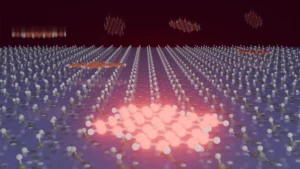
The research conducted by the Nägerl group utilized an advanced experimental setup involving ultracold cesium atoms. These atoms are cooled to temperatures just billionths of a degree above absolute zero, a state where their thermal motion is virtually eliminated, allowing their quantum mechanical properties to dominate. To simulate a one-dimensional environment, the researchers employed optical lattices—intersecting laser beams that create a "tube-like" potential, confining the atoms to a single axis of movement.
The core of the experiment involved a process of periodic driving, often referred to in the scientific community as Floquet engineering. Instead of keeping the interaction strength between the atoms constant, the researchers utilized Feshbach resonances—a phenomenon where an external magnetic field can be used to tune the scattering properties of the atoms. By rapidly and repeatedly cycling the magnetic field, the team forced the atoms to oscillate between states of strong repulsion and strong attraction.
Under normal circumstances, such a violent manipulation of a quantum system would be expected to inject heat, eventually leading to a disordered, high-entropy state where any quantum coherence is lost. However, the researchers discovered a specific regime of frequency and intensity where the system did not simply heat up. Instead, the atoms reorganized themselves into a highly excited but remarkably stable and organized configuration. This state is what the team identifies as the fractional Fermi sea.
Characteristics of the Fractional Fermi Sea
The term "fractional" in this context refers to a radical departure from the standard occupancy rules of a traditional Fermi sea. In a standard Fermi sea, each available quantum state is either occupied by a single fermion or is empty (binary occupancy). In the newly discovered state, the particles appear to obey a reduced or fractional occupancy rule. This suggests that the fundamental "building blocks" of the state are no longer individual atoms, but rather complex quasiparticles that emerge from the collective interaction of the entire system.
Hanns-Christoph Nägerl, the group leader at the Department of Experimental Physics, noted the peculiar nature of these entities, suggesting they might eventually be termed "super-Fermions." These quasiparticles exhibit a hidden order that is not immediately apparent through standard density measurements but becomes visible when examining the mathematical correlations between particles.
One of the most striking signatures of this new state is the presence of pronounced Friedel oscillations. In condensed matter physics, Friedel oscillations are ripples in the charge or particle density that occur around an impurity or at the boundaries of a Fermi gas. In the fractional Fermi sea, these oscillations appear with distinctive decay patterns across all levels of repulsive interactions, providing a clear experimental fingerprint that distinguishes this phase from a standard Tomonaga-Luttinger liquid.
Chronology of the Discovery
The path to this discovery involved a multi-year effort combining theoretical prediction with experimental refinement. The theoretical groundwork was laid by Alvise Bastianello and Yi Zeng, the study’s lead author. Their mathematical models suggested that a specific type of periodic driving could lead to a stable, non-equilibrium phase that bypassed the thermalization typically expected in many-body systems.
Following the theoretical proposal, the Nägerl group at the University of Innsbruck implemented the experimental protocol. The team has a long history of excellence in cold-atom physics, having previously explored Bose-Einstein condensates and 1D quantum gases. The experimental realization required extreme precision in magnetic field control and laser stability to ensure that the interaction cycles were perfectly timed.
The publication in Physical Review Letters serves as the formal theoretical validation of this phase. Currently, a companion paper that details the specific experimental results and the data captured from the cesium atom simulator is under peer review. This two-step disclosure—theory followed by experimental verification—is a hallmark of rigorous scientific advancement in the field of quantum optics and many-body physics.
Broader Implications for Quantum Science
The discovery of a new critical phase of matter has profound implications for several branches of science. First and foremost, it demonstrates the power of quantum simulators. Unlike traditional computers, which struggle to model the complexity of interacting quantum particles, cold-atom systems like the one used in Innsbruck can directly emulate these physics. By "creating" a fractional Fermi sea, researchers have shown that they can use simulators not just to study known physics, but to discover entirely new states of matter that were previously unimagined.
Furthermore, this research contributes to the growing field of non-equilibrium thermodynamics. Most of our current understanding of matter is based on equilibrium states—systems that have settled into a stable temperature and configuration. However, most of the universe is not in equilibrium. Understanding how organized structures can emerge from "driven" systems is a key challenge in physics. The fractional Fermi sea provides a controlled laboratory environment to study how "order" can be maintained in highly excited states, a concept that could have applications in the development of more stable quantum computers.
In the realm of materials science, the insights gained from 1D quantum gases often translate to the development of new electronic materials. While the cesium atoms are neutral, their behavior in 1D mimics the behavior of electrons in carbon nanotubes or specialized semiconductor wires. If "super-Fermions" can be harnessed or replicated in solid-state systems, it could lead to the development of wires with unconventional conductive properties, potentially bypassing the limits of current silicon-based technology.
Official Responses and Scientific Analysis
The scientific community has reacted with significant interest to the findings. Alvise Bastianello emphasized the counterintuitive nature of the discovery, noting that forcing atoms through extreme conditions typically results in chaos. "Fermions stack neatly into available energy states to form the Fermi sea," Bastianello explained. "But what happens if one forces interacting atoms to continuously cycle through extreme conditions? Instead of simply heating the system, the interaction cycle reorganizes the atoms into a new many-body state."
Yi Zeng, the lead author, highlighted the control offered by this method. "This gives us a controlled way to explore quantum matter beyond the usual equilibrium paradigms," Zeng stated. This sentiment was echoed by Nägerl, who pointed out that the "hidden order" found in the correlations of the state is what makes it truly unique. The ability to find order in a highly excited state suggests that there are "conservation laws" or mathematical constraints in these driven systems that physicists are only beginning to uncover.
Analysis of the data suggests that the fractional Fermi sea is a "critical phase," meaning it sits at a point of transition where its properties are universal—they do not depend on the specific details of the cesium atoms but rather on the fundamental symmetries and dimensionality of the system. This universality is what allows physicists to claim they have found a new "phase" of matter rather than just a specific experimental curiosity.
Conclusion and Future Directions
The identification of fractional Fermi seas marks a milestone in quantum simulation. It proves that by manipulating the interactions between particles in a periodic fashion, researchers can engineer states of matter that do not exist in nature under equilibrium conditions. The Nägerl group and their collaborators have effectively opened a new door in the study of one-dimensional systems, moving beyond the Tomonaga-Luttinger liquid theory that has dominated the field for half a century.
Moving forward, the research team intends to explore the stability of these fractional states over longer timescales and investigate whether similar phases can be created in two-dimensional or three-dimensional systems. The upcoming companion paper is expected to provide even more granular data on the momentum distribution of the particles, further solidifying the "fractional" nature of the occupancy rules. As quantum simulation technology continues to evolve, the creation of such exotic phases will likely become a primary tool for physicists seeking to unlock the secrets of the subatomic world and develop the quantum technologies of the future.