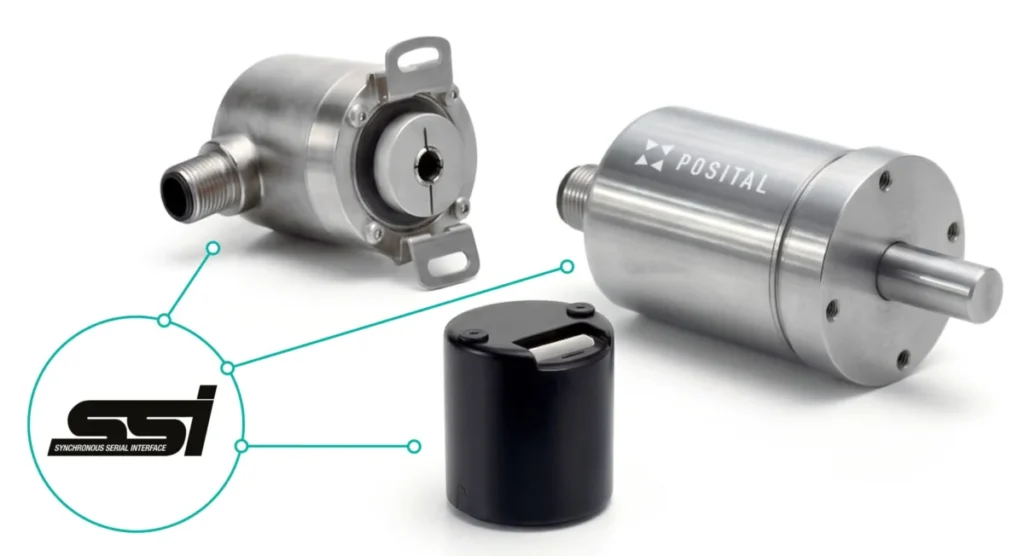
The latest strategic enhancement from POSITAL, a leading manufacturer of advanced industrial sensors, significantly broadens the availability of Synchronous Serial Interface (SSI) communication across its acclaimed IXARC absolute rotary encoder series. This expansion encompasses a wide array of products, from compact kit (modular) encoders designed for seamless integration into existing systems to robust industrial-grade encoders built for demanding environments. Notably, this includes the recently introduced 20 mm miniature form factor, a development that underscores the industry’s ongoing drive towards miniaturization without compromising performance.
This move by POSITAL addresses a persistent demand within the industrial automation sector for reliable, high-performance position feedback solutions that leverage established and widely supported communication protocols. The IXARC encoders, renowned for their precision and durability, will now offer SSI across an even broader spectrum of their product line, providing system designers and engineers with greater flexibility in selecting the optimal encoder for their specific application requirements.
The Strategic Expansion: Meeting Diverse Industrial Needs
The integration of SSI into a wider range of IXARC encoders is a direct response to the evolving needs of modern manufacturing and automation. For larger encoder models, SSI interfaces are now offered in several established mechanical configurations, ensuring compatibility with a vast array of industrial machinery. These options include compact 36 mm models, highly rugged 58 mm versions designed for harsh operating conditions, and specialized 78 mm explosion-proof models that boast ATEX certification, making them suitable for hazardous environments where safety is paramount. In these larger form factors, customers retain the critical choice between magnetic and optical measurement technologies, allowing for application-specific optimization based on factors such as shock resistance, immunity to contamination, and extreme precision requirements.
The introduction of SSI support for the new 20 mm miniature form factor is particularly significant. As automation systems become more compact and integrated, the demand for smaller, yet equally capable, components intensifies. This miniature encoder, now equipped with SSI, opens up new possibilities for space-constrained applications such as robotic end-effectors, small-scale assembly machines, and specialized medical equipment, where both precise angular position feedback and compact design are crucial.
Understanding SSI: A Cornerstone of Industrial Communication
Synchronous Serial Interface (SSI) stands as a venerable and widely adopted communication interface for a multitude of industrial sensors, particularly absolute encoders. Its enduring popularity stems from its inherent simplicity, robustness, and reliability, making it an ideal choice for smaller to medium-sized control systems that prioritize direct, point-to-point communication without the added complexity of more elaborate industrial Ethernet or fieldbus networks.
Technically, SSI is a serial communication method that facilitates a direct connection between sensors and digital programmable logic controllers (PLCs) or microcontrollers. It operates on a master-slave principle, where the PLC (master) generates clock pulses, and the encoder (slave) responds by transmitting its absolute position data synchronously. This communication is typically based on the RS-422 standard, which provides excellent noise immunity and supports high transmission rates. Furthermore, SSI connections can reliably span distances of up to 1,200 meters, offering considerable flexibility in plant layout and sensor placement. A key advantage of SSI is its widespread adoption and support by most major PLC manufacturers globally, ensuring broad compatibility and ease of integration into existing control architectures. Unlike incremental encoders, absolute encoders with SSI transmit an absolute position value immediately upon request, eliminating the need for homing procedures after power cycles and significantly enhancing system uptime and operational efficiency.
Absolute Rotary Encoders: Precision in Motion
Absolute rotary encoders are indispensable components in industrial automation, providing precise and reliable feedback on angular position, speed, and direction. Unlike incremental encoders, which generate pulses based on movement and require a reference point upon power-up, absolute encoders maintain and provide their exact position even after a power interruption. This characteristic is vital for applications where machine state must be accurately known at all times, preventing costly re-homing sequences and ensuring operational continuity.
POSITAL’s IXARC series of absolute rotary encoders are engineered for demanding industrial applications, offering robust construction and high-performance measurement capabilities. Their role extends across diverse sectors, from robotics and material handling to machine tools, renewable energy systems, and packaging machinery. The ability to provide an absolute position value directly contributes to increased accuracy, reduced setup times, and enhanced safety in complex automated systems.
Technological Edge: TMR and Wiegand Sensors for Unrivaled Performance
At the heart of many POSITAL IXARC magnetic encoders lies an advanced technological core: Tunneling Magnetoresistance (TMR) sensors for angular position measurement. TMR technology represents a significant leap forward compared to older Hall-effect sensors, offering a suite of performance advantages critical for modern industrial applications. TMR sensors deliver superior stability across varying conditions, reduced temperature sensitivity, and a more robust response to subtle changes in magnetic fields. This translates into higher measurement accuracy and reliability over extended operational periods. Moreover, their improved energy efficiency contributes to lower power consumption, a desirable trait in sustainable industrial practices.
For multiturn versions of the IXARC encoders, POSITAL employs an ingenious Wiegand energy-harvesting sensor system to power the rotation counting mechanism. This innovative technology enables the encoder to precisely record each shaft rotation in non-volatile memory, critically including rotations that occur when the primary system power is unavailable. The Wiegand sensor generates a small, but reliable, pulse of energy with each rotation, which is then used to update the multiturn counter. The most compelling benefit of this approach is the complete elimination of backup batteries, a common failure point and maintenance concern in traditional multiturn absolute encoders. This battery-free design significantly enhances the long-term reliability, reduces maintenance overhead, and lowers the total cost of ownership for POSITAL IXARC encoders, making them a truly set-and-forget solution for many industrial applications.

Versatility in Form Factors and Measurement Technologies
POSITAL’s commitment to versatility is evident in the broad range of mechanical configurations and measurement technologies offered within the IXARC family. The availability of SSI interfaces across 36 mm, 58 mm, and 78 mm models caters to different mounting requirements and environmental considerations. The 36 mm compact models are ideal for applications where space is at a premium, while the 58 mm rugged versions are built to withstand severe shocks, vibrations, and extreme temperatures, common in heavy machinery and outdoor installations. The 78 mm explosion-proof models, certified with ATEX, are specifically designed for use in potentially explosive atmospheres found in oil and gas, chemical processing, and mining industries, ensuring safety compliance without sacrificing performance.
Customers also have the crucial choice between magnetic and optical measurement technologies. Magnetic encoders, leveraging TMR sensors, are highly resilient to dust, moisture, and shock, making them suitable for dirty and harsh environments. Optical encoders, on the other hand, typically offer higher resolution and accuracy, preferred in applications requiring extremely fine positioning and where the operating environment is cleaner. This dual-technology approach, combined with the diverse form factors, ensures that POSITAL can provide an optimized SSI-enabled encoder solution for virtually any industrial application.
The Advantage of Hybrid Communication: SSI and Incremental
Recognizing the evolving demands of complex control systems, POSITAL also offers IXARC encoders with a unique hybrid communication interface that supports both absolute (SSI) and incremental measurements. This dual functionality provides control system designers with unparalleled flexibility and future-proofing capabilities. Absolute measurement, as provided by SSI, is inherently well-suited for a wide range of positioning tasks, ensuring precise knowledge of a machine’s exact state at all times. Incremental encoders, conversely, are often favored for monitoring rotational speed and direction due to their dynamic response characteristics, making them excellent for real-time velocity control.
Combining both functions within a single device allows engineers to simplify their system architecture, reduce component count, and optimize costs. This is particularly advantageous in scenarios where a future transition from basic incremental monitoring to more sophisticated absolute position measurement is being considered, or where both types of feedback are required simultaneously. For instance, a robotic arm might use incremental feedback for rapid, dynamic movements, while relying on absolute feedback for precise end-point positioning or safe homing. The hybrid interface empowers designers to adapt to changing application requirements without needing to replace hardware, offering significant long-term value.
Programmability and Future-Proofing with UBIFAST
Adding another layer of value and adaptability, POSITAL encoders with SSI interfaces are fully programmable. This capability allows many operating parameters to be configured and updated through software, utilizing POSITAL’s proprietary UBIFAST programming tool. UBIFAST (Universal Bi-directional Interface for Sensors and Transducers) provides a user-friendly platform for adjusting parameters such as resolution, direction of rotation, and various other communication settings.
This programmability is a critical feature in modern industrial settings. It enables engineers to fine-tune encoder performance to match specific application needs, perform field upgrades, and adapt to evolving system requirements without physical modification or replacement of the hardware. This not only streamlines commissioning and maintenance processes but also extends the operational lifespan of the encoders, contributing to a more agile and cost-effective automation infrastructure. The ability to update parameters via software ensures that the encoders can remain current with new control system demands and industry standards, providing significant future-proofing benefits.
POSITAL’s Vision and Broader Market Impact
This substantial expansion of SSI options across the IXARC encoder line reflects POSITAL’s ongoing commitment to innovation and its responsiveness to market demands. In an era dominated by Industry 4.0 and the proliferation of smart factories, the need for robust, reliable, and versatile sensor technology has never been greater. Precision position feedback is a cornerstone of advanced automation, robotics, and the Internet of Things (IoT) in manufacturing. By enhancing the accessibility of SSI, POSITAL reinforces its position as a key enabler of these technologies.
Industry analysts consistently highlight the growing market for industrial sensors, driven by the increasing automation of manufacturing processes, the rise of collaborative robotics, and the imperative for greater efficiency and productivity. The global industrial encoder market, for instance, is projected to continue its steady growth, with absolute encoders playing an increasingly vital role due to their inherent advantages in reliability and data integrity. POSITAL’s strategy aligns perfectly with these trends, offering high-performance solutions that meet the stringent requirements of modern industrial applications while providing the flexibility and ease of integration that engineers demand.
The move also underscores the enduring relevance of established, proven communication protocols like SSI, even as newer, more complex Ethernet-based systems gain traction. For many applications, particularly those requiring straightforward, reliable, and cost-effective point-to-point communication, SSI remains the optimal choice. POSITAL’s comprehensive offering ensures that customers do not have to compromise on performance or reliability, regardless of their preferred communication standard or application complexity.
In conclusion, POSITAL’s expanded support for SSI communication interfaces across its IXARC absolute rotary encoder portfolio represents a significant advancement for the industrial automation sector. By making this robust and widely supported protocol available across a broader range of products—including innovative miniature form factors, rugged industrial designs, and advanced technological features like TMR and Wiegand sensors—POSITAL empowers engineers with enhanced flexibility, reliability, and future-proof solutions. This strategic move is poised to further solidify POSITAL’s leadership in the industrial sensor market, contributing to more efficient, precise, and adaptable automation systems worldwide.