The Infrastructure of a Temporary Metropolis
The creation of Black Rock City is a logistical feat managed by the Department of Public Works (DPW), a specialized branch of the Burning Man organization. However, the true essence of the "City of Makers" lies in the hundreds of independent art installations and mutant vehicles that populate the landscape. These projects are not merely aesthetic; they are rigorous engineering challenges designed to withstand 70-mph dust storms, extreme thermal fluctuations, and the physical interaction of over 80,000 participants.
While the Burning Man Project provides a platform and, in some instances, financial support through its Honorarium Program—a grant system that distributes hundreds of thousands of dollars annually to artists—the majority of the labor and funding is grassroots. In recent years, a significant trend has emerged where these massive installations find a second life beyond the desert. Venues such as Maker Faire Bay Area on Mare Island have become critical exhibition spaces, allowing the broader public to witness the craftsmanship that was previously reserved for those making the pilgrimage to the remote desert.
Chronology of the Maker Cycle: From Concept to Playa and Beyond
The lifecycle of a major Burning Man project typically spans twelve to twenty-four months. The process begins with conceptual renderings and engineering blueprints, often developed in collaborative makerspaces like the Reno Generator or the Crucible in Oakland.

- The Design Phase (Winter–Spring): Artists submit proposals for Honorarium grants. Technical teams utilize CAD software and 3D modeling to simulate structural integrity.
- The Fabrication Phase (Spring–Summer): Construction takes place in industrial hubs. This involves CNC milling, advanced welding, LED programming, and pneumatic testing.
- The Installation Phase (August): Teams arrive in the Black Rock Desert weeks before the event. This "Build Week" requires heavy machinery, including cranes and telehandlers, to assemble modular components transported by semi-trucks.
- The Exhibition Phase (Late August–Early September): The art is activated for the duration of the event, often featuring interactive electronics and pyrotechnics.
- The Legacy Phase (Autumn and Beyond): Post-event, the art is decommissioned. High-profile pieces are frequently refurbished for permanent installation or touring exhibitions, such as Maker Faire.
Engineering Highlight: Kinetic Sculpture and Fire Art
Among the most prominent makers returning from the playa is Duane Flatmo, a veteran kinetic artist based in Eureka, California. Flatmo’s latest iteration of his work, El Pulpo Magnifico, serves as a prime example of the "recycled industrial" aesthetic prevalent in the maker community. The sculpture, a massive fire-breathing octopus, was constructed using repurposed aluminum bread tins, cookie molds, and assorted metal ephemera. The mechanical complexity of its articulating tentacles and synchronized flame effects requires a sophisticated understanding of both fluid dynamics and mechanical linkages.
Similarly, the Tree of Photon by Polish artist Artur Grycuk represents the fusion of biological inspiration and high-tech execution. As the first Polish artist to receive an Honorarium grant, Grycuk designed the piece to symbolize the quantum poetry of light. The structure utilizes interactive sensors that respond to human touch, triggering light sequences across thousands of LEDs. This bridge between human interaction and technological response is a recurring theme in modern maker art, moving away from static objects toward responsive environments.

Mobile Engineering: The Evolution of Mutant Vehicles
In the nomenclature of Black Rock City, "mutant vehicles" are highly modified motorized installations that bear little to no resemblance to their original chassis. These projects, often referred to as art cars, require rigorous safety inspections by the event’s Mutant Vehicle Department (DMV).
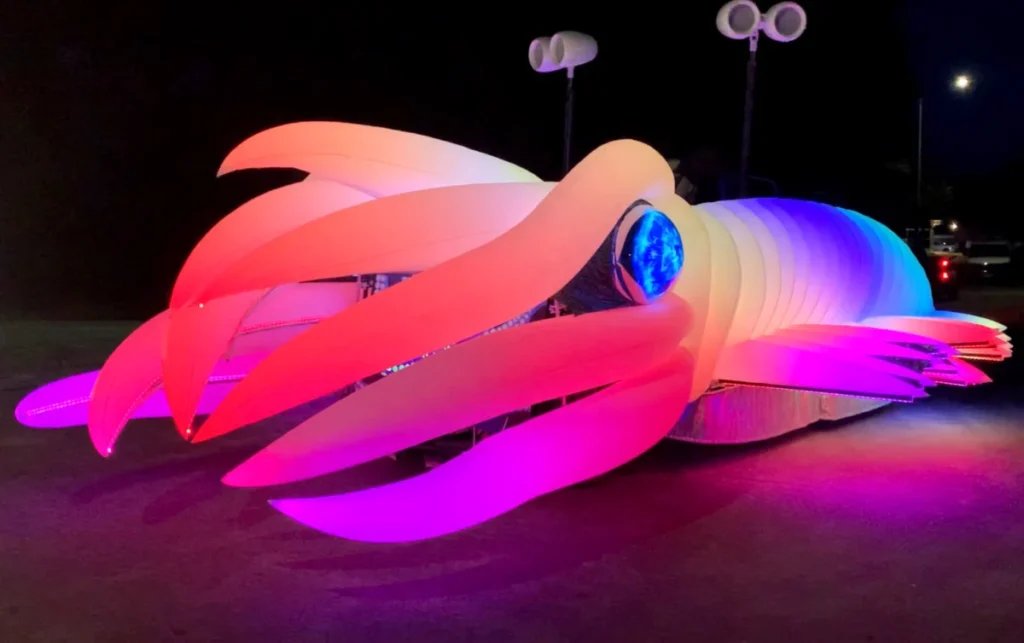
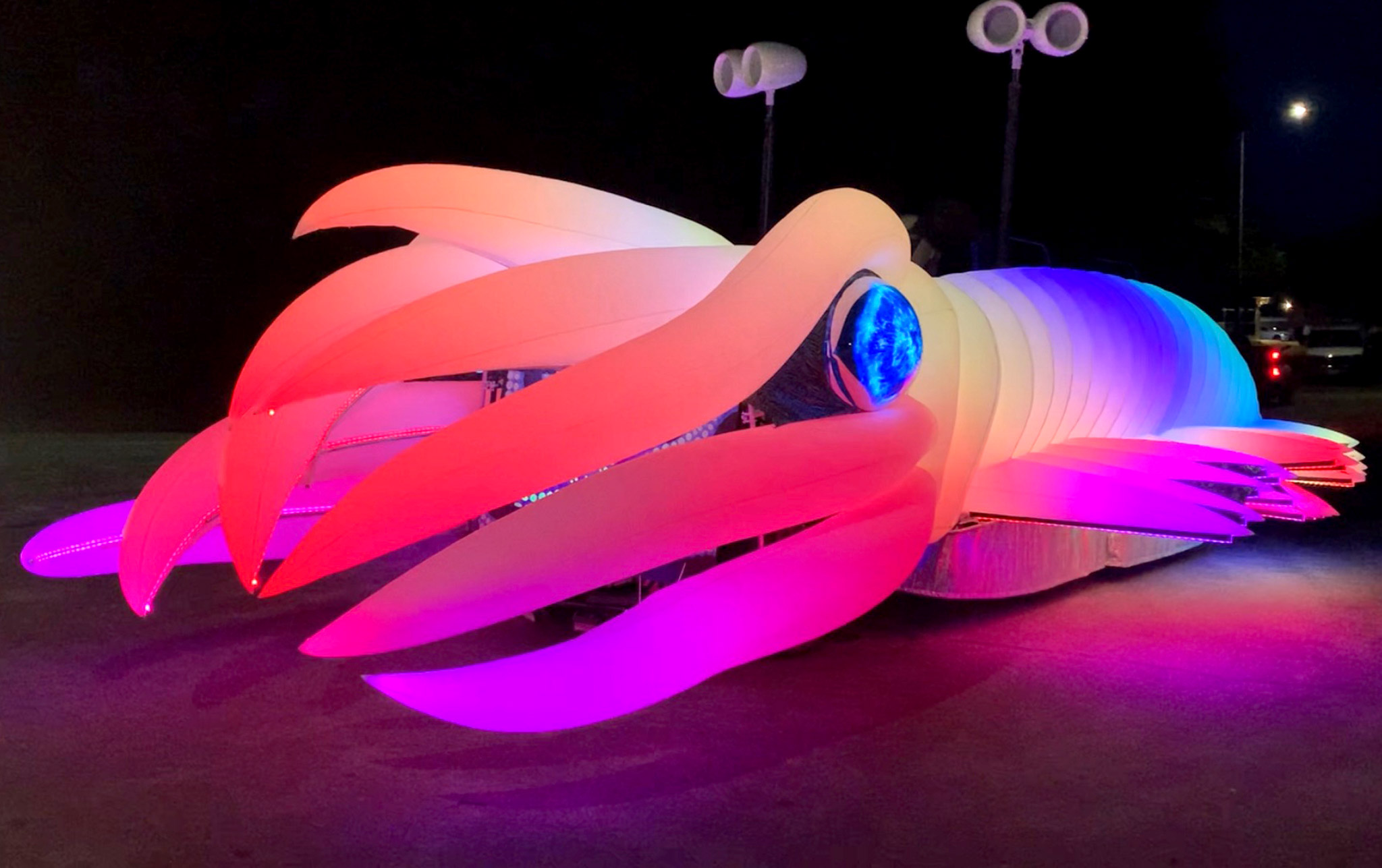
One such project is Sepia Lux, an illuminated cuttlefish created by Bill Kennedy, known professionally as "Inflatabill." The vehicle is built upon a modified Polaris General side-by-side ATV chassis. The engineering challenge for Sepia Lux involved the creation of inflatable fins that utilize a wave-motion mechanism to mimic the undulating movement of a cephalopod. The project, which took 20 months to complete, involved intricate plastic welding and the integration of a high-fidelity sound system and a complex LED matrix.

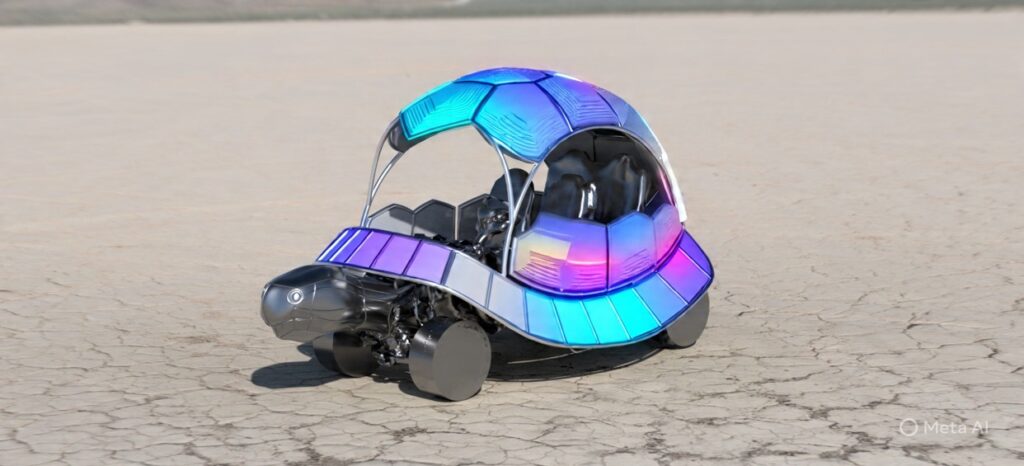
Following in the footsteps of Sepia Lux is Flash the Tortoise, a 2002 Gem Car converted into a bioluminescent land tortoise. The build featured a custom-welded aluminum frame and vacuum-formed HDPE scutes (shell panels). The designers at CooLab utilized a custom lithium battery pack to power both the drivetrain and the extensive internal lighting system, demonstrating the transition toward sustainable power in large-scale mobile art.
Industrial Heritage and Monumental Metalwork
The transition of art from the playa to Mare Island is particularly symbolic given the island’s history as a naval shipyard. The installation of Zulu Heru’s Farmer the Rigger highlights this connection. This 21-foot-tall, 9,000-pound metal mask was forged by Heru, a professional crane operator who transitioned from agricultural work to industrial rigging.
The sculpture serves as a "guardian spirit" for creative spaces, but its construction speaks to the industrial skills preserved within the maker community. The use of heavy-gauge steel and large-scale forging techniques mirrors the naval construction that once defined Mare Island. According to representatives from Mare Island Co., placing such monumental works in a former industrial powerhouse validates the technical skill of the artists and bridges the gap between traditional labor and contemporary art.
The Biomechanics of Motion: Adrian Landon’s Kinetic Horses
Adrian Landon, a New York-based artist, has gained international recognition for his ability to replicate animal biomechanics through stainless steel. His project Nebula Rider is the culmination of years of study into equine movement. Landon’s journey began with simpler mechanical horses in 2014, eventually leading to the Burning Man Honorarium project Wings of Glory.

Nebula Rider features a mirrored, reflective surface and a complex internal gear system that allows the horse to "gallop" in a realistic fashion. At night, the piece is transformed by color-changing LED illumination. Landon’s work exemplifies the maker movement’s rejection of formal academic silos, instead favoring a "learn-by-doing" approach that combines physics, biology, and metalwork.
Broader Impact and Economic Implications
The migration of Burning Man art to events like Maker Faire Bay Area has significant economic and cultural implications. It creates a secondary market for large-scale art, providing artists with opportunities for commissions, rentals, and public grants. Furthermore, it democratizes the "Burner" aesthetic, stripping away the exclusivity of the desert event and focusing on the underlying technical achievement.

The "Maker Economy" relies on a network of specialized suppliers—electronics manufacturers, metal wholesalers, and software developers—who have seen increased demand for high-durability components capable of surviving the Black Rock Desert. This has led to innovations in "ruggedized" consumer electronics and portable solar power solutions that eventually trickle down to mainstream applications.
Conclusion: The Permanence of the Temporary
While Black Rock City is designed to leave no trace, the influence of its makers is permanent. The transition of projects like Project Empire—a sci-fi performance piece from the creators of The Golden Mean and The Serpent Twins—into the public sphere ensures that the engineering lessons learned in the dust are shared with the next generation of builders.

As these "engineered wonders" continue to tour the globe, they serve as a testament to the power of communal effort and radical self-expression. The collaboration between the Burning Man Project and the Maker Faire movement reinforces a vital message: the tools of creation are accessible to all, and the boundary between a "beginner" and an "expert" is merely a matter of participation. For those who cannot journey to the Nevada desert, the presence of these massive, fire-breathing, light-pulsating structures at Mare Island offers a window into a world where the only limit is the builder’s imagination and the structural integrity of their welds.