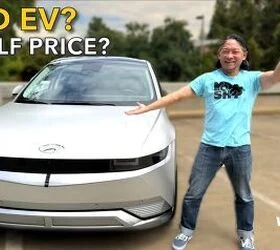
The automotive landscape is in a state of profound transformation, with electrification emerging as a dominant force. For many, this shift represents a departure from decades of ingrained loyalty and familiar driving dynamics. This is precisely the journey undertaken by Gwon, a passionate Volkswagen aficionado whose long-standing dedication to the German marque has been tested and ultimately redefined by his experience with a used 2023 Hyundai Ioniq 5 Limited Edition. His decision to trade in a lineage of beloved Volkswagen GTIs, GLIs, and Alltracks for a Korean electric crossover, acquired at nearly half the price of a new equivalent, offers a compelling narrative about evolving consumer priorities, the burgeoning used EV market, and the critical factors influencing the transition to electric mobility.
This detailed examination, presented within the framework of the TTAC Creators Series, delves into Gwon’s six-month ownership review of the Ioniq 5, juxtaposing it against the Volkswagen ID.4. The analysis meticulously dissects the user experience, from the striking aesthetics of the Ioniq 5’s Gravity Gold Matte paint to the practical considerations of cargo space and the technological disparities between 800-volt and 400-volt charging architectures. Furthermore, it probes the perennial debate between the tactile satisfaction of physical buttons and the sleek, albeit sometimes frustrating, interface of capacitive touch sliders. This exploration is not merely a personal anecdote; it serves as a vital case study for consumers contemplating the leap to electric vehicles, particularly those with established preferences for traditional internal combustion engine vehicles.
The Genesis of a Switch: From German Engineering to Korean Innovation
Gwon’s automotive journey, spanning two decades, was deeply intertwined with Volkswagen. His garage had housed a consistent rotation of performance-oriented models that epitomize the brand’s enthusiast appeal. The GTI, a benchmark in the hot hatch segment, and the GLI, its sedan counterpart offering a blend of sportiness and practicality, represent a significant chapter in his driving life. The Alltrack, a more rugged, all-wheel-drive variant, showcased a versatility that appealed to a broader spectrum of needs. These vehicles are celebrated for their engaging driving dynamics, robust build quality, and a certain intangible "German feel" that resonates with a dedicated following.
The decision to pivot away from this established comfort zone was multifaceted. The primary catalyst, as revealed in the comprehensive review, was the substantial cost savings associated with purchasing a pre-owned 2023 Hyundai Ioniq 5 Limited Edition. Acquiring a vehicle that was only a year old for approximately 50% of its original sticker price presented an irresistible financial proposition. This economic incentive, coupled with the inherent advantages of electric propulsion – notably the elimination of premium gasoline expenses – laid the groundwork for a significant shift in Gwon’s automotive philosophy. The allure of modern design, the promise of advanced technology, and the growing confidence in EV infrastructure, particularly the diminishing concerns around range anxiety, all contributed to this pivotal choice. Six months into his ownership, Gwon’s household has expanded to include two Hyundai EVs, a testament to his growing satisfaction and the successful integration of electric vehicles into his daily life.
Design and Aesthetics: A Visual Revolution
The Hyundai Ioniq 5 has consistently garnered praise for its avant-garde design, a deliberate departure from conventional automotive styling. Described as a "hatchback on steroids," its retro-futuristic aesthetic draws inspiration from the original Hyundai Pony and the iconic Giugiaro-designed Adobe concept car. The vehicle’s distinctive pixelated LED lighting signatures, both front and rear, create a memorable visual identity. The clean, sharp lines, the flush door handles, and the aerodynamic profile contribute to its unique presence on the road.
In direct comparison to the Volkswagen ID.4, the Ioniq 5 presents a lower, more aggressively raked silhouette, reinforcing its hatchback-like character despite its classification as a crossover SUV. This design language not only sets it apart from its German counterpart but also appeals to a demographic seeking a more expressive and fashion-forward mode of transport. The ID.4, while possessing its own contemporary design, leans towards a more conventional, albeit modern, crossover aesthetic. The Ioniq 5’s design choices underscore a strategic intent by Hyundai to capture attention and evoke emotion, a departure from the more conservative design cues often associated with traditional automakers.
Interior and Technology: A Harmonious Blend of Luxury and Innovation
The Limited Edition trim of the 2023 Hyundai Ioniq 5 is equipped with a suite of premium features that elevate the ownership experience. The interior is characterized by its spaciousness and airy ambiance, largely due to the flat floor enabled by the E-GMP platform and the generous wheelbase. The seats, particularly the front "Relaxation Seats," offer exceptional comfort, with the driver’s seat featuring an integrated leg rest, transforming commutes into more restorative journeys. The use of sustainable materials throughout the cabin further aligns with the ethos of electric vehicle ownership.
The technological interface, however, represents a more complex aspect of the transition, especially for someone accustomed to the more traditional ergonomics of older Volkswagen models. The Ioniq 5 boasts a dual-screen setup: a 12.3-inch digital instrument cluster and a 12.3-inch infotainment touchscreen. Features like the augmented reality head-up display, which projects navigation prompts and driver-assistance information directly onto the windshield, offer a glimpse into the future of automotive interfaces. The integrated navigation system, wireless Apple CarPlay and Android Auto, and a robust suite of driver-assistance technologies, including Highway Driving Assist 2 (HDA 2), contribute to a modern and convenient driving experience.
Despite these advancements, Gwon’s review highlights a common point of contention in modern vehicle design: the reliance on capacitive touch sliders for climate control and infotainment functions. While aesthetically sleek, these touch-sensitive controls can lack the immediate tactile feedback of physical buttons, leading to occasional frustration, particularly when attempting to adjust settings while driving. This contrasts with the Volkswagen ID.4, which, despite its own capacitive touch elements, offers a more integrated approach to some physical controls, although it too has faced criticism for its reliance on touch interfaces. The debate between physical buttons and capacitive sliders remains a significant factor in user satisfaction, with many enthusiasts, including Gwon, expressing a preference for the former’s intuitiveness and ease of use.
Driving Dynamics and Performance: A New Paradigm
The driving experience in the Hyundai Ioniq 5 is characterized by its smooth, quiet operation, a hallmark of electric vehicles. The instant torque delivery provides brisk acceleration, making city driving and highway merging effortless. Gwon specifically praises the responsive throttle, the low center of gravity contributing to stable handling, and the comfortable ride quality, which absorbs road imperfections with commendable composure. The Ioniq 5’s well-tuned suspension system strikes a balance between comfort and dynamic capability, making it a pleasant companion for both daily commutes and longer journeys.
However, the integration of advanced driver-assistance systems presents a learning curve. Gwon notes that Hyundai’s steering assist, particularly the lane-centering function, can feel overly intrusive on winding roads, prompting him to disable it in favor of adaptive cruise control on highways. This observation underscores the importance of user configurability and the need for drivers to familiarize themselves with the nuances of these sophisticated systems.
The Charging Imperative: An 800-Volt Advantage
A critical differentiator between the Ioniq 5 and the Volkswagen ID.4 lies in their respective charging architectures. The Ioniq 5 is built upon Hyundai’s E-GMP (Electric-Global Modular Platform), which supports an 800-volt electrical system. This advanced architecture enables ultra-fast DC charging, allowing the Ioniq 5 to charge from 10% to 80% in as little as 18 minutes at a compatible 350 kW charging station. This capability significantly reduces downtime on long-distance trips, alleviating range anxiety and enhancing the practicality of the EV for extended travel.
In contrast, the Volkswagen ID.4 utilizes a 400-volt architecture. While still capable of DC fast charging, its charging speeds are generally lower than those of 800-volt systems, typically requiring more time to achieve a comparable state of charge. This technical disparity represents a significant advantage for the Ioniq 5 in scenarios where rapid charging is a priority, such as road trips or when access to charging infrastructure is limited. The widespread adoption of 800-volt technology is considered a crucial step in making EVs more competitive with the convenience of refueling internal combustion engine vehicles.
Comparative Analysis: Ioniq 5 vs. ID.4
While Gwon’s ultimate allegiance lies with the Ioniq 5, his appraisal of the Volkswagen ID.4 is nuanced and appreciative. He commends the ID.4 for its familiar Volkswagen driving dynamics, which often provide a more connected and engaging feel for those accustomed to the brand’s traditional offerings. The ID.4’s interior, though perhaps less avant-garde than the Ioniq 5’s, is recognized for its practical layout and solid build quality, characteristic of Volkswagen’s engineering prowess.
Volkswagen ID.4 Strengths:
- Familiar Driving Dynamics: Offers a driving experience that many Volkswagen loyalists will find comfortable and engaging.
- Practicality and Ergonomics: Generally well-designed interior with a focus on user-friendly packaging.
- Solid Build Quality: Reflects Volkswagen’s reputation for robust construction.
- Potential for Aftermarket Improvements: Discussions within the enthusiast community suggest that modifications, potentially involving parts from other VAG group vehicles like the Volkswagen Atlas or Audi models, can enhance certain aspects of the ID.4’s user interface, particularly its touch controls.
Volkswagen ID.4 Weaknesses:
- Slower Charging Speeds: The 400-volt architecture limits its DC fast-charging capabilities compared to 800-volt systems.
- Infotainment and Controls: Like many modern vehicles, it relies on touch interfaces that can be less intuitive than physical buttons.
- Design: While modern, it may be perceived as less distinctive or emotionally engaging than the Ioniq 5.
Practicality and Cargo Considerations
When comparing the utility of these two electric crossovers, cargo space emerges as a key practical consideration for many buyers. The Ioniq 5 offers a total cargo volume of 27.2 cubic feet behind the rear seats, expanding to approximately 59.3 cubic feet with the rear seats folded down. It also features a modest front trunk (frunk) of about 0.7 cubic feet, suitable for charging cables or small items.
The Volkswagen ID.4, in its standard configuration, typically provides a slightly larger cargo area. With the rear seats in place, it offers around 30.3 cubic feet of space, expanding to approximately 64.2 cubic feet when the rear seats are folded. The ID.4 generally does not offer a frunk. This difference in cargo capacity, while not substantial, could be a deciding factor for buyers who prioritize maximum storage volume.
Ownership Drawbacks and the Path Forward
Despite the overwhelming satisfaction Gwon has found with his Ioniq 5, no vehicle is without its compromises. He notes a few minor drawbacks, including the lack of a rear wiper, which can be an inconvenience in inclement weather, and the sometimes-finicky nature of the interior door handles, which require a deliberate pull to open. These are relatively minor points, but they highlight the attention to detail that can significantly impact everyday usability.
The broader implications of Gwon’s experience are significant. His successful transition from a legacy of internal combustion engine vehicles to an electric alternative, driven by a combination of financial prudence and technological appeal, mirrors a growing trend in the automotive market. The availability of compelling used EVs at attractive price points democratizes access to electric mobility, making it a viable option for a wider segment of the population. The Ioniq 5’s success in attracting a former Volkswagen loyalist underscores the evolving nature of brand loyalty in the face of technological advancement and shifting market dynamics.
Conclusion: A Verdict on Electric Evolution
After six months of living with the 2023 Hyundai Ioniq 5 Limited Edition, Gwon unequivocally states he would purchase it again. The vehicle’s compelling combination of distinctive styling, practical versatility, advanced technology, rapid charging capabilities, and overall comfort has rendered it a significant upgrade from his previous Volkswagen fleet. His journey serves as a powerful endorsement of the Ioniq 5’s merits and the broader appeal of the electric vehicle revolution.
Ultimately, both the Hyundai Ioniq 5 and the Volkswagen ID.4 represent strong contenders in the electric vehicle market, particularly in the burgeoning used car segment. The choice between them hinges on individual priorities. For those who prioritize head-turning design, cutting-edge charging technology, and a premium, futuristic interior, the Ioniq 5 stands out. Conversely, drivers seeking familiar Volkswagen driving characteristics, a more conventional yet practical crossover experience, and a solid overall package may find the ID.4 to be the more suitable option. Gwon’s experience, however, demonstrates that the allure of electrification, coupled with smart purchasing decisions in the used market, can lead even the most dedicated enthusiasts down a new and rewarding automotive path. The electric frontier, once a distant prospect, is now an accessible and appealing reality for a growing number of consumers.