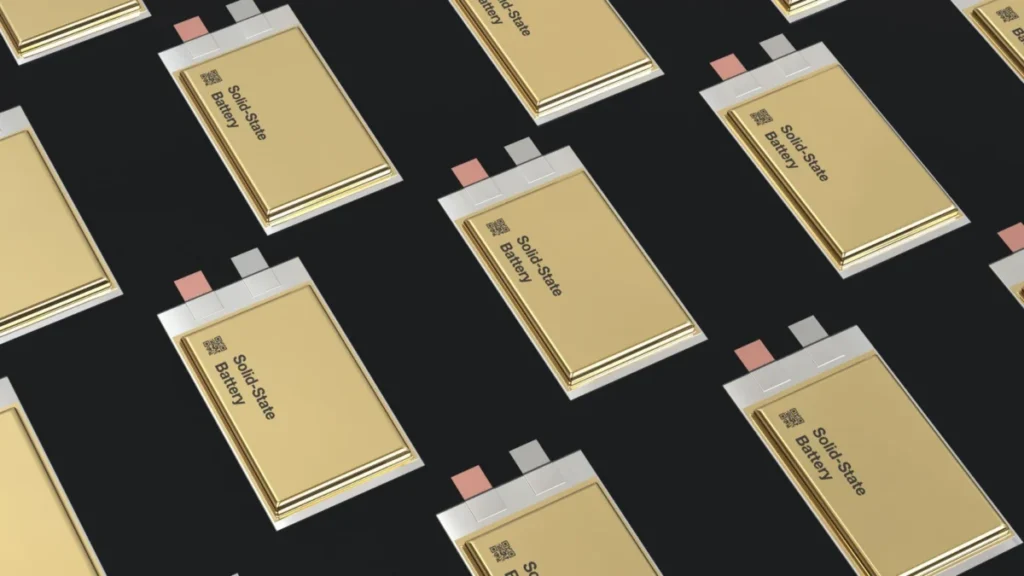
Researchers at the Argonne National Laboratory have developed a faster, computer-assisted method to identify protective nanoscale coatings that can significantly stabilize promising, yet inherently fragile, sulfide-based solid-state batteries. This pioneering work represents a critical step forward in addressing one of the most persistent hurdles in next-generation energy storage technology, promising a future of safer, higher-capacity, and ultra-fast charging batteries for electric vehicles and beyond. The breakthrough centers on the discovery that an ultrathin, one-nanometer-thick coating of magnesium oxide (MgO) can effectively safeguard sulfide-based solid electrolytes, preventing their destructive degradation when in contact with lithium metal.
The methodology employed by the Argonne team ingeniously combined sophisticated computational screening techniques with rigorous experimental validation. This synergistic approach allowed scientists to predict and then confirm that the most effective coatings operate by strategically reacting at the battery’s critical interfaces. Instead of remaining inert, these reactive coatings form a dynamic, protective barrier. Crucially, this barrier is designed to permit the unimpeded flow of lithium ions, which are essential for battery function, while simultaneously blocking the detrimental flow of electrons that initiates and accelerates material degradation. This counter-intuitive finding challenges previous assumptions in battery material science, where inertness was often considered the ideal property for protective layers.
The Imperative for Solid-State Batteries: Addressing Current Limitations
The global energy landscape is undergoing a profound transformation, with electric vehicles (EVs) and renewable energy integration at its forefront. Central to this revolution is the battery, and while conventional lithium-ion (Li-ion) batteries have been instrumental, they present inherent limitations that hinder widespread adoption and optimal performance. Current Li-ion technology, predominantly utilizing liquid organic electrolytes, faces challenges related to safety, energy density, and charging speed.
One of the most significant concerns with liquid electrolytes is their flammability. Under extreme conditions, such as overcharging, rapid discharging, or physical damage, these electrolytes can overheat and ignite, leading to a phenomenon known as "thermal runaway." This risk, though rare, poses a considerable barrier to consumer confidence and necessitates complex thermal management systems, adding weight and cost to battery packs. Furthermore, the formation of lithium dendrites—tree-like metallic structures—on the anode during repeated charging cycles can pierce the separator, leading to short circuits and potential fires, and significantly shortening battery lifespan.
In terms of performance, while Li-ion batteries have made substantial gains, their energy density—the amount of energy stored per unit of volume or weight—still limits EV range and their charging times remain relatively long compared to refueling internal combustion engine vehicles. The market demand for batteries that offer greater range, faster charging, and uncompromising safety has propelled intensive research into solid-state battery technology. Forecasts indicate that the global solid-state battery market is poised for exponential growth, with projections suggesting it could reach tens of billions of dollars within the next decade, driven primarily by the automotive sector’s need for superior energy storage solutions.
The Core Challenge: Interfacial Instability in Solid-State Systems
Solid-state batteries are widely hailed as the future of safe, high-capacity energy storage. By replacing flammable liquid electrolytes with solid counterparts, they inherently eliminate the risk of thermal runaway and enable the use of lithium metal anodes, which offer significantly higher energy densities. Among the various solid electrolyte candidates, sulfide-based materials are particularly attractive due to their high ionic conductivity, which rivals that of liquid electrolytes. However, their development has been significantly hampered by a critical vulnerability: chemical fragility.
Specifically, sulfide-based solid electrolytes exhibit a tendency to react destructively at key internal boundaries, especially when in direct contact with lithium metal. This unwanted chemical interaction, often described as "chemical warfare," leads to the formation of resistive interphases that degrade the materials from the inside out. This internal degradation severely compromises battery performance, leading to rapid capacity fade, increased internal resistance, and a drastically shortened operational lifespan. The Argonne research team focused on addressing this precise problem in a specific sulfide solid electrolyte known as lithium phosphorus sulfur chloride (LPSCl), a highly promising material for its excellent ionic conductivity.
The degradation mechanism involves parasitic electron flow across the electrolyte-electrode interface, leading to unwanted chemical reactions that consume active materials and form electrically insulating but ionically resistive layers. Over time, these interphases grow, effectively "clogging" the pathways for lithium ion transport and crippling the battery’s ability to store and deliver energy efficiently. Solving this interfacial instability is paramount to unlocking the full potential of sulfide-based solid-state batteries.
Argonne’s Innovative Approach: Bridging Computation and Experimentation
To overcome the pervasive degradation problem, the Argonne researchers embarked on an ambitious strategy that leveraged the power of computational materials science to guide experimental discovery. The team utilized a sophisticated computational technique known as Density Functional Theory (DFT) to screen a wide variety of potential oxide coatings. DFT is a quantum mechanical modeling method used in physics and chemistry to investigate the electronic structure (or nuclear structure) of many-body systems, particularly atoms, molecules, and condensed phases. It allows scientists to simulate and predict the behavior of materials at an atomic level, including how different coatings would interact with the electrolyte and electrode materials.
This computational screening allowed the researchers to rapidly evaluate thousands of candidate materials, a process that would be prohibitively time-consuming and expensive through purely experimental means. The simulations focused on predicting how each protective layer would behave across three high-friction battery boundaries: where the coating intersects the electrolyte, the lithium metal anode, and the cathode materials. This holistic approach ensured that the chosen coatings would perform optimally across the entire electrochemical cell.
Once promising candidates were identified computationally, they were applied using Atomic Layer Deposition (ALD). ALD is a high-precision manufacturing method capable of depositing uniform, ultrathin layers at a near-atomic level. This technique is ideal for creating the one-nanometer-thick coatings required for this application, ensuring perfect, conformal coverage over the intricate surfaces of the electrolyte powder particles. The ability of ALD to produce such precise and controlled layers was critical for testing the computationally derived hypotheses.
A pivotal and counter-intuitive discovery emerged from this combined approach: conventionally, scientists assumed that the best protective coating would be the least reactive one, aiming for something completely inert. However, the computational data revealed a different truth. The most effective coatings were not inert; they actually did react with the electrolyte and electrode materials. What proved to be most critical was the nature of the reaction products formed by these coatings. The ideal coating, it was found, forms a "smart" barrier – one that effectively blocks the flow of electrons, thereby halting further decay, but simultaneously leaves the door wide open for lithium ions to pass through efficiently. This fundamental shift in understanding paves the way for a new paradigm in designing interfacial layers for advanced battery chemistries.
Magnesium Oxide Emerges as a Champion
When the computationally predicted candidates were rigorously tested in the laboratory, magnesium oxide (MgO) unequivocally stood out as the top performer. Its application significantly improved the stability of the LPSCl electrolyte against lithium metal, dramatically reducing interfacial resistance and boosting overall battery performance. The MgO coating, upon reacting at the interface, formed a stable interphase that possessed the desired transport properties: high lithium ion conductivity and low electronic conductivity. This "smart" barrier effectively passivated the reactive surfaces, preventing the parasitic reactions that plague unprotected sulfide electrolytes.
The study also provided valuable insights into the performance of other candidate materials. Zinc Oxide (ZnO), for instance, was found to be highly reactive, much like MgO. However, because its reaction products also exhibited the correct transport properties—allowing lithium ions to pass while blocking electrons—it still performed remarkably well. This further reinforced the new understanding that reactivity itself is not detrimental, provided the resulting interphase is functionally optimized.
In contrast, Zirconium Oxide (ZrO₂) proved to be a disappointment. While intrinsically highly stable on its own, it reacted at the interfaces to form "clogged" pathways, meaning its reaction products had poor lithium ion conductivity. This resulted in terrible overall battery performance, underscoring the critical importance of not just the initial stability of the coating material, but the precise electrochemical nature of the compounds it forms upon reaction within the battery environment.
To validate these findings, advanced analytical techniques were employed. High-resolution electron microscopy and X-ray spectroscopy were used to meticulously confirm that the MgO coatings were perfectly and uniformly distributed over the electrolyte powder surfaces. These techniques provided direct visual and chemical evidence of the nanoscale barrier’s integrity and confirmed the composition of the beneficial reaction products at the interfaces, providing robust experimental backing for the computational predictions.
A New Paradigm in Material Discovery
This research represents more than just a breakthrough in solid-state battery technology; it signifies a fundamental shift in the methodology of materials science itself. By combining advanced computational modeling with high-precision experimental validation, Argonne National Laboratory has demonstrated a predictable and accelerated way to screen thousands of candidate materials. This paradigm moves beyond traditional trial-and-error approaches, which are often slow, resource-intensive, and serendipitous. Instead, it ushers in an era of rational design, where material properties can be predicted and optimized before ever stepping into the lab.
The ability to leverage Density Functional Theory to simulate atomic-level interactions and predict interfacial reactions is a game-changer. It allows researchers to quickly identify promising candidates and discard unfeasible ones, drastically shortening the research and development cycle. This accelerated discovery pipeline holds immense implications not only for battery materials but for a vast array of other fields requiring advanced material solutions, from catalysts and sensors to next-generation electronics. The "computer-assisted method" ensures that future advancements in material science can be achieved with unprecedented speed and efficiency.
Broader Implications for Electric Vehicles and Beyond
The successful stabilization of sulfide-based solid electrolytes with ultrathin nanoscale coatings has profound implications, particularly for the electric vehicle industry. One of the most eagerly anticipated benefits is the potential for ultra-fast charging. While conventional liquid lithium-ion batteries risk dangerous "thermal runaway" when pushed too hard—leading to overheating or even fire—solid-state batteries protected by this new shield could theoretically charge in under ten minutes without any such risks. This capability would largely eliminate range anxiety and make EVs as convenient to "refuel" as gasoline-powered cars, addressing a major psychological barrier to widespread EV adoption.
Beyond charging speed, the enhanced safety profile of solid-state batteries is transformative. By eliminating flammable liquid electrolytes and preventing dendrite formation, these batteries offer an intrinsically safer energy storage solution. This translates to more robust and reliable vehicles, reducing the need for complex and heavy thermal management systems, which in turn can lead to lighter, more efficient, and potentially more affordable EVs.
Furthermore, the extended lifespan of these stabilized solid-state batteries—running safely for decades—would significantly improve the total cost of ownership for EVs and reduce waste from battery disposal. This longevity is crucial for sustainable mobility and could also open doors for secondary applications, such as grid-scale energy storage, where long-term reliability and safety are paramount. Imagine battery packs from retired EVs being repurposed for home energy storage or grid stabilization, further enhancing the circular economy. The higher energy density enabled by stable lithium metal anodes would also translate to longer driving ranges for EVs, further enhancing their practicality and appeal.
The Road Ahead: Scaling and Commercialization
While this research marks a monumental scientific achievement, the journey from laboratory breakthrough to widespread commercialization involves significant challenges. The next steps will focus on scaling up the production of these nanoscale coatings and integrating them into commercially viable battery cell designs. This includes optimizing the ALD process for high-volume manufacturing, ensuring cost-effectiveness, and demonstrating long-term performance and reliability under real-world operating conditions. Collaboration between national laboratories like Argonne, academic institutions, and industry partners will be crucial to accelerate the transition of this technology from fundamental research to market-ready products.
Researchers at Argonne emphasize that this discovery provides a powerful tool, a "predictable, accelerated way to screen thousands of candidate materials," ensuring that future advancements can be made with unprecedented speed and efficiency. This systematic approach reduces the guesswork inherent in materials discovery, allowing for more targeted research and development efforts. The ultimate goal is to bring solid-state batteries that charge in minutes and run safely for decades from the realm of scientific possibility into everyday reality, fundamentally transforming energy storage for electric vehicles, portable electronics, and grid applications worldwide.